Published
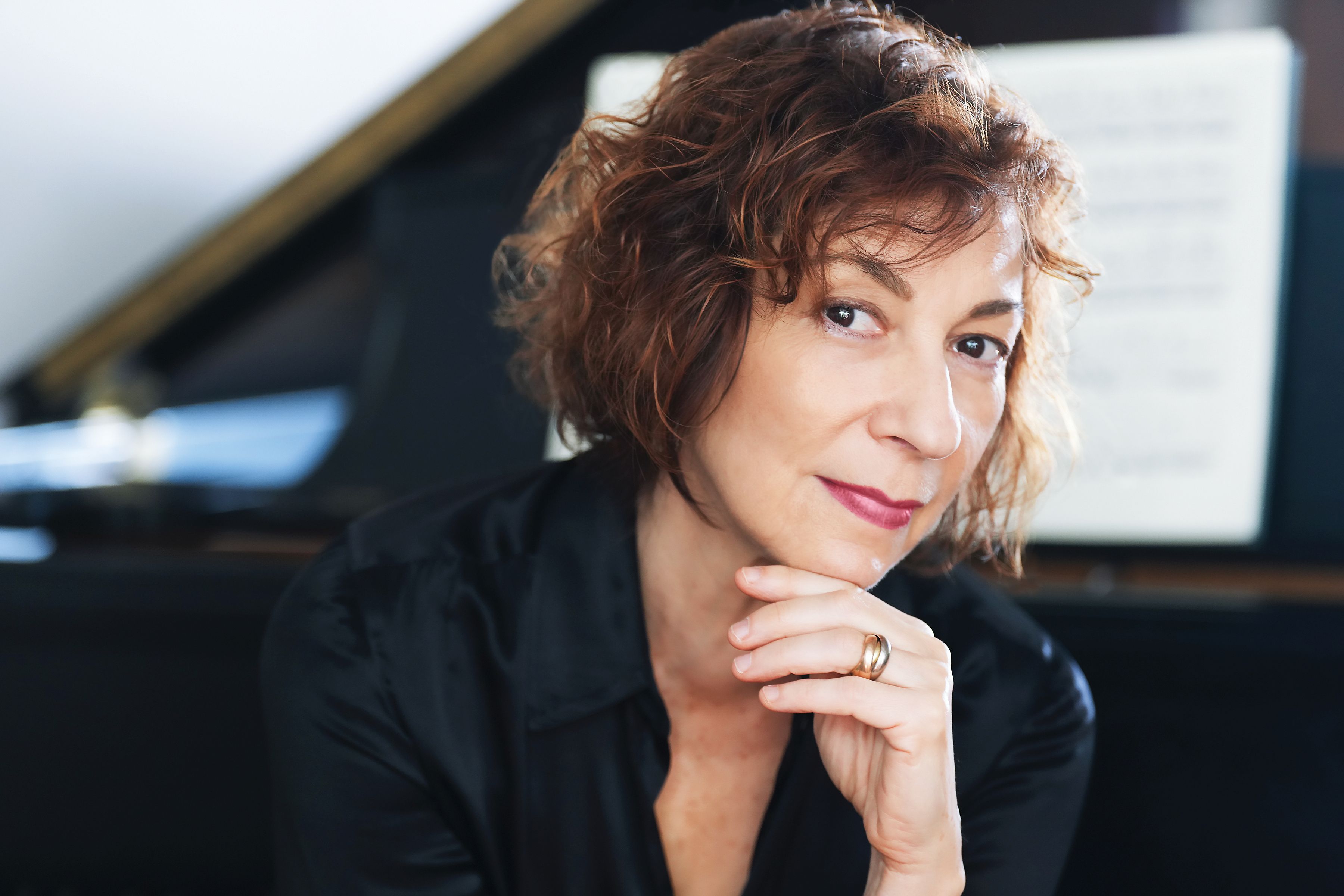
Name: Sarah Rothenberg
Nationality: American
Occupation: Pianist, curator, artistic director at DACAMERA
Current Release: Sarah Rothenberg's new album In Darkness and Light, containing her interpretations of Vijay Iyer's For My Father (premiere recording), Beethoven's Piano Sonata No. 32, Op. 111 and Morton Feldman's Palais de Mari is out via DACAMERA Editions.
Recommendations for Houston and New York, USA: The gem of Houston is the Renzo Piano-designed Menil Collection, its adjacent Twombly Gallery, and the nearby Rothko Chapel. It is all in a bungalow-bordered residential area, an art mecca open free to the public. This neighborhood is the soul of my life in Houston. The DACAMERA offices, where I am artistic director, are right across the street. And, of course, if you come to Houston, please come to a DACAMERA concert! We present chamber music, new music, jazz, downtown in Houston’s theatre district and also at the Menil Collection.
In NY – and I am a native New Yorker – there is too much to name. But I am lucky enough to live across from Riverside Park and look out at the Hudson River. There is nothing like a walk through this somewhat untamed park along the river to restore one’s spiritual sanity.
[Read our Vijay Iyer interview]
When did you first start getting interested in musical interpretation?
The first thing that interested me at the piano was sound.
It amazed me, even as a 9 year old taking piano lessons, that in using one’s wrist, the pedal, shifting the speed of one’s attack on the key, you could dramatically change the sound that the hammer hitting the string would make. The quality of sound seduced me.
This clearly has the seeds of my coming to play Morton Feldman’s music, as on my new album, and how much that music says to me now. But that was far in the future and his music came to me much later in life.
Which artists, approaches, albums or performances captured your imagination in the beginning when it comes to the art of interpretation?
The sensuous side of the piano has always been a magical draw to me. And so I was attracted, as a serious student, to pianists with beautiful sounds.
I listened to old recordings of Dinu Lipatti and loved Arthur Rubenstein. Lipatti’s Chopin E minor piano concerto moved me to tears.
Later, as I became especially drawn to Beethoven, Schumann and Brahms, I adored Leon Fleisher’s Brahms and Beethoven concerti. I loved Radu Lupu’s Brahms.
I listened to Arthur Schnabel, Geza Anda, Ashkenazy, Richter, Gilels, Stephen Bishop-Kovacevich.
I didn’t find many women! I found Dame Myra Hess.
Are there examples for interpretations that were entirely surprising to you personally and yet completely convincing?
Glenn Gould’s famous Goldberg Variations recording stood both Bach and piano-playing on its head.
Is there repertoire you are deeply interested in but rarely get to talk about or perform?
Neglected works from the past. Whether for reasons of politics, race, gender, there are many great composers whose music gets lost along the way. I have always, from the start of my career, been inspired by such figures, and have dug through archives to unearth them.
My first CD, Rediscovering the Russian Avant-Garde: Roslavetz, Mosolov, Lourié, (GM label) presented US premieres of explosively creative Russian composers of the 1910’s-20’s whose brilliant careers were supressed under Stalin’s regime.
Stravinsky and Prokofiev had left for the west – these are their contemporaries who stayed behind, briefly flourished, and disappeared.
Fanny Mendelssohn’s Das Jahr is an extraordinary epic piano cycle, daring for its time, more virtuosic than her brother Felix’s piano music, composed in the 1840s, and published for the first time in 1989 (not a typo, that is 1989).
I performed the US premiere in 1991 (Das Jahr [Arabesque]). Mieczeslaw Weinberg’s music needs more performances. I hope young pianists will take these fantastic works into their repertoire and look for more to unearth.
What do you personally enjoy about the act of interpretation? Are you finding that this sense of enjoyment is changing over time?
I find the process of getting inside a piece continually surprising, because you don’t know where you are going to end up. With standard repertoire, such as Beethoven’s Op. 111, you have in your ear a sense of the piece that has come from multiple recordings and performances over time, so you may start out with preconceptions.
But then when you are at the piano alone, just you and the score, it becomes just yours, in a way. I forget about everyone else and feel like I am communing directly with Beethoven – asking questions, searching for the answers in the score. There is so much in this music, it is such a personal and philosophical statement from Beethoven. There are moments in Op.111 that strangely feel like a mirror of my own interior life- one discovers oneself in music composed by someone living in Vienna two hundred years ago! It’s a miracle.
One of the greatest experiences as a musician is the ability to return, throughout one’s life, to a piece like this, and discover it anew – but with the piece already inside you. Not a note of the score has changed, but you have changed. It is a very deep experience, and I have had this especially with Beethoven’s last three piano sonatas. Each time you return, you notice more – an accent you may have missed, a phrasing, but, most of all, with these works, it’s the structure.
Every interpretive decision has to do with making audible the magnificent structure – Beethoven’s incredible ability to push the sonata form to the limit, to wander almost to the edge of sanity (variation 4 and onward in Op 111) and then to contain it all within this form.
An entirely different and exciting experience is being handed a brand new score. I have had this most recently with two new piano pieces composed for me by Vijay Iyer and Tyshawn Sorey. Well, it is not entirely different, but here the sense of discovery is not just personal – it is about delivering this piece to the world, being the messenger, being entrusted with the composer’s work and also making it your own. It is your own, in a very different way than a standard work, as you are responsible for its birth.
And so then you want to bring that fresh view of playing a world premiere, that sense of discovery, back to Beethoven, back to older repertoire. I do think about the daring of Beethoven, and ask myself how I can make that same sense of daring alive today two hundred years after he wrote his last sonatas.
Some of that motivates my programming Op 111 between two modern works in my new album.
How much creativity is there in the act of interpretation? How much of your own personality enters the process?
It’s perhaps surprising, but I never think I am doing anything to the music, I am just trying to bring out, make visible, what lies within the music – Leon Fleisher, whom I worked with at various times, used to talk about the notes being just the tips of the iceberg.
I remember, when I was 16 and waiting in the hallway for my audition at Curtis (Curtis Institute of Music), I heard another auditioner practicing the last movement of Beethoven Op. 109, which I was also about to play. And I hardly recognized one of the variations, it was being played so differently, and it caused a jolt of recognition in me; I realized that the way I played that variation, which had seemed obvious, was not obvious, perhaps, at all, and was something personal.
This was an awakening to choices being made, conscious and unconscious, but also to the idea of musical personality and individuality.
What was your own learning curve/creative development like when it comes to interpretation - what were challenges and breakthroughs?
There is a big shift, I think, when you stop studying with a teacher.
The music world has at its center an incredibly intense teacher-student relationship. I actually think it is unique to music. The only thing it is close to is psychoanalysis. It is a one-on-one meeting, usually once a week, that you practice for, in conservatory years, probably 5-6 hours a day. And then in that one hour you measure where you are and who you are.
When you leave school, stop lessons, and start to work on new repertoire that you have never studied with anyone, it becomes a very different process. You internalize those lessons, of course, they stay inside you – I still hear the voices of Seymour Lipkin, Mieczeslaw Horszowski, Leon Fleisher, even Herbert Stessin, with whom I studied from age 9-16.
But then the big shift is having to hear yourself, hear not just what you intend to do on the piano, but what is actually coming out; as well as make your own interpretive decisions.
One of the key phrases often used with regards to interpretation are the “composer's intentions”. What is your own perspective on this topic and its relevance for your own interpretations?
I think it’s vital to approach each composer somewhat differently. Each musical personality has its own relation to intentions.
I recently had the amazing experience of Tyshawn Sorey writing me a 45+ minute long piano solo, For Julius Eastman. The piece arrived without a single dynamic or phrase mark. It is written primarily on one staff. It was like being handed a map.
I was already deeply familiar with Tyshawn and his music, having commissioned, performed multiple times and recorded his epic work, Monochromatic Light (Afterlife) [DACAMERA Editions], composed for Rothko Chapel’s 50th anniversary. So having this intimacy was hugely important.
Learning and performing FJE turned out to be one of the most meaningful experiences of my musical life. I had to find my way into this piece with no hints, only the notes. I had to get inside and underneath what was expressed – and this is a deeply, profoundly expressive piece.
It made me reflect on how often, as musicians, we start out blindly “following directions,” and then we try to play as though we have internalized those directions. But with FJE, Tyshawn gave me a musical gift and a gift of trust, and the evolution of my performance became an intense process between us. He supported my choices and this trust was powerful.
The work, as composed, is deeply intentional but does not give directions. Again, a map. The piece, when I play it, has a very large dynamic range – infinite degrees of softness to thunderously loud – and to me, this seemed written into the notes once I knew the piece … I guess that is full circle to my comment about my Curtis audition with Op. 109; because it’s quite possible someone else could play For Julius Eastman completely differently and that my dynamics are entirely personal.
Also, in the spirit of this work – and I think spirit may be the soul of interpretation – I never wrote a dynamic or marking in the score. For me, in this particular work, that would be cheating. I had an internal map that I have pretty much maintained, but there is no following directions – neither mine nor Tyshawn’s – beyond the naked notes and rhythms on the score.
I am infinitely fascinated by radically different or even “wrong” interpretations – the tempi of Toscanini, Kempff's Goldberg Variations. Are there extreme interpretations that you enjoy as well? Do you personally draw a line – and if so, what happens when we cross it?
I think one of the most amazing things about any musical composition is that there is no one interpretation that can be definitive. The richer the piece, the more possibilities exist – you can’t bring out ALL its possibilities at once.
The piece exists in the continuum of all the interpretations that have been and will be performed. I like to think these interpretations float into the atmosphere and somehow enter our collective musical unconscious, influencing how we hear and how we play for generations, which will, necessarily, shift with time. Think of Shakespeare plays and all the stagings of them throughout the centuries since he lived – this kind of visualizes what we can’t visualize when thinking about interpreting a piano sonata.
For sure, our parameters may be narrower in music, and, of course, we all have favorite performances or recordings of certain works; but I still believe that a great work doesn’t exist entirely in any single performance of it. Each valid interpretation is a kind of contribution to this ongoing continuum of a musical work’s life.