Published
Name: schntzl
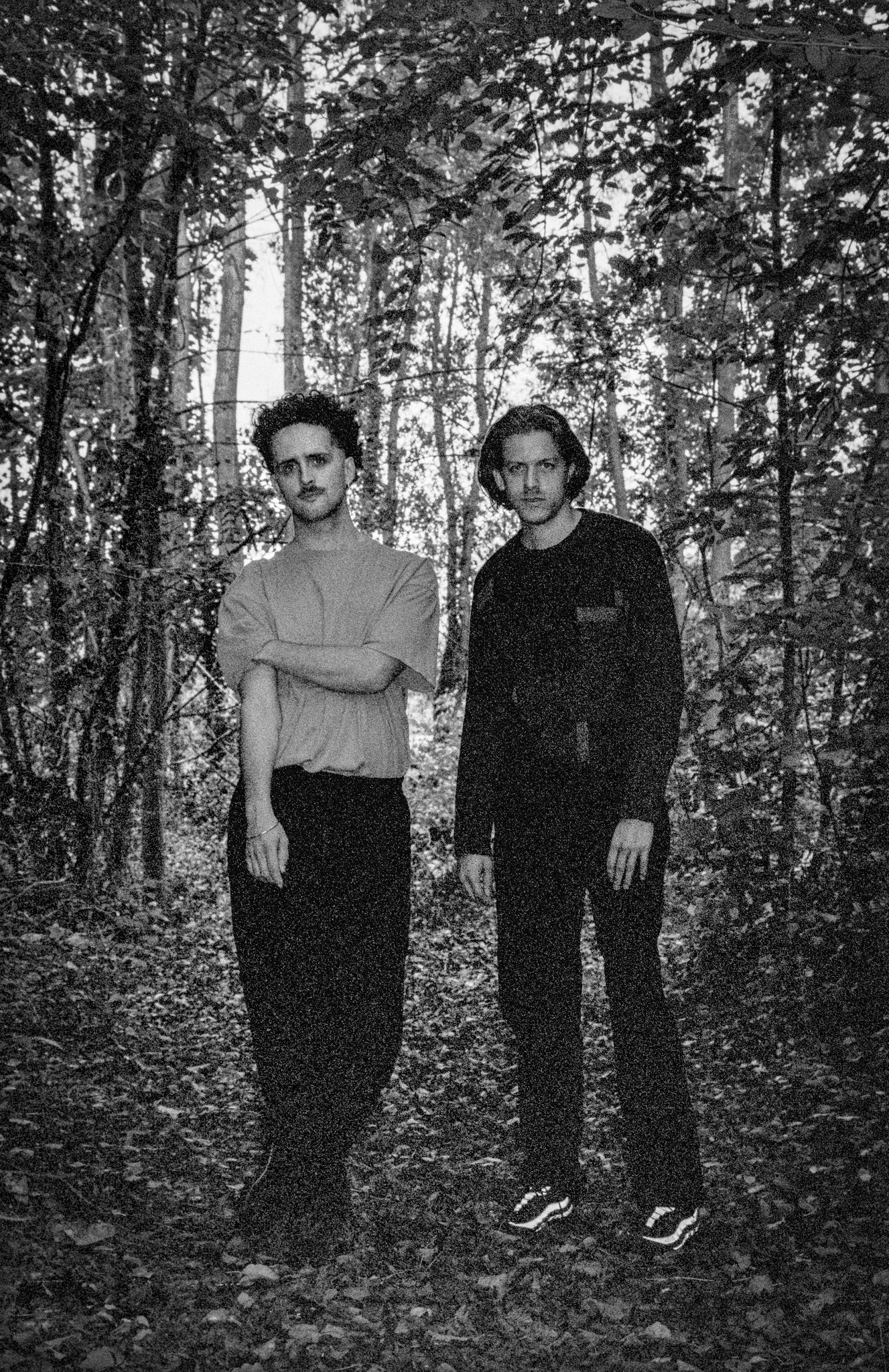
Members: Hendrik Lasure (piano, electronica), Casper Van De Velde (drums, electronica)
Interviewee: Hendrik Lasure
Nationality: Belgian
Current Release: schntzl's new album Fata Morgana is out via VIERNULVIER.
If you enjoyed this schntzl interview and would like to stay up to date with the duo and their music, visit their official homepage. They are also on Instagram, bandcamp, and facebook.
For a deeper dive, read our earlier schntzl interview about their views on jazz.
Are you treating each album as a new beginning and perhaps even an opportunity to re-think the entire concept of the band?
I’ve always seen schntzl as a sort of mothership. It’s the place where we experiment with whatever interest we’ve taken, and is therefore ever-changing.
Looking back at what we’ve made so far, there were always some key concepts we wanted to try out. On the ‘Amsterdam!’ album for example we wanted to record ourselves, record improvisations and edit ourselves.
With ‘Holiday’ we played with sampling vinyls and each other.
It’s true that we left the intimate and acoustic-focussed sound from our beginning days behind now for a rawer, more extreme sound, with electronic kicks building the gap between the acoustic drums and the synths.
The press release mentions your “appetite for implosion” for the new material. What does that mean, concretely?
I believe it means we like to keep the tension high and don’t give in too easily.
In the past we’ve been quite extreme to that regard in live situations, but now we understand sometimes it’s okay to give people what they want: something to bounce their heads on.
The departure point for the new album seems to have been your interest in 90s trance. What, specifically, interests or fascinates you about this time and music?
For sure the sound of early trance is something we grew up with.
Trance music is driven by a certain kind of synthesizer sound that feels gigantic and out of this world. Somehow it sounds very unnatural and brutal, but it also gets close to sounding like white noise. Like waves crashing or a waterfall.
Trance riffs and melodies tend to go for the big emotions, which is something that resonates with us very much.
Which acts and pieces particularly drew you in?
Rediscovering Belgian trance acts like Milk inc and Sylver at first felt like a forbidden fruit. This music is very straightforward and aims for big emotions. That’s something we both are a sucker for.
Last year we went to see Regi in the Afas Dome on a Sunday afternoon.
Alongside his new ultra-commercial work he played some older trance tracks from his days with Sylver and early Milk inc. Hendrik and I got high on Redbull and Regi that day.
Do you personally enjoy the club experience, the dancing, the idea of events that continue for days? Were there any inspiring experiences which impacted Fata Morgana?
The clubbing experience is more of a recent discovery for us.
Recently we saw DJ Paypal in Recyclart, that was really inspiring. She was playing the decks as if she was kneeding dough. Really tactile and super hands-on.
Her music is very daring: She combines bits that are very far apart but still she makes it work in an incredible way.
Fata Morgana works openly with its influences, but it's clearly its own thing and not actually just trance as functional dance music. What were you aiming at?
Early trance music was just one of the many influences we let in on the album. We were heavily inspired by the music of Chuquimamani-Condori, Still House Plants or John Oswald too.
We’re not aiming to make an exercise in style, on the contrary. We used elements of trance, whether it be in sound or in style, to make a mix that’s exciting to us.
Our music should always be the sound of who we were at that time.
It would theoretically be possible to work with vintage gear and to replicate the processes and approaches of the music you were inspired by. Do you see any value in this kind of “authenticity?”
We do that kind of research for a bit, just to know how they did it back in the days is interesting. How some of those sounds came to be, without the ease of the laptops and software that we grew up with.
But we are not at all what you would call 'analog or gear purists'. We have never tried or wanted to recreate music that has been already. We pick little elements from here and there to create a blend of sounds to play around with. In the end, we create a setup that allows us to play with the instrumentation in a fluent way.
Most of the time, it results in limiting the possibilities: choosing a specific piece of gear or choosing a couple of software parameters to be able to tweak in real time. If there are too many options you get lost and it's hard to focus on where the music is going.
One thing which seems important about the album to me is regarding kitsch as a positive quality. Can you reflect on that a bit?
Kitsch is so interesting because it really questions our aesthetic. There’s humour in kitsch, which is very important to us. It’s also big emotions, like trance music or schlager.
Trying to see beauty in kitsch pushes us to be open-minded and broaden our palette.
The press release refers to the project as “hyper-visual.” How would you describe the relationship between the visual aspects of the and the musical ones? What are these worlds you're taking listeners to?
We describe our music as hyper-visual because we talk about our music to each other through images. It can be a landscape we describe to each other, or a fictional character. It's a way of giving the instrumental music more context for ourselves in the first place, to make the atmosphere more specific. We try to communicate that with the listener through how we name the tunes.
For this album we clearly had more of a magical/fantasy world in mind. This has also been translated in the artwork and video by the amazing Benjamin Ikoma.
Assuming you played parts of the material on the album live while developing it - what was the interaction between the response of the audience and the finished LP?
There is always a very different focus live, which changes the way we play drastically. We want to convince the audience, so we’re sharper and play with more decisiveness.
We did some new recordings after we played a first live show, but also decided to delete two tracks we already recorded. That was a difficult decision as we were used to always use all of our material on the album.
But taking our time for decisions like this really makes for a more coherent whole.
How would you describe the recording and development process? It looks like it was recorded at two different venues and rather spread out across several sessions rather than a week “blocked” for recording.
It was the first time we worked like this. For our previous albums we recorded in a studio.
So first we would rehearse everything to be able to record it in one session. In that way the recording feels more like a picture, a snapshot of one of the versions it can be. Because we wanted to focus more on artificial sounds and processing, it seemed like a good idea to incorporate the recording process a bit more into the creation.
We recorded multiple sessions over the course of one year, which gave us time to listen back, evaluate, edit, process and re-record. In this way, the creative process didn't end for us with the recording session but it kept going further. This has brought us to places we hadn't been before, mainly in the field of sound design and arrangement of the tunes.
At the end of our process we sent the tracks to mixing engineer Chris Elms who surprised us in many ways. He left a big mark on the sound of the album.
What role did improvisation concretely play for Fata Morgana?
It’s where every song starts, from playing with each other.
And from there we start to pour the improvisations into structures and make songs out of them.
What interests you about working with sampling?
In previous albums and live situations, Casper has been live-sampling in a couple of different ways. First he used to sample his drums through a microphone, later on he was sampling FM radio-stream. This live-sampling used to be the big surprise element: we wouldn't know beforehand what sample would be captured exactly.
With the CDJ there is still the possibility of sculpting a captured sound (through effects, scratching, pitch manipulation,...) but there is a good balance of control and surprise. With the CDJ, we can choose certain moments of a specific CD, so the sampling becomes part of the compositional process.
The sound quality of sampling with the CDJ is amazing: the samples are bits of mastered lossless audio files, so the CDJ alone can have the same impact, volume and frequency range as the both of us playing at the same time.
You're performing several dates in the wake of the album release. How are you approaching the process of performing these pieces on stage?
We recorded the tunes in a pretty compact form for the album. For the concerts we worked on stretching out the material, because we feel the possibility for the tunes to become hypnotic and have a kind of physical effect on the listener.
But we really like to surprise each other, so if we are feeling it, there is still a great amount of openness to break out of the forms we created and rehearsed.
Next to that, Stan Vrebos built a scenography to go along with it, so the physical space reflects what we are doing.
You mentioned the importance of loops in our earlier interview. At the same time, the press release also mentions it was important for the arrangements to “never stand still.” In which way is this not a contradiction?
At the core we are players. We like to challenge and surprise each other. Although our live set is one of the most unchanging ones so far, there will be differences with every show.
I use the CDJ for making loops, but also my playing lately is heavily influenced by loops. This doesn’t mean there cannot be subtle changes in the loops. We want the music to be continuous and try to lure people into our groove.
Because our grooves our often unconventional we simply have to take more time to develop them.
From your point of view, what sets an inspiring loop apart from a boring one?
That's a hard question to answer! Some loops get boring after a while, but some loops you want to hear again and again. It's part of the magic that we don't really know when it's going to be extraordinary.
But the main things we are looking for in loops are texture and a certain flow. We like it when a rhythmic pattern goes in circles but is not really tight. Like a bicycle with an oval wheel.