Published
Name: Sera Kalo
Occupation: Singer, songwriter, improviser, composer
Nationality: Caribbean-American, Berlin-based
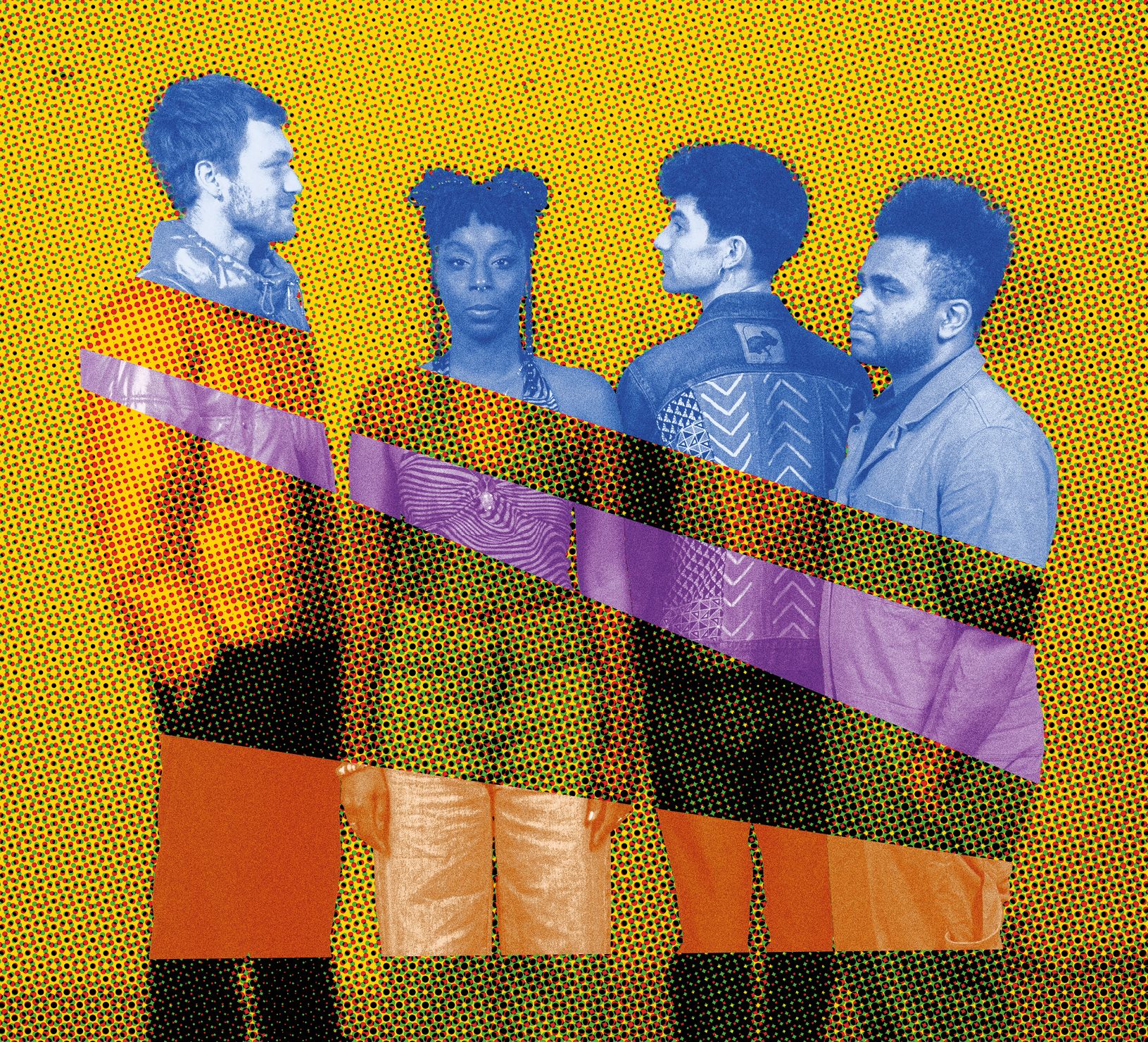
Current release: Sera Kalo teams up with Dylan Hunter Chee Greene (drums), Marius Max (sax), and Nick Dunston (bass) for eX.II - Jazz Is Punk, the debut album of her band ex.II, out via unit.
Recommendations for Berlin, Germany: Rhinoçéros - a wonderful listening bar in Prenzlauerberg.
Topics I am passionate about but rarely get to talk about: Generally speaking, I love musicals. Currently, I’m very much into the WICKED movies. Alongside its impressive creative depth, there is so much symbolism and social critique to dissect … It’s simply amazing how layered and symbolic the films are. I could talk about it for hours. The music is so wonderful as well.
Aside from music I also studied a psychosocial discipline so I generally really love analyzing culture and dissecting social trends that are happening in society and how that’s reflected, represented or processed in different art forms. I also love dancing, food & cooking … Is this a date?
If you enjoyed this Sera Kalo interview and would like to know more, visit her official homepage. She is also on Instagram, and tiktok.
For a deeper dive, read our earlier Sera Kalo interview.
Do you think that some of your earliest musical experiences planted a seed for your interest in writing lyrics or poetry? How and when did you start writing?
Absolutely. I grew up between cultures, and that meant I was always listening, absorbing, translating.
Music in my home was eclectic — Old 60s, 70s, 80s, Caribbean songs at family gatherings and events, gospel on Sundays, American R&B in the evenings, jazz standards, alternative rock and hip hop in high school and college. Those were my first impressions of songwriting before I was moved to write my own lyrics.
I started writing intentionally in my late teens, mostly small poems and fragments in multiple notebooks. Later, that became songwriting for my first projects.
Entering new worlds and escapism through music and literature have always exerted a strong pull on me. What do you think you are drawn to most when it comes to writing?
I’m drawn to transformation where a feeling becomes a metaphor, and a metaphor becomes a sound.
Writing is a doorway. When I write, I’m usually trying to understand and process. For me it’s less escapism and more world-building: through sound and words I’m creating a sensory landscape and language I need in order to move through something.
What were some of the artists and albums that inspired you early on purely on the strength of their lyrics? What moves you in the lyrics of other artists?
Lauryn Hill’s The Miseducation… was huge for me. Not just the wisdom, but her vulnerability and spine.
Erykah Badu, a master of the philosophy - poetry blend.
In Feist, I could hear how the phonetic nature of a word influenced the melodies she produced and how that in turn amplified the meaning of individual words.
Kendrik Lamar reminded me over and over again that language can be reinvented.
Bjork’s lyrics are quite beautiful, too.
I think sometimes writing in a language that isn’t your first gives you more freedom to play with syntax and meaning - I like how she sometimes reimagines language.
Meshell Ndegeocello’s lyrics are like stories from a diary - direct yet so gentle in a way.
And then there were poets: Langston Hughes, Maya Angelou, Gil Scott Heron, Rupi Kaur. Their voices taught me tension, rhythm, lyrical imagery, and also how silence can be a word.
I’m moved by lyrics that make me feel like the writer risked something. Even when wrapped in abstraction.
It is sometimes said that “music begins where words end.” What do you make of that?
I think words are a facilitator of music and can be a musical element in its own right when treated as such.
In the context of music, words need tone, breath, and timbre to transform into metaphysical meeting. Some parts of the emotional spectrum simply insist on being sung rather than explained.
Not sure if that really answered the question.
I see many forms of music as poetry. Where do you see similarities? What can music express that poetry cannot?
Both are condensed forms that can transmit something enormous with very little. But music is the vessel.
Poetry can break your heart, but music can break your heart and rearrange your nervous system.
The relationship between words and music fascinates me. How do you see it? Can music take your writing to places it wouldn’t otherwise go?
Yes. Drums, a bassline or a melody can unlock a line that I probably would not have thought of otherwise.
I’m open to that so the synergy is definitely there.
What themes do you keep returning to in your lyrics?
Duality. Belonging. Resilience. Self-acceptance. Emotional dissonance. Architecture of relationships: how we carry each other’s ghosts, how we negotiate intimacy, and how we reclaim ourselves …
“AND MORE”.
Take a piece from eX.II - Jazz Is Punk and describe how the lyrics grew into their final form.
Every song is different.
The “Jassmine Jury” for example is a culmination of feelings and impressions I’ve had while navigating through the jazz world in Germany over the years. It’s my train of thought and reflection.
“This is jazz as I understand it. This is what I do with it now. This is what I see others doing with it. Something doesn’t align. Jazz seems to be imprisoned when it actually symbolizes freedom. That doesn’t make sense to me. But it seems to be working for some. Does anyone else notice? This is what I think is going on. It’s time to consciously decide how to participate in this thing called jazz because if you don't, someone else will.”
On the flip side there is the song, “Silence Speak.” The only lyric is essentially, “Silence, speak to me.”
With that lyrical impulse encased in soundscapes, I want to reflect the act of what it feels like to consciously make sense of emotions as well as internal or external imagery that shapes our view of the world.
Where do you usually begin? First line? Chorus? Something random?
It’s different every time. Sometimes it starts with intention, sometimes it doesn’t.
How does an individual song relate to the EP or album it belongs to? Does it need to be consistent with the whole?
For me, coherence isn’t about uniformity. A song doesn’t need to sound like the others on an album. It’s more about the overarching perspective and story.
On eX.II – Jazz Is Punk, each song is a facet of a broader question: Who do you become and what do you believe in when you’ve stripped yourself of all the societal norms and generational conditioning you’ve been molded by?
I’m exploring this topic specifically in the last tune of the album called "Perfectly Dismantled."
Have listeners shared surprising interpretations of your songs?
Yes, with my debut album eXante and the album The Good Life I released with an earlier project called, Seraleez. Some listeners thought certain songs were romantic when they were actually about managing sensory overload or identity fragmentation.
Those moments teach me that once a song is released, it no longer belongs solely to the writer. Listeners complete the meaning. I kind of like that.
Is writing lyrics inherently different from making a great cup of coffee? What do you express through music that you couldn’t in more mundane tasks?
No- for many reasons. But to highlight one I’ll say this …
I’m not really sure if a cup of coffee asks you to face your grief, your joy or your contradictions. But I think music does. And music is where I allow myself to be unshielded. Which is not how I usually walk through my everyday life.
But I very much enjoy the smell and taste of coffee and maybe in the right context, I might write a song about it.