Published
Part 1
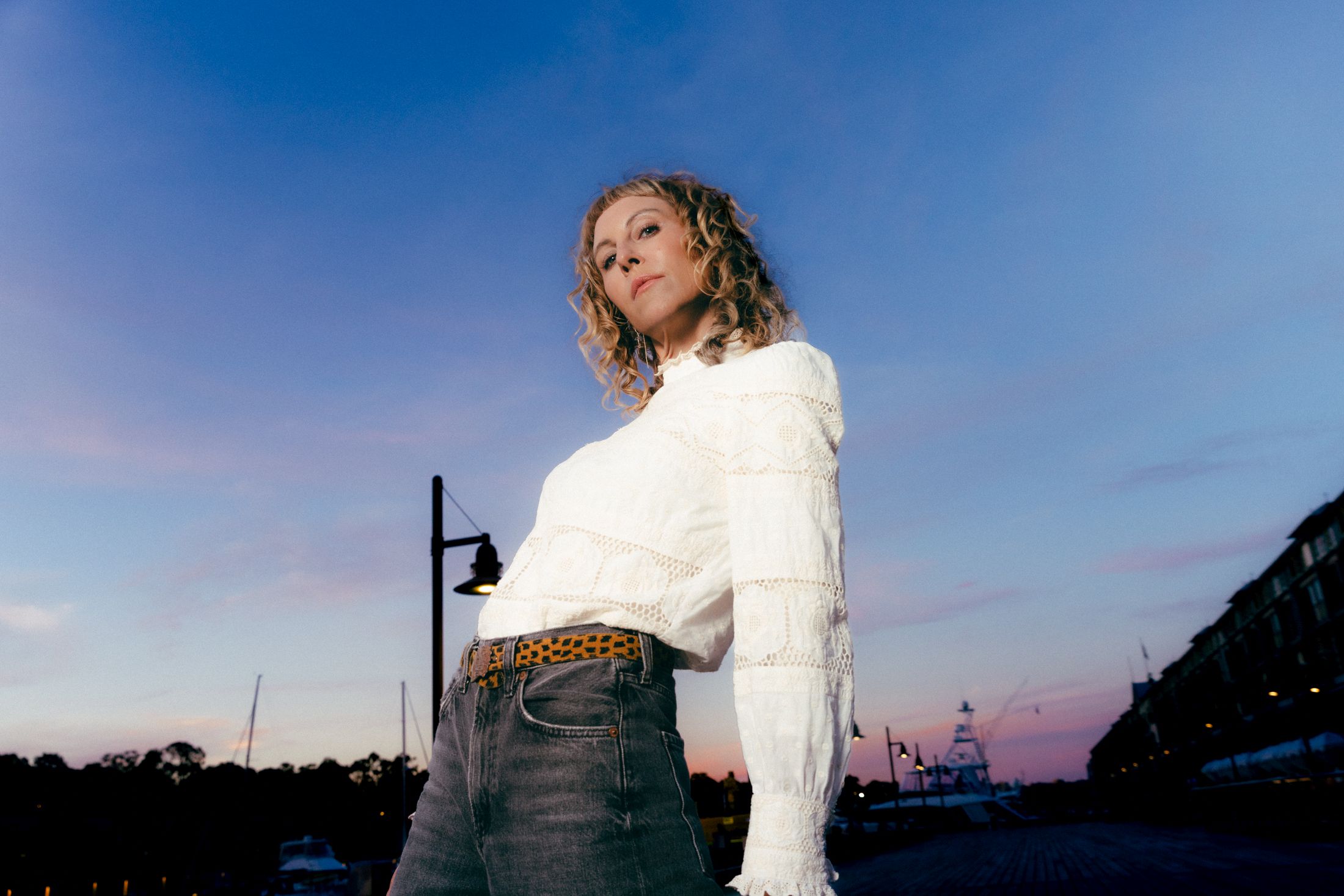
Name: Sophie Hutchings
Nationality: Australian
Occupation: Composer, pianist
Current release: Sophie Hutchings's new album become the sky is out via Mercury Classics.
Recommendations for Sydney, Australia: One is hard to say! BUT I will say do the ‘Manly Ferry’ ride. It’s a beautifully picturesque way of experiencing Sydney harbour whilst viewing some of Sydney’s iconic landmarks at the same time.
Topics that I am passionate about but rarely get to talk about: I’m super into cooking but I think that is the first thing everyone loves talking about! I find it’s a great creative outlet yet without the pressure I can tend to place on myself musically. It really helps me unwind.
I’m also obsessed with scents and perfumes. My favourite at the moment is Modus Vivendi by SSAINT. I’m always picking sprigs of leaves & flowers, burning essential oils or incense too. As a nostalgic person I find these fleeting sensory triggers of smells can instantly take us back to specific moments in time. So I think that scenery feeling connected to smells is a topic worth talking about!
Road trips are a huge favorite too. Living in Australia means covering long distances to get anywhere, but I find so much joy in the journey itself. The open road, the changing landscapes, and the simple pleasure of camping under the stars. It's a great way to disconnect and explore.
If you enjoyed this Sophie Hutchings interview and would like to know more about her music, visit her official homepage. She is also on Instagram, Facebook, tiktok, and bandcamp.
For a deeper dive, read our earlier Sophie Hutchings interview.
The borders between producers, sound artists, and even songwriters are becoming increasingly blurry. What does being a composer mean today, would you say?
That's a really interesting question. While traditionally a composer's role was very definitive, I see it as having a much broader scope today. For me, being a composer isn’t just about conceiving the initial musical ideas.
While a strong foundation in melody and harmony driven by the piano in my case is still the heart of my work, the process extends outside of that. With an ambient piano led album like ‘become the sky’ for example, manipulating and treating the sound became an integral part of the writing process. Layering those sounds and textures was a really important creative element that shaped the mood and atmosphere of the entire record. In that sense, my roles as a composer, producer, and even sound artist I would say merged during the creation of the music.
However, I've also learned over time the value of working with others. While some composers these days are a one stop shop, I’ve found collaborating with a producer or engineer during the recording phase can bring out new elements and perspectives that you might not discover on your own.
So, while these roles may overlap more than ever, I believe each still has a distinct and valuable purpose.
Many people perceive classical music and contemporary composition as having high barriers of entrance, both for listeners and musicians. What have your own experiences been in this regard?
I do believe those barriers of entry exist. Especially as a female. There can be a certain elitist mentality or snobbery within some traditional classical circles and a focus on rules and regulations that can feel limiting and unwelcoming to those who don't fit a specific mold.
Early in my career, this mindset tended to affect me. As someone without a traditional compositional background, I felt a degree of insecurity about calling myself a ‘composer’ and I still tend to call myself an ‘artist’. It created a personal wall that made it difficult to fully embrace and share my creative voice.
Over time, however, I've come to realise that not fitting the traditional mold can actually be a strength. It forced me to lean into my own unique style and individual creativity. Instead of adhering to established rules, I focused on embracing my personal sound.
The power of music lies in its emotional impact on the listener, not in how clever its structure is or how many rules it follows. While some traditional barriers will always remain, I've found that people's attitudes are changing. Ultimately, if a piece of music is authentic and connects with someone, it shouldn't matter how the composer got there.
As of today, what kind of materials, ideas, and technologies are particularly stimulating for you?
Believe it or not I’ve found having a smart phone a quick and essential creative tool.
When I’m feeling a little lazy I tend to record a quick demo on my phone app called ‘StudioMini’ so I don’t lose or forget it. My piece "Holding Moments" is a good example of a melody I captured this way.
Over the years, I've built up a catalog of hundreds of musical ideas just sitting in my phone that I’ve kept saved or will occasionally transfer to harddrive.
I’ve also found MIDI and DAW great for my creative work flow. Whilst I prefer to keep everything as real and organic for the final recordings, using MIDI in my demos allows me to work quickly and capture my arrangement ideas. It's a way to rough out a full arrangement and hear my ideas coming to life in real-time.
For instance, when I was composing "Secrets to the Sea," the ideas were quite impulsive. Having my own little studio setup with Pro Tools allowed me to immediately document and arrange those ideas, translating them from my mind into a tangible form.
This ability to capture and build on a creative moment enables me to bring my pieces to life.
Where do most of your inspirations to create come from – rather from internal impulses or external ones? Which current social / political / ecological or other developments make you feel like you need to respond as an artist?
My inspiration comes almost entirely from internal impulses. Music, for me, is a deeply emotional and personal space. The core of my compositions often emerges from a feeling and for the most part the story line will naturally follow later. For me it’s about creating a piece from a place that isn't overly cerebral.
However, I find that my ability to tap into that internal world is often stimulated by external factors, specifically the natural world. Embracing a lot of space is pretty integral to my creative process. It gives my mind the room to breathe, allowing me to connect with those inner feelings in a very organic and unforced way.
As for responding as an artist, I wouldn’t say I directly address current social, political, or ecological developments through my music. My music isn't intended to be a direct commentary. Instead, I see it as a mindful companion. My goal is to create a space for the listener to find their own meaning.
Music is an incredibly powerful and personal place, and rather than dictating a message, I hope my compositions can encourage a listener's own self-reflection and inspire them to act on what they feel is right for the greater good.
Composing has always had an interesting relationship between honouring its roots and exploring the unknown. What does the balance between these two poles look like in your music?
I feel that my creative process is a constant balancing act between these two poles. I see honouring the roots as building a strong foundation, while exploring the unknown is where the individuality and personality of a piece emerge.
In my music, the roots are very much traditionally piano forward. That's the foundation I mostly start with. However, the balance shifts as I expand and build on that initial idea, pushing the piece into a more contemporary and non-traditional realm.
For ‘become the sky’, a key part of this exploration was intentionally blurring the lines between instruments. In tracks like "Sleeping Giant" and "The Gathering Dusk," I layered atmospheric guitar and synth melodies alongside the piano.
My goal wasn’t for the listener to clearly distinguish each instrument, but rather to form an ambient cloud of sound that encourages a sense of drifting away.
This approach allows me to create music that is grounded in what is possibly a familiar tradition but ultimately takes the listener on a unique and personal journey.
How much potential for something “new” is there still in composition? What could this “new” look like?
I feel there is still plenty of room for something ‘new’ though this newness isn't always about a radical break from the past. I think it often lies in how we blend and personalise existing ideas. Recycling influential ideas of the past can be part of the ‘new’ as long as it’s projected with a genuinely unique voice. I think it’s about finding that balance.
Another way is through genre fusion. My own musical circle is a good example of this where we are constantly blending different styles to create unique sonic palettes. I feel this form is continually evolving but another area I’ve found, is simply in the subtlety of personal style.
Even within a traditional form like solo piano, a composer with a unique, instantly recognisable touch can create something that feels completely new and original. I don’t feel it needs to be groundbreaking in a technical sense, instead, its novelty comes from the emotional sincerity and individuality of the composer's expression.
I feel as though the most significant factor is in the emotional conveyance. If a composer can build a sound that deeply resonates and emotionally connects with the listener in a way that feels special to them, that is, to me, the truest form of "new."