Published
Name: Svetlana Marinchenko
Nationality: Russian
Occupation: Composer, improviser, pianist, producer
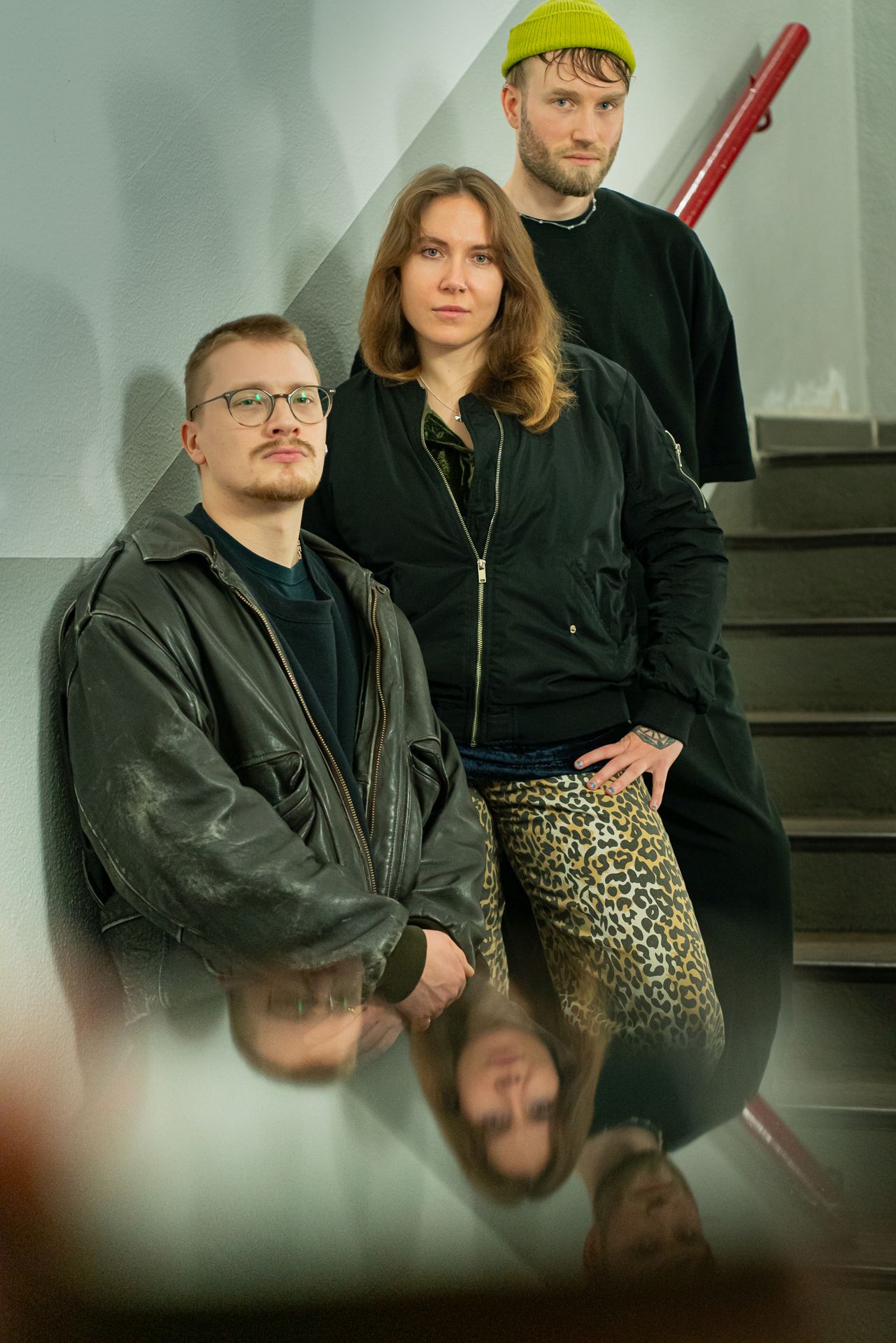
Current Release: Svetlana Marinchenko's new album Vtorchermet, out now via Boomslang. The album features her band SVM3 which is comprised of her on piano and synths, Felix Henkelhausen (bass), Philip Dornbusch (drums), and this time also features Jo Beatdenker (guitar, post-production, mixing, mastering), and Leon Griese (sound engineer)
Recommendation for Berlin, Germany: Visit DONAU115 Club.
Shoutouts: My label Boomslang Records for sure, hahah, Fun in the Church, Intakt Records, Bezau Beats Festival, Südtirol Jazzfestival. Saafelden Jazzfestival, Cologne Jazzweek, Berliner jazz fest, Future Bash collective, Artists like Mary Halvorson, Matt Mitchell, Jim Black, Christian Lillinger, Elias Stemeseder, Marc Ducrtet, Louis Cole, David Virelles and many, many more.
Topic I am passionate about but rarely get to talk about: Actually, I’m deeply interested in psychology, and I feel that in the world of music, we pay surprisingly little attention to it. For example, even your approach and physical interaction with your instrument depend on your psyche: how confident you are, how open you are to letting the music flow through you. I’ve experienced this myself many times—when you resolve certain inner issues, your playing changes. Especially rhythmically. Your ability to exist within the groove shifts depending on your mental state. Of course, this isn’t absolute—but if you observe closely, highly anxious people often struggle rhythmically.
And that’s just a small part of it. Since I’ve dealt with neurotic issues since childhood, I’ve very clearly recognized these connections for myself.
If you enjoyed this Svetlana Marinchenko interview and would like to know more about her music, visit her official homepage. She is also on Facebook.
What were some of the musical experiences which planted a seed for your interest in jazz?
Actually, my first encounter with jazz was the decisive insight for me. I heard John Coltrane’s album A Love Supreme, and the torrent of that wild energy simply swept me away—I became determined at all costs to become part of it.
I should mention that I had absolutely no musical background whatsoever before that moment; this album compelled me to dive into music from scratch and make it my profession and my life.
What does the term jazz mean today, would you say?
Nowadays, it’s really very hard to say what the word “jazz” actually encompasses, because the variety of music people still classify as jazz is truly enormous.
I think today it generally means music that includes improvisation in some form. But in reality, if you genuinely try to describe the music accurately, much of what gets placed into the “jazz” box doesn’t actually sound like jazz, even though it employs improvisational concepts. It might sound more like contemporary classical, rock, or pop.
Everything is blending together so intensely these days—and that’s great. But the very concept of jazz is becoming increasingly vague and blurred.
As of today, what kind of materials, ideas, and technologies are particularly stimulating for you?
Currently, I am interested in polyrhythmic structures and experimenting with electronics.
Where do most of your inspirations to create come from – rather from internal impulses or external ones? Which current social / political / ecological or other developments make you feel like you need to respond as an artist?
Actually, it varies. Sometimes impulses come from within, sometimes from outside. I’m often inspired by the sound of certain music and feel a desire to create something similar—but in my own way.
I think lately it’s happening more according to the second scenario. Sometimes I play something, improvise, and think, “Wow, this could really be developed further—it expresses certain emotions of mine.” In any case, I never start solely from musical concepts; I always begin from the emotional state I want to convey.
Regarding social factors … My country is currently waging an aggressive war, and for me, it’s important to stand for democratic values and show that another, alternative Russia also exists.
I dedicated my previous album entirely to this issue; this one, to some extent, also reflects my feelings about all of this happening right now, cause its just the everyday life background—just less obvious.
Tell me a bit about the sounds & creative directions, artists & communities, as well as the colleagues & creative hotspots of your current hometown, please. How do they influence your music?
Berlin is pure inspiration. An incredible amount of fascinating music truly happens here.
I’d say that since I moved here from Munich, I’ve been strongly influenced by the avant-garde scene and free improvisation—I was genuinely far removed from all of that before coming to Berlin. I’d describe Berlin as having its own absolutely unique, dark sonic aesthetic. People actively experiment with all kinds of things.
Who has influenced me? My own colleagues, with whom I recorded my latest album: Jo Beatdenker, who has a completely unique rhythmic and sonic concept; Felix Henkelhausen; and Philip Dornbusch. Among other peers: TAU, Max Andriewsky, Julius Windisch, Liz Kosak.
There really are so many super creative and musically open people living in Berlin—and the artistic growth happening here is truly extraordinary.
What role do electronic tools and instruments play for your creative process?
It definitely plays a fairly significant role.
I enjoy experimenting with electronic sound aesthetics—I find that it truly opens up a whole new world of possibilities.
Thanks to technological advances, collaboration has become a lot easier. What have been some of the most fruitful collaborations for you recently and what approaches to and modes of collaboration currently seem best to you?
I’m really glad that on my latest album I got to collaborate with Jo Beatdenker, about whom I already talked before—but yes, overall, I also believe collaborations are amazing and can profoundly develop your art and take you to places you’d never reach on your own.
I also run a project called “Female Bandleaders Jazz Row,” where I invite female bandleaders to perform my music and theirs—through this, I’ve had the chance to interact with a number of incredible artists across a wide range of genres.
It was everything live so to say, but maybe through technologies it would be also a very good idea.
Jazz has always had an interesting relationship between honouring its roots and exploring the unknown. What does the balance between these two poles look like in your music?
Well, my latest album can only be called “jazz” with a certain effort —but still, I think there’s genuinely a lot of a purely jazz approach in my playing.
For example, when I play a solo, I believe someone with a trained ear would recognize that I come more from the jazz world than, lets say, the contemporary classical one (although I do have some attempts going in that direction too).
Honestly, I just try not to think in terms of genres… though that does make it harder to categorize and market my music, haha. I think the main point is simply to express your individuality as fully as possible—whether it ends up being called “jazz” or not is secondary.
How much potential for something “new” is there still in jazz? What could this “new” look like?
As I’ve already said, I think “jazz” is now a very blurred concept, so I believe that if your music contains improvisational elements and even hints at a certain jazz vocabulary, it can be categorized as jazz.
Therefore, I think there’s plenty of room for something new—there’s all the space you need, and it’s right there waiting. New can be - from prog metal elements to folk. Basically anything …
You cook your own thing with elements which express you the best.
For many artists, life-changing musical experiences take place live. How do you see that yourself?
Well, my absolute life-changing experience didn’t happen live—it came from John Coltrane’s record. But of course, I’ve had countless incredible live concerts too.
I think the most vivid experience was when I first came to Europe as a student from the Saint Petersburg Conservatory—we went to Spain, and there was some festival in Nice featuring Chick Corea, whom I was absolutely obsessed with at the time. My friend and I hitchhiked all the way to Nice because we couldn’t afford train tickets—we only had enough money for festival entry.
When we arrived, we caught the opening act—and that opening act was Tigran Hamasyan. I was completely blown away by his music, and I’d say my musical taste shifted dramatically from that moment on. Chick’s concert afterward, as much as I’d been looking forward to it, somehow didn’t give me the same thrill—because I’d been so unexpectedly stunned by Tigran.
Chick remains a legend in my heart forever, of course; it’s just that in that very moment, I surprised even myself with how suddenly my direction had changed.
[Read our Tigran Hamasyan interview]
How, would you say are your live performances and your recording projects connected at the moment? How do they mutually influence and feed off each other?
Of course, they’re connected.
Essentially, we’re trying to more or less reproduce the album, but naturally, the live setting and its unpredictability bring their own wonderful adjustments.
Ímprovisation is obviously an essential element of jazz, but I would assume that just like composition, it is transforming. How do you feel has the role of improvisation changed in jazz?
I think the role of improvisation depends — and has always depended — on the music itself. There was music in the 1920s, for example, where people mostly danced and didn’t need overly complex improvisations. Then came bebop, where improvisation became the central element and the very essence of the music.
On my album, for instance, there are tracks with no improvisation at all, and there’s one that’s entirely improvised. I believe our understanding of how to use improvisation has simply expanded. Improvisation has become just another expressive tool, alongside other musical elements — or, alternatively, a radical experimental concept, which didn’t really exist before.
It seems to me that the further jazz — and music in general — evolves, the more diverse concepts people explore.
What, would you say, are the key ideas behind your approach to improvisation?
My main idea is interaction and mutual provocation—in a good sense. I love playing with contrasts; I find it boring just to toss phrases back and forth.
I want to suddenly drop in a chord or a rhythmic shift right in the middle of everything, just to instantly trigger a reaction. It’s like throwing a stone into water and watching the ripples spread.
For me, improvisation is truly a game—you never know where it will lead. At the same time, there are certain rules that govern how everything functions … but those rules exist precisely so you can break them.
The Montreux Festival intends to preserve its archive of recordings for future generations. Do you personally feels it's important that everything should remain available forever - or is there something to be said for letting beautiful moments pass and linger in the memories of those that experienced them?
Hahah, interesting question. I think I would have nothing against it, why not?