Published
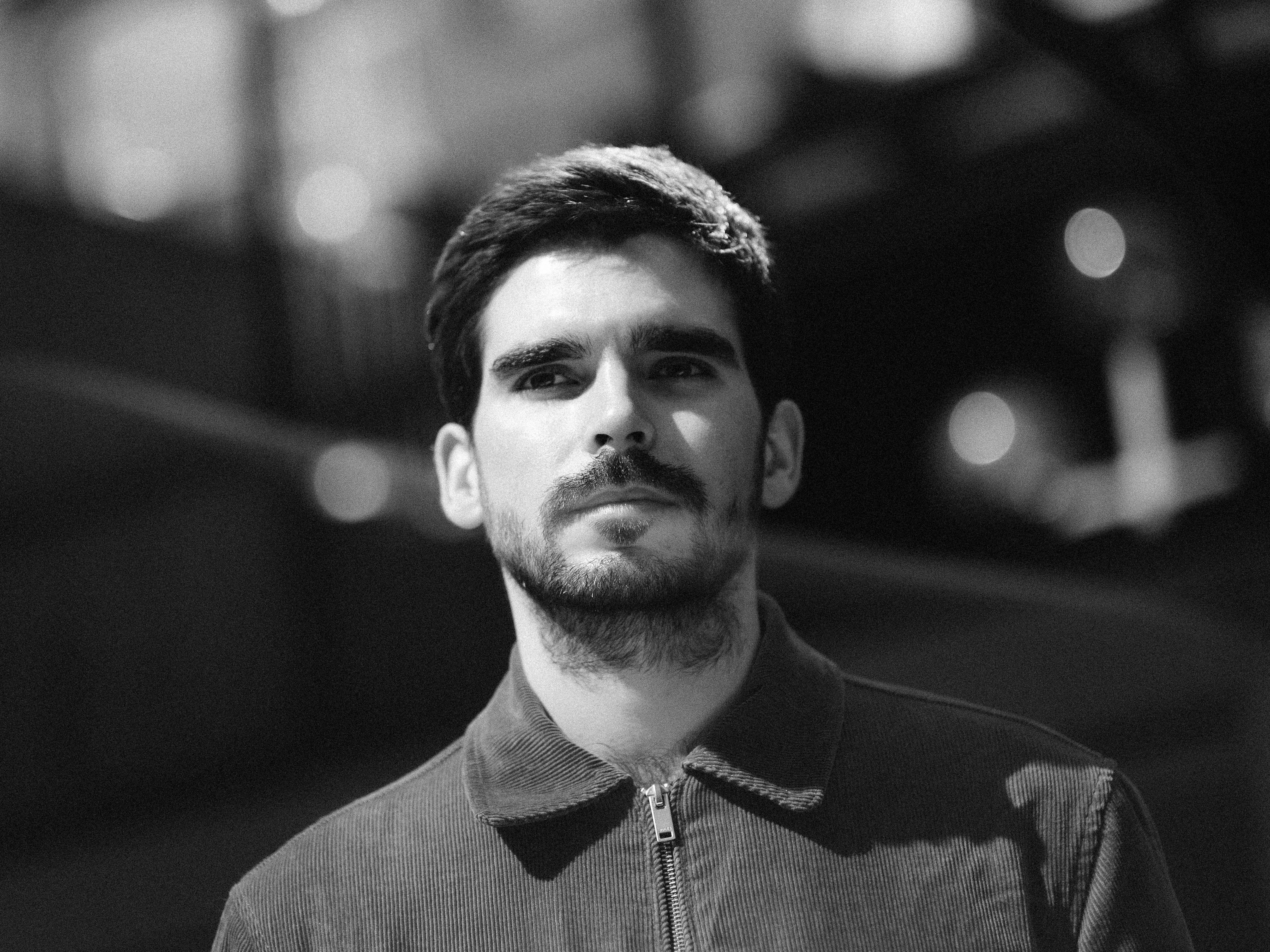
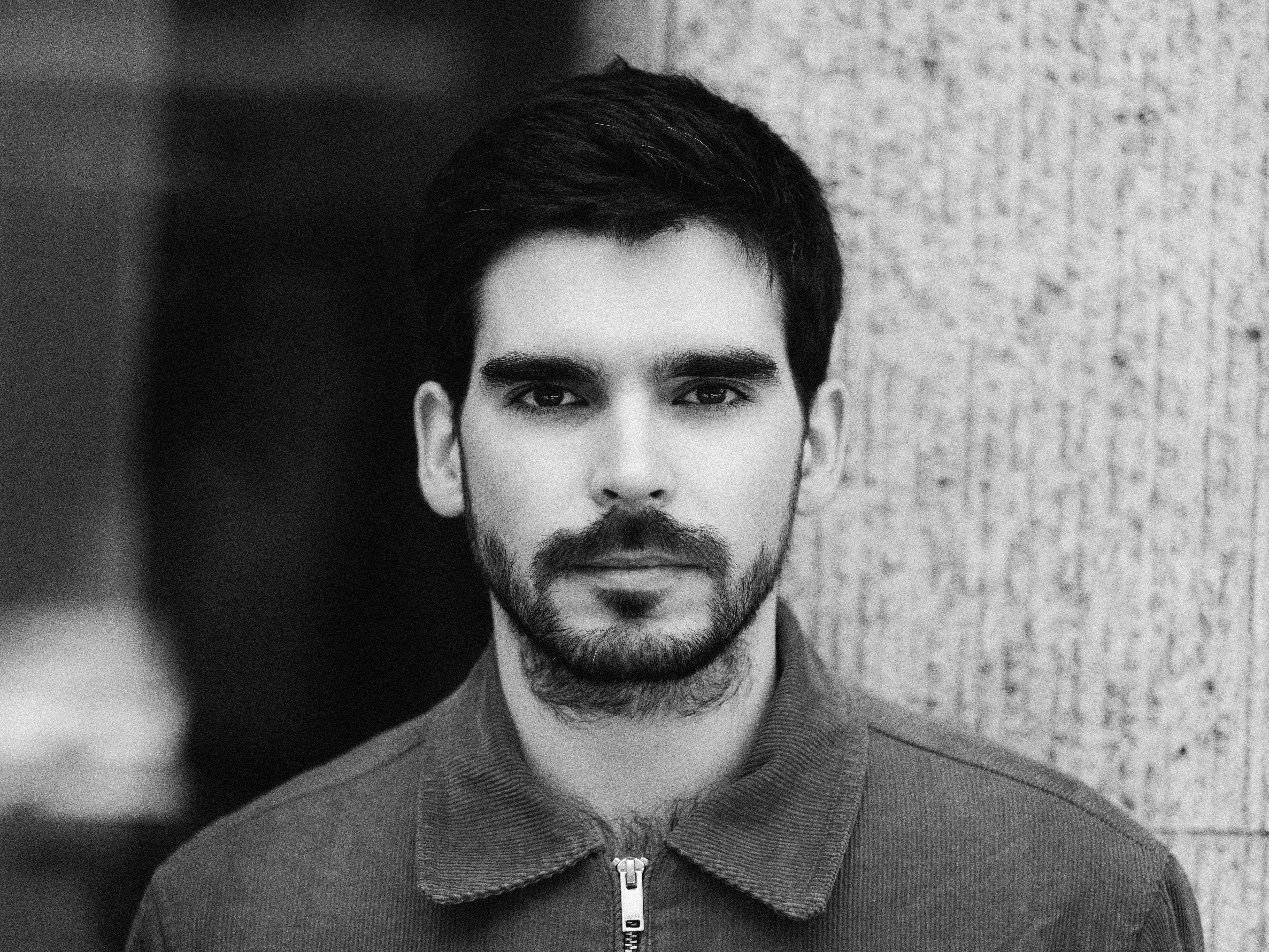
Name: Pierre d'Estienne d'Orves aka Tour-Maubourg
Nationality: Belgian
Occupation: Producer, DJ, performer, composer
Recent release: Tour-Maubourg's Floating on Silence EP + Remixes is out digitally and available for pre-order on a 2x12' via Pont Neuf. Physical copies will ship out August 30th, 2024.
If you enjoyed this Tour-Maubourg interview and would like to stay up to date with the project, visit him on Instagram, Soundcloud, and Facebook.
You started producing music in 2011. What were some of the defining influences for you from and at that time?
The main influences I could note would be the ones of my previous teenage years. Pop, rock or indie bands, like the Beatles, the Doors, the Rolling Stones, Al Green, Metronomy etc …
[Read our Anna Prior of Metronomy interview]
On the more electronic side, I was very much into Nicolas Jaar music. I loved his use of textures, samples, field recordings etc … that gave a new dimension to music for me.
There is a clear jazz influence in your music, but it manifests itself in a far more interesting way than just through the use of samples. What does the term jazz mean today, would you say, and what does it mean to you?
I would say that jazz is kind of a mood, a way of thinking and accepting harmonies of all kinds, pleasant or not, more as a current situation than a goal in itself. It is like life, it has its happy moments, sad moments, dissonant moments.
It's the law of tension and resolution. You get out of your comfort zone, and feel a tension that you have to resolve to feel better again. It’s about acceptance and adaptation.
As you're from Belgium, you're coming to the French house scene as an outsider in a way, What were your impressions of the French connection with Chicago house and how does it differ from the blueprints from Chicago? Do you have any ideas about why this connection feels so particularly natural?
When I decided to move to Paris to try and achieve a career in music, I didn't know much about house music or its history. I kinda learned on the go, and slowly built my electronic music culture through you tube digging, friends showing me stuff etc … All I knew was that I liked the aesthetics of house music, and its grooves and wanted to be part of that culture.
So, to answer that question, I didn't really notice the connections there might be between the French and Chicago music scene at the time. And I am not sure that there is a particularly strong obvious connection between the two. To me French house music (electronic music scene, speaking more generally) is more a melting pot of styles, a little NYC house music, mixed with Detroit influences and Chicago house staples make the French sound.
There is also a strong influence of pop music in the French house music scene to me, which is why I think artists such as Daft Punk managed to reach such a huge amount of people. Their songs, despite belonging to the club realm, offer some more classic composition schemes (verse/chorus etc …)
If I understood correctly, you were part of the Pont Neuf family from a very early stage. Tell me about these early years, please.
A few years after I moved to Paris, I met a now friend called Antoine, and he pushed me to seek out a record label in order to release my music.
I was too shy and insecure to just send my stuff to record labels. He sent out a demo package to Thomas, whom I then met a few months later before the release of my track “I Sent Your Flowers”, on the second various artist of the label. The label was already “complete” with its OG artists (Alva, Cosmonection, KX9000, Madcat, Taos and Heuphrasia).
[Read our Cosmonection interview]
Aside from Pont-Neuf, I met artists such as Armless kid, Pierre Moritz, Mjog, the Increase the groove records team, Groovence, Mangabey, or the Groove Boys Projects. There was a huge outburst of talented artists, and being all more or less the same age I remember thinking “maybe we are a new generation or french producers, like the third French Touch generation.”
But I couldn't be sure and i’m still unsure whether that is true or not. Only time will tell if our work lasts in the decades to come.
I was often going clubbing to concrete (mostly), but also at Rex club, or “La Mona” parties in la JAVA. It was a time when house music was everywhere, the influence of record labels such as Rush Hour, Faces or Local Talk was absolutely huge. In France, D.KO where (to me) the absolute kings of house music, releasing underground hits such as mézigue’s “du son pour les gars sûrs” or Mad Rey’s “Quartier sex”.
What were the Rex club and your residency there like? What was the impact on your career?
As I said, I used to club at Rex quite often, so it was a personal achievement to be able to play in such an iconic club. Though I can't be sure of the impact on our careers of playing there so early on.
I had a very strong imposter syndrome at the time, not knowing the culture that well, and being pushed so quickly onto one of the capital's most respected clubs felt a little surreal and I was out of place if I wanna be honest.
This said, being out of my comfort zone also pushed me to learn quickly about the history of this music and work on my DJ game.
About the transition to your second album, you wrote: "This switch is mostly due to the people I rented my studio with in the first place. I can’t thank them enough as they gave me the opportunity to meet a lot of amazing artists, discover new sounds and textures to explore and a lot of amazing synths to play with." Can you expand on this a little bit and what do you still remember about composing and recording your debut album Paradis Artificiels?
The moment I started working on my first album coincided with the moment I started renting a studio at Villette 45. A studio groupement and online radio based in the North of Paris.
Coming from an in the box production style, I suddenly gained access to all the synths I could ever dream of: 808, 909, 707, Nord keys, Prophets 8, Korg Monopoly, Eventide H3000, compressors etc … All that gear belonged (and still does) to Behzad & Amarou, a DJ/producer duo, concrete residents whom my friend Antoine also sent demos to. They offered me to come and jam there wich led to me renting the place with them, and I was all of the sudden in heaven.
[Read our feature on the Korg Monopoly]
[Read our feature on the TR-909]
The other studios were rented by people I had and still have a profound admiration for (D.KO / Chuwanaga / Aurèle or Clouclou from La Mamies and also the owner MB Mastering). Again, I was extremely insecure being surrounded by all these people I admire, and I had to compensate for my “lack of synthworld” knowledge by catching up as fast as possible.
All these people were listening to music I never heard of, and it shaped the sound I achieved on my first album.
The second album was recorded in Brussels, in a very lonely setting. I wanted to find myself again so I took advantage of my girlfriend’s erasmus in brussels to move in my grandparents house and tried to go back to my roots.
By then I had bought a lot of gear and moved it to Belgium, so it was less a gear discovery than a personal introspection.
You recently collaborated with fellow Pont Neuf artist Cosmonection. What do you appreciate about his music and how did you record the track for his debut album Hidden Places? Are you in touch with any other artists from the label?
At the time we worked together, Cosmonection and I were both renting a studio together, so we hung out a lot, which naturally led to producing stuff together.
The track we made together was just a classic Tuesday afternoon jam, hanging around in the studio, producing, chilling, drinking beers and having a good time.
As a matter of fact, at some point, almost all the label artist’s were renting that studio. Behzad & Amarou had left due to life changes; I had to find new studiomates, and I naturally asked my label friends if they wanted to start this adventure with me.
There is a lot of diversity on the Pont Neuf roster, but there is also a shared sensibility for sound. How would you describe your own sound and what, in terms of production, defines it?
It's a complicated question because I believe my sound has evolved quite a lot through the past 10 years. Due to the increased knowledge I have everyday of gear, mixing and general music theory.
But what I think would define it best is a very down to earth and organic groove with a lot of emotion and soul on top.
How and for what reasons has your music set-up evolved over the years and what are currently some of the most important pieces of gear and software for you?
It mostly evolved because, as I was trying out synths and outboard gear, I realised it was way easier for me to turn knobs instead of using my mouse and adding a ton of processing to try and sound more analog. It is just to me a lot more fun. I'm much more playing around in the studio than programming.
If I had to choose my favourite pieces of gear in the studio, it would be my tanzbar (drum machine by MFB) and my eventide H3000.
Of course this all needs to be connected to a computer so I can record and sequence what I come up with. I truly am a hybridity lover, I want to take the best of both worlds.
Tour-Maubourg Interview Image by Robin Delanoy
In the light of picking your tools, how would you describe your views on topics like originality and innovation versus perfection and timelessness in music? Are you interested in a “music of the future” or “continuing a tradition”?
I think that when innovation and originality reach considerable success, it becomes timeless. And I must say I want to aim for timeless music.
A good friend of mine said to me something that resonates with me everyday : “We make art to mark history”. It may sound a little pretentious, but I don't see the point of making music and sharing it with the world if doesn't leave a mark.
I’m not saying that I manage to do it, but that is the goal I always keep in mind.
Your recent Panorama Sessions EP is a collaboration with Ismael Ndir. Tell me about the importance of trust between the participants, personal relationships between musicians and engineers and the freedom to perform and try things – rather than gear, technique or “chops” - for creating a great performance.
I met Ismaël a few years back, immediately clicked with him on a human level, and we worked on a few songs together. When I released my second album, I had to play some tracks live for radio shows etc. so I offered him to come and play with me the tracks we recorded together.
From there we decided to play a full live show together. This led to a complete rearrangement of the songs, for them to make sense with a saxophone on eac, but also to fit better a live configuration.
Once again, through meeting with Ismael, who is a confirmed musician, I had to learn what it is to play a live show, to interact with the crowd, and mostly to accept imperfections, which I was really not used to. Once again, I had to leave my comfort zone, and once again it changed my life in a way.
What tend to be the best collaborations in your opinion – those with artists you have a lot in common with or those where you have more differences? What happens when another musician take you outside of your comfort zone?
The best collaborations come from artists who manage to be completely honest with each other. It requires the common agreement that the music is the goal, and the ego needs to be put aside.
If both artists understand that, then the music will be honest, and able to touch people.
When you're improvising, does it actually feel like you're inventing something on the spot – or are you inventively re-arranging patterns from preparations, practise or previous performances? What balance is there between forgetting and remembering in your work?
It depends. Sometimes, I get inspired and in the right mood which allows me to turn around themes I already know and enhance them with something new.
Sometimes I struggle to completely forget myself and there are patterns, solos I learned in order to be able to give the audience a good show every time.
In a way, improvisations remind us of the transitory nature of life. When an improvisation ends, is it really gone, just like a cup of coffee? Or does it live on in some form?
Unless you record it, it is gone forever. And that is its beauty. It requires you to be present in the moment, fully listening to others, not think of what has happened before or will after, and accept it as it is.
The good thing about it is that mistakes, just as an amazing improvisation, disappear as soon as it happens. Unless you record it.