Published
Name: Ultramarine
Members: Ian Cooper, Paul Hammond
Interviewee: Paul Hammond
Nationality: British
Recent release: Ultramarinewill play a one-off London show at Water Rats July 27th 2024. Get tickets here. Their latest full-length album Send and Return is still available via Blackford Hill. Their classic Every Man and Woman is a Star can be purchased via Rough Trade.
If you enjoyed this Ultramarine interview and would like to stay up to date with the band, visit the duo's official homepage. Their label Blackford Hills is on Instagram, Facebook, and twitter.
When I listen to music, I see shapes, objects, and colors. What happens in your body when you're listening? Do you listen with your eyes open or closed?
I listen to the shapes in the music and the relationship between the various instruments and sounds, so it’s definitely a visual or spatial thing.
I often listen to music early in the morning before I’ve properly woken up, so my eyes are closed, listening on my phone with earbuds in. I like listening to radio shows or mixes like that, drifting in and out of sleep with the music.
My favorite for this type of listening is Jack Rollo’s Friday morning show on NTS. I’ll listen to it once it’s archived, at 5 a.m. on a Saturday or Sunday morning.
How do listening with headphones and listening through a stereo system change your experience of sound and music?
When making music, I prefer to hear it through speakers because I like to experience it within the room and hear it traveling through the air to me.
Headphones are quite tiring when working on music and feel like an unnatural way of experiencing it. I’m not really interested in creating music with headphones in mind either. It feels gimmicky and too academic to me.
Tell me about some of the albums or artists that you love specifically for their sound, please.
Robert Wyatt’s album ‘Dondestan’ has a minimal palette of organ, cheap-sounding synth, piano, snare drum, cymbals, and voice. Tonally, the keyboards work beautifully with Robert’s reedy voice and evoke a strong sense of a flat, featureless coastal landscape. The record definitely has a unique, self-contained sound.
I’ve always loved albums with their own distinctive sound world. A few other examples might be ‘Sextet’ by A Certain Ratio, ‘Odyshape’ by The Raincoats, ‘Songs to Remember’ by Scritti Politti, ‘Swoon’ by Prefab Sprout, ‘Another Green World’ by Brian Eno, and ‘Whatevershebringswesing’ by Kevin Ayers.
[Read our A Certain Ratio interview]
[Read our Brian Eno feature about climate change]
Do you experience strong emotional responses towards certain sounds? If so, what kind of sounds are these, and do you have an explanation for these responses?
I’m a sucker for certain instruments or playing styles, maybe more than responding to particular sounds. Finger-picking acoustic guitar and clarinet always get me emotionally. And a cappella folk singing, like the Watersons or Anne Briggs.
Check out the Watersons' film ‘Travelling for a Living’; it sends shivers down my spine.
There can be sounds that feel highly irritating to us, and then there are others we could gladly listen to for hours. Do you have examples for either one or both of these?
I can’t really stomach much rock guitar, although I realize that’s a sweeping generalization, and I don’t hate it all. But screeching blues-based rock guitar generally turns me off.
As mentioned above, I could listen to finger-picking acoustic guitar all day.
Are there everyday places, spaces, or devices that intrigue you by the way they sound? Which are these?
I do like the general acoustic ambiance of a large railway station.
Have you ever been in spaces with extreme sonic characteristics, such as anechoic chambers or caves? What was the experience like?
I visited a couple of caves in France last year but wasn’t particularly aware of their sonic characteristics, to be honest.
One place I have visited a couple of times recently, and only experienced in silence, is the main chapel at Le Corbusier’s La Tourette monastery just outside Lyon. It is an incredible space; a vast, brutalist, minimal interior that took my breath away on first seeing it. 
La Tourette monastery Image by Esther Westerveld
I’d love to hear some suitable music in that space—something minimal, slow, and austere.
What are your favorite spaces to record and play your music?
I’ve got a garden studio where I work on music. It’s not a recording studio, but I work on small projects with minimal gear setups. It’s a wooden building, slightly elevated off the ground, surrounded by greenery. It’s incredibly peaceful and a lovely place to concentrate on making or listening to music.
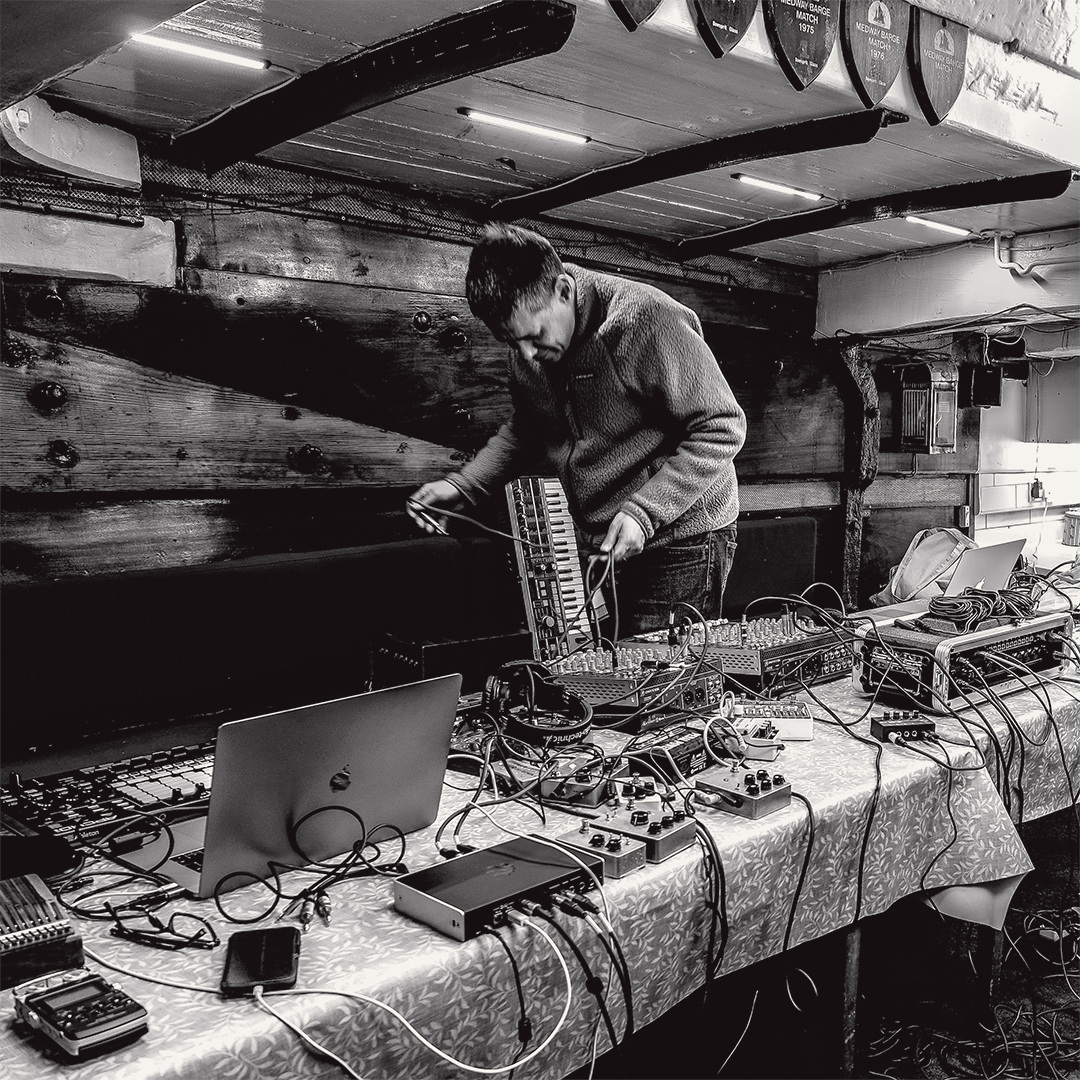
By contrast, we produce most of our Ultramarine music in a pretty grim, windowless, and slightly smelly rehearsal room on an industrial estate in Essex. Strangely, we find it very conducive to work; it’s not an inspirational space, but the lack of outside stimuli keeps us focused.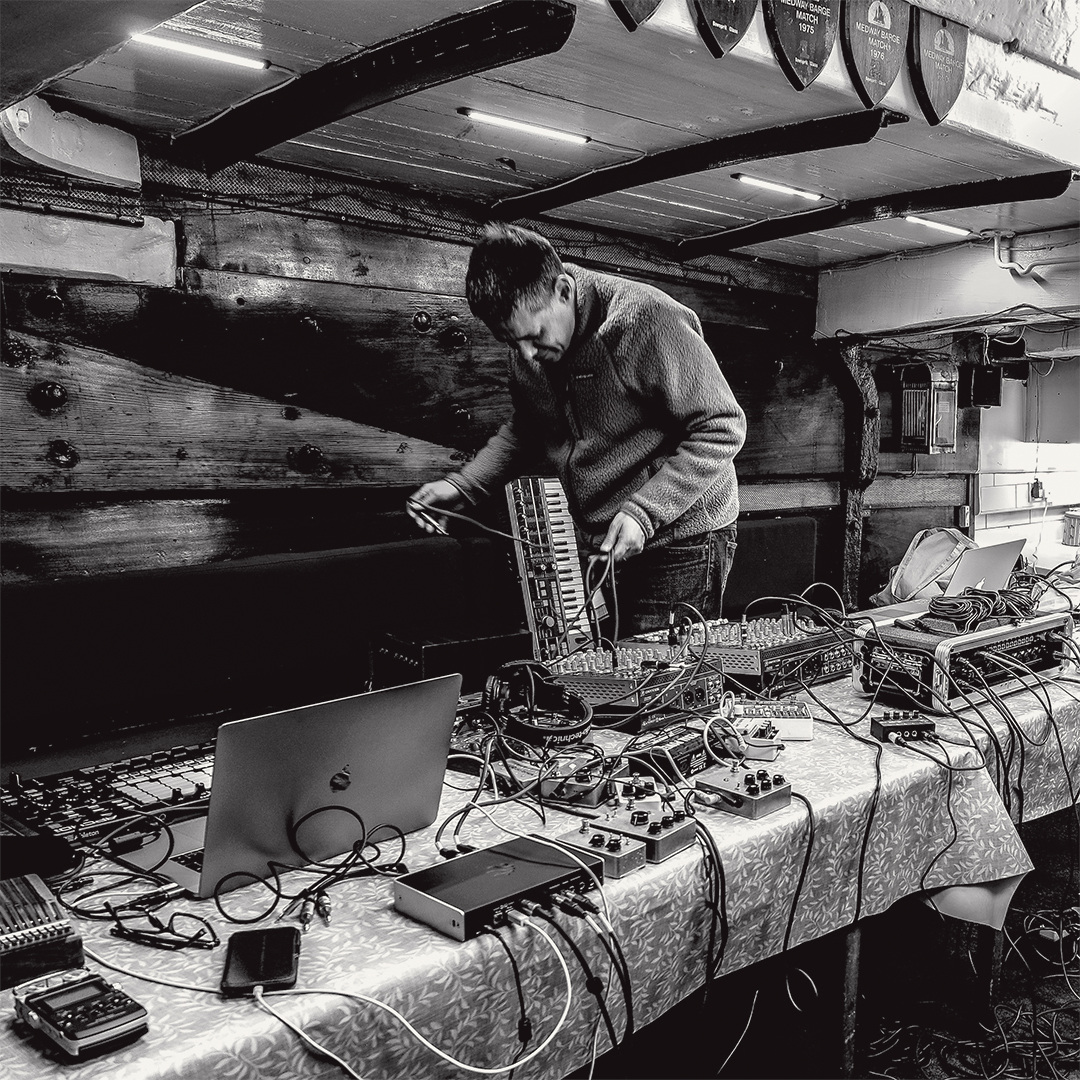
Do music and sound feel “material” to you? Does working with sound feel like you're sculpting or shaping something?
Definitely. With Ultramarine, that’s absolutely how we think about it when creating new material.
When Ian and I are discussing the music, the shape of individual sounds is often how we refer to them.
How important is sound for our overall well-being, and to what extent do you feel the "acoustic health" of a society or environment reflects its overall health?
I think it’s very important. I live in a city and enjoy its general ambiance—more so than the deadly quiet of the countryside, which I think could drive me mad.
However, constant aggressive or intrusive noise is tiring, and we definitely all need access to some sort of silence.
Sound, song, and rhythm are all around us, from animal noises to the waves of the ocean. What are some of the most moving experiences you've had with these non-human-made sounds?
It’s an obvious answer, but the sound and rhythm of the waves or a running stream or river are enough for me. The most beautiful, meditative, and relaxing sounds I can think of.
Many animals communicate through sound. Based on either experience or intuition, do you feel interspecies communication is possible and important? Is there a creative element to it, would you say?
I’m not sure I have much to offer on this question! I’ve been a dog owner in the past, so I understand and enjoy communication with animals, which can obviously be quite deep with a dog in particular.
But I can’t say it was ever elevated to a creative level with me and my particular canine.
Tinnitus and developing hyperacusis are very real risks for anyone working with sound. Do you take precautions in this regard, and if you're suffering from these or similar issues, how do you cope with them?
I suffer from tinnitus and am aware that my ability to listen to music accurately is pretty poor nowadays. It comes and goes—it’s usually related to stress or tiredness—but sometimes it’s quite obstructive if I’m trying to listen closely.
I don’t consciously take any precautions, but I’m rarely exposed to loud music these days. It saddens me somewhat that I can’t really listen to certain types of music in a detailed way anymore, and it’s lessened my interest in some music as a result.
We can surround ourselves with sound every second of the day. The great pianist Glenn Gould even considered this the ultimate delight. How do you see that yourself, and what importance does silence hold?
I don’t like having music on constantly. I find it too distracting and much prefer spoken word radio or silence most of the time.
Having said that, I’ve always loved ambient music and would default to listening to someone like Harold Budd when working in the mornings.