Published
Part 1
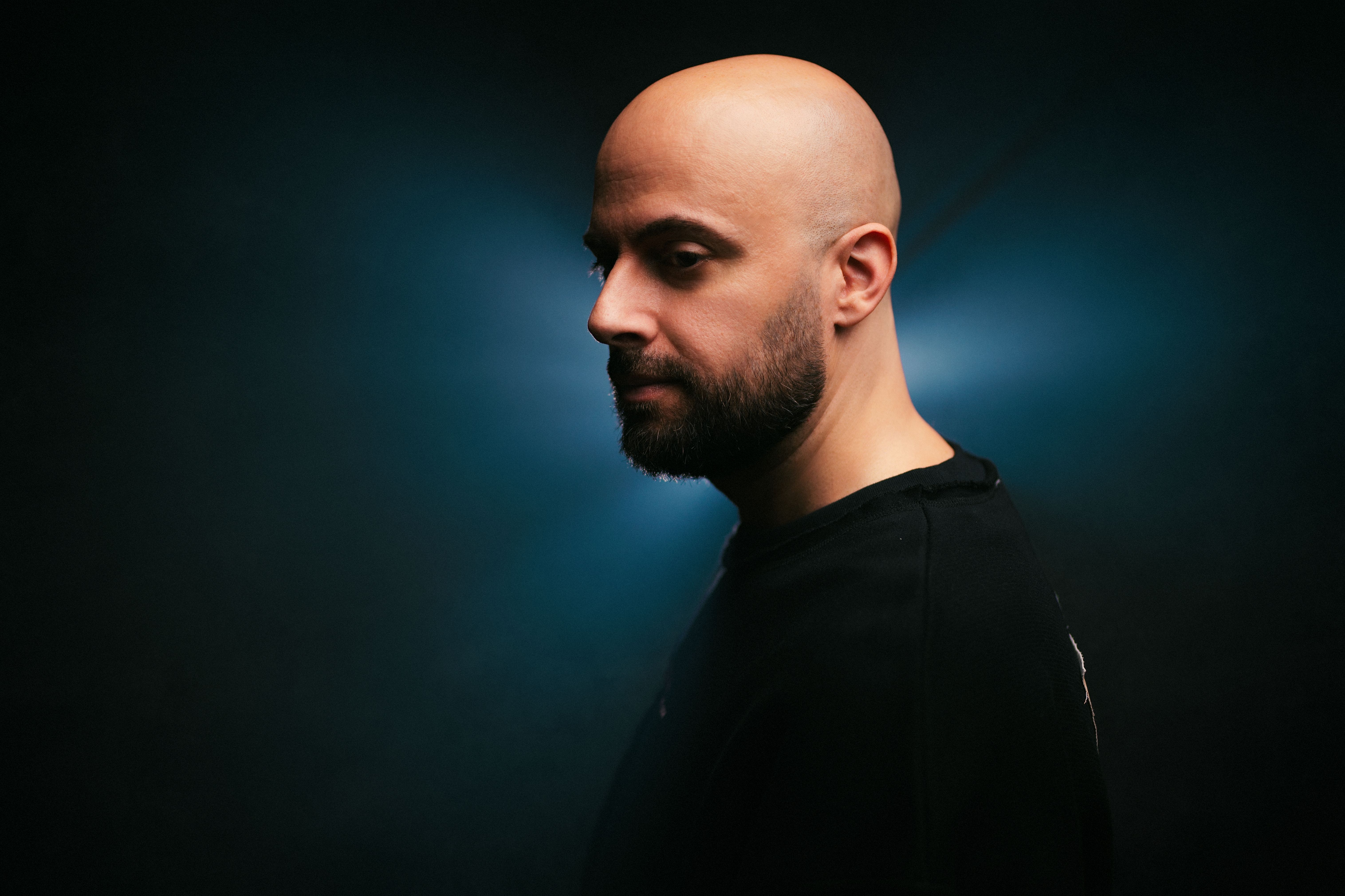
Name: Manuel Garcia aka Uner
Nationality: Spanish
Occupation: Producer, composer
Current release: Uner's CONTICINIUM LP is out via Veil Theory.
Recommendation for Lleida, Spain: There’s a viewpoint in Lleida called La Seu Vella. Go there at sunset. It’s quiet, ancient, and full of echoes. If you listen closely you’ll hear more than history.
But also, don’t miss the nearby Castell de Gardeny. This 12th-century fortress was once a key center for the Knights Templar and the stories surrounding it are powerful. There’s a sense of mystery and energy in the place, with legends tied to the Templars’ legacy and the ancient rituals that took place in the area.
If you're into mysteries, the nearby Tower of Exorcisms at La Seu Vella is another must-see where rituals were performed to ward off dark forces.
And, if you’re a fan of rice, you should definitely stop by “L’Arrosseria x No Rules”. It’s an amazing spot for rice dishes and a perfect place to refuel :)
You are more than welcome to visit and I’ll be your guide :D
If you enjoyed this Uner interview and would like to know more about his music and upcoming live dates, visit him on Instagram, Facebook, Soundcloud, and tiktok.
Are there examples of minimalism in music – and outside of music - that impressed you early on?
Absolutely. Minimalism has always resonated with me as a mindset.
Some of the earliest moments that left a mark were in music where space was treated as sacred. I remember discovering pieces like Arvo Pärt’s “Spiegel im Spiegel”, and feeling how the silence between notes could speak.
That sense of breath and letting the music exist in time stayed with me.
In classical music, composers like Satie had this ability to say so much with so little “Gymnopédies”, for example, are incredibly simple on paper, but emotionally infinite.
Steve Reich’s “Music for 18 Musicians” also opened my ears to the beauty of repetition and slow evolution. That is something I’ve carried into my own process.
Are some of those influences traceable to CONTICINIUM?
In CONTICINIUM, I wouldn’t say I made a “minimal” record in genre terms but I absolutely approached it from that philosophy. I wanted to create something that breathes and I deliberately limited myself to just a few instruments and field recordings to go deeper and to really listen to each sound and allow it space to live and interact.
The breathing and those moments of restraint are essentials to me. They reflect the influence of minimalism and a personal need to slow down and reconnect with “clubbing” sound on a more emotional level. I would say that minimalism taught me how to listen.
Were you ever interested in minimalism as a style – from the Philip-Glass-variety to solo instrumental work to minimal techno? If so, tell me a bit about your interest in this.
I think I was drawn to it long before I even knew it was minimalism. It wasn’t a conscious decision at first because didn’t sit down and say “oh!, I’m into minimalism now.” But looking back, I realize that many of the things that moved me most deeply had that stripped-back essential quality.
When I was younger it might have been a long pad holding a single note, or the hypnotic pulse of early minimal techno, where just a kick and a hi-hat could build tension for minutes. I remember being mesmerized by how something so seemingly simple could create such a powerful emotional or physical response. That was the gateway.
I discovered composers like Philip Glass, and Arvo Pärt, and it hit me even harder. There was a sense of discipline in how they used repetition, silence, and space making felt honest, patient, and somehow timeless. I didn’t fully understand it back then but it stayed with me.
So I can say that I became interested in minimalism as a style only after realizing I had already been in love with its spirit for a long time.
Do you tend to find that, as many claim, “less is more?” Are the notes you don't play really as important as the ones you do play?
Absolutely. I think the real magic often lies in restraint and knowing when not to play. “Less is more” has become a bit of a cliché but when you truly experience it, it’s transformative. Silence, space, and simplicity allow emotion to breathe. They let the listener come with their own interpretations.
One of the tracks, for example, on CONTICINIUM that reflects this approach is “Renaste.”
It’s built around a few essential elements: a fragile bass with an “empty” melody, soft textures and arpeggio with effect, and lots of space and repetition.
I remember working on it and realizing that every time I tried to add something, it lost some of its emotional weight. The piece didn’t need more, it needed air and room for the listener to feel.
In that sense, the notes I didn’t play became just as important as the ones I did. It’s a very humbling process as a composer because you have to quiet your ego and trust the music and the process.
Do you feel as that making music is a process of adding elements until it is done – or one where you chisel away pieces from something that is already there?
For me, it’s definitely more about chipping away, like sculpting. I often start with a large, “messy“ block of ideas, sounds, and layers. But as soon I start with the arrangement the pieces take shape, I realize that most of those elements are just “noise”. The real work is in the subtraction, in peeling away everything that doesn’t serve the emotional core.
A perfect example of that is the track “Time Masses”. It’s built almost entirely around a single evolving arpeggio and pads. There’s no big drop, no overcomplication, just subtle movement and texture.
The track started with a lot more elements, but the more I stripped away, the more it breathed. It felt like I was discovering the hidden piece within the sound, rather than building it.
Sometimes I think the music is already there but we just need to listen closely enough to uncover it instead of “messing” around random ideas.
Many artists are becoming more minimalist in their music as the years go on, focusing on the “essence.” How is that for yourself and how would you describe your development in this regard?
I’ve come to understand minimalism not just as a stylistic choice or a physical limitation like “let’s use only four stems” but more as a mindset, almost like a kind of philosophy or religion. It’s about intention and about learning to say more with less and trusting silence as much as sound.
Over the years, I’ve become more interested in what remains when you remove everything unnecessary (sonically, emotionally), even in life. I would say CONTICINIUM is a reflection of that. It wasn’t about using fewer instruments just for the sake of minimalism but about being brutally honest with myself: does this sound serve the story? If not, it goes.
I think I had lost that sense just before stepping away from clubbing in 2019, but the time spent “recovering” my personal relationship with UNER from that nonsense was perfect for me to reconnect with that feeling of freedom through silence and solitude.
And in that process, I’ve realized that minimalism isn’t just reducing but it’s refining. It’s a deep search for essence and presence. Not emptiness.
What were some of the starting points for CONTICINIUM?
CONTICINIUM began as a very personal journey. It wasn’t initially supposed to be an album.
For years, my UNER identity was dormant and “pushed” aside as I focused on NIN3S, which was always present, like a parallel force pushing me forward. NIN3S gave me the space to explore new sounds and ideas, but UNER remained quiet, almost like a part of me I wasn’t sure how to reconnect with.
But then “CHRYSALIS“ came. That track was an emotional exercise in bringing UNER back.
It was my way of acknowledging that side of me and the understanding that the evolution I was experiencing didn’t have to erase the past and I was able to integrate it. And that moment, that return to UNER, was a huge turning point.
From there, everything for the album flowed naturally. The tracks began to take shape without any pressure to force anything and it was like stepping into a new chapter where both NIN3S and UNER could coexist. The album is about rediscovery, about emotional reconciliation, and the understanding that creative identities evolve in cycles. NIN3S had been there during that dormant period, but CONTICINIUM became a true “meeting point” between those two forces.
As I said in other conversations, it is a story of forgiveness and growth not only in sound but also in the way I perceive myself as an artist and, the most important, as a person.
How did a minimalist mindset possibly inform the creative process for CONTICINIUM?
For me, this kind of mindset is about understanding the space between the elements, the moments of silence, the time you allow for the music to breathe, etc.
My minimalist mindset isn’t just about reducing sound but it’s about how I move within that sound. There’s a kind of emotional minimalism where everything has its place, and it’s only through restraint that you can truly highlight what matters.
Take the track “FLAMES,” for example. It’s not a track built with minimal instruments or textures but it’s a perfect example of this idea.
The concept behind this track is almost like a breathing exercise, a struggle to find the right moment to breathe when everything around you is chaos, fire, smoke, the heat. It’s about finding that precise moment where you can catch your breath.
In the music, you can feel this tension: the sound builds, recedes, then builds again, mimicking the process of finding that one perfect moment where you can exhale.
This track was a reminder to not rush, even when you have those “Flames” inside of you. The music breathes in and out instead of looking for progress, finding space even within intensity. That was the minimalist approach I have been trying to embrace understanding the rhythm of the silence, of what’s not played and how it all ties back to the emotional core of the song. By building moments of full tension and then releasing them, you can find something incredibly powerful.
So, in the end, it’s not just about minimalism as an aesthetic but as a deeper way of thinking about how music, space, and emotion interact.
Do you like to set yourself limitations? If so, which were some of those limitations for the new pieces?
Yes, absolutely. I’ve come to embrace limitations as a way to create more meaning. I’ve learned a lot about working within constraints, especially through the creation of NIN3S. I am not forcing myself to do less but I try to understand how limitations can spark something deeper, more focused, and often more surprising.
For CONTICINIUM the limitation wasn’t about using fewer instruments or elements though I did keep things relatively sparse. The real challenge was to keep the emotional depth of the tracks, but without overwhelming the listener. That was my main limitation: not overcrowding the sound with layers, and giving each part room to breathe and be there. I wanted each moment to feel essential, and that’s where the true power of minimalism comes, in my opinion.
One of the biggest learnings from NIN3S was understanding that limitations can actually be liberating. The moment you set boundaries, whether that’s in terms of sound design or a conceptual direction, the creative process becomes more focused. In fact, limitations force you to dig deeper into your emotions and instincts (sometimes it is scary). They push you to create something more intentional, rather than just relying on endless possibilities and loops.
There’s a sense of freedom in choosing to restrict yourself, and for me, that’s where the magic happens. You can really rely on what matters. That “less is more” that we have talking about before it’s less noise, more space, and ultimately, more truth in the sound.