Published
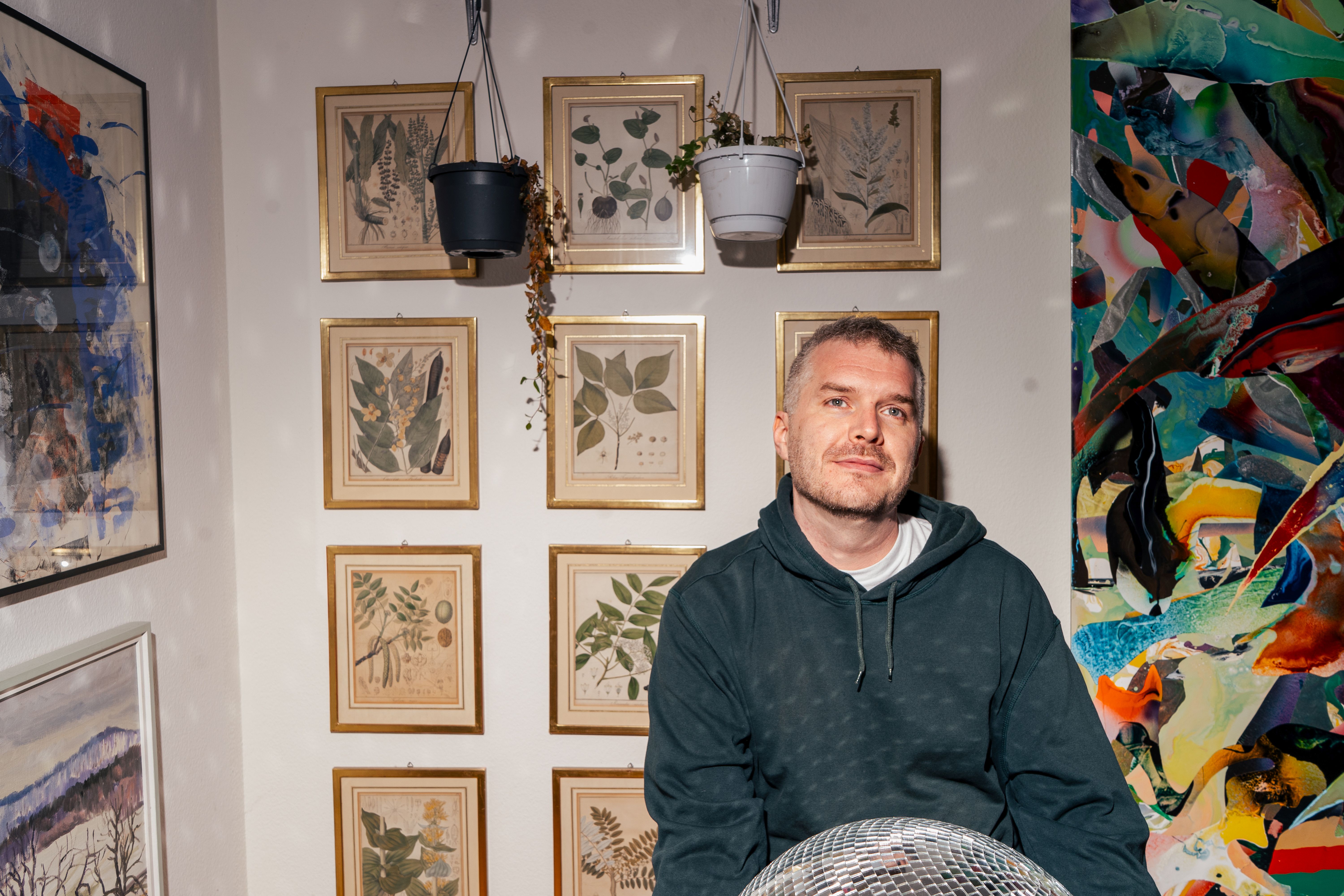
Name: Roland Vollenweider aka us & sparkles
Nationality: Swiss
Occupation: Producer, composer, sound artist
Recent release: us & sparkles's new album Sir Kaboom and Trippy Tweet, featuring a long list of collaborators, is out via damn rich.
Recommendation for Zurich, Switzerland: Eat dinner at Kronenhalle.
If you enjoyed this us & sparkles interview and would like to stay up to date with his music, visit him on Instagram, Facebook, and Soundcloud.
For a deeper dive, read our earlier us & sparkles interview.
When it comes to experiencing strong emotions as as a listener, which albums, performances, and artists come to mind?
I’d say Nirvana, Bob Marley, Bob Dylan, Oasis, The Stone Roses, or Björk.
Each of them created an emotional state that stayed with me.
There can be many different kinds of emotions in art – soft, harsh, healing, aggressive, uplifting and many more. Which do you tend to feel drawn to most?
I think it began with a fascination for melancholy and introspection.
Over time, that shifted towards something more open and uplifting—almost a sense of healing.
I have had a hard time explaining that listening to death metal calms me down. When you listen to a song or composition, does it tend to fill you with the same emotions – or are there “paradoxical” effects?
I relate to that. Music works in paradoxical ways. Something that appears aggressive or chaotic on the surface can create a sense of calm or clarity internally.
In a way, I think we all exist within that tension.
In as far as it plays a role for the music you like listening to or making, what role do words and the voice of a vocalist play for the transmission of emotions?
The voice is probably the most direct emotional channel in music. Even before understanding the words, you respond to tone, phrasing, and texture.
Lyrics can add another layer, but they’re not always necessary for something to resonate.
When it comes to experiencing emotions as as a creator, how would you describe the physical sensation of experiencing them? [Where do you feel them, do you have a visual sensation/representation, is there a sense of release or a build-up of tension etc …]
It’s controlled immersion. You step into a certain state and stay there long enough to work with it.
It’s not necessarily overwhelming—it’s more about focus and timing.
When it comes to composing / songwriting, are you finding that spontaneity and just a few takes tend to capture emotions best? Or does honing a piece bring you closer to that goal?
Both, but they serve different purposes.
The initial moment often carries the energy, but without refinement it can remain vague. The challenge is to develop something without losing its original tension.
How much of the emotions of your own music, would you say, are already part of the composition, how much is the result of the recording process?
The core is in the composition, but the recording process can completely shift its weight.
Sound design, space, dynamics – they’re not secondary. They define how the emotional content is perceived.
For Sir Kaboom and Trippy Tweet, what kind of emotions were you looking to get across?
It’s not really about expressing a fixed emotion. The record is more like a situation or a state you can enter. There’s a certain looseness to it—something slightly psychedelic, maybe even playful at times.
It’s less about telling you what to feel and more about opening a space.
How do you capture the emotions you want to get across in the studio?
By not chasing it. Setting up a framework and then allowing things to happen within it.
It’s more about attention than intention.
What role do factors like volume, effects like distortion, amplification, and production in general for in terms of creating the emotions, energies or impressions you want?
They’re structural. Volume especially—it’s physical, not just technical. It changes how the body reacts.
Distortion, space, dynamics—they all shape how the music is felt, not just heard.
In terms of emotions, what changes when you're performing live on stage, with an audience present, compared to the recording stage?
In the studio you can refine endlessly. Live, things either work or they don’t.
How does the presence of the audience and your interaction with it change the emotional impact of the music and how would you describe the creative interaction with listeners during a gig?
It becomes a shared system.
Even if the interaction is subtle, it feeds back into the performance. The energy shifts, and you respond to it, whether consciously or not.
Would you say that you prefer to stay in control to be able to shape the emotions or do you surrender to them and allow the music to take over? Who, ultimately has control during a live performance?
You need enough control to maintain direction, but too much control kills the moment.
The emotions that music is able to generate can be extremely powerful. How, do you think, can artists make use of this power to bring about change in the world?
Not necessarily through direct statements.
More by shifting perception –creating spaces where things feel slightly different. That can already be enough.