Published
Part 1
Name: Vega Trails
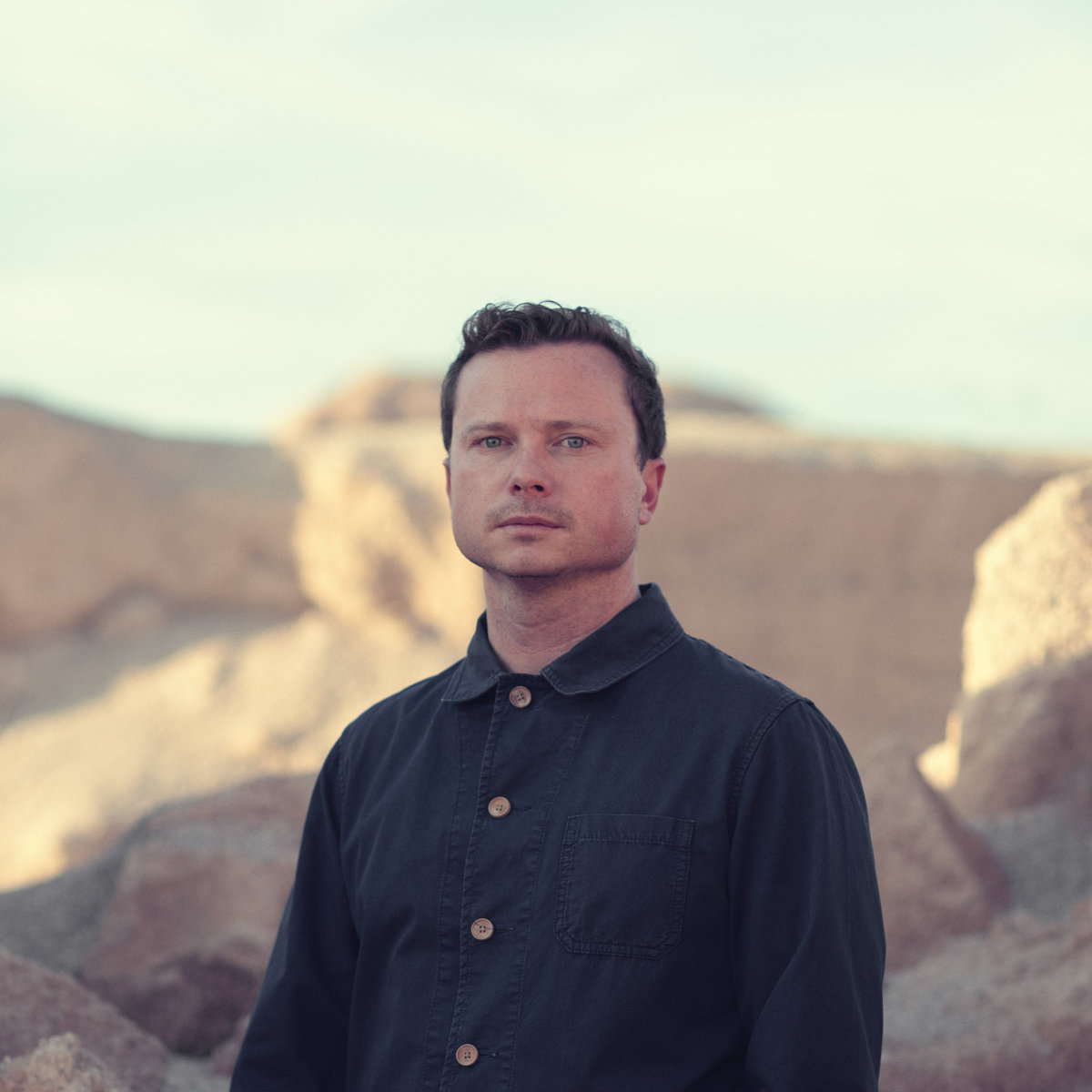
Members: Milo Fitzpatrick (composer, double-bass), Jordan Smart (saxophone)
Interviewee: Milo Fitzpatrick
Nationality: British
Current release: Vega Trails' new album Sierra Tracks is out March 28th 2025 via Gondwana.
Recommendation for Milo's current hometown of Madrid: I live just outside Madrid in a small town. And there are plenty of fun things to do in the capitol, but I’m pretty happy walking in the mountains – Sierra de Guadarrama.
If you’re ever in Madrid, take a day trip out to the country (aprox 1hr north by bus/train) and take a walk through the pine forests, breathe in the fragrant forests and take in the views, go for a cold beer and tapas in any of the local towns (food and prices are very good) and absorb the friendly Spanish people’s vibes.
Milo is also a members of Portico Quartet, Jordan of Mammal Hands, Sunda Arc. For a deeper dive, read our Portico Quartet interview and Portico Quartet concert review from the XJazz! Festival, as well as our Sunda Arc interview.
If you enjoyed this Vega Trails interview and would like to know more about the duo and their music, visit their official homepage. They are also on Instagram, and Facebook.
Are there examples of minimalism in music – and outside of music - that impressed you early on?
I think I was probably exposed to varying forms, or inspirations of minimalist music as a kid.
But the one record I can remember being played, which had some minimalistic influence, was the Penguin Café Orchestra. I think there was something in its simple structure and repetition that as a kid I found accessible.
That’s not say their music is lesser for that reason, on the contrary I think any good music has a universal appeal that can stride time, ages and cultures.
Were you ever interested in minimalism as a style – from the Philip-Glass-variety to solo instrumental work to minimal techno? If so, tell me a bit about your interest in this.
The first time I think I really acknowledged and appreciated Minimalism music was back when I was a student (2004 - 2007). I was coming back to a friend’s halls of residence from a London rave and he played me ‘Music for 18 Musicians’. I was truly mesmerised at how much of an effect that piece had on me.
It was the hypnotic disorientating effect of repetition and the long duration that allowed me to go in deeper, closer, higher etc, to this state of letting go and connecting all at the same time.
Now with more experience I understand this process in many other genres which I’m drawn to, probably for the same reason, such as in Techno, Qawwali, Drone, Gamelan, other types of religious music and some Jazz, to name a few.
Do you tend to find that, as many claim, “less is more?” Are the notes you don't play really as important as the ones you do play?
Yes I think they definitely are.
I think space is so important in music. The way the sound decays, or silence eats away at the energy of sound, is as important as how the sound is produced. It defines a sound’s shape and character.
I often see a link between Miles’ quote and the work of John Cage, and his explorations into how silence shapes sound and how sound shapes silence. I’m finding myself thinking about this more and more these days.
For example, the first Vega Trails record was made with just sax, double bass and a church. So I had to be super mindful and economic with choosing, as Miles said, the right notes to play, and the ones to not play.
Each part had to sound like a balanced solo part and at the same time compliment the other part so both would coalesce and resonate in the room in the best possible way. This was sometimes challenging as neither instrument is really capable of harmony.
But I think ultimately these limitations shaped the record’s identity and direction and taught me how to write more precisely and economically, always forcing me to find the energy of the piece in the most direct way.
Do you feel as that making music is a process of adding elements until it is done – or one where you chisel away pieces from something that is already there?
Both of these processes work and one should experiment by adding and subtracting.
Essentially by virtue of either you are trying to find the essence of the music, the thing that makes it tick (often I refer to this as ‘the meat and potatoes’) it’s those elements which give a piece it’s shape and character so that it creates enough of an energy to the point it moves you. It’s hard to find sometimes.
You can add and it is enhanced, and sometimes not, and vice versa.
Many artists are becoming more minimalist in their music as the years go on, focusing on the “essence.” How is that for yourself and how would you describe your development in this regard?
I think it's interesting that you say music is becoming more minimalist. Perhaps its because now almost anyone with a laptop is a music producer and the level of music being created is kinda ridiculous, artists have had to become much more selective about how to define themselves and carve out their own space and identity.
It’s interesting, but I guess this is one of the ways art keeps moving; trying to break free from mediocracy and search for a deeper meaning.
With regards to my own writing, like I said earlier, in one regard I was inadvertently forced into a more minimal way of writing, but perhaps I was also reacting to a lot of music at the time.
I think I was just looking for a way to bring the sound of the individual forward again. I wanted to hear more of the delicate textures going on, the human breath, the keys clicking and the fingers sliding; I wanted to bring that human intimacy forward.
What were some of the starting points for your most recent release Sierra Tracks?
The starting points were actually quite similar to how the first record began. Just playing some bass lines and singing melodies on top. Going for walks and humming and imagining tunes in my head.
But this time I wanted to go from minimal to maximal. I thought, I’ve explored the duet relationship, I’ve done that, now I want a new challenge, so I asked myself, how big can this go? I still wanted to maintain a clarity and focus on melody, let the themes be the characters which the listener can follow. But this time I wanted these characters go to new wide-open spaces - probably inspired the mountains I am living amongst now.
And so, with that in mind I wanted to have moments where the sound goes from chamber duet to massive orchestral textures.
How did a minimalist mindset possibly inform the creative process?
Well sometimes I don’t play or really listen to music for weeks.
It’s not intentional. But through this process I kind of wipe the canvas clean and I feel like I’m starting all over again, from a really basic point. And then when I do sit down at the piano, or pick up my bass, I just play one or two notes over and over, and can get so into that, to the point I feel there is quite a lot of emotion coming out and things I want to say with just those two notes.
So, it’s not a case of saying I’m gonna be minimalist, but more of a way to find that basic and super crucial love and connection with sound again.
Do you like to set yourself limitations? If so, which were some of those limitations for the new pieces?
I think limitations can be good. They can bring a shape and character to a piece of work by forcing you think in new ways. But I don’t think it should be adhered to in super strict manner if it hinders an exploratory process, one should always be open to changing tack.
On the first record there were definitely limitations (with just bass and sax), but like I said, this second record expands the pallet of sound quite considerably. However I still knew I wanted the timbre to be rooted in acoustic instrumentation, so I always had to consider that.