Published
The XJAZZ! Festival 2024 will take place in Berlin between May 6th 2024 and May 12th 2024. We will cover the event through interviews with select participants as well as reports on the performances (which you can find right here, further below, as we update this page throughout the festival).
For tickets and more information, visit the XJAZZ! Festival site.
What does the term jazz still mean today? XJAZZ! has been an attempt at moving that question away from history books and towards the one place where it can rightfully be found: The stage. As the festival's tenth anniversary celebration is now underway, it has become an institution itself. How will this affect its capacity to keep reshaping audience expectations and experiences of improvised music?
~
One thing's for sure: Even including the word in a festival name can be a risky endeavour. When journalist Victoriah Szirmai reported on the very first instalment of the festival for online magazine Fair Audio, an audience member at the Emiliana Torrini gig confided in her that she genuinely hoped that the performance of the otherwise more folk- and electronica-oriented icelandic singer-songwriter would not “become too jazzy.” Torrini, meanwhile, was already a bold choice, precisely because performing within the jazz idiom was a challenge for her as well – one which she, however, mastered without a hitch.
As it turned out, the question of terminology is more of a journalistic dilemma than a creative one. For the curation and organisation team, comprised of Natalie Greffel, Daniel Best, Sebastian Studnitzky, and Sebastian Hecht, the success of the festival has actually made it easier to remain relevant, rather than harder:
“I think genre boundaries are becoming increasingly blurred,” Hecht tells me, “There is a growing number of musicians and listeners for whom the musical definition of whether something is jazz or not is no longer so important.” The end of the story, he stresses, is certainly not nearly within sight: “There is still so much to discover and so many exciting stories that have not yet been told.”
Of course, when the festival opened its doors for the first time in 2014, acceptance was not a given. The line-up was a bold fusion of scenes, styles, and approaches. To many, it would hardly have been recognisable as a jazz event at all. I remember walking through the streets and seeing promotional posters with an instantly recognisable pencil-drawing-design, thinking how different this group of artists was: Francesco Tristano and the Birgitta Fleck Quartet, Micatone and Håkon Kornstad …
And then, there was the big meeting between Moritz von Oswald and Nils Petter Molvaer. It could all have deflated like a badly prepared souffle. And yet, to paraphrase Shakespeare in Love, despite a festival's “natural condition of insurmountable obstacles on the road to imminent disaster, strangely enough it all turned out well.”
When I had the chance to individually interview von Oswald and Molvaer recently with just a few months between conversations, both remembered and looked back fondly at that encounter – almost a full decade later.
~
Studnitzky was the driving force behind the festival and he was driven by a passionate desire for change. When he spoke to Victoriah Szirmai at the time, he was adamant that he wanted the effects of XJAZZ to ripple far beyond the borders of a small scene: “It's not just Berlin. The entire country, our whole society needs a festival like this We've set out to free jazz from the shackles of the “scene police” and bring back its original energies."
Since then, the festival has invited a wide variety of acts, including Acid Pauli, Yussef Dayes, GoGo Penguin, Robot Koch, Kalle Kalima, Monika Roscher, Nik Bärtsch, Pascal Schumacher, Robert Ames, Theo Croker, Alabaster DePlume, Emma-Jean Thackray, Markus Stockhausen, YĪN YĪN, and Jazzanova.
Has the hard work and the dedication paid off? 2020, after the pandemic years, Studnitzky arrived at a positive look back in terms of achieving these goals:
“XJAZZ! was the first big festival that put a big focus on young bands, and the openness of the genre. Before, young local bands were only booked for the side program because traditional festivals wanted to play the safe card by booking mainly the big names. XJAZZ! becoming so successful and reaching such a young audience was a big inspiration for other festivals to also book more young bands.”
~
Certainly, the tenth edition, again hosted by a handful of mid-size venues in Berlin's emotional heartland of Kreuzberg, shows no signs of watering down the enthusiasm and will to innovate which fueled its inception in 2014. As always, the bill is made up of an organic blend between established names, up and coming acts and newcomers, between the international community and local, homegrown talent.
The latter is not a conceptual focus as such. But it has become increasingly important, as Berlin's jazz scene, aided in no small part through the support of the festival, has transformed itself from a mostly tradition-oriented clique “dominated by older men, meaning they were curating, and [...] artists [which] were also mainly older men, and the audience as well,” in the direction of a colourful, diverse, and willing-to-experiment community of young musicians.
This development has not gone unnoticed. “I think Berlin is super exciting. It seems very progressive and open to creative improvisation in general, whatever that looks like. That doesn’t even necessarily have to be jazz-oriented,” notes vibraphonist-composer Sasha Berliner in our interview with her, “I also love that the Berlin scene isn’t afraid to embrace electronics and house or techno music, although there’s a connotation that electronics entail R&B or funk and that’s not necessarily the case here - I think it’s more experimental.”
Berliner's South African colleague, pianist Nduduzo Makhathini agrees: “Berlin is one of my favourite cities, I sense an openness and that there is a willingness to conceive of the ‘world’ beyond its own borders. In my view, that is a significantly artistic sensibility that spread over in the way that people absorb the music. This understanding of sharing space definitely plays into the jazz scene here, I love it.”
For the first time, XJAZZ! Is now showcasing the sounds of this scene not just through live performances, but a festival compilation as well. Entangled Grounds. The Sound of XJAZZ! Berlin includes ten tracks by many of the key players from the Berlin community and surprisingly these pieces, which include simple, straightforwardly beautiful vocal pieces as well as the quarter of an hour long ambitious epic “Brewery Suite,” combine into a cohesive work.
Perhaps that is because, ultimately, music really does begin where language fails. Jazz can mean a lot of different things to a lot of different people, but it is strangely at its most meaningful when we let go of the idea of meaning altogether. As Muriel Grossmann puts it so well: “Music feels like freedom. Improvisation feels like free falling."
~
LIVE REVIEW: Wednesday, May 8th 2024: Shabaka Hutchings 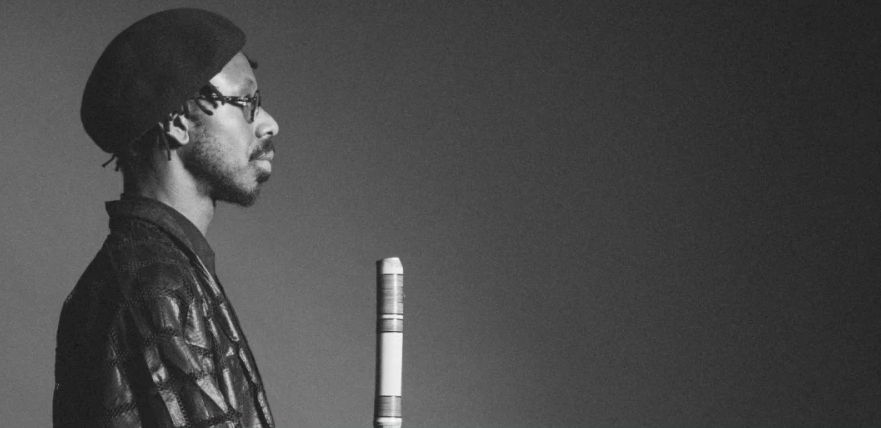
The stage of the Emmaus church is a simple, yet highly effective twist to the usual dynamics of a live performance. The theater-in-the-round-approach is nothing new, of course. But whereas the concept seems somewhat constructed at a stadium-size-gig-level as, for example, on Metallica's most recent tour, the circularity of the design, embedded into the medium-sized space of the Kreuzberg church, raise both the intimacy- and intensity level of the performances taking place here tonight.
Both Sera Kalo's EX.II, whose ultra-eclectic, multidirectionally time-travelling take on the jazz quartet has the bearings of something big in the making, and The Dream Portal benefit from these added dramatical qualities. The latter, in particular, convey the sensation of spending a night at Mulholland Drive's Club Silencio, David MengChuen Chen (aka Cavid Dhen) feeding sonorous, mesmerising sax lines into a small array of stomp boxes and extracting a dense, feverdream-like, ruptured streamscape as the sonic backdrop to Eve Day's poetic revelations.
[Read our Sera Kalo interview]
For just under half an hour, we are granted a tour of her private thoughts and confessions which somehow translate into an urgent call for self-examination. The joyous collective scream she extracts from the audience at the end therefore feels entirely fitting.
And yet, right from the very first note of Shabaka Hutching's performance tonight it becomes clear that this space is almost tailor-made for him and his chambermusical ensemble made up of two harpists, and two electronics-performers. From Shabaka and the Elders and Sons of Kemet to the Comet is Coming – Shabaka's music has always been tribal, dealing with and based on connection, collaboration, and community.
After closing the chapter on these three vital formations, however, his work under his given name has shifted from outer space to the innercosm, from the confrontational to the contemplative. Clearly, what we're about to witness is no longer a mere performance. It is a ritual.
It is interesting to note that, prior to the release of Shabaka's first solo album Afrikan Culture, just about every interview he gave would start with music and then quickly turn political within the blink of an eye.
But when he sat down to discuss the motivations and process behind the follow-up, this year's Perceive Its Beauty, Acknowledge Its Grace, with Stereogum's Phil Freeman, the conversation revolved around the people participating and the personalities at play, the relevance of rhythm and the absence of the saxophone. Two words were at the heart of that interview: “Spirit” and, even more importantly, “atmosphere”.
As he put it in that interview: “The older I get, the more I realize that atmosphere's the thing. That’s the source of music.”
It certainly is for his XJAZZ! gig. Of course, the beauty of the music and the intricate nature of the compositions, never quite settling into easy patterns, always delicately shifting and transforming, are part of the allure as well. But the real magic is taking place in the vibrations and the sonorities.
There is a constant, subtle tension: Between the acoustic sounds from Shakaba and the harps on the one hand, and the otherworldly, glistening electronics – providing melodies, harmonies and texture alike - on the other hand. Between the measured, meditative pace of the ensemble pieces and the dizzyingly fast solo interludes, which, in their dervish-like hypnoticism, are the true source of trance.
The longer the ritual carries on, the less one knows where it started, how long one has been listening, and if there is a direction to all this. The only way to end this is to just stop playing. That moment does eventually come and when it arrives, it feels both perfectly natural - and as though things could have gone on for another one and a half hours.
~
LIVE REVIEW: Friday, May 10th 2024: Nightmares on Wax featuring XJAZZ! Ensemble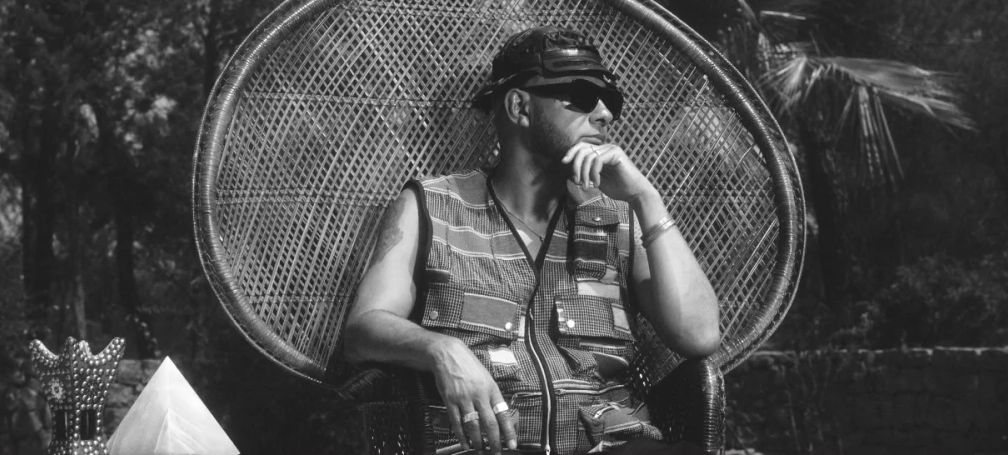
It seems like the least jazz approach imaginable: Put together a group of musicians and reproduce a canonical studio record note by note. When many started to think about jazz as the “classical music of the 20th century,” I doubt this is was they were thinking of: The art of improvisation subservient to the craft of interpretation, the unpredictability of the moment replaced with the refinement of a score. And yet, this live performance of Nightmares on Wax's 1999 Carboot Soul album, is easily one of this year's festival most anticipated highlights.
One reason is that Carboot Soul occupies a special place in its generation's hearts and record shelves. When I bump into my upstairs neighbour earlier that day and tell him about the concept, he downright depressed he can't attend, revealing he owns two original vinyl copies of the release.
In my own listening history, it occupies a similarly seminal place: I listened to it obsessively for months, later sold my copy, then rebought it after feeling an almost physical craving for it. Smoker's Delight may have the grander scope, A Word of Science the bigger historical significance, and 2021's Shout Out! to Freedom, which George Evelyn has performed live in its entirety before, would have fit the bill of a jazz festival a lot more obviously.
But there is something about Carboot Soul that makes it seem like the perfect departure point for this live re-imagination. The Festsaal is suitably jam-packed when the elegiac opening chords of "Les Nuits," the magnificent first single off Carboot Soul and a piece which, through its inclusion on countless downbeat compilations, would turn into one of the defining anthems of the movement.
Here, what was formerly a proud wall of sound composed of a fully-fledged 52-member string orchestra, is replaced with moody oscillations from cello, clarinet, and trumpet – reducing the sensual film-noir splendour of the studio cut with something more erotic, dark, and forbidden.
George Evelyn's role in the performance is outwardly restricted to some minor background turntable movements and blowing so much incense into the space that I am overwhelmed by olfactory hallucinations and my clothes still smell of it for two days.
He will later come to the fore a bit more, but otherwise remain in the background and why shouldn't he? The band are clearly so immersed into the music that any larger involvement by the composer would probably impede the free flow of spirits on display here. The rhythm section is interlocking ever more tightly with each new song, and although most of the album is delivered almost verbatim, a few off-kilter solos, including an entirely out-there psychedelic reed improvisation, add for welcome surprises.
After a short retrospective speech by Evelyn about the origins of the album, it is the second half of the gig, meanwhile, when things really lift off. "Arga Nhoa" feels dense and subaquacious, "Fire in the Middle" develops a joyous swing from its slow burning groove, and "Survival" is performed as a triumphant raised fist, replete with a very effective false-ending. Closer "Capumcab," meanwhile, runs through several incremental tempo increases, sublimating a cool farewell into a euphoric moment that feels like it should never end.
It is easily forgotten that Carboot Soul, despite its laid back production, was actually an experimental album for Nightmares on Wax. While touring Smoker's Delight, Evelyn struck upon the idea that he could have befriended instrumentalists perform for him, create his own samples, and then piece them together on his DAW. In a way, what we're being treated to tonight is a group of dedicated musicians taking back that music and setting the electronic arrangements free again.
Although the performance is almost 100% faithful to the original, their powerful, and sweeping delivery is testimony to the fact that a live performance will still trump the studio cut after everything's been said and done. If that's not the most jazz message a performance can send out, then I don't know what is.
~
LIVE REVIEW: Friday, May 10th 2024: Portico Quartet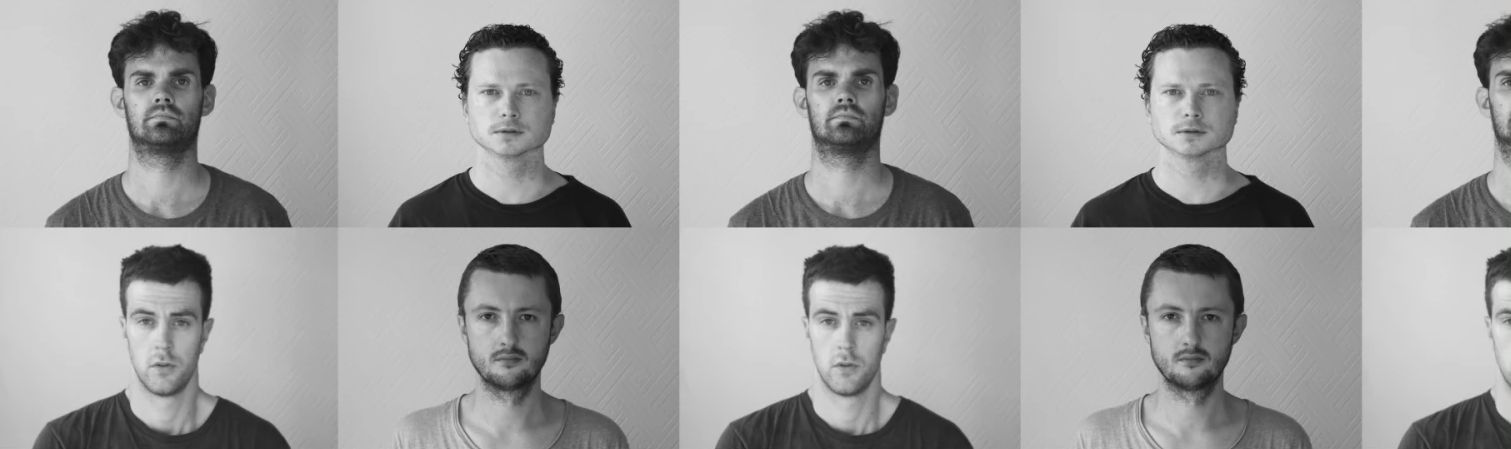
Watching the Portico Quartet play live directly after Nightmares on Wax's Carboot Soul show offers an intriguing point of comparison. Just like N.O.W. live, the band neither radically rethink their pieces, nor do they fill them with expansive solos. Rather, their modus operandi seems to lie in an atmospheric penetration, pushing further into the mood and themes of a composition until either its contours become blurry or the rhythm locks your body into an irresistible pattern.
Only recently, the fourpiece performed at the Elbphilharmonie Hamburg, presenting a new, string-quartet-supported arrangement of their composition "Terrain." Had I known about this, I would have hopped into the train to Hamburg instantly, as Terrain, an album blending all of their recognisable stylistic characteristics into a three movement composition which is arguably the best music they've ever written and, to me at least, one of the most fascinating recordings of the last ten years at the very least.
But already the live rendition of Terrain at Abbey Road, also released on LP and CD, showed an exciting approach of simply extending the music, allowing it to go even further, become even more detached from linear axes of time and logic, to simply flow and loose itself.
Tonight's performance is no different in this respect. The Porticos' catalogue built over what are now an impressive 17 years, is of a remarkable cohesiveness, and this means that the group can draw from a lot of material with subtly contrasting approaches and textures without sacrificing the sacral ambiance and overall feeling of their show.
And so, the differences between the studio "originals" off their most recent studio album Monument and the live versions is almost negligible. Which is saying a lot since the clockwork like interlocking of the individual elements, is a vital aspect of what makes this band so fascinating – to be able to reproduce this in a live setting, and with the inclusion of electronic elements existing in harmonic galaxies and metric grids of their own, is quite an achievement.
What is striking in terms of the album versus live performance, though, is how you notice that, despite Jack Wyllie obviously dominating the melodic side of things, the music decidedly feels like it is driven by Duncan Bellamy's drums.
Most pieces start with his beats, many of them contain lengthy passages where the rhythm section keeps propelling the music forward while the saxophone is taking a leave of absence. Even in terms of its spatial placement, Bellamy's kit is almost literally taking center stage. It is the rhythm section, too, which turns this music, equally drawing from post rock, post punk, and electronica into jazz after all – although it remains a mystery, in which way exactly.
The opening "Impressions" is searching, the closing sequence of pieces hypnotic, and sweeping. What lies in between, however, is so dense and cobweb-like that the borders between tracks disappear for the most part. The effect is mesmerising, the band reconfiguring its music into a threedimensional puzzle whose pieces constantly comment on and complement each other.
Once complete, its shape has become a hazy, but beautiful memory, one that will linger for days.