Published
Name: Sebastian Hecht
Nationality: German
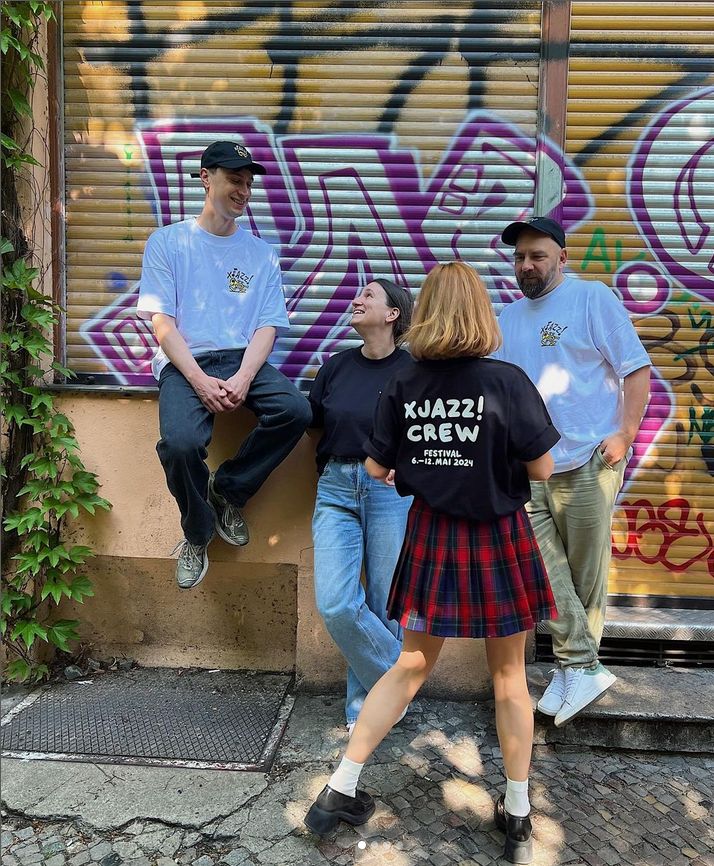
Occupation: Curator, programming director
Current event: Sebastian Hecht is curator for the XJAZZ! festival in Berlin which takes place for the 10th time in 2024. For tickets, go here. Together with Szabolcs Bognár aka Àbáse, Sebastian also curated the compilation Entangled Grounds. The Sound of XJAZZ! Berlin. Recorded live over two days, which aims to capture the current jazz sound of Germany's capital in ten tracks.
[Read our Àbáse interview]
Acts at the XJAZZ! festival include Nala Sinephro, Shabaka, Bill Frisell, Bex Burch of Vula Viel, Portico Quartet, Muriel Grossmann, Sasha Berliner, Nubiyan Twist, Orchestra Baobab, Nduduzu Nakhathini, Sebastian Studnitzky and many more.
[Read our Bex Burch interview]
[Read our Vula Viel interview]
[Read our Portico Quartet interview]
[Read our Nubiyan Twist interview]
[Read our Sebastian Studnitzky interview]
[Read our Muriel Grossmann interview]
[Read our Nduduzu Nakhathini interview]
If you enjoyed this Sebastian Hecht interview and would like to know more about his work, visit him on Instagram.
The XJAZZ! Festival is just around the corner. Tell me just a little bit about how you approached the curation and what guests can expect.
Many people are involved in creating the festival program. On the one hand, we are a booking team consisting of four members: Natalie Greffel, Daniel Best, Sebastian Studnitzky and myself. We hold regular meetings, introduce music to each other and discuss it. This process gives us quite a wide musical range.
On the other hand, we collaborate a lot with protagonists from the Berlin scene, who then host entire evenings as part of the festival. This year it's Swim Good, Expressions, Oshu Records, Casette Heads, Zig Zag Jazz Club, and the Ukrainian exchange project Jazz Kontakt.
The festival has always prided itself to an eclectic approach but there always seemed to be a clear understanding who fits the bill. What does the term jazz mean today, would you say?
This is not easy to answer, and I can only answer from my personal perspective: Jazz has both influenced other genres, some of which have emerged from it.
Meanwhile, more recent pop cultural developments have in turn influenced jazz. In today’s jazz scene many musicians also have some roots in electronic and urban music culture. Not that this jazz sounds electronic per se, but it picks up on elements and shares the same vibe. However, that's just one example. I think genre boundaries are becoming increasingly blurred, there is a growing number of musicians and listeners for whom the musical definition of whether something is jazz or not is no longer so important.
Of course, jazz is also an attitude toward life, a philosophy, and a part of history, with some of it being problematic.
Music has become a lot more global and incorporating elements from other parts of the world or the musical spectrum is commonplace. Do you still think there are city scenes with a distinct, unique sound? What holds these communities together?
The special thing about the Berlin sound is that musicians from all over the world come together here and bring together all the different influences and experiences. That's what makes the sound so fresh.
I believe this can only happen through openness, sensitivity, and respect – community.
The press release also states: "Connection is collaborative; what isn’t heard on the album is all the contributions made outside of the recording sessions. From the venues to the promoters and the audience to the musicians, these all inform the community and facilitate creativity." Can you talk about that a little more, please?
When discussing community, there is a broad network wherein the sound described above is created. There are so many significant places in this city that contribute to the creation of this sound, whether through jam sessions, studios, clubs, or festivals. I find it quite unique that everyone appreciates and supports each other.
On the vinyl, we aimed to capture a snapshot of this sound, knowing that it will only be a part of the big picture. However, I believe the approach of recording completely analog and recording the tracks within a few takes gives the compilation a high degree of authenticity, as if you were experiencing it live.
What is the connection between the festival and the compilation?
A major focus of the festival has been on the Berlin scene since the beginning. Most of the musicians represented on the record have performed at the festival in various constellations over the last years. So, the idea of making a festival compilation was quickly born.
In fact, some of the bands on the record have entered special collaborations. This also happens regularly as part of the festival.
I was quite fascinated by the Analogue Foundation and how dedicated it is to its goals. Can you give A brief introduction to the Analogue Foundation and how it ties in with this project?
The Analogue foundation is a collective dedicated to analog music as an art form.
The head of the Brewery Studios in Berlin, Erik Breuer, is part of the collective and a big supporter of the Berlin jazz scene. When the idea of the compilation came up, we contacted Erik because we were looking for a suitable studio to make the recordings.
He and his team immediately got involved in the project and brought the Analogue Foundation on board, who kindly supported us.
I'd be curious to hear if you feel as though this project would have ended up differently had it not been approached with an “analogue philosophy.”
All the tracks on the compilation were recorded on analog tape. This results in an incomparable sound on the one hand, but on the other hand there are also fewer opportunities to change things afterwards.
The tracks were recorded live, which means the complete band plays live together, fewer overdubs, and since the tape is not endless, there are fewer takes to record, which makes the sound very lively.
Entangled Grounds was recorded over five days. Tell me about the sessions, please.
The time in the studio was great. The Brewery Studios is a very special place; it’s very high quality and professional, but at the same time cozy.
As a total of 10 tracks were recorded, the time frame was very ambitious. Two tracks were recorded per day, one in the morning and one in the afternoon. As I mentioned earlier, this left only a few takes per track.
Some of the musicians are featured on more than one track or stayed for the sessions of other bands and gave feedback. It was great to experience this creative energy.
Tell me about the recording of the suite at the end, how did that come together?
Erik Breuer had the idea of including a larger work on the compilation, consisting of several parts, and recorded by a kind of supergroup. He brought in Moses Yoofee, Zacharias S. Falkenberg, Petter Eldh and Szabolcs Bognár to write the track.
In the end, more than 30 musicians were involved in recording the suite. Among others the Expressions Orchestra, A Song For You, Philo Tsoungui and Monika Mussungo.
Did the collaborations on the release come about spontaneously, or was there some form of planning involved? Is there still a lot of unreleased material?
It was very different for each of the artists.
Some of the artists brought along ideas that they had already developed in advance, which they then developed further with the others in the studio, while other pieces were completely improvised.
How do you see the role of collaboration for this music, especially between a group of musicians who are frequently rotating constellations amongst themselves?
I think that collaboration is the most important factor in a community. When many people join together, work together, support each other, it sparks an incredible force.
As a journalist, I would love to get involved more with this music. What are media formats that you think “work” and would serve the community best?
Everything that gives the scene attention and reach is very helpful. There is still so much to discover and so many exciting stories that have not yet been told.