Published
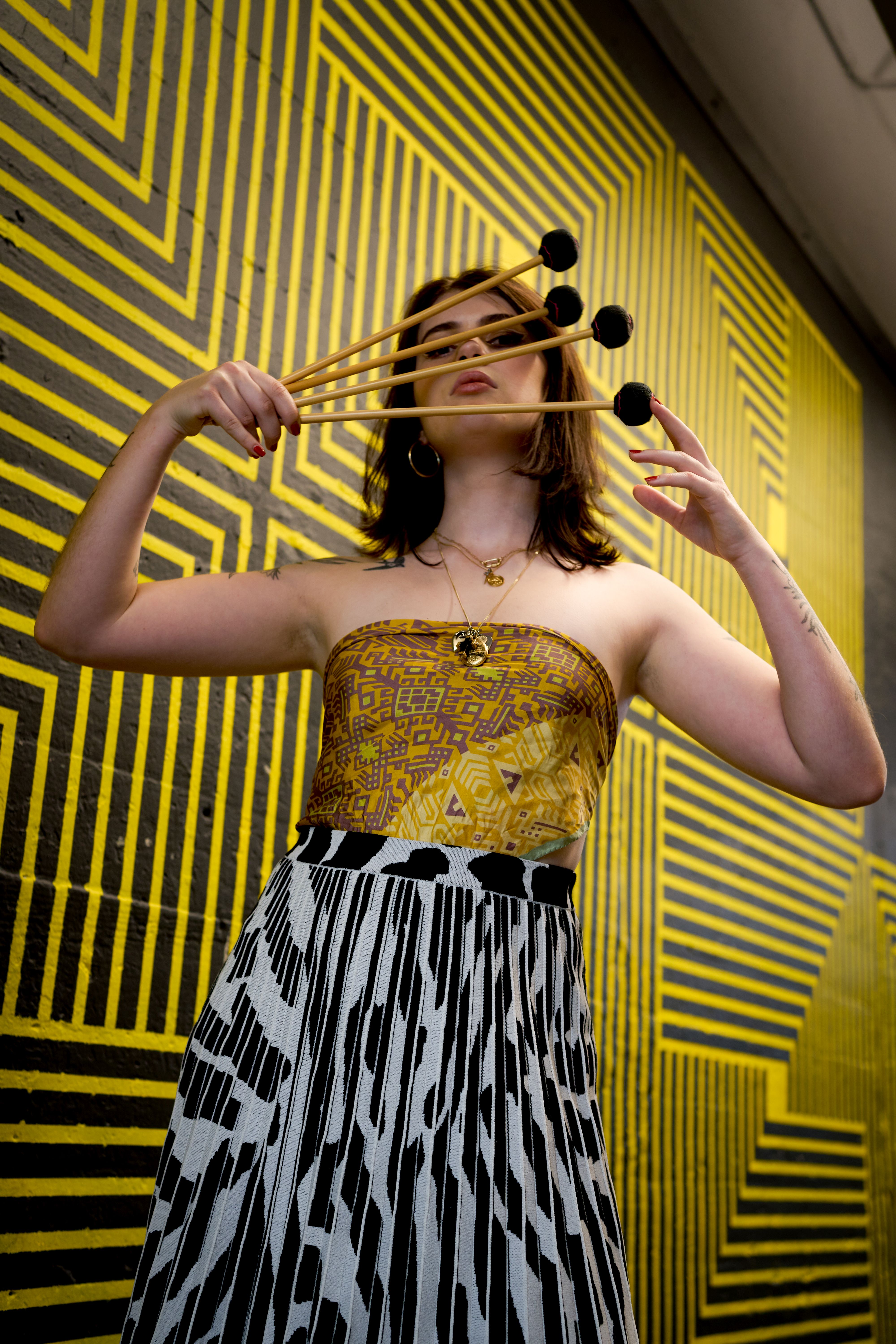
Name: Sasha Berliner
Occupation: Percussionist, improviser, composer
Nationality: American
Current release: Sasha Berliner is one of the artists appearing at the XJAZZ! 2024 festival in Berlin. For tickets, go here. Her new studio album Onyx is out via J.M.I.
Other acts at the festival include Nala Sinephro, Shabaka, Bill Frisell, Bex Burch of Vula Viel, Portico Quartet, Sasha Berliner, Nubiyan Twist, Orchestra Baobab, Nduduzu Nakhathini, Sebastian Studnitzky and many more.
[Read our Bex Burch interview]
[Read our Vula Viel interview]
[Read our Portico Quartet interview]
[Read our Nubiyan Twist interview]
[Read our Sebastian Studnitzky interview]
[Read our Muriel Grossmann interview]
[Read our Nduduzu Nakhathini interview]
[Read our Sebastian Hecht interview about XJAZZ curation]
If you enjoyed this Sasha Berliner interview and would like to know more about her music and upcoming live performances, visit her official homepage. She is also on Instagram, tiktok, and Facebook.
The XJAZZ! Festival is just around the corner. Tell me just a little bit about your performance at the festival, please.
The performance will be a mix of previously recorded/released songs as well as new songs that will appear on upcoming recordings or live sessions of mine.
It will be with an outstanding quartet, including a rhythm section hailing from Amsterdam, Copenhagen, and Berlin by way of NYC originally. It should be pretty exciting! :)
How, would you say are your live performances and your recording projects connected at the moment? How do they mutually influence and feed off each other?
I think that the live performances can often lead to interpretations or experimenting with the recordings, since I often have different band members reading the same charts based on where in the world I’m performing.
It also depends on the backline of the show - a song traditionally played with Rhodes or keyboard might be played with piano or guitar instead. The saxophone melody might be covered by me or a trumpet player instead. If I can bring my electronic pedals, then that might warrant a live intro that isn’t on the album. That kind of thing.
Sometimes I get ideas in those live performances that I end up wanting to bring to future recording sessions, especially with songs that I have yet to record but want to try out in a live setting first.
The XJAZZ! Festival is closely connected to the Analogue Foundation, which emphasises the role of analogue gear and music-making. Do you have any thoughts on this and the role of “mistakes” (as opposed to the “cleanness” and “perfection” of digital) in music?
My last studio album, Onyx, was recorded in a fully analog fashion and recorded entirely to tape, so I’m very familiar with this. We couldn’t edit anything on the album and so some mistakes were left in.
I think it’s much harder to do and it forces the artist to be more vulnerable since they can’t edit out parts of their solo or their entrances that they don’t like. But it’s also more similar to a live recording in that way. It’s more transparent and honest, and it also requires a higher musicianship level.
In the same vein, though, I don’t think digital music is necessarily cleaner or more perfect. Even when I record digitally, I do not like to edit much as to maintain transparency between my studio and live sound, and I’m not afraid to leave in a couple more mistakes. (Plus it’s more expensive to do all that editing!) I guess it’s a case of “just because you can, doesn’t mean you should”.
I mostly opt for digital in cases where I want to use certain electronic elements that have not been developed in an analog fashion, or to use automation to create cool filters or altered effects to transform sound in an interesting way.
In as far as you have any experience or insights, what's your view of the Berlin jazz scene?
I think Berlin is super exciting. It seems very progressive and open to creative improvisation in general, whatever that looks like. That doesn’t even necessarily have to be jazz-oriented.
For example, my bassist for the show Nick Dunston (who lives in Berlin) does experimental shows running a banjo through pedals and modifying it from its original condition, or he’ll perform with a Gayageum player doing a fully improvised set.
I also love that the Berlin scene isn’t afraid to embrace electronics and house or techno music, although there’s a connotation that electronics entail R&B or funk and that’s not necessarily the case here - I think it’s more experimental.
Overall the audiences are also extremely good listeners and very open minded!
Music has become a lot more global and incoporating elements from other parts of the world or the musical spectrum is commonplace. Do you still think there are city scenes with a distinct, unique sound? What holds these communities together?
I think that more than certain styles of music relating to certain cities, the individual artists in a city sort of dictate the direction of the music coming from a certain city. I don’t think it’s as much about a specific genre or skill set as much as what hybrid of influences each artist brings to their city, and it sort of ripples throughout the community and inspires everyone to try new things.
In short, I think the artists influence the sound on a scene more than a particular genre or subset of skills. And any artist is subject to any number of influences at a time. Maybe certain countries like South Africa, Lebanon, or Cuba have a distinct history and sound, but I feel that North America and countries like Germany, Denmark, Sweden, and England take on a number of influences that their artists turn into a sort of melting pot.
The term identity is an important aspect of many communities. Are you acting out parts of your identity in your improvisations which you couldn't or wouldn't through other musical approaches? If so, which are these?
It’s very possible! But I wouldn’t say I’m consciously aware of it.
I also wouldn’t say that different parts of my identity are only shown in certain aspects of music making - I think all music I make is all a product of my identity as a whole.
What does the term jazz mean today, would you say?
I think it is losing more meaning by the second. (Haha). Jazz at this point can be called anything that shares both a through composed and improvisational element, and maybe borrows from some aspect of jazz harmony whether through chord progressions or chordal extensions and colors.
I also think jazz entails an aspect of chromaticism, although some jam band oriented jazz artists might disagree with this.