Published
Part 1
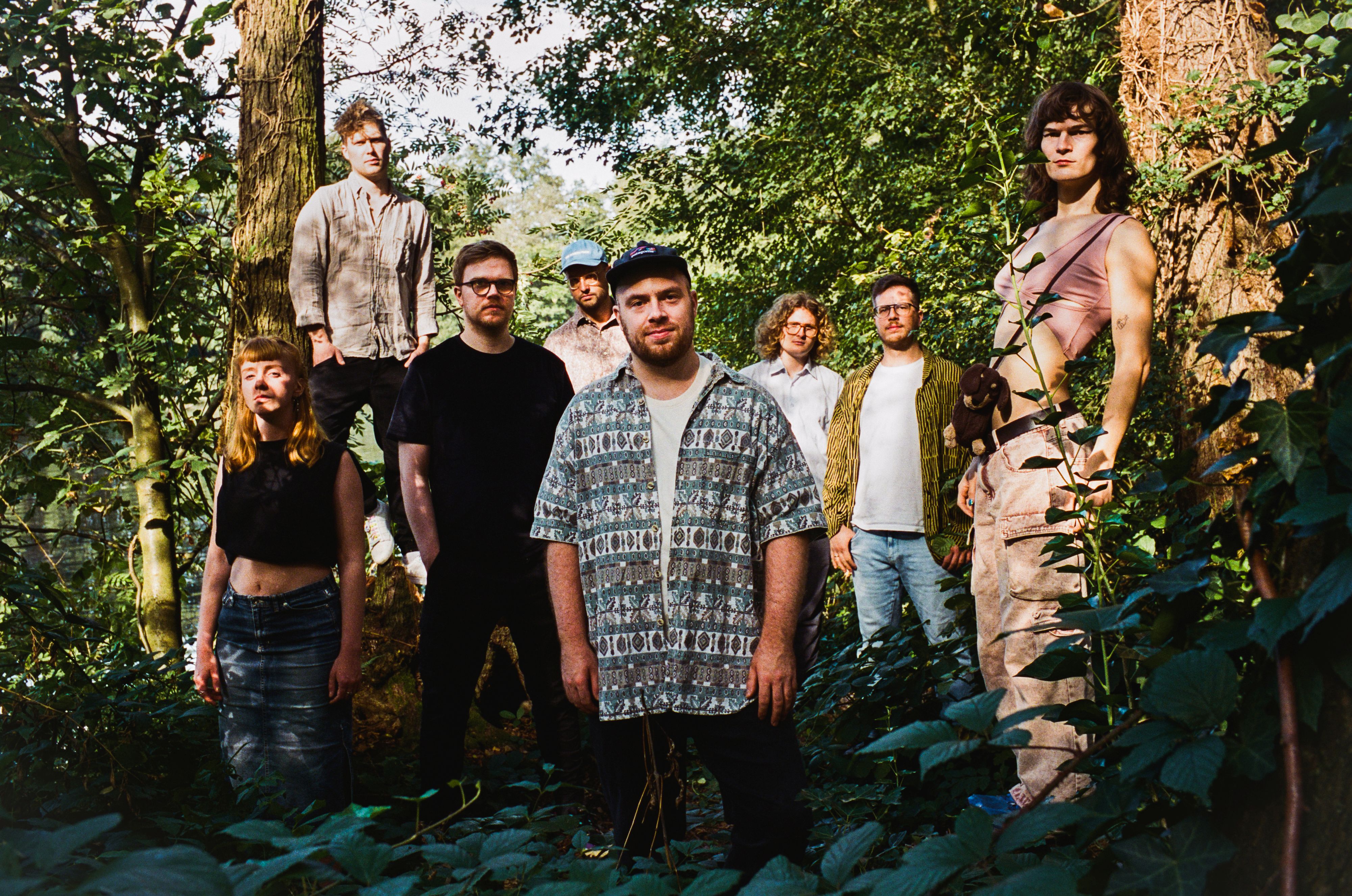
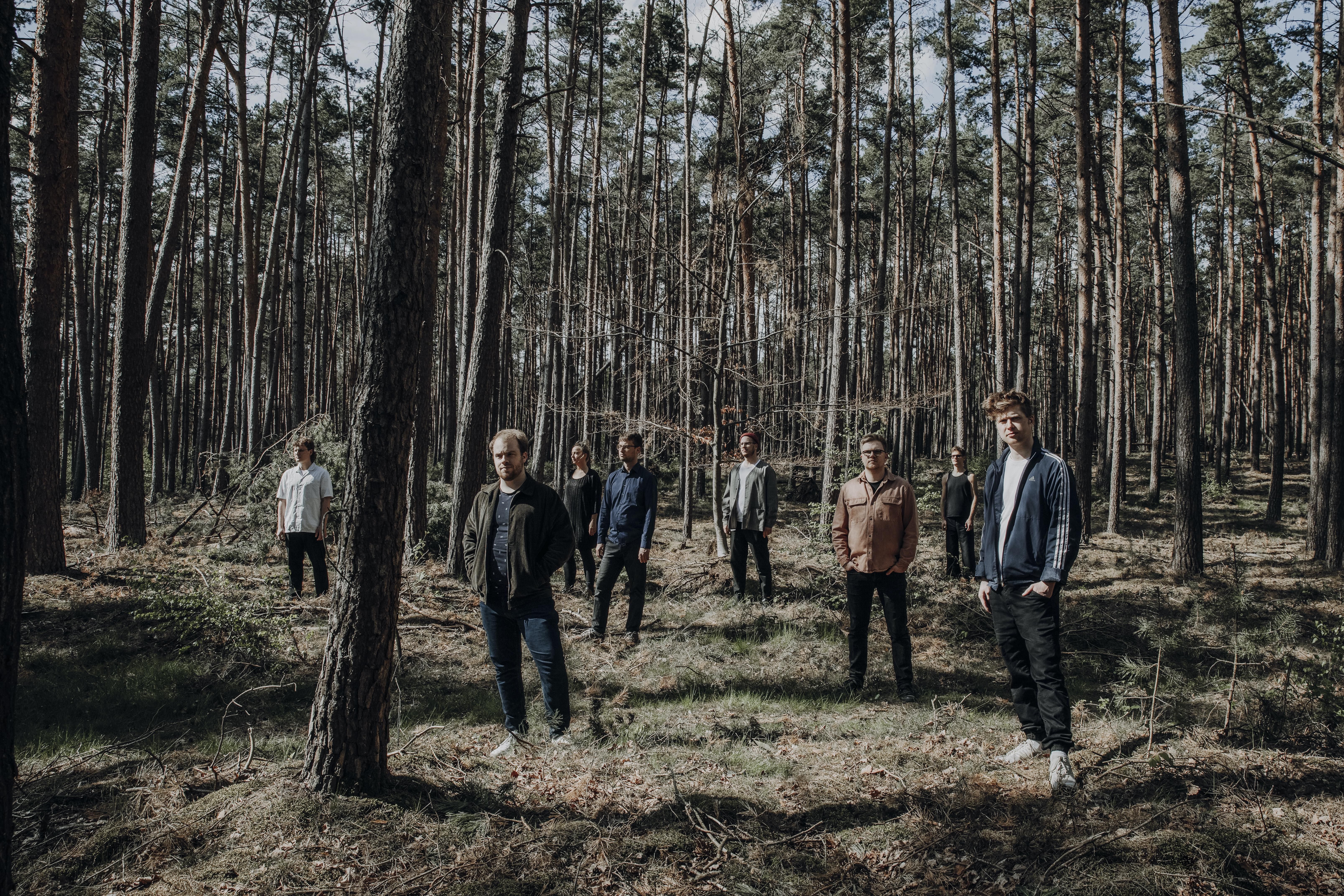
Name: Nordsnø Ensemble
Members: Anna Berglund /vocals), Vincent Dombrowski (saxophone, flute, arrangement), Ken Dombrowski (trombone, bass trumpet), Lucy Liebe (guitar), Sandro Sáez Eggers (piano), Vincent Niessen (bass), Lukas Schwegmann (percussion), Johannes Metzger (drums),
Interviewee: Vincent Dombrowski
Nationality: German
Current release: Nordsnø Ensemble's new album ett omaka par, featuring Kit Downes, is out now via sts/sts.
Recommendations: David Leon - Bird’s Eye (beautiful album); All of Henry Cartier Bressons photography but particularly the portrait of Alberto Giacometti in the rain (maybe my favorite photograph)
If you enjoyed this Nordsnø Ensemble interview and would like to know more about the band and their music, visit their official homepage. Vincent also has a personal website.
Do you think that some of your earliest musical experiences planted a seed for your interest in improvisation?
The first musical experiences I can remember are connected to my brother Ken, with whom I created what I would now call improvised music – parts of it idiomatic (if we succeeded) and some non-idiomatic and on the threshold to being chaotic.
I remember that both of us chose different instruments we had at home and tried to create something together. That was an experience of empathy and shared common creative force I have dear memories of. When we were really happy with the music we even recorded some of it with my fathers old cassette recorder.
Music was around us all the time, because my mom was playing the classical flute and my dad took us to (Dixieland)-jazz concerts. Additionally we listened to a lot of popular music from the 60-80s. I remember specifically that I was impressed watching the old jazz musicians creating music in the moment and without sheet music in front of them.
Until today Ken and I created lots of music together, especially with the Nordsnø Ensemble which we and drummer Johannes Metzger founded more than ten years ago. We recently released our third album ett omaka par featuring Kit Downes. It's the most improvised album of that ensemble yet.
When did you first consciously start getting interested in musical improvisation? Which artists , teachers , albums or performances involving prominent use of improvisation captured your imagination in the beginning?
When I took up the saxophone (I was 12 years old then), I first started playing mainly written music. But as soon as I took lessons with a jazz -saxophonist called Hans Malte Witte I started getting interested in improvisation more and more.
In the beginning I was mainly interested in jazz and was fascinated by albums such as The Soothsayer by Wayne Shorter and Kind of Blue by Miles Davis (which is kind of a cliché, but was one of my favorite albums, when I was 14).
Back then I started to embark on a journey (which I now know is folly) to get to know every jazz record by always reading all the liner notes and buying albums under the name of the sideman I had just heard.
That way I created a net of music I grew to admire and my listening preferences slowly got more and more diverse. Three of the artists, who drew me towards something new where Ornette Coleman, John Coltrane and Eric Dolphy.
After a while I was drawn towards European jazz music. It had a very different tone and approach and tried to get what fueled that music. When I started studying the saxophone in Hamburg in 2015 I took lessons with Vlatko Kučan and played with him on various occasions. He really inspired me to deeply go into improvised music and absorb it into my playing.
Tell me about your instrument and/or tools , pleas e. What made you seek it out, what makes it “your” instrument, and what are some of the most important aspects of playing it?
When I first started playing a wind instrument, the alto saxophone was the one everybody started with. So I took it up and I got stuck with it, even though I had some problems finding my sound ideal at first. But I love the search, which is forever ongoing. Sometimes I feel like playing the tenor but on an alto and I kind of like that thought.
While studying in Hamburg I bought a Selmer Mark VI from my classical music teacher, which I had fallen in love with instantly. I have been playing this instrument for nearly ten years now and it inspires me in a sense of being a long, seemingly never ending corridor with an indefinite number of doors to open and sounds to create.
I mainly identify as an alto saxophonist but also like to take up the flute and the soprano saxophone regularly. Both of these instruments inspire me to play differently, because of their individual traditions and their particular sound. In the future I want to work more with pre-recorded material and a setup of a couple of pedals and a tape recorder I am working with at the moment.
How would you describe your own relations hip with your instrument – is it an extension of your self/body, a partner and companion, a creative catalyst, a challenge to be overcome, something else entirely?
To me the instrument is definitely a challenge to overcome but at the same time it is more and more becoming an extension of my mind and my body. It somehow feels like a being that I am trying to get into a full symbiotic relationship with.
Everyday is an new challenge though.
Derek Bailey defined improvising as the search for material which is endlessly transformable. What kind of materials have turned to be particularly transformable and stimulating for you?
I can honestly say that this has always been in change. I've had phases in which certain music stimulated me and found a way into my playing. I have never been great at being a, what I would call, “jazz musician” – playing standards and originals in the traditional sense. I always identified as an improviser and took my inspiration from everywhere.
At the moment I am most interested in what I would call the renaissance of “Free Jazz” combined with beats and the European Avantgarde (e.g. Koma Saxo, DLW, Y-Otis, Binker & Moses), Progressive Rock & Metal, Free Improv and Free Jazz from the GDR and folklore (especially from Scandinavia).
[Read our Binker Golding interview]
I also love to listen to all kinds of noise music (e.g. the band “Big Brave”, Cecilia Lopez, Steve Lehman’s solo record and many more). While I am writing this list so many others come to mind too, so this is only what comes to mind in this moment.
I believe all material is transformable and can be brought together in a meaningful way, if you really care about the music and try to find your unique way of incorporating it into your practice.
Do you feel as though there are at least elements of composition and improvisation which are entirely unique to each? Based on your own work or maybe performances or recordings by other artists , do you feel that there are results which could only have happened through one of them?
There is definitely a difference between the two for me. While I can be careful to systematically organize a piece while composing and achieve a good dramaturgy within that piece, this is something that can be hard in improvised music, especially when playing with a group, that hasn't played together very often.
I personally don't want to choose between the two and my music mostly combines both improvisation and composition.
I try to only write what I really think is necessary and try to offer as much freedom within a composition as possible. This backbone of the piece – as I would call it – can be quite concrete like in this example:
Or just a sketch:
Both can coexist quite well I think. My general feeling is, that the amount of improvisation in all of my artistic practice is increasing, because both me and the musicians I am playing with and myself are getting better and better.
I also want the music to continue evolving over time and improvisation and opening compositional choices for collective debate are a great way of doing that.