Published
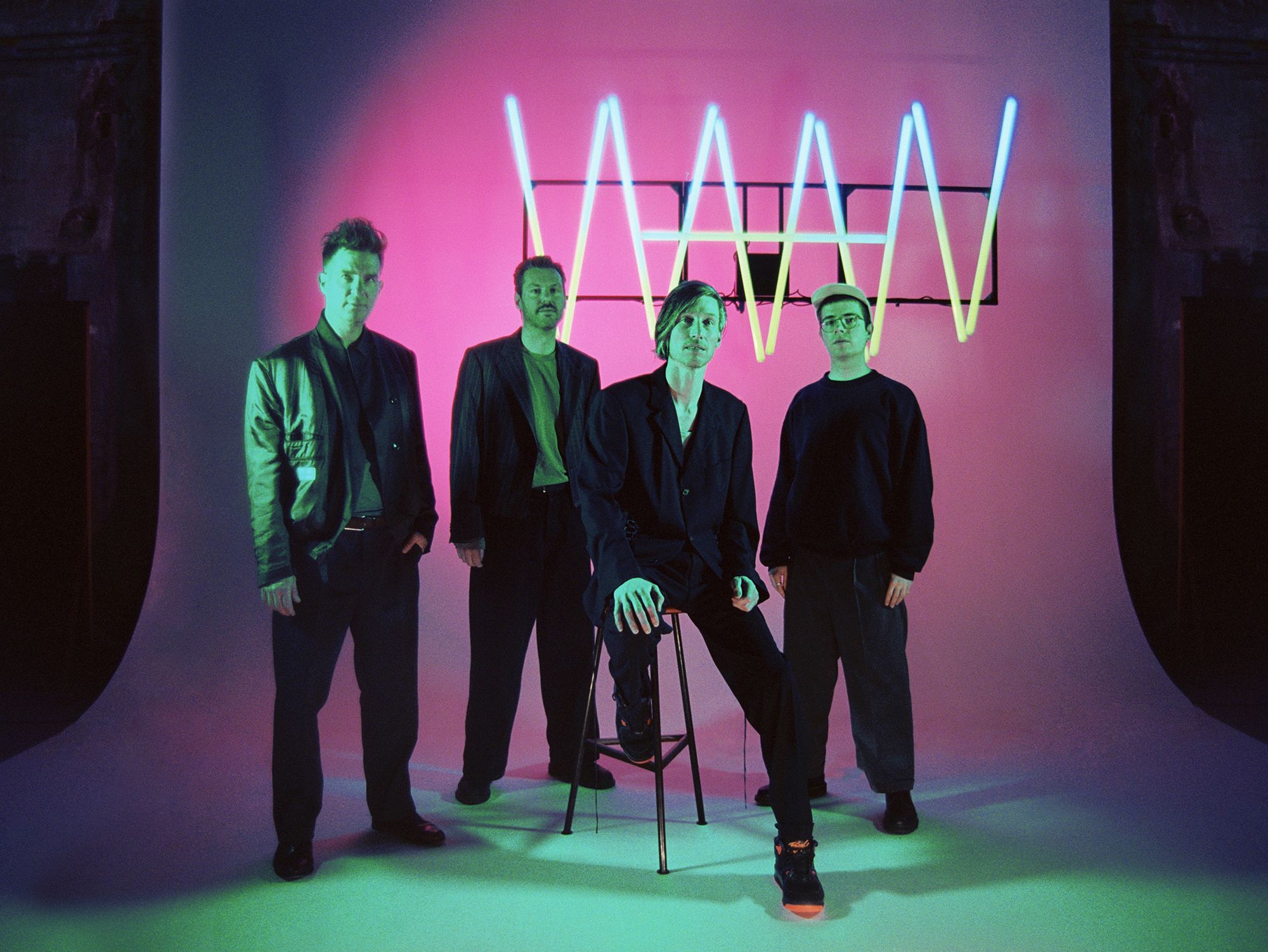
Name: WAAN
Members: Bart Wirtz (saxophone), Emiel van Rijthoven (keys)
Current release: WAAN's new album We Want WAAN is out January 23rd 2026 via Sonar Kollektiv.
Shoutouts: There are fantastic jazz festivals like So What’s Next (NL), Garana Jazz Festival (RO), RAUW (NL), and Orange Jazz Days (NL), where we’ve performed, and which are very open to diverse styles within the idiom. At the same time, we’re now being invited more often by festivals such as Peel Slowly & See (NL), which truly program all genres — from indie to electronic to classical. We’d love to play more at these kinds of festivals internationally as well! So, festival programmers — if you’re reading this …
If you enjoyed this interview with WAAN and would like to find out more about the band's music, visit their official homepage. They are also on Instagram, and bandcamp.
For a deeper dive, read our earlier Waan interview about collaboration, and improvisation.
What were some of the musical experiences which planted a seed for your interest in jazz?
We both grew up with a deep interest in jazz. Not only that, but our parents’ record collections also included classical music, pop, and hip-hop. Emiel’s early influences included artists like Ahmad Jamal, while Bart was inspired by musicians such as Cannonball Adderley.
Later on, we both studied at the conservatory, where you dive deeper into music and simultaneously discover your own identity in relation to it.
What does the term jazz mean today, would you say?
For WAAN, jazz today remains a living, breathing form — a space of freedom and exploration. It’s freedom in breadth, in what can belong, and freedom in depth, in how far we can go with expression.
Where other genres rely on fixed structures and agreements, jazz thrives on dialogue and spontaneity. It’s that constant sense of discovery that keeps it alive for us.
As of today, what kind of materials, ideas, and technologies are particularly stimulating for you?
We find it fascinating to bring different genres together, especially since we’re inspired by so many styles. That naturally leads us to think about how to incorporate modern techniques.
Besides being a musician, Emiel is also technically skilled. He built a setup for us that intertwines electronics with acoustic improvisation. We’re constantly exploring and interested in both vintage electronics and new technological developments.
Where do most of your inspirations to create come from – rather from internal impulses or external ones? Which current social / political / ecological or other developments make you feel like you need to respond as an artist?
Our strength and inspiration come from both sides. The current state of the world — the climate, wars, politics — deeply affects us; it can make us feel hopeful at times, and angry at others. Alongside our spontaneous compositions, these emotions often become the first spark of a new piece.
When we use vocals and lyrics, you can sometimes hear that directly — for example, in ‘Why Didn’t You Get Me’, which reflects on the role of the Dutch government in relation to Gaza.
Tell me a bit about the sounds & creative directions, artists & communities, as well as the colleagues & creative hotspots of your current hometown, please. How do they influence your music?
In his hometown of Leiden, Bart built his own studio as part of a collective of musicians and artists. He shares this space with producer Oscar de Jong from Kraak & Smaak.
Besides producing our own work, other bands also record there. This creative hub generates a lot of energy and inspiration. It also gave Waan the flexibility to work full force on the new album.
A fun fact: after long studio days, we often end up at our favorite local bar, the legendary jazz café De Twee Spieghels. That’s actually where the idea was born to record the crowd of this bar and let them comp one of our tracks with clapping, “Mirrors.”
[Read our Oscar de Jong interview]
Thanks to technological advances, collaboration has become a lot easier. What have been some of the most fruitful collaborations for you recently and what approaches to and modes of collaboration currently seem best to you?
One of the guiding principles for We Want WAAN was to carefully consider what each track needed. That led us to invite several guest musicians.
String players René van Munster and Beste Sevindik contributed, vocalists Marta Arpini and Mingue sang on the track “Why Didn’t You Get Me,” and American rapper and trailblazer in the non-binary hip-hop scene Ivy Sole joined us on “Been Blue.”
For us, this was incredibly inspiring — it allowed us to reach a broader and more diverse audience. A true win-win situation for everyone involved.
Jazz has always had an interesting relationship between honouring its roots and exploring the unknown. What does the balance between these two poles look like in your music?
We prefer to speak of improvised music. Of course, we’re deeply inspired by Black American music.
We also draw from our pop influences, and we regularly attend classical concerts. We go to festivals and raves — all these experiences find their way into our music.
The fact that we can navigate through all these influences through improvisation shows how much we owe to jazz. That’s a root that won’t easily be shaken.
How much potential for something “new” is there still in jazz? What could this “new” look like?
We’ve noticed that the label jazz has become so broad that it means something different to almost everyone.
But that also creates possibilities: boundaries fade, and for us, that means we can do whatever we want. Inspiration comes from everywhere, and we embrace that. We’ve also seen that young audiences really connect with this approach and come to our shows.
That’s why it’s so important to maintain and strengthen a healthy climate for live music! We see that everywhere this is under pressure — because of budget cuts, the growing influence of artificial intelligence, and populist shouters that don’t care about culture.
We firmly believe that as long as people have access to great live music, it will continue to thrive.
For many artists, life-changing musical experiences take place live. How do you see that yourself?
Partly.
As a result of our previous album Echo Echo, we’ve performed a lot. Through that, the band keeps developing more shape and depth. It also helped us define our musical direction and vision for the new album very clearly.
At the same time, we’re creating new worlds in the studio. That’s where exciting ideas emerge — ideas we then bring back to the stage during live shows. In the studio we have time to explore new gear and sounds.
For instance we worked with the legendary EMS Synthi AKS and it takes weeks to figure that machine out. But it sounds amazing!
How, would you say are your live performances and your recording projects connected at the moment? How do they mutually influence and feed off each other?
Our albums are rich in sound and production, and we bring that same sonic world to the stage — using all the technical tools we need, without losing spontaneity.
With our upcoming second album ‘We Want WAAN’, we have something we didn’t have before: the experience and feedback from our first tour. That gives us a clearer sense of what we’re good at — what works, and of course, what doesn’t.
Improvisation is obviously an essential element of jazz, but I would assume that just like composition, it is transforming. How do you feel has the role of improvisation changed in jazz?
Our earlier work was characterized by a more traditional jazz structure: theme, solo, solo, maybe a bridge, and then back to the main theme. We’ve evolved since then.
Nowadays, the song structure itself takes the lead. Improvisations have to fit within that framework — which might be on a dance track or a pop song. Searching for that balance between both worlds makes it incredibly exciting.
The Montreux Festival intends to preserve its archive of recordings for future generations. Do you personally feels it's important that everything should remain available forever - or is there something to be said for letting beautiful moments pass and linger in the memories of those that experienced them?
I’m of the opinion: keep everything!
With WAAN, we’ve been deeply inspired and empowered by live recordings from before and in our time — by both known and unknown artists who created incredible music in their era. It brings so much richness and energy.
Studio albums are just snapshots in time — and so are live concerts, but they’re often more spontaneous, and can touch you in a different, sometimes deeper way.