Published
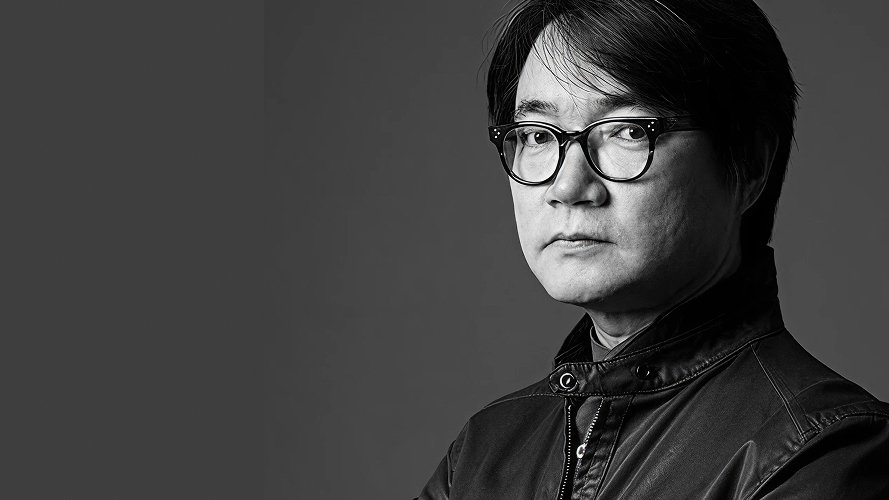
Name: WON IL
Occupation: Composer
Nationality: South Korean
Current event: WON IL is one of the artists appearing at the K-Music Festival 2025, a "genre-defying celebration of Korean music set to return to major London venues in the autumn." The line-up includes Okkyung Lee, JAMBINAI, Hilgeum, Park Jiha, Dong-hoon Shin, Seong-Jin Cho, and HanBin Lee's Gray by Silver. For more information and tickets, go here.
Recommendation for South Korea: In Korea, visiting our many famous mountains is, I believe, the best way to experience the true Korean spirit.
Things that I am passionate about but rarely get to talk about: The connection between madness and art; the spiritual worlds of animals and plants in relation to art—these are themes I am passionate about, though I rarely have the chance to speak about them.
Shoutouts: Soundscape composition, the fusion of biological data with music, Brian Eno, ACT and ECM, independent labels with unique identities, Big Ears Festival, A/V (Audio/Visual), Mutek Festival, Nils Frahm, Thom Yorke, Jonny Greenwood, Sote, Unsuk Chin … too many to list.
[Read our Brian Eno interview]
[Read our Nils Frahm interview]
If you enjoyed this WON IL interview and would like to stay up to date with his music and live dates, visit him on Facebook.
The borders between producers, sound artists, and even songwriters are becoming increasingly blurry. What does being a composer mean today, would you say?
This is a question I have been thinking about a lot recently. Music, in its broadest sense, has always absorbed every aspect of sound, transforming it into something we can perceive as music. Since John Cage drew our attention freshly to sound itself, this has become even more evident.
Today, composers live in an environment where not only Western classical traditions but also their own cultural and musical heritages are absorbed more naturally. With computers and electronic devices, sampling has become relatively easy. Unless one chooses to become a strict guardian of traditional classical music, all the possibilities remain open to connect music and sound in every direction.
In the end, a composer is someone who connects and creates the sounds they desire and imagine through thought and technique. Metaphorically, I see the composer today as a kind of modern-day Hephaestus—the divine blacksmith—who forges sound itself.
Many people perceive classical music and contemporary composition as having high barriers of entrance, both for listeners and musicians. What have your own experiences been in this regard?
Experiencing something new is exciting for anyone, but it also brings unfamiliarity and unpredictability, sometimes even fear. For me, this function of art is most important. Classical music, with its strict adherence to rules, often carries an air of rigidity, while contemporary music, which may not be embedded in shared experiences, can feel difficult for audiences.
I have always been curious by nature. From an early age, I endured learning and performing music full of strict rules—even though I found it boring—but at the same time I was filled with curiosity about walking paths I had never taken before. As a child, I would often play alone in the forest, discovering countless sounds and having conversations with them.
Just as contemporary music often reveals the fear and darkness embedded in the human unconscious after collective traumas such as war, I pay close attention to how art responds in the aftermath of major events. From the emptiness of ambient soundscapes to immersive sonic experiences, I am drawn to all forms of music that offer newness, regardless of the height or thickness of their entry barriers.
As of today, what kind of materials, ideas, and technologies are particularly stimulating for you?
At present, I am working with ideas around soundscapes made possible through sampling, as well as shamanistic imagination and immersive exhibition practices.
At the same time, I am reflecting on the contrast between what I call the “data robot”—AI—and the tactile arts of the five senses.
Where do most of your inspirations to create come from?
I believe it is crucial to have a working environment where I can immediately record new ideas the moment they arise. Often, external stimuli—whether in nature, in the city, at an exhibition, or during a performance—awaken inner potential.
When inspiration or a flow of ideas emerges, I make a habit of recording the words that repeatedly surface in my mind. Among them, there is usually one that stands out as the most essential.
Tell me about the sounds & creative directions, artists & communities, as well as the colleagues & creative hotspots of your current hometown.
Seoul is my birthplace, and my studio is not far from there. More broadly, Korea—the peninsula itself—is a geographically unique place. After traveling abroad, I realized even more clearly that Korea is a land of mountains, and that Seoul is divided by the Han River, an enormous body of water nearly two kilometers wide. Our four seasons are also very distinct.
These days, many Korean artists are beginning to regard this geographical particularity as a strength. From these conditions given by nature, an implicit pride and sense of solidarity seems to have formed. In earlier times—artists of the 1960s, 70s, 80s, and 90s—there was not much pride in Korea’s history or geography. Seoul, as a vast and diverse city, now offers multiple hubs of creativity.
Interestingly, Korean artists tend not to form tight-knit communities but rather prefer to work independently while maintaining loose connections. I share that preference. I also believe Korea is now evolving toward a welfare system for artists that approaches the level of developed nations. For me, the Korean artistic way of being is to pursue one’s individuality, to respect each other without interference, yet still live with a subtle sense of community.
And if, in some form, North and South were to reunify, I believe a new kind of solidarity and communal spirit would emerge. This is something I deeply hope for.
Composing has always balanced roots and exploration. How does this appear in your music?
I have always tried to move naturally between these two worlds—sometimes merging them, sometimes running far away from both. But I have never found much joy in merely reproducing traditional roots; such work has rarely been my focus. I even find “dead music,” the act of reanimating tradition without vitality, to be something I deeply resist.
At the same time, whenever I discover the complete and flawless beauty within tradition, I feel a kind of powerlessness. As a composer living in this era, I sometimes question myself when I present traditional legacies to contemporary audiences through processes that inevitably distort them.
Yet my destiny is that of a blacksmith: I cannot help but forge sounds by mixing them into my own language. The two wings that sustain me as a creative musician are Korean traditional music and all the other musics and sounds of the world.
How much potential for something “new” is there still in composition?
True newness is rare, but the task of the artist is to make the familiar appear new again.
I believe the future of composition lies in a balance where improvisation and structured content coexist. Traditional notation and compositional methods will never outpace AI—the “data robot.” What interests me are forms of art that draw intuition from the memories embedded in human experience and from the ocean of the unconscious. I believe this intuitive mode of creation will be increasingly favored.
Tactile art and immersive art can be understood in the same context: forms that allow us to move through all dimensions of time and space from within the present moment. Shamanism, with its ritual and mythological qualities, has always existed as such an art form.
What role do electronic tools and instruments play in your creative process?
Imagine Hephaestus’s forge of sound—that is what my studio looks like in spirit. Electronic tools and instruments are not only the future of music, they are also the future of my music, because they allow sound to be unified and transcended.
Still, I believe the essence of music lies in performance. Performing is when I feel the greatest joy. The many devices and instruments in my studio were chosen with the imagination of a live stage in mind—even if that stage is only a projection.
Adding a conceptual dimension seems almost a prerequisite today. How do you view this?
Ha ha ha—perhaps it is thanks to philosophers like Deleuze and Nietzsche, who encouraged artists to become cleverer (half-joking!). In fact, I tend to be more “conceptual” not in my works themselves but in my role as an artistic director—when I organize ensembles or lead festivals.
A strong concept can become a linguistic and textual tool to persuade and inspire many people. In particular, the core cosmological ideas of East Asia—yin-yang and the five elements—have remained stable for nearly 5,000 years, offering principles for understanding all change and order in the world.
Lately, I have been working with the concept of “composing in a Sinawi way.” By this, I mean a form of composition where the composer does not strictly control every note and logic, but rather creates in a way that leaves decisions to be shaped together with the performers and through improvisation.
How do you deal with long forms and complex structures, as both composer and listener?
Personally, I do not prefer long and overly complex forms. Yet, just as some find joy in mathematics, there are artists and audiences who feel pleasure in inventing and experiencing such forms.
I am deeply drawn to shamanistic art forms that have been passed down since ancient times. My work Dionysus Robot, performed in London, is also a kind of ritual that allows the audience to encounter the god Dionysus. In that tradition, the present moment extends into eternity, “I” becomes “you,” and myth becomes humanity’s universal journey.
As an artist and listener who seeks new experiences in the darkened theatre, I want to embody this eternal quality of the fleeting moment within my art.
Few works today are performed beyond their premiere. What does this mean for composers?
Aren’t there far too many musicians and composers today? One could call it “poverty amid abundance.” In the popular music scene, success is often measured by chart rankings and economic victories, not by the music itself.
And yet, miracles do happen. Music born from pure intention tends to endure, and when someone truly masters their instrument so that mind, skill, and sound are perfectly aligned, a miracle of oneness arises—the miracle of uniting the frequency of hearts into one. The greatness of music lies in such moments, and thanks to the musicians who create them, music can remain eternally great.
I myself have experienced such moments a few times—and perhaps it is because I wish to live in those moments that I continue forging sound in my blacksmith’s workshop today.
How are live performances and recording projects connected for you?
Considering the length of my musical life, I have not released many official albums. Although I have given many live performances, I have rarely turned those live recordings into albums.
From 2026 onward, however, I plan to release at least one album each year, with the aim of publishing ten albums over the following decade. Live performance and recording will gradually become united as both technology and artistry evolve.
For now, however, I still regard them as strictly separate realms.
What role do AI and intelligent tools play for you?
As a tool for composition, AI currently holds no meaning or practical use for me, nor do I have any plans for it. I may test and observe it in the future, but I have long carried a fear toward AI—the “data robot.” That fear began when I read Ray Kurzweil’s The Singularity Is Near.
At the same time, as a performance director, I find AI highly intriguing for stage production. This dual dilemma will likely remain with me until at least 2025.
I am also concerned about excessive competition among advanced nations, and about the dystopian future Yuval Harari warns of, in which vast capital and power monopolize data technologies, turning humans into slaves of information. As an artist, I ask myself: with what attitude should I live and work in response to this reality?
Should everything remain available forever, or do we let beautiful moments pass?
I believe both perspectives hold meaning. After much reflection and discussion, my conclusion is that keeping records is ultimately beneficial for future generations.
And yet, there is also profound beauty in ephemeral moments that live only in the memories of those who experienced them.