Published
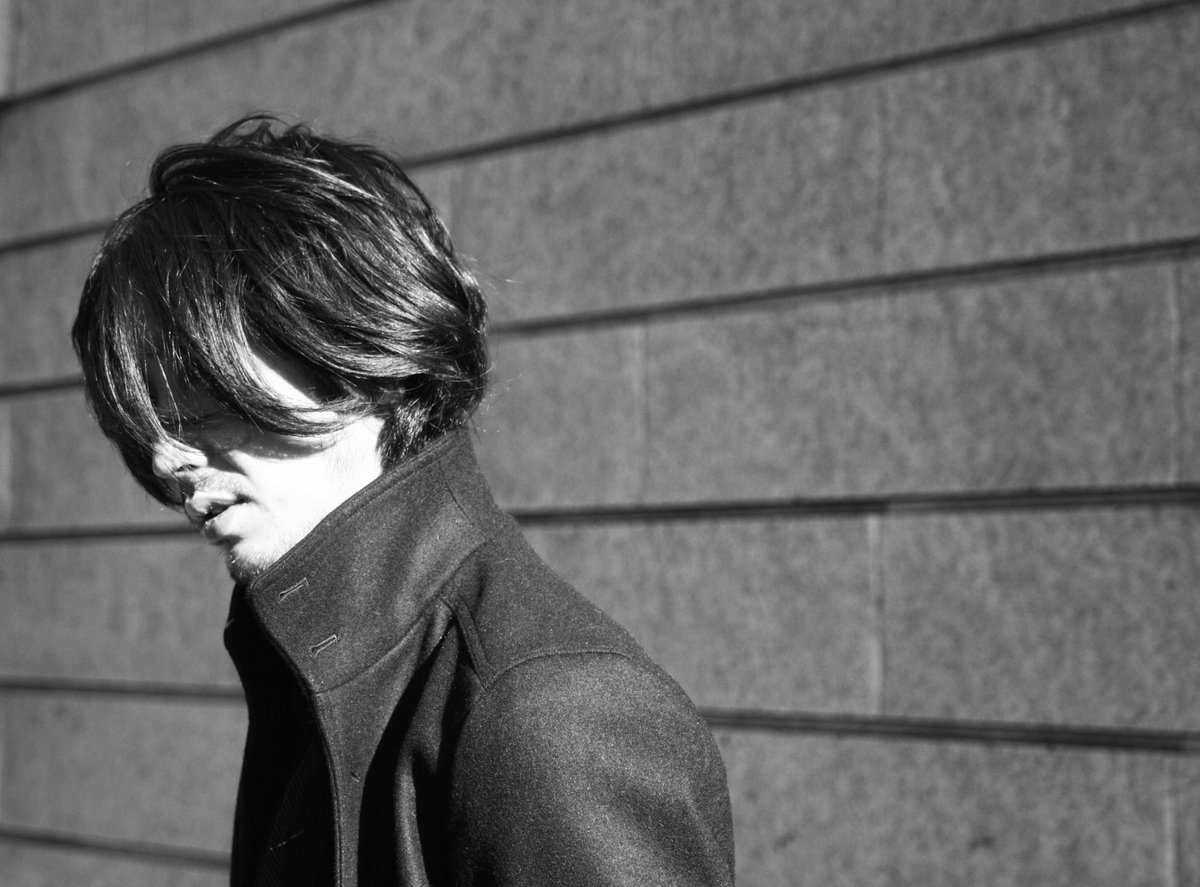
Name: Yui Onodera
Nationality: Japanese
Occupation: Sound artist, producer, composer, architectural acoustics designer
Current release: Yui Onodera teams up with Arovane for Stillform, out via Affin.
Recommendations on the topic of sound: I think Pour les Oiseaux by Daniel Charles, the father of Christophe Charles, is an excellent introductory book.
[Read our Arovane interview]
If you enjoyed this Yui Onodera interview and would like to know more about his music, visit his official website. He is also on Instagram, Soundcloud, and bandcamp.
When I listen to music, I see shapes, objects and colours. What happens in your body when you're listening? Do you listen with your eyes open or closed?
Most of the time, I listen to music alone, lying on my bed with my eyes closed and using headphones.
I like this because it allows me to enjoy even the most subtle changes and movements in very small sounds.
Tell me about some of the albums or artists that you love specifically for their sound, please.
Recently, I’ve been collecting and frequently listening to the undirected series by Christophe Charles.
I’ve loved his work for a long time. Even if I leave it playing with the window open, it blends into the environment in a very mysterious way.
And when I listen through headphones, I discover something new each time—it has remarkable depth.
Do you experience strong emotional responses towards certain sounds? If so, what kind of sounds are these and do you have an explanation about the reasons for these responses?
For example, I’m often strongly drawn to continuous sounds that are almost unnoticed—like the low hum of air conditioning or the distant reverberation of traffic. These are not sounds that come forward as “objects,” but rather exist as something dissolved into the space. Because of that, they create a sensation of blurring the boundaries of my body and my awareness.
On the other hand, sudden sounds with a strong attack can trigger a physical reaction. Including that, I feel that sound reaches the body before it reaches thought.
On Stillform, many small sounds—sustained tones and sudden ones—overlap and move in layers. I would love for people to listen carefully in a quiet environment.
There can be sounds which feel highly irritating to us and then there are others we could gladly listen to for hours. Do you have examples for either one or both of these?
The sounds I can listen to for a long time are those that seem to merge with the environment. For example, in works like those of Christophe Charles, sound feels closer to a “state” than an “event.”
On the other hand, sounds that carry excessive information and strongly demand meaning—such as advertising sounds or attention-forcing sound design—can feel fatiguing.
Have you ever been in spaces with extreme sonic characteristics, such as anechoic chambers or caves? What was the experience like?
In fact, during the recording of Kiso Three Rivers, which I released last year, I had the opportunity to use the second-largest anechoic chamber in Japan.
The experience wasn’t so much that sound “didn’t exist,” but rather that the sounds of my own body came to the foreground. Sounds like breathing and blood flow suddenly became prominent, creating a sensation where the object of listening flips from outside to inside. In a way, it felt close to the origin of what it means to listen to music.
On the other hand, I also recorded in an artificially constructed reverberation chamber with a decay time of over 10 seconds. There, small sounds are amplified through reflection, creating the opposite sensation—something flipping from inside to outside.
Both spaces have extreme acoustic properties that don’t exist in daily life, so each time brings surprise and discovery.
Sieh dir diesen Beitrag auf Instagram an
What are among your favourite spaces to record and play your music?
For creating work, my private home studio is the most calming and allows me to concentrate the best.
As for performance spaces, I tend to prefer places with ambiguous purposes—such as galleries or temples—rather than spaces specifically designed for music like halls or clubs. In such places, the behaviour of sound is not fixed, which gives a strong sense of freedom.
Do music and sound feel “material” to you? Does working with sound feel like you're sculpting or shaping something?
Yes, I feel it is very material. However, it is not material as a solid object, but rather as something that changes within air pressure and time—“material as an event.”
Working with sound feels less like sculpture and more like arranging fluids or subtle presences little by little.
How important is sound for our overall well-being and in how far do you feel the "acoustic health" of a society or environment is reflective of its overall health?
I believe sound is extremely important. Vision can be controlled to some extent, but sound constantly flows in from the environment.
Because of that, the sound environment affects us on an unconscious level. I also feel that the quality of sound in a place reflects its mental spaciousness or sense of ease.
From this perspective, I have worked on several environmental music design projects based on psychoacoustics. One of them is a system called “Sound Garden.”
Sieh dir diesen Beitrag auf Instagram an
Sound, song, and rhythm are all around us, from animal noises to the waves of the ocean. What, if any, are some of the most moving experiences you've had with these non-human-made sounds?
Of course, the sounds of wind and water are important, but what leaves a strong impression on me are “unintentional ensembles” that occur in cities.
There are moments when multiple mechanical and natural sounds overlap and form a perfect balance for just an instant. I feel this is a kind of beauty that is difficult to achieve through composition.
Many animals communicate through sound. Based either on experience or intuition, do you feel as though interspecies communication is possible and important? Is there a creative element to it, would you say?
I believe it is fully possible on a level different from linguistic communication. At the level of sound, rhythm, and vibration, the boundaries between humans and other beings become quite ambiguous.
There is clearly a creative dimension there, and I feel it opens up new ways of perception.
Recently, Toshitaka Suzuki, who studies “animal linguistics” in Japan, has reportedly demonstrated through long-term research that bird calls are not merely emotional expressions but function as language with words and grammar. I find this extremely fascinating.
Tinnitus and developing hyperacusis are very real risks for anyone working with sound. Do you take precautions in this regard and if you're suffering from these or similar issues – how do you cope with them?
Of course, I avoid prolonged exposure to loud volumes, but more importantly, I consciously create time not to listen. Because I work with sound, I feel it is important to maintain states of silence or low stimulation.
However, Tokyo is overflowing with excessive sounds, which can be mentally exhausting. I may need to consider setting up a studio in a quieter countryside.
We can surround us with sound every second of the day. The great pianist Glenn Gould even considered this the ultimate delight. How do you see that yourself and what importance does silence hold?
I resonate with parts of Glenn Gould’s thinking, but for me, sound emerges precisely because there is silence.
Silence is not simply “nothingness,” but an important state for resetting perception.
Seth S. Horowitz called hearing the “universal sense” and emphasised that it was more precise and faster than any of our other senses, including vision. How would our world be different if we paid less attention to looks and listened more instead?
In today’s visually biased society, where efficiency is constantly prioritized, experiences involving physicality—such as bodily sensation and direct contact—tend to be lacking.
Sound always exists within relationships, so the act of listening promotes a “connection” with the world. As our senses sharpen, I think it could expand a more fluid and relational way of perceiving the world.