

Published
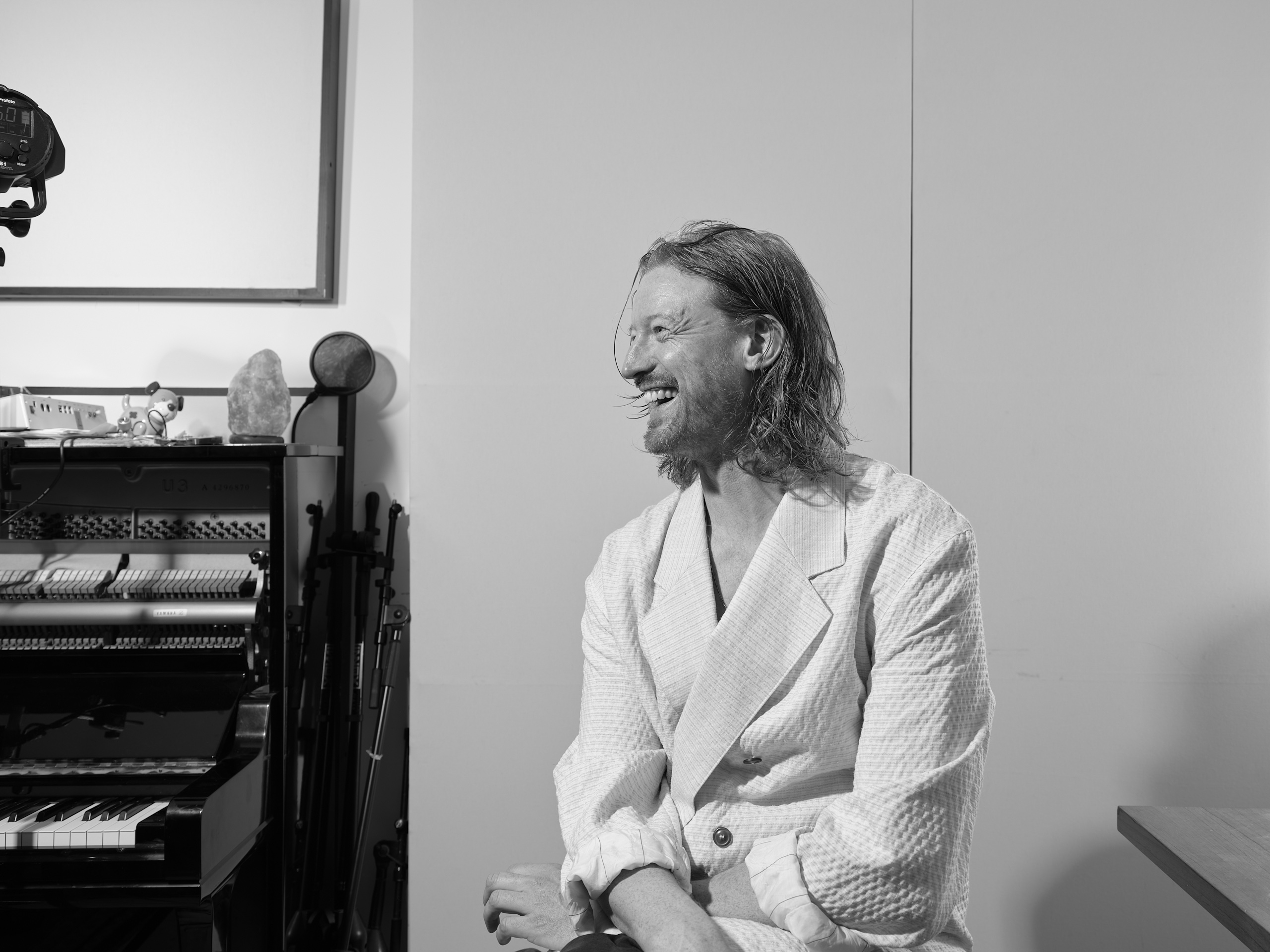
Name: Anderts Tysma
Nationality: Dutch
Occupation: Composer, producer
Current release: Anderts Tysma's new album Parallels is out via Apollo.
Hometown Recommendations: Since I live in both Amsterdam and Berlin:
Amsterdam: eat Surinamese food. It doesn’t exist outside of the Netherlands and Suriname, and Amsterdam has some of the best places.
Berlin: the Funkhaus, one of the most beautiful and best recording studios in the World.
Things I am passionate about but rarely get to talk about: I’m a big movie geek. My initial plan was to make film scores, but my project went in a somewhat different direction. I would still love to do that in the future, though.
If you enjoyed this Anderts Tysma interview and would like to know more about his music and upcoming live dates, visit him on Instagram, bandcamp, and Facebook.
What were some of the musical experiences which planted a seed for your interest in electronic music?
There were a few.
One was at Lowlands festival (Netherlands) when I was 17 or 18 years old and saw Aphex Twin live. That had a crazy impact on me. I remember his shyness and crazy (loud) drum and bass :).
The other one was listening to Herbie Hancock’s first Head Hunters record. It was my first introduction to that kind of sound and the use of synths.
Most genres of music make use of electronic production means. What does the term “electronic music” mean today, would you say?
I think the literal meaning doesn’t necessarily correspond with the genre.
I find genres in general a difficult thing, because it risks putting music into boxes. I think the beauty of music is its potential boundlessness/limitlessness.
Disco, house, techno, drum n bass, IDM and many other genres were about A lot more than just music. For you personally, is electronic music (still) a way of life – and if so, in which way?
Miles Davis once said in an interview that he wasn’t making jazz, but ‘social music.’ I think that’s very well put.
Music is very often more than just music; it’s more of a language for what’s going on around us.
Debates around electronic music tend to focus on technology. What, though, were some of the things you learned by talking to colleagues or through performing and/or recording with other musicians? What role does community play for your interest in production and getting better as a producer?
I think community has been very important.
When I moved to Berlin, I was surrounded by friends who were on a totally different level of music production and songwriting than me. It really helped and inspired me to grow, find my own voice and teach others as well.
Community is everything we have, and we can all contribute to it.
What are examples for artists, performances, and releases that really inspired you recently and possibly gave you the feeling of having experienced something fresh and new?
I was recently sitting with a friend and he showed me the work of a young artist from the Netherlands called Torus. I really like what he does; he has a very fresh sound.
Barker is a big inspiration for me, sonically amazing. And I was in New York a few weeks ago and saw Pan American performing live on guitar. That was so beautiful!
What kind of musical/sonic materials, and ideas are particularly stimulating for your own work right now?
A few things, worlds apart :)
I’ve been listening to quite a lot of gabber music lately. It was all over the place in the Netherlands when I was a kid, but I never listened to it with trained ears. It’s a fascinating genre.
I also recently bought a mixer for performing live, which has really changed a lot for me. It gives me more creative possibilities while performing.
Where do most of your inspirations to create come from – rather from Internal impulses or external ones? Which current social / political / ecological or other developments make you feel like you need to respond as an artist?
I think all of the above, in no particular order.
I see myself as a big walking converter: input comes in, gets processed, and music comes out.
Tell me a bit about the sounds & creative directions, artists & communities, as well as the colleagues & creative hotspots of your current hometown, please. How do they influence your music?
That’s a big question with many different directions.
Sounds & creative directions: with my last album, Parallels, I wanted to go deeper into the sound of an instrument, to be inside it and feel it, hear it. So it’s more textural than my previous record, Hana, and therefore maybe a bit more abstract too.
Most of the recordings for Parallels were done in Berlin and Amsterdam. Those two cities are where my communities are. I like both a lot and enjoy my time there, the special little things about these cities, and above all my communities.
Today, electronic music has an interesting relationship between honouring its roots and exploring the unknown. What does the balance between these two poles look like in your music?
Well, I think when learning music, especially if you’re learning an instrument, you need some time to study it before you master it. The same goes for learning about production, performing live and building an artist profile.
I think it’s good to acquire skills (and then unlearn them), and to get inspired by what has been done before and what the people around you are doing.
What were some of the recent tools you bought, used, or saw/read about which changed your perspective about production, performing, and making music?
I recently bought a mixer that I’m using on stage as well.
I know lots of artists already do that, but for me it’s a new thing. It gives me more of an overview of what is going on, and creative possibilities.
How do you see the role of sampling in electronic music today?
As a kid, I could choose between a sampler and an electric piano. I chose the piano, but sometimes I wonder what would have happened if I had chosen the sampler.
I really enjoy sampling in all its forms, especially with some tape involvement :)
What are some of the most recent innovations in sound design for you - And what are currently personal limits to realising the sounds you have in your mind?
Well, I started using modular three years ago. It has quite a long learning curve; it takes a lot of time to master it as a proper instrument.
I especially like the different philosophies and approaches that developers have towards sound.
With synthesis and sound design I feel that I can go even deeper, fortunately :) We have something to do :)
In as far as it is applicable to your work, how would you describe the interaction between your music and DJing/DJ culture and clubs?
I don’t DJ, but I would like to learn to.
I think it depends a bit on how you approach DJing. It can be similar to what I do live with only electronics: mixing stems, for example.
How, would you say are your live performances and your recording projects connected at the moment? How do they mutually influence and feed off each other?
Both are sort of living things.
After every performance I go back to the studio inspired to try new things, and vice versa.
Even if AI will not entirely replace human composition, it looks set to have a significant impact on it. What does the terms composing/producing mean in the era of AI, do you feel?
I sometimes feel a bit naive when I hear the doom scenarios about AI around me, but based on what I know now, I think it can be an interesting addition to the production palette. At the same time, I do think the industry will inevitably change, as it always does.
But as humans we crave the human experience, and perhaps with AI all around us we’ll crave it even more. So I think it can be an opportunity for humans to show their uniqueness, at least until AI can mimic that as well :)