Published
Name: Andy Sheppard
Nationality: British
Occupation: Composer, saxophonist, improviser
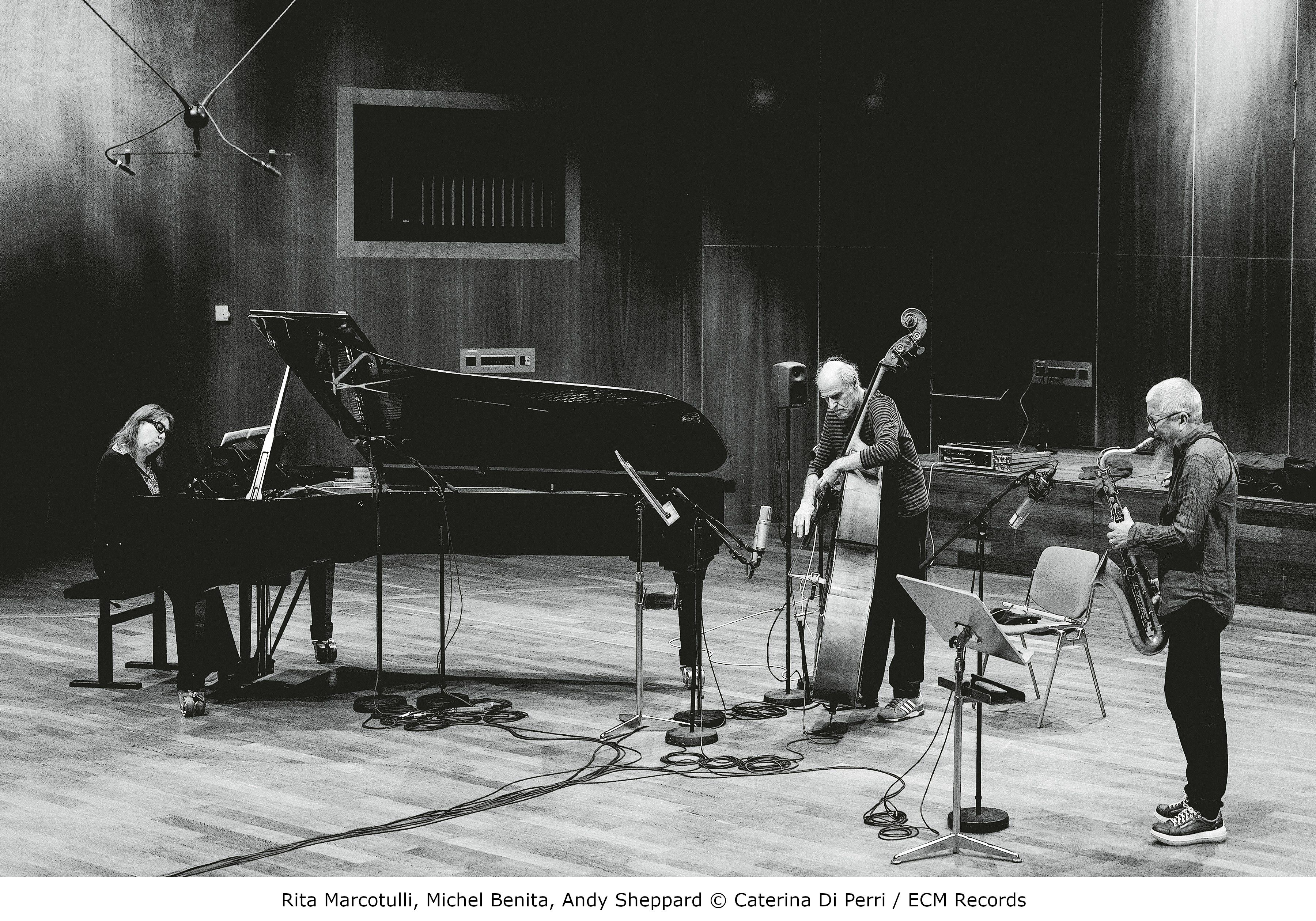
Current Release: Andy Sheppard's new album Salt Catchers, featuring Italian pianist Rita Marcotulli and French bass player Michel Benita, is out via ECM.
Hometown Recommendations: The Chinese Pavilion in Lisboa - for a perfect cocktail.
Things I am passionate about but rarely get to talk about: Wine.
If you enjoyed this Andy Sheppard interview and would like to find out more about his music and current tour dates, visit his official homepage. He is also on Instagram, and Facebook.
When did you first consciously start getting interested in musical improvisation? What was your first improvisation on stage or in the studio and what was the experience like?
My earliest memory is of exploring the sound of my grandmother’s piano - I went on to sing in a church choir and this is where my music comes from - learning by ear my part inside the world of Purcell, Bach etc …
Jazz came later - I smoked some wonderful weed with this fantastic piano player who made me listen to Coltrane, Miles, Mingus, Jarrett etc for the first time. I thought I’d stepped into heaven and I immediately sold everything I owned bought a tenor sax and devoted myself to playing.
Three weeks later I played ‘Sonnymoon for two’ on stage. It was terrifying and exhilarating - I’ve never looked back.
Tell me about your instrument and/or tools, please. What made you seek it out, what makes it “your” instrument, and what are some of the most important aspects of playing it?
I currently play a tenor that was made for me. It’s called the Andy Sheppard autograph series by Trevor James. My soprano is a solid silver Yanagisawa. I never practice the soprano just play it on the gig/recording session.
It’s important to find the instrument / set up that works for you. Mouthpieces and reeds are a never ending story but ultimately the note/sound starts inside you. It just passes through the instrument to get heard in the outside world …
How would you describe your own relationship with your instrument – is it an extension of your self/body, a partner and companion, a creative catalyst, a challenge to be overcome, something else entirely?
The saxophone is always a challenge. But that’s the beauty of it.
Derek Bailey defined improvising as the search for material which is endlessly transformable. What kind of materials have turned to be particularly transformable and stimulating for you?
I’m interested in the way an improvised phrase / idea / melody weaves its way through moving harmonies and time to ultimately move / entice the listener - and how musicians are listening to each other and subtly reacting to make music together for the audience.
Do you feel as though there are at least elements of composition and improvisation which are entirely unique to each? Based on your own work or maybe performances or recordings by other artists, do you feel that there are results which could only have happened through one of them?
With composition I am always revising my choices ie chord voicing or writing a melody at the piano, then changing notes / phrases when I try playing it on the saxophone.
When it comes to tempo, often tunes find their own tempo after being played a few times and it’s often way off the original tempo marking you gave it when writing.
I guess you could say composition requires a lot of thinking whereas when playing / improvising I try to not think at all …
When you're improvising, does it actually feel like you're inventing something on the spot – or are you inventively re-arranging patterns from preparations, practise or previous performances? What balance is there between forgetting and remembering in your work?
The most valid and best improvisation is that which is in the moment, especially if it is connecting on all levels with that which is going on around it.
The more experienced you become, you begin to develop the ability to relax and stretch time - to embrace the mystery - to get into that in-tune sweet spot where your ears are open to what’s going on around you but you have a direction and a story to tell as you continue to react spontaneously to ideas / feelings without thinking - if you try and slip in a premeditated lick the music just stops happening.
There is a big difference between the woodshed and the stage …
Artists from all corner of the musical spectrum, not just “free jazz” have emphasised the importance of freedom in their creativity. What defines freedom for your improvisations?
The freedom to choose the note a half step away knowing that it will sound left.
Taking your recent projects, releases, and performances as examples, what, would you say, are the key ideas behind your approach to improvisation?
I try to find the right hat for the context that I find myself in so as to serve the music in the best way.
For example when I was playing in George Russell’s Living Time Orchestra, I was required to play with much more energy. He wanted a ball of fire flying over the top of the band.
Also with the Carla Bley Big Band I played very differently than in the Trio with Carla and Steve Swallow.
In your best improvisations, do you feel a strong sense of personal presence or do you (or your ego) “disappear”?
Endeavour to be in the moment without ego (easier said than done), but that’s probably where the best music is.
What are some of your favourite collaborators and how do they enrich your improvisations?
It's always good to play with musicians who are more advanced than you are as they will lift you up to their level.
In a live situation, decisions between creatives often work without words. From your experience and current projects, what does this process feel like and how does it work?
Manfred says you’ve got to let the music come into the room.
You know when it does - suddenly it’s all there, happening.
Stewart Copeland said: “Listening is where the cool stuff comes from. And that listening thing, magically, turns all of your chops into gold.” What do you listen for?
When the whole band sounds like one instrument.
As a listener, do you also have a preference for improvised music? If so, what is it about this music that you appreciate as part of the audience?
Free playing can often seem to be more rewarding for the improviser than the listener.
You have to find yourself in your music - if that means playing fast and furious and loud that’s fine but it’s also fine to play with more space and super soft shaping the notes and phrases you play.
I guess I prefer to hear musicians working together inviting the music in …
In a way, we improvise all the time. In which way is your creative work feeding back and possibly supporting other areas of your life?
Yes, we are all of course just making it up as we go along …
I’ve always felt with music that what you put in is what you get out and this is of course true with any endeavour - sounds simple - just as there are only 12 notes. Well, 13, if, like me, you count silence as one.
How can a finite number of notes have an infinite number of combinations?