

Name: Blurry The Explorer
Members: Jeremy Gustin (drums, keys, vocals), Ricardo Dias Gomes (bass, keys), Ryan Dugre (guitar), Leo Abrahams (guitar)
Interviewee: Jeremy Gustin
Nationality: American
Current release: Blurry The Explorer's new album Clear Blue Mind is out via Nublu.
Hometown Recommendations: Flushing Queens! Don't sleep on Hunan noodle and flushing meadows park.
Things that I am passionate about but rarely get to talk about: I make collages from sticker dots and find it very creatively fulfilling. I slice them up and place them. Different shapes and colors. Something about the spacing seems really significant in the sense of time and space. You place one dot and then the next one close??touching?far?up?down?miraculously once you put one or two down its always clear where to put the next . And if you don't like where you put it, then that reveals what to do next. This seems to be some big life mirror sort of situation.
If you enjoyed this Blurry The Explorer interview and would like to know more about the band, their music and upcoming gigs, visit them on Instagram, and bandcamp.
When did you first consciously start getting interested in musical improvisation? What was your first improvisation on stage or in the studio and what was the experience like?
I grew up in a classical music family and naturally started playing classical music at a young age. Was an oboist in orchestras through high school. Studying and practicing in a more formal way.
Around the time I was 13 I first played a drum set and will never forget the feeling. It’s the closest thing I can imagine to perfection. I’m sure it didnt sound that good - but to me it was heaven. Also, it was the first time I was creating something that was mine. I wasnt just interpreting I was improvising.
A few friends and I began making music in my basement. Experimenting with songwriting and improvising. This has never left me, it’s still what I'm always developing, deepening.
By the time I was 16 or so my love of this format made me loose interest in my classical pursuits and I've been following this path of improvisation and composition since.
Tell me about your instrument and/or tools, please. What made you seek it out, what makes it “your” instrument, and what are some of the most important aspects of playing it?
I've found pictures of me hitting pots and pans as a small child so it’s always been there. Even the way I held the wooden spoons truly looks like the same way I hold drumsticks.
But in 7th grade I first sat on a drum set in my middle school. Fell in love with playing it. My parents thankfully being supportive bought me my first set from the local pizza man. I still clearly remember how excited I was.
A few years later I got a vintage Gretsch drum set and I've never gotten another. Still play it to this day.
Derek Bailey defined improvising as the search for material which is endlessly transformable. What kind of materials have turned to be particularly transformable and stimulating for you?
It’s absolutely an extension of me. A voice and like a a writer, a voice that can have a point of view and a sound, but can be easily affected, influenced, inspired etc. But hopefully with a thread that is the “me”.
As someone that plays with many different sort of musicians I’m often pulled in different directions and it’s one of my favorite things about my career. I can be comfortable and uncomfortable which feels healthy. Making chances and figuring out how to make things “work” when they don't go the way you want them to.
Drumming is typically a very supportI've role and one that can dictate alot about the shape. So it’s an important and sometimes wild feeling doing that, especially in a large ensemble. Going with someone or against someone . Playing in unison, making a counterpoint or fully deconstructing something. Build up, break down, stay static.
Many decisions that at times I make and at times seemingly are made for me by the moment.
Do you feel as though there are at least elements of composition and improvisation which are entirely unique to each? Based on your own work or maybe performances or recordings by other artists, do you feel that there are results which could only have happened through one of them?
I think great improvisers have some tools that are ready at all times. The most important is having wide open, big ears.
Sometimes the deepest and trickiest thing to know to do is to do nothing. Or something big out of nowhere. Making confident, bold decisions is an important tool to be able to do. As opposed to having enough facility to play a lot of notes well and just sort of noodle around the key centers and tempos.
Ideally we have a strong voice and this comes out in our playing and it’s impossible to not repeat certain things. It’s part of our vocabulary. BUT the best shows are the ones we surprise ourselves. Do something totally new. Where did that come from?! It's a magic sweet treat that doesn't always happen.
When you're improvising, does it actually feel like you're inventing something on the spot – or are you inventively re-arranging patterns from preparations, practise or previous performances? What balance is there between forgetting and remembering in your work?
When there is repertoire to learn I always try to prepare enough so I don't need to read and I can just let go and not think.
Of course that's not always possible and it’s more often a mixture of thinking and not thinking. But that's the space I want to be when playing.
Artists from all corner of the musical spectrum, not just “free jazz” have emphasised the importance of freedom in their creativity. What defines freedom for your improvisations?
Freedom is truly open ears, not preconceived ideas of what will happen. Being completely in the moment and letting it happen.
Being more of a guide to a sort of spirit that we can sort of conduct with our tools.
Taking your recent projects, releases, and performances as examples, what, would you say, are the key ideas behind your approach to improvisation? In your best improvisations, do you feel a strong sense of personal presence or do you (or your ego) “disappear”?
I'm most happy when I create something with people that I think sounds fully realized. Like composition.
Which improv is fundamentally as well … but often with tools like soloing it's easy to hear that as a “jazz” shape. A head then solo. Then the head out. You know what youre hearing … but when there's no solos just parts, interactions, shapes, you hear it more like classical music, which is more exciting for me.
What are some of your favourite collaborators and how do they enrich your improvisations?
It’s always changing.
I have a hard time with favorites but just last night I played with some new people (Nicholas Jaar, Mariel Roberts and Patrick Higgins) and the process was very different for me in that it was more about creating a sonic landscape to sort of conjure a door for improvisation, with some loose structure of sounds and melodic/harmonic imprints.
Stewart Copeland said: “Listening is where the cool stuff comes from. And that listening thing, magically, turns all of your chops into gold.” What do you listen for?
I try to either make a door or hear one. When I do hear one, open and go in and see.
Ideally you don't have to make any decisions.
There can be surprising moments during improvisations – from one of the performers not playing a single note to another shaking up a quiet section with an outburst of noise. Can you tell me about such situations from your own performances and how they impacted the performance?
You have to decide to go with something, go against it or to stay silent. It’s a wild thing that sometimes just happens and other times you really have to make a decision and go for it.
Such a huge part of this is down to who youre playing with. If they're amazing players you can really do anything. It’s a wonderful feeling. almost like closing your eyes and falling backwards … they always catch you.
Last week I played a gig and would change the tempo in the middle of a piece. No cue, just start a beat and go. It was unreal, they were all with me within a 1/4 of a second.
As a listener, do you also have a preference for improvised music? If so, what is it about this music that you appreciate as part of the audience?
I really don't, I just try to stay as open as I can to inspiration. It can come in surprising ways.
In a way, we improvise all the time. In which way is your creatI've work feeding back and possibly supporting other areas of your life?
It’s very true.
My whole life is an improvisation and being sensitI've, intuitive and recognizing synchronicities are all so important. It's truly all the same formula.

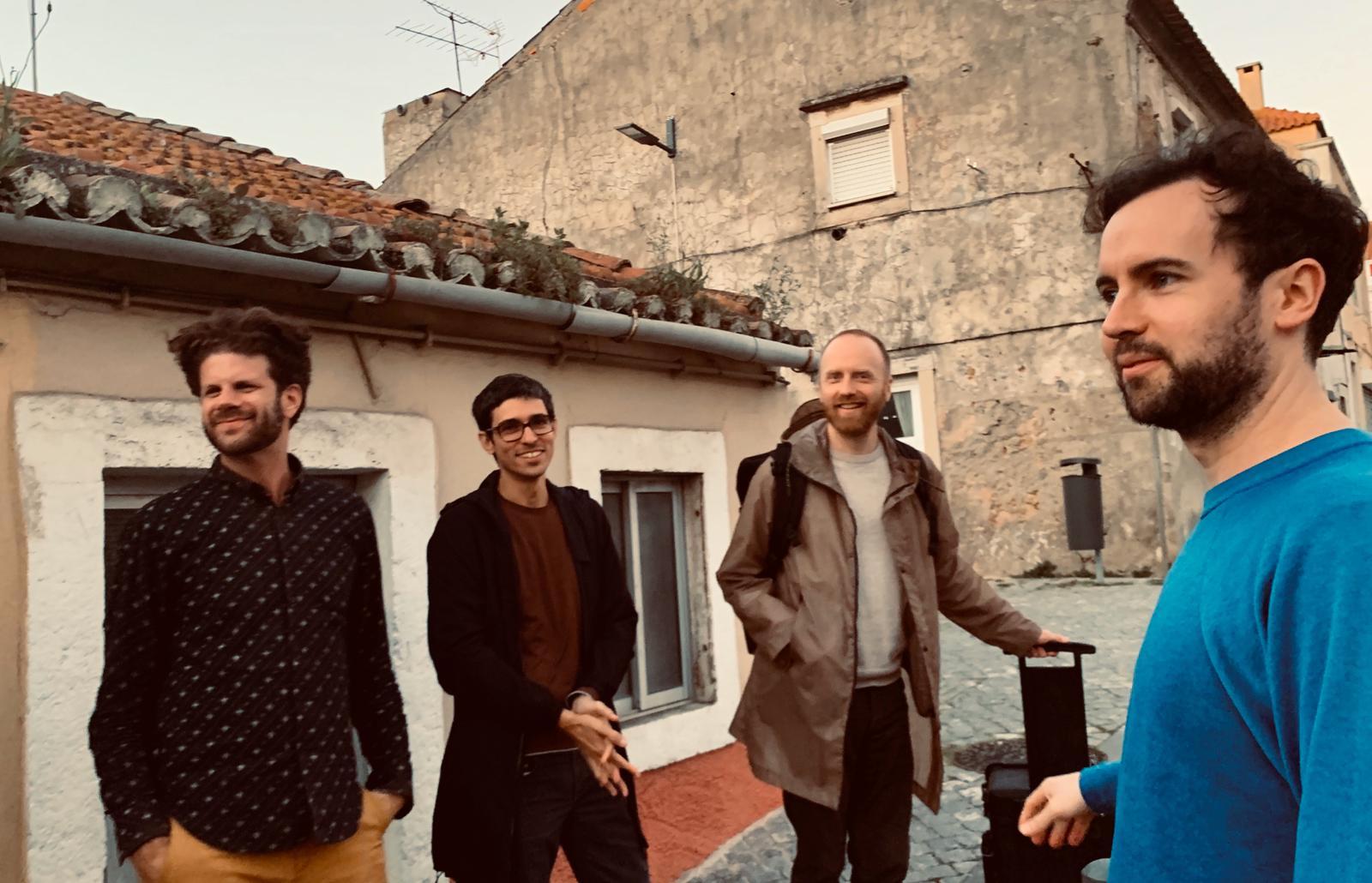 Blurry The Explorer Interview Image (c) the artist
"Sometimes the deepest and trickiest thing to know to do is to do nothing. Or something big out of nowhere."
Video
