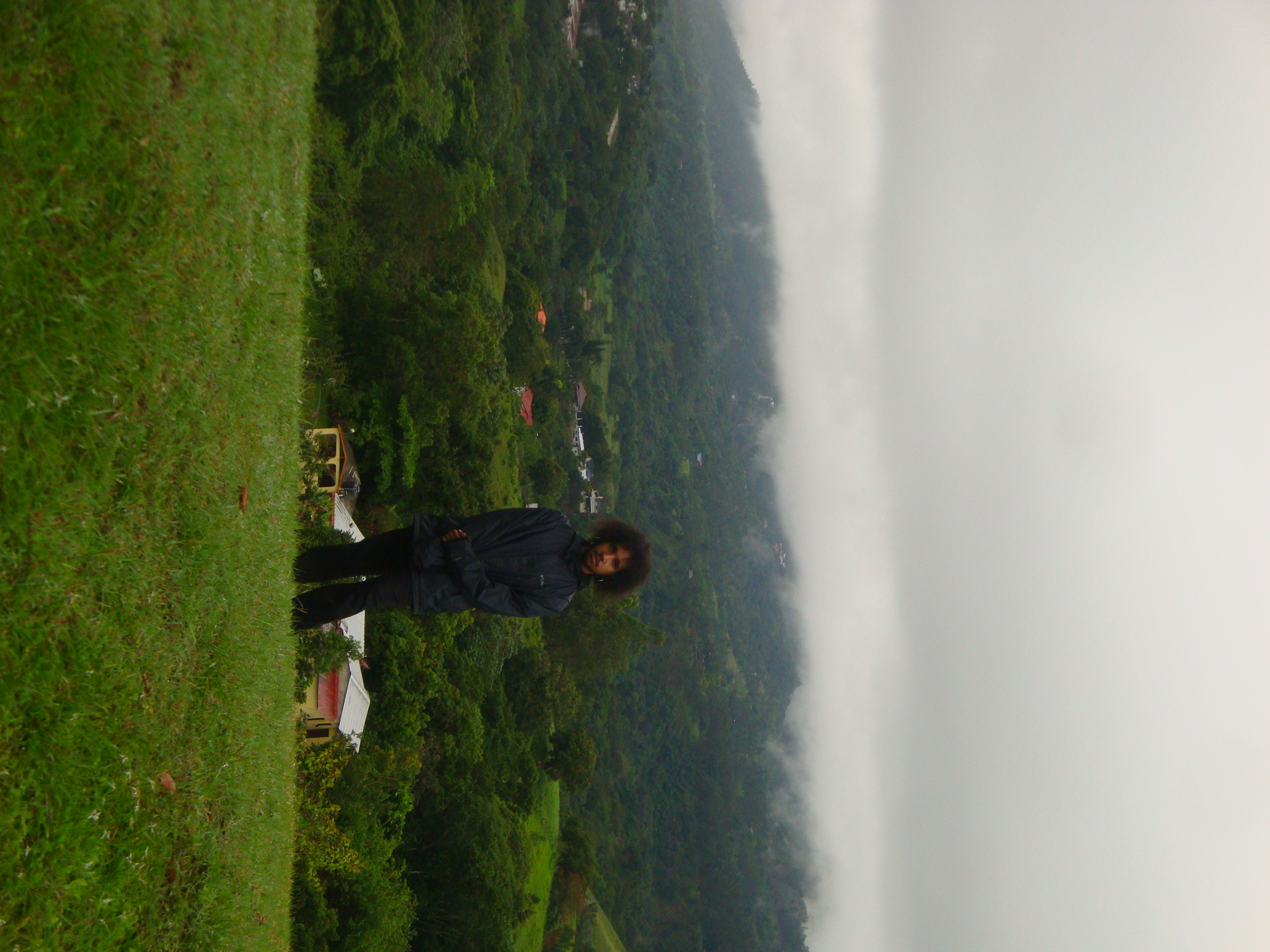
Published
Name: Boundary
Nationality: Dominican
Occupation: Producer
Current release: Boundary's new album PROXIMA CENTAURI is out via Point. Pre-order the vinyl LP here.
Hometown Recommendation: If you ever want to space out in the Santo Domingo for a bit, the Malecon in Santo Domingo Este is a pretty nice spot to wind down for a while.
Things that I am passionate about but rarely get to talk about: I’m a big fan of meteorology and weather phenomena, I always kinda joke/not that I’d love to study it in the future. Maybe it’ll happen
If you enjoyed this Boundary interview and would like to know more about his music and upcoming live dates, visit him on Instagram, facebook, bandcamp, and Soundcloud.
The path to becoming a producer is a process - but from many interviews, I am under the impression that there are nonetheless one or a few defining moments. If this was the case for you – what were they and why were they so incisive?
I defo feel like it was the ‘How To Make A Legowelt Track’ video.
I knew what Ableton Live did but I had never seen it in function. Obviously, the video is edited, but he just seems to fly around the program and make music so effortlessly, that just seemed amazing to me, I was using Logic Express, but it just seemed like the workflow in Live was the one I wanted to use.
I downloaded it and instantly knew this was the workflow for me.
Tell me about one or two of your early pieces that you're still proud of (or satisfied with) in terms of production – and why you're content with them.
"33 Posibles Encuentros" (2018) and "Guia Para Descubrir Los 4 Cielos" (2020) are both songs I really like.
I feel like they both sound like beta versions of what I would end up doing on my latest record, PROXIMA CENTAURI.
In how far, would you say, was your evolution as an artist connected to the evolution of your music set-up and studio? Were there shared stepping stones?
I feel like since 2018, I’ve constantly added one more thing to my ‘studio.’ At the moment I don’t have a fixed place for my setup, but right now I have it over at my label’s studio, Point Studios.
I’ve just seen it as ways to get faster results, as you can honestly do anything on a DAW nowadays. My first hardware setup in 2018 was an Arturia Keystep a Cyclone TT-303, and an Elektron Octatack. I found it completely changed the way I approached music and it just felt fun, which was very important for me,
I always want music making to feel fun. I’ve optimized my current setup around that, just want to have fun making music!
There are artists who can realise their ideas best with a traditional – or modified – piano interface, others with a keyboard and a mouse, yet others by turning knobs or touching screens. What's your preferred and most intuitive/natural way of making music and why?
At the moment, I use the Squarp Hapax as my main interface for composing, but I’m not opposed to a laptop with or without a midi keyboard workflow either.
For the longest time I really just used the keystep to get my ideas recorded. The Hapax currently works for me because it’s able to bridge Ableton with my hardware so well, and also brings some sort of physicality to a lot of the virtual synths I use.
Tell me about the space of your current studio/workplace and how you've set it up to optimise creativity.
I currently have my setup over at Point Studios, It consists of the Squarp Hapax, Elektron Octatrack, Elektron Machinedrum, Norand Mono, and of course Ableton.
I’ve set up a template in Ableton, where 16 tracks correspond to the 16 tracks of the Hapax, so I can easily access all of the synths and stuff I assign to to those tracks. OT for sampling, chopping up breaks, and one-shot duties. Machinedrum as a drum machine obviously, and just coming up with more original, quirky drum sounds in general when needed.
The Norand Mono is a fantastic sounding monophonic synth, that I would describe as a roland sh-09 on steroids, very underrated and just so quick to get a good patch going.
From the earliest sketches to the finished piece, tell me about the production process for your current release, please.
Well, it all began when I made this template on Ableton called ‘fake orchestra’
I basically assigned a bunch of instruments with sounds already assigned to them, and I kinda decided to not change those sounds in most tracks. I thought of it like those were the instruments the respective players had, and if you wanted to change how it sounded, you’d have to process it with effects and stuff. This template was able to help me make music soo much faster.
I made 2 of the tracks last year around SeptemberOoctober. One was made in the time I was in Bogota, Colombia, and the rest were made during February-April of this year.
Late producer SOPHIE said: “You have the possibility with electronic music to generate any texture, and any sound. So why would any musician want to limit themselves?” What's your take on that?
I definitely agree with that. I very much enjoy editing and making sounds from scratch, but I can understand that might not be for everyone.
Some people might say it’s kinda time consuming and takes away time from actual composing, but I’ve reached ideas for new songs just by fooling around on a synth and trying to get interesting sounds of it. You might be missing out on that if you just use presets.
Everyone has their workflow though!
Tell me about your aesthetic preferences for picking effects like reverb, delay, compression, chorus etc … - what was the role of these effects in the production of your current release?
I’m heavy on using a lot of delays honestly.
I especially like the plugin MTurboDelay, which has a lot of interesting and experimental delay algorithms. It’s also a very easy way of ‘faking’ complex drum programming, if you know where to place your steps and kind of create a conversation with the delay feedback.
I also love using chorus and reverb a lot but I try to use it in specific scenarios to give more impact to stuff. Same thing goes for compression
Producers work with sound in a very direct way for very long stretches of time. What are some of its qualities that you appreciate now more than before, and how do you try to bring these to the fore in your work?
I’ve been kind of obsessed with making these seemingly simple panoramas and ambiance in the music sound really huge.
It’s something some of my big inspirations, like Ocio (Gustavo Cerati & Flavio Etcheto) made happen in their music.
The current production process allows for fast and infinite variations. Can you tell me about how you deal with this potential for the infinite and what ultimately decides on how many iterations to create and which version to release?
This is something you hear people say often about why they prefer hardware.
It truly does mean you have to work within the gear you have. Obviously, some gear is more complex, but nowadays modern computers are so powerful for the average musician that you can really get carried away.
It's a Pro and a Con, but I definitely have to agree that I appreciate the restraints that hardware provides.
Tell me about the role collaboration played in your recent productions – and how you see the potential for machines as collaborators compared to humans.
Well, in terms of composing, mix and production, I usually take care of everything myself.
I sometimes do the artworks for the releases together with my brother, but recently I’ve been doing the art with some of my friends; Martin Bruce made the artwork for Oxido En El Espejo and Fernando Molina made the artwork for PROXIMA CENTAURI, which just came out.
As for the machines, I guess the collaborators would be my computer and my synths and stuff.
Production, as opposed to live performance, can be a lonely process and feedback from listeners isn't always tangible. What is it about it that gives you satisfaction?
If I can hear it myself a bunch of times, I’m probably happy enough with it. I mostly try to make music I feel like I wanna hear to be honest.
But obviously I share some of my demos with close friends and their reactions are pretty important feedback as well.
We can watch videos on production, take producer courses, and exchange deep insights on gear forums. Amidst these options to improve one's chops/skills, how do you keep things playful?
Just listen to a bunch of music and keep yourself open to many other genres outside the type of music you make.
I feel like that’s something a lot of people miss out on.
AI is already capable of making something most people would recognise as music. I am curious, though, and will keep this question somewhat broad on purpose: What do you think that means?
Well yes, just like AI can generate a photo that resembles a human being, or imitate a drawing, it can also generate something that resembles music, as it’s just scraped stuff from almost everyone has made.
But what it will always lack is true intentionality behind the creations.
Creativity can reach many different corners of our lives. Do you personally feel as though producing a piece of music is inherently different from something like making a great cup of coffee? What do you express through music that you couldn't or wouldn't in more 'mundane' tasks?
Not really. Everyone expresses their creativity in their own specific way, be it the way they solve their daily tasks, make their food, decorate their space.
I guess everything in some way or form connects to your creativity to see, feel and go about your ways on everything about life!