Published
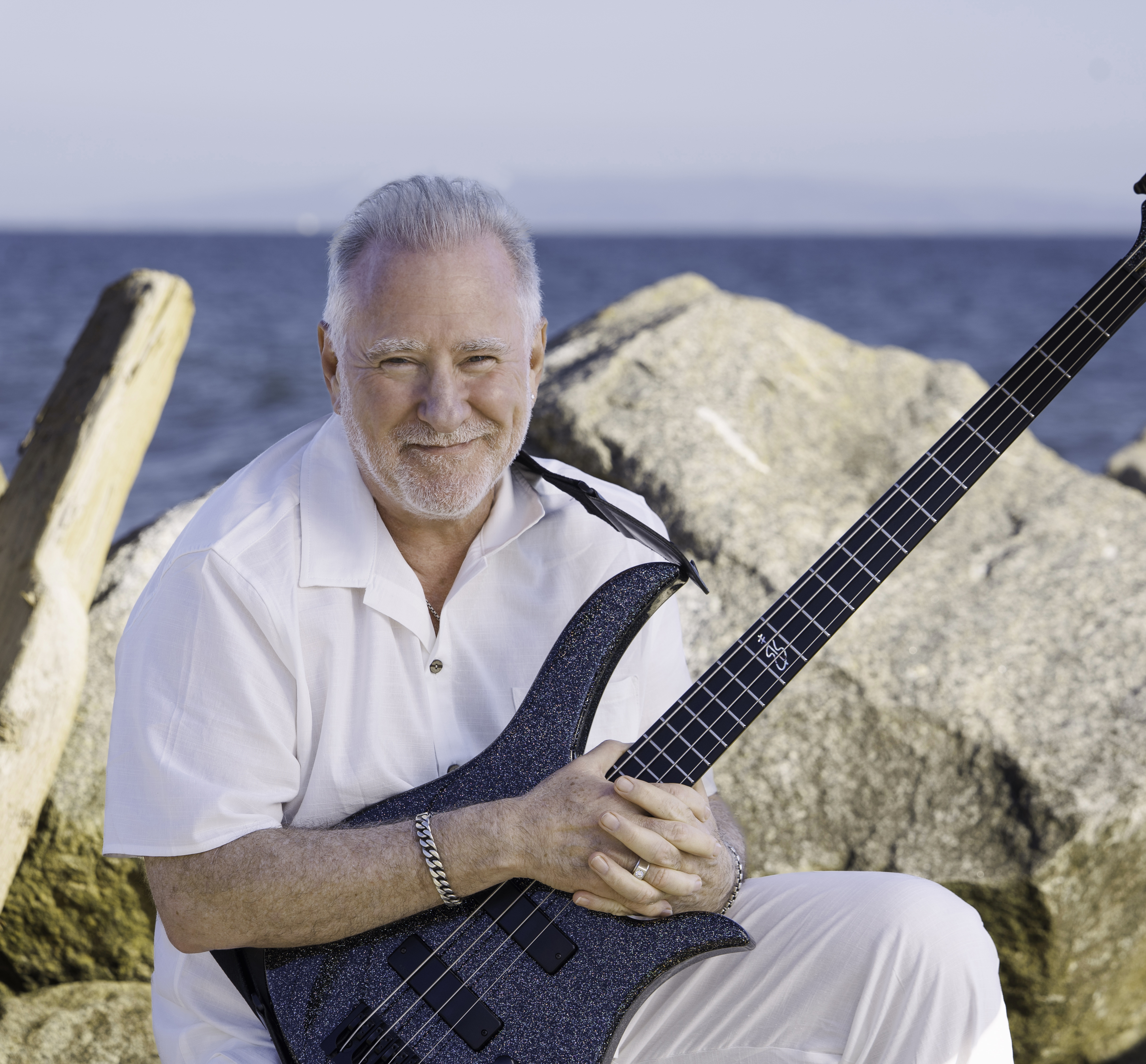
Name: Brian Bromberg
Nationality: American
Occupation: Bassist, composer
Current release: Brian Bromberg's new album Awakening is out via Shanachie Entertainment.
Hometown Recommendations: I am from Tucson, Arizona, in the Sonoran Desert. It is a very special place. Go visit Mt. Lemmon, which is in the Catalina Mountains on the northern edge of Tucson. In about an hour's drive, you go from the desert to beautiful pine and fir forests. It is almost like driving to Canada at sea level! It is absolutely beautiful. And be sure to check out the night sky. The stars in the desert are simply stunning.
Things that I am passionate about but rarely get to talk about: I am passionate about animals, nature, the environment, astronomy, science, and professional drag racing, especially the NHRA. One of my dreams is to own a professional drag racing team someday.
If you enjoyed this Brian Bromberg interview and would like to know more about his music, visit his official homepage. He is also on Instagram, and Facebook.
When it comes to experiencing strong emotions as a listener, which albums, performances, and artists come to mind?
To be honest, that is an impossible question for me to answer.
There are so many artists and records that have touched me in so many ways. From Miles Davis, Chick Corea, Jimi Hendrix, and Antonio Carlos Jobim to the Mahavishnu Orchestra, the list goes on and on.
There can be many different kinds of emotions in art – soft, harsh, healing, aggressive, uplifting and many more. Which do you tend to feel drawn to most?
I am drawn to what moves me in the moment. What makes me feel, look within, ask questions, and feel something deep in my soul.
Art of any kind can be all of those things: soft, harsh, healing, aggressive, uplifting, and more. How we feel it and interpret it is what matters most.
I have had a hard time explaining that listening to death metal calms me down. When you listen to a song or composition, does it tend to fill you with the same emotions – or are there “paradoxical” effects?
Music connects with us in so many ways; there are no rules.
I think we just have to look within ourselves and ask why certain music connects with us the way it does. What am I getting from this music, and why? Is there a lesson in it, or is it simply an emotional feeling?
In as far as it plays a role for the music you like listening to or making, what role do words and the voice of a vocalist play for the transmission of emotions?
I am an instrumental artist, so for me, it is not about the words or the voice. But I would imagine it has a lot to do with the delivery of the song, the story being told through the lyrics, and how those words relate to you as the listener.
I'm just guessing, as I am an instrumentalist.
When it comes to experiencing emotions as a creator, how would you describe the physical sensation of experiencing them? [Where do you feel them, do you have a visual sensation/representation, is there a sense of release or a build-up of tension etc …]
I feel them in the depths of my soul, my being, my inner self, where my spirit lives, deep within the core of my body.
It can be all-consuming, so powerful and remarkable. It is a feeling and an energy that takes over your entire body, and having that energy come out through the music and the notes you are playing can be overwhelming.
It can be insanely emotional and spiritually fulfilling.
When it comes to composing / songwriting, are you finding that spontaneity and just a few takes tend to capture emotions best? Or does honing a piece bring you closer to that goal?
Just to make sure I am understanding the question properly, when I think of "takes," that refers to recording, not songwriting.
To me, there are no takes in songwriting; you just write. You listen, you feel, you sing, and you create the music that you will eventually record. You always work on refining the notes to make the music the best it can be, telling the story the way you want to tell it.
Sometimes a song literally writes itself, and I just have to figure out where to put my fingers to play the notes that are channeling through me. Other times, I might try a few different phrases and land on the one that moves me the most.
For me, all of that happens before the actual recording process. If I play something special while writing the song, I might keep it in the final recording. It all depends on how it feels and moves me.
How much of the emotions of your own music, would you say, are already part of the composition, how much is the result of the recording process?
The music I write is an expression of my emotions because it comes from within me when I write it. The recording process simply documents the emotions already present in the music.
They are two different things entirely, although they can certainly be connected. You want the recording process to enhance the music and capture the highest level of performance possible, but the emotion and melody are already established in the composition.
For your current release, Awakening, what kind of emotions were you looking to get across?
I went through a personally challenging period when I wrote this record.
I had a long relationship end abruptly, moved to a different city with all my life's belongings, underwent eye surgery, and then, while putting in eye drops after surgery, lost my balance and fell onto a concrete floor in my new surroundings, breaking my back. It was an incredibly painful period, both physically and emotionally. It was important to me that all of those emotions came out through my music.
In many ways, the music itself was far more important than the bass playing. The bass is simply my tool for performing and creating the music. The music always comes first.
How do you capture the emotions you want to get across in the studio?
Well, that is what art is all about. It is our responsibility as artists to convey the emotions we are feeling. In music, at least to me, the only way we can truly do that is to reach a level of musicianship and expertise on our chosen instrument that allows us to tell a story, share our emotions, and say something meaningful through the music.
Anyone can play an instrument, but truly playing the music and sharing a part of who you are as a person through your instrument is something entirely different. It is not just what you play; it is how you play it.
We must develop the musicianship and expertise necessary to express the music and tell the story we want to tell. That takes years of dedication, discipline, and hard work. Only then can you truly capture and communicate the emotions you want to express through your music.
What role do factors like volume, effects like distortion, amplification, and production in general for in terms of creating the emotions, energies or impressions you want?
All of those things play a part in how the music sounds and how your emotions come across. It also makes a huge difference what genre of music you are playing.
Effects like distortion and amplification are more commonly associated with electric guitars and rock-based music. In jazz, those kinds of sounds are generally less prevalent because of the nature of the music.
Production is incredibly important when it comes to the overall quality and sound of a recording. You have to understand the big picture: the music, style, genre, instrumentation, and how everything works together.
But a great deal of the emotion that comes through the music has to do with the artistry and musicianship of the individual players. Effect pedals and distortion do not make you a great or complete musician. They simply add more layers of sound to what you are already playing.
Ultimately, it is up to each musician to perform at the highest level possible. If you don't have a good sound on your instrument with your hands, all an amplifier is going to do is make that bad sound louder! It is up to you as the player to deliver real musicianship and genuine emotion directly through your instrument, without relying on effects or bells and whistles.
That is why I rarely practice with an amplifier. I want to have a direct relationship with my instruments through my hands and develop a beautiful sound organically.
In terms of emotions, what changes when you're performing live on stage, with an audience present, compared to the recording stage?
Everything changes because we are feeding off the audience and their energy.
I call the audience part of the band because they contribute so much to the energy and vibe of the music we play. They inspire us to play harder, with more feeling, passion, and intent, because they are right there sharing the experience with us and giving us their energy and love for the music. It is quite remarkable, to be honest. It is an amazing feeling, and you just want to be the very best you can be for them.
Recording is a totally different experience because you don't have that audience there inspiring you. You have to dig deeper within yourself. It is up to you and the other musicians to perform at the highest level possible and capture the very best music and performances you can, because those performances will live forever on the recording.
How does the presence of the audience and your interaction with it change the emotional impact of the music and how would you describe the creative interaction with listeners during a gig?
I touched on this in the previous question, but the audience gives us so much energy and love for what we do. That is why they are there: to share and experience the music together with us in real time.
The audience makes you want to play to the absolute best of your ability, with more intensity and passion, because they are hanging on every note you play. They don't just want to hear your music. They want to feel your music. They want to feel you, who you are as a person. They want to be moved and touched by you. They want to leave your show feeling more connected to you, almost as if they know you better.
It is truly a blessing to be able to communicate with people on such a deep emotional level through music.
What kind of feedback have you received from listeners or concert audiences in terms of the experience that your music and/or performances have had on them?
That is by far the most rewarding part for me: what this whole musical experience is about and how it can affect and connect with people. Speaking for myself, I have three different audiences and fan bases.
There is the bass world, people who gravitate toward my bass playing and the instrument itself, whether acoustic upright bass or electric bass. Then there is the traditional jazz world, people who enjoy mainstream, straight-ahead acoustic jazz, jazz standards, and acoustic music. And finally, there are the people who enjoy funky contemporary jazz and smooth jazz, which, to me, is more like instrumental pop music and funky grooves with jazz improvisation on top.
Those are three very distinct audiences. There is certainly some crossover, but there are also some strong divisions. It is impossible to please everyone at the same time with the same project, album, or style of music.
The bottom line is that you hope to reach the people who truly understand who you are and where you are coming from. It means the world to me when people come up and tell me how much they love my music, which may have nothing to do with my bass playing. It is incredibly rewarding when they connect with my compositions, with the music that comes from my heart and from a very deep place within me.
I know my bass playing gets a lot of attention because of what I do and how I do it, but I am much more than just a bass player who plays fast and crazy. When people connect with my songs and my music on an emotional level, it is deeply gratifying. It truly means the world to me.
Would you say that you prefer to stay in control to be able to shape the emotions or do you surrender to them and allow the music to take over? Who ultimately has control during a live performance?
The artist always has most of the control. We simply respond and adapt to the audience and the environment.
We do what we do and deliver the music the way we feel it. The audience responds in kind. The more connected they are, the more they give us, and the more we give back to them.
It is truly a beautiful back-and-forth experience and a blessing to be able to have that be your life.
The emotions that music can generate can be extremely powerful. How, do you think, can artists make use of this power to bring about change in the world?
By coming from a real and honest place.
We all have a voice. How do we choose to use it? Do we use it to make the world a better place? That is a choice we all have to make. Do we do what we do to serve our own egos, or do we share what we have with the world and take that responsibility to a much higher and more meaningful level?
There is no room for ego on stage, in the studio, or in music, at least not for me. Let what you do speak for itself, and always consider the greater good. We are all the same: the human race, sharing this planet Earth.