

Published
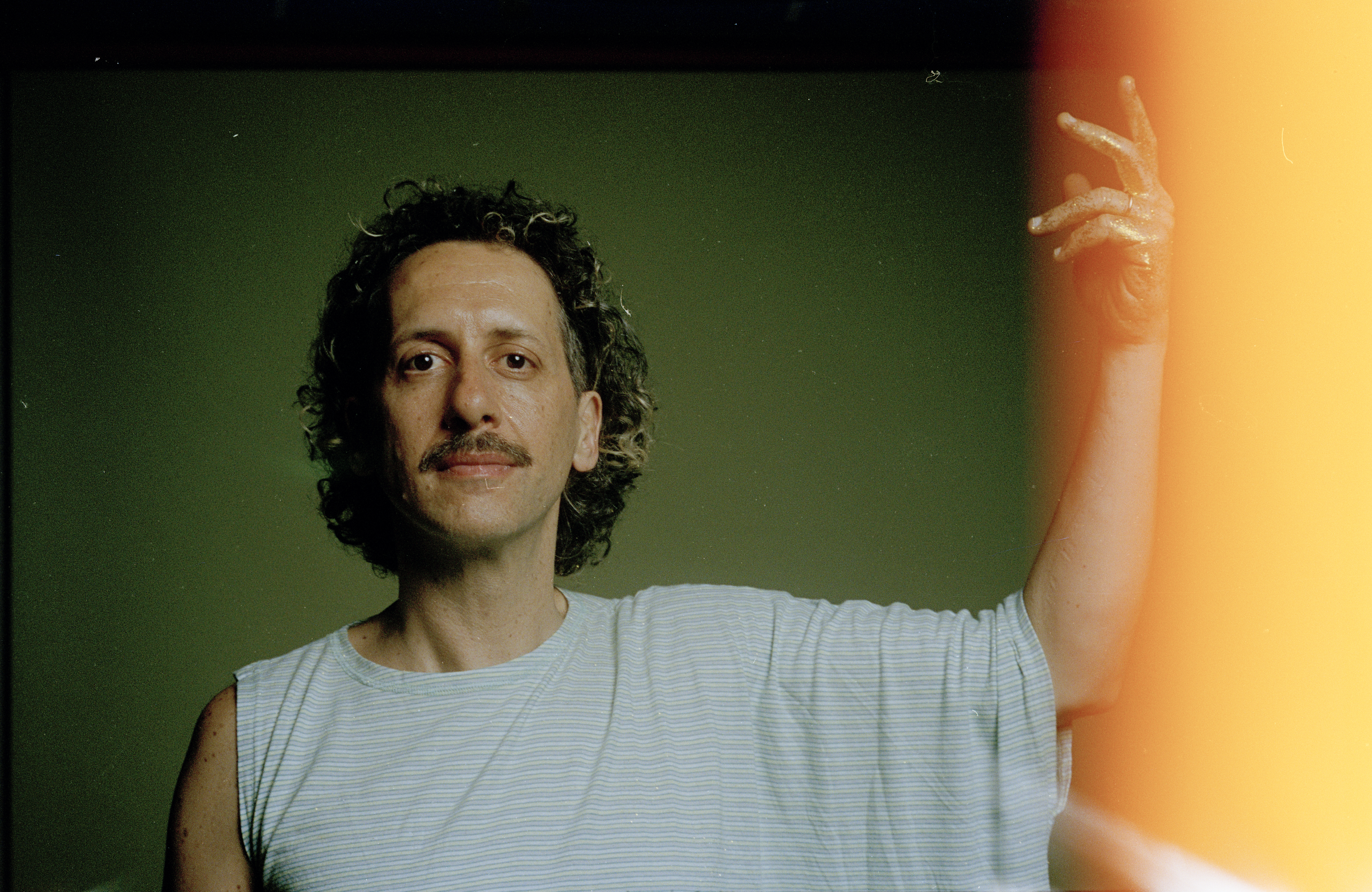
Name: Caetano Malta
Nationality: Brazilian
Occupation: Singer, songwriter
Current release: Caetano Malta's new album Eterna Juventude is out October 16th 2026 via Favorite.
Hometown Recommendations: Places that only local, alternative people know about: In my hometown, São Paulo, the Bumba Meu Boi party at Morro do Querosene neighborhood —a popular street party that happens three times a year.
In the city where I live, Paris (actually a little outside, in Montreuil), the Sunday AIRE—an incredible party with dozens of concerts.
Things that I am passionate about but rarely get to talk about: I am deeply fascinated by the spiritual or metaphysical connection between people and nature: how we are all connected, how we communicate, how nature can influence us, and how we can feel people's energy without actually knowing them.
If you enjoyed this Caetano Malta interview and would like to know more about his music and projects, visit his official homepage. He is also on Instagram, and Facebook.
Where does the impulse to create something come from for you? What role do often-quoted sources of inspiration like dreams, other forms of art, personal relationships, politics etc play?
The impulse to create is something inevitable if you are connected to universal intelligence.
Melodies are always floating around us; if our channels are open, we can receive them. Afterwards, intellectual work is almost always required to develop and finish a composition. So, the act of composing is also a form of therapy—one that can be very pleasant and almost meditative due to the need to connect and clear the mind to reach good ideas.
My inspirations come from human relationships, encounters and departures, everyday political tensions, musical references, and especially the mood of the moment, as I try to translate into music the sensations I have within me.
For you to get started, do there need to be concrete ideas – or what some have called a 'visualisation' of the finished work? What does the balance between planning and chance look like for you?
Normally, I compose in a very free manner.
Perhaps something from the moment connects the songs and a cohesive album starts to form, or perhaps an aesthetic consciousness is already formed in my mind and I start moving in that direction—but I always let chance play its part. Later, when I begin producing the record, I try to visualize the finished project.
The important thing is to have a clear direction in mind and set aesthetic and practical limitations—such as the instrumentation or production process—in order to achieve a cohesive result.
Is there a preparation phase for your process? Do you require your tools to be laid out in a particular way, for example, do you need to do 'research' or create 'early versions'?
The preparatory phase is composing the songs, usually with voice and acoustic guitar.
I don't like making early versions for my records; I like to jump straight into producing and recording, flirting with the chance nature of ideas.
A little chaos can help unusual ideas surface.
Do you have certain rituals to get you into the right mindset for creating? What role do certain foods or stimulants like coffee, lighting, scents, exercise or reading poetry play?
To create, I need to be disconnected from the ultra-overloaded modern world: turning off the computer and especially the cell phone, taking a day off from bureaucracy, emails, and practical matters, and taking a walk in nature.
When I write music collaboratively, simply being with that friend, motivating each other, and practicing the act of composing already creates a great environment for creation.
For Eterna Juventude, what did you start with? If there were conceptual considerations, what were they?
Two situations put me in the mood to compose this record: the pandemic and the birth of my daughter.
The basic concept comes from childhood memories and how these memories—along with our relationship with children—can bring us "Eternal Youth." It's not about staying young forever or fighting against aging; it's about recovering the child inside us and living through that child at all times.
My theory is that the wisdom of happiness lies in the mind of a child. When we recall the fond moments of our childhood and when we play with children, we can access that feeling. That was the exercise I did while making the record.
In Portuguese, we have the verb brincar (to play/playfully engage), which is different from jogar (to play a game/compete). Brincar means to play without the intention of winning; it is playing purely to have fun, surrendering oneself to a world of imagination, fantasy, and enjoyment. It is the child's way of knowing how to live—being happy through imagination alone.
That is the core of Eterna Juventude.
Tell me a bit about the way the new material developed and gradually took its final form, please.
The compositions were made during the pandemic isolation, and as I needed help writing lyrics, I invited a few partners.
I started the recordings alone in my studio in São Paulo, and a large part of the arrangements was built that way. Later, I took the album to Bruno Buarque, and we continued producing together. Bruno recorded drums, percussion, some synths, and also mixed the record.
After that, we invited a few musicians to record, followed by the special guest appearances.
What makes lyrics good in your opinion? What are your own ambitions and challenges in this regard?
In my opinion, good lyrics are fluid and natural, where the words merge organically with the melody. I also like a sense of mystery; I enjoy poetry when it isn't direct, when there is something to be interpreted—something to discover if you step inside it.
For me, it is almost like painting a large canvas, where you place elements one by one until, in the end, there is a whole scene to admire.
What are areas/themes/topics that you keep returning to in your lyrics?
Memories, spiritual evolution, interpersonal relationships, and politics.
Many writers have claimed that as soon as they enter into the process, certain aspects of the narrative are out of their hands. Do you like to keep strict control or is there a sense of following things where they lead you?
Following things where they lead me; I don't have that much control over the process.
I like to let it flow, to be surprised, and to embrace any new idea if I feel it's worth it.
There are many descriptions of the creative state. How would you describe it for you personally? Is there an element of spirituality to what you do?
Yes, absolutely. There is an element of spirituality and connection with universal intelligence.
I would describe myself as a fisherman who manages to catch melodies floating through the sky.
Once a piece is finished, how important is it for you to let it lie and evaluate it later on? How much improvement and refinement do you personally allow until you're satisfied with a piece?
Yes, stepping away for a while and listening to the music with a fresh mind is essential. When you get deeply immersed in the recording process of an album, you can easily lose an impartial sense of judgment.
Afterward, with fresh ears, I like to polish the production until the sensations I have in my head are fully achieved.
How do you think the meaning, or effect of an individual piece is enhanced, clarified or possibly contrasted by the EPs, or albums it is part of? Does each piece, for example, need to be consistent with the larger whole?
I think an album always enhances the songs within it; they always gain strength.
I like it when there is coherence—it doesn't have to be complete, but I appreciate a thread that ties everything together, and I consider aesthetic cohesion fundamental.
In terms of what they contribute to a song, what is the balance between the composition and the arrangement (including production, mixing and mastering)?
60% for composition, 30% for arrangement and production, 9% for mixing, and 1% for mastering.
Music and the accompanying artwork are often closely related. Can you talk about this a little bit for your current project and the relationship that images and sounds have for you in general?
On the cover of Eterna Juventude, I am offering light to the audience—a star, a glow of enthusiasm, eternal youth through joy, playfulness, and wonder. That is what the album is about.
I don't think an album cover needs to be as explicit as mine, but I believe there must primarily be aesthetic coherence between the two.
After finishing a piece or album and releasing something into the world, there can be a sense of emptiness. Can you relate to this – and how do you return to the state of creativity after experiencing it?
There is always a gap between the creative process and the release of an album, especially given all the technical and bureaucratic issues, as well as how the industry works.
So I usually enter the creative process for a new album even before the completed one is released; I have never experienced that sense of emptiness. In truth, it feels as though the creative process never stops if you know how to give it space.
I would love to know a little about the feedback you've received from listeners or critics about what they thought some of your songs are about or the impact it had on them – have there been “misunderstandings” or did you perhaps even gain new “insights?”
In general, people find the album very bright (solar) and mention that it is relaxing and full of energy.
From the comments, I realized that the standard here is high and the album is really good. I think some lyrics are quite open to interpretation, and I love how some people take paths I could have never imagined.
Creativity can reach many different corners of our lives. Do you personally feel as though writing a piece of music is inherently different from something like making a great cup of coffee? What do you express through music that you couldn't or wouldn't in more 'mundane' tasks?
Yes, it is very different from making a cup of coffee, even if it comes easily and quickly.
For instance, I composed 'Domingo Matinê' in 15 minutes—including harmony, melody, and lyrics—but I was already deep in the process of writing other songs, and this one just came out like that.
Sometimes, with fellow songwriters, we can create very quickly, as if we were in the kitchen experimenting with new recipes, but we still need to get into the right mood. When the subject matter is more delicate and the music gets complex, composing requires a profound level of concentration and work.
We never need that level of concentration for mundane tasks.