

Published
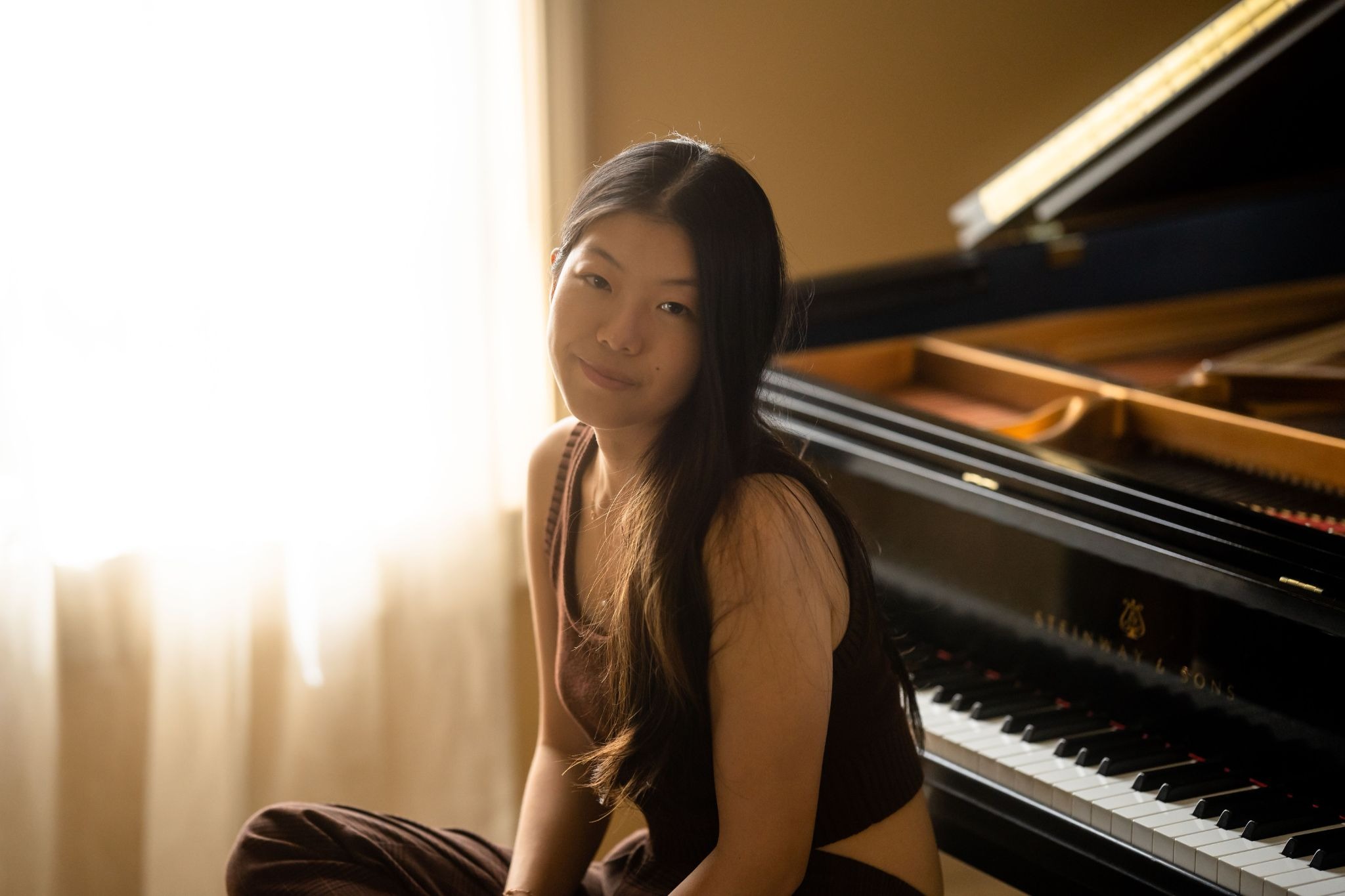
Name: Caroline Ho
Nationality: American
Occupation: Composer, pianist, celist
Current release: Everest: The Other Side, featuring Caroline Ho's score, is now playing in theatres.
If you enjoyed this Caroline Ho interview and would like to know more about her music and projects, visit her on Instagram.
Do you think that some of your earliest musical experiences planted a seed for your interest in film music as well?
I began composing as a young kid; outside of the practice room, I spent my time reading and writing short stories. I think that pairing of interests has been there since the beginning.
I remember as a kid I would listen to audio narrations of Tchaikovsky’s The Nutcracker with the music playing on repeat. I was always intrigued by that intersection of music and storytelling and that curiosity only grew.
My dad, who always dreamt of being a musician himself, instilled in me early on to keep post-its and scraps of manuscript paper with musical ideas. My room was full of half-phrases of ideas, both musical and stories.
I was fortunate to play both piano and cello and used these as metaphorical and literal instruments for my ideas. Playing around on them and experimenting with no boundaries was key to me eventually developing my compositional voice.
What were your very first active steps writing film music and how would you rate the gains made through experience - can one train/learn being an artist?
I was lucky to have such fantastic mentors early on - Marco Beltrami, to name one - and I think what was most crucial was being mentored while also actively practicing the craft myself.
He was mentoring me while I was still in college at Yale, and he’d send over scenes from previous films of his to try my hand at scoring. That practice, along with scoring as many short films as I possibly could while a student, was instrumental and allowed me to apply these larger, macro ideas about scoring into something tangible.
I was very fortunate to land my first solo studio gig a year after graduating college, with director Mark Waters at Netflix - and having those learning experiences beforehand was extremely valuable.
For your own creativity and approach to writing for film, what were some of the most important things you learned from teachers/tutorials, other composers, or personal experience?
Most recently, I was very fortunate to work with composer Ludwig Göransson on The Odyssey and Star Wars: The Mandalorian and Grogu.
I gained an immense amount of knowledge and it certainly informed my process while I was scoring Everest: The Other Side.
Especially with Everest being an IMAX film, it was so informative to see the sonic possibilities within that format.
How would you rate the importance of soundtracks and film music for the movie as a whole? How do you see the relationship between image and sound in a movie?
My favorite scores are ones where you can listen to it on its own and feel like you can visualize and feel the movie and its emotions all over again.
The relationship between the visual and the audio entirely depends on the project and what we need to be in service of; understanding that relationship and how it differs from film to film is a skill that I’m always honing.
How did you get started scoring for films and what were some of the specific challenges?
My first major scoring gig was a Netflix film directed by Mark Waters when I was 23/24.
I have learned that it’s very important to always lead with my music and believe in my compositional voice. I am so thankful to the directors that have taken chances on me during the first few years of my career.
It has been so crucial for me to believe in my voice while also being a sponge, and absorbing the years of knowledge that other people in the room have been able to offer. It has been important to know when to be open and listen, and when to fight for an idea you believe in.
As creative goals and technical abilities change, so does the need for different tools of expression, be it instruments, software tools or recording equipment. Can you describe this path for you, starting from your first studio/first instrument? What motivated some of the choices you made in terms of instruments/tools/equipment over the years?
I have been playing piano and cello since I was a young kid, and was very lucky to be able to learn a lot of music through those instruments. I was able to explore orchestral music, jazz, counterpoint, through my youth.
I began exploring the possibilities outside of those when I went to college; I met producers and songwriters and began to toy with music production and sound design. The interplay between my more classical compositional background with these newer explorations was very exciting to me. I began to experiment with electronics - such as electric cello - and processing live audio of recordings into interesting sonic manipulations.
The sound of Everest: The Other Side teeters these lines - it’s very much in the hybrid world - with synths, electric and acoustic cello, strings, and Nepalese and Chinese percussion. I experimented a lot with running electric cello through different pedals.
Can you take me through your process of composing a soundtrack on the basis of a movie that's particularly dear to you, please?
For me, the process of putting together the soundtrack album is a slightly different process than composing a score for the film, but intrinsically intertwined.
For a soundtrack, I try to take the listener through the film in a meaningful way, so I aim to establish the themes and the sound world we are living in, early on.
For the Everest: The Other Side soundtrack specifically, I wanted it to feel as though the listener is going on this journey of the film - the expedition itself - so the tracks are all chronological from the summit all the way to the descent of the mountain.
I would assume that a major part of composing for film is the ability to interpret the images and the narrative at play. Tell me about how this works for you and how these interpretations in turn lead to sounds and compositions.
Like most things, I feel that this is a skill that develops over experience and time.
At the end of the day, it all comes down to instinct - which I think is best honed by watching and absorbing a lot of great films. You gain an inherent understanding of all the factors that really shape a score’s role.
For example, it’s crucial to understand the edit - its pace and breath and the emotionality of the acting (does the score want to emphasize and add more dimension or should the score be pulling it back). They heavily inform not only the way music enters and exits, but its expressive role in the scene.
What, from your experience and perspective, does the ideal collaboration between you and a director look like?
It’s always ideal getting involved early. I love sharing suites and sketches that help establish the musical world we’re living in. I really enjoy working with different musicians and instruments early on; it allows a period of experimentation without deadlines.
I love reading scripts and having conversations with the director about their process shooting and editing, and to start getting the ball rolling early on, about the role score can have.