Published
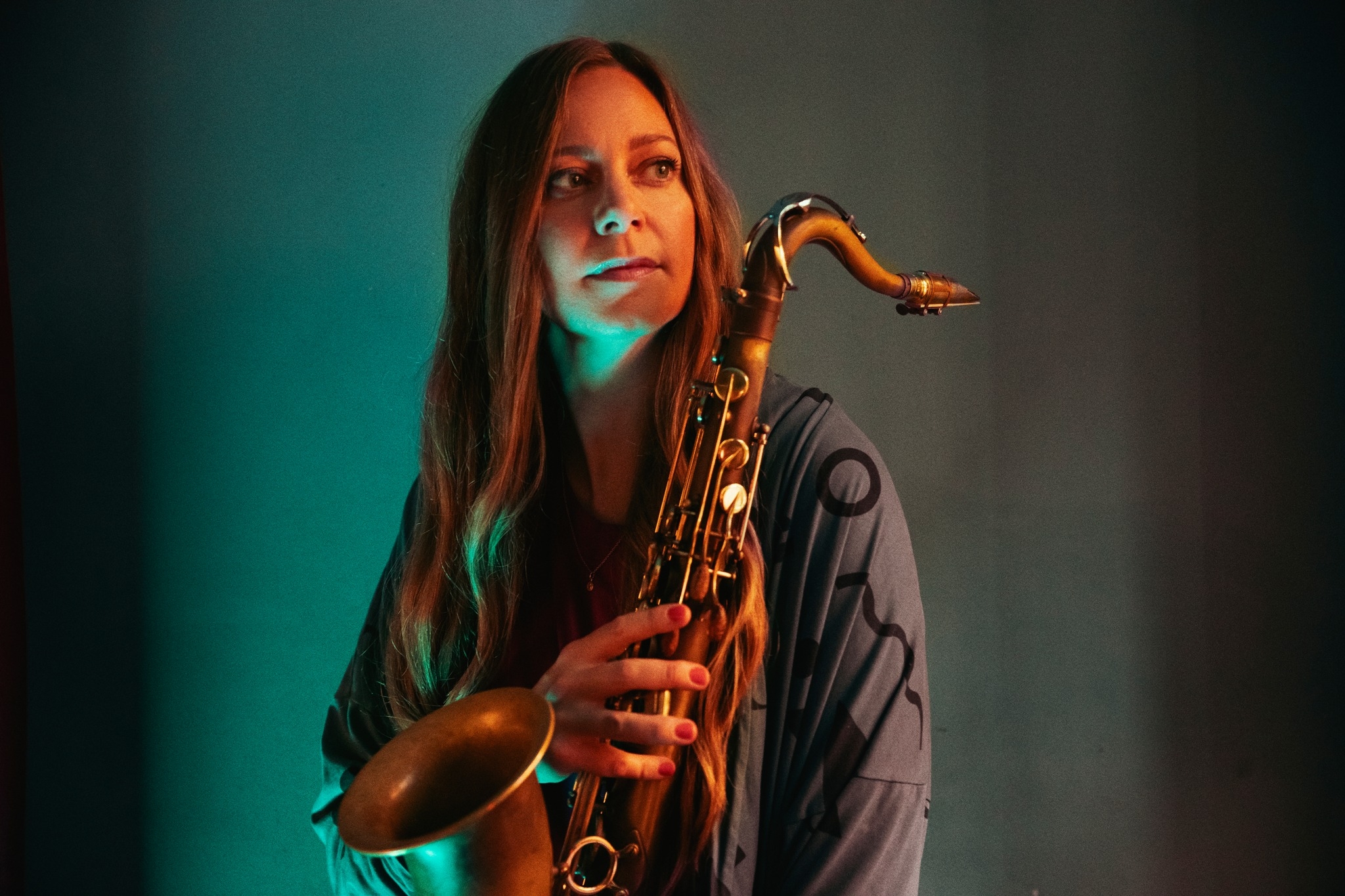
Name: Cecilie Strange about Directions in Jazz
Nationality: Danish
Occupation: Saxophonist, composer, improviser
Recent event: Cecilie Strange is among the artists featured at Sounds of Denmark, a celebration of Danish jazz that takes place in London and Southampton on September 25th and 26th 2025. For more information and tickets, go here.
Recent release: Cecilie Strange's new album Beech is out via April.
Shoutouts: Denmark is a small country, but even so there is a lot jazz festivals. I am happy about that cultural statement, that right now in 2025 jazz is for sure a genre that both young and older people know about. I have also been lucky to play at some great festivals outside Denmark like Jazzfest Kolkata (India) and Reset Festival (Luxembourg) and I am hoping to play at many others in the future.
Recommendations for Copenhagen, Denmark: I recommend to visit Jazzhus Montmartre or visit Copenhagen Jazz Festival in July every year, which is a beautiful festival lasting for 10 days with more than 1000 concerts on about 100 venues. Sight seeing locations could be to visit “Glyptoteket” or the great park “Søndermarken” which is my favourite.
If you enjoyed this Cecilie Strange interview and would like to stay up to date with her music, visit her on Instagram, Facebook, and bandcamp.
What were some of the musical experiences which planted a seed for your interest in jazz?
My parents were both classical musicians so we listened a lot to classical music during my childhood.
When I started to play the saxophone at the age of 12, I got my first jazz CD with Stan Getz, Joao Gilberto and Astrud Gilberto: Live from Carnegie Hall in 1964.
From the moment I heard that music and Getz' sound and playing I started to be interested in jazz.
What does the term jazz mean today, would you say?
Jazz, for me, is a palette of beautiful music - so many different things at once. Free and open jazz, world jazz, traditional, fusion and so on. I love that about the jazz genre.
My main focus in my own quartet the last years has been Nordic, minimalistic jazz and jazz with a touch of folk. But I also play open improvised ambient jazz in the duo K A L E II D O that I am also a part of.
I think that the wideness of the genre is its strength.
As of today, what kind of materials, ideas, and technologies are particularly stimulating for you?
Listening is the top thing for me. Going to live concerts. Listening to an album at home or on the road. At home me and my family also really listen a lot to the Danish national radio channel for jazz: P8.
Playing with people is very stimulating for me. I treasure all these musical meetings, both when it is a rehearsal or a gig, and I feel really lucky and grateful that this is what I do: It is my job and my passion combined.
Where do most of your inspirations to create come from – rather from internal impulses or external ones? Which current social / political / ecological or other developments make you feel like you need to respond as an artist?
At the moment everything I compose circulates around PEACE. How we need peace in world.
It is extremely fundamental for us to function as living organisms, that we have peace and love in the world. It makes me really sad sometimes that some people suffer so heavily because of others desire for power and greed. Music is a language that everyone can speak. I feel it is a great place to express your dreams and hopes for us all.
Also, I find nature to be a huge inspiration for me. I am lucky to have seen beautiful corners of our amazing world already, but I can also find inspiration just looking outside my own window at home.
Tell me a bit about the sounds & creative directions, artists & communities, as well as the colleagues & creative hotspots of your current hometown, please. How do they influence your music?
I live in Copenhagen and have been for almost 15 years in total.
Very close to my home where I live with my husband and our three children, is my rehearsal room that I share with many others. I have many sessions there and I always meet friends and colleagues and hang a bit together for a talk or a coffee. It is also so easy to get in touch with people – set up a jam session, coffee meeting or something else.
I really feel that vibe of creative energy daily which I am grateful for.
What role do electronic tools and instruments play for your creative process?
None. I play with musicians using electronic tools or instruments, but I don´t use them myself.
Thanks to technological advances, collaboration has become a lot easier. What have been some of the most fruitful collaborations for you recently and what approaches to and modes of collaboration currently seem best to you?
In January 2024 I joined a group of musicians from all over Europe to take part at the Reset Festival in Luxembourg as an artist in residence program. Some of us just played together again and we're planning for more gigs in the future. That is for sure easier because of modern ways of connection via the internet.
I was also in India to teach “Jazzcamp for girls” and to play at “Jazzfest KOLKATA”, which was the same thing. It is possible and much easier to collaborate because of modern technology.
Jazz has always had an interesting relationship between honouring its roots and exploring the unknown. What does the balance between these two poles look like in your music?
For my own journey, listening to old Scandinavian folk music has been my way of connecting to my own roots. I really use that inspiration when I compose.
I treasure all kinds of music – classical music was what we heard at home until I started to listen to pop and then jazz at the age of 12. The history of jazz is very interesting, so I enjoy going through it sometimes to remind me of what we stand on the shoulders of.
At the moment I think that the open, ambient, elastic Nordic jazz scene is what I am a part of but using elements of the history of jazz.
How much potential for something “new” is there still in jazz? What could this “new” look like?
I believe that what we create in the moment is always new.
For many artists, life-changing musical experiences take place live. How do you see that yourself?
Yes, I feel that the energy from the audience is amazing and therefore make live concerts important. That is where you try your repertoire and get some feedback from people.
Also with our band, the energy different when we play live compared to when we're in the recording studio.
How, would you say are your live performances and your recording projects connected at the moment? How do they mutually influence and feed off each other?
I definitely enjoy doing both. I can't do without any of them.
Ímprovisation is obviously an essential element of jazz, but I would assume that just like composition, it is transforming. How do you feel has the role of improvisation changed in jazz?
I don't think it has changed that much. It is still essential and maybe the main language. It is also a beautiful way of playing with each other around the world that is extremely unique.
Maybe one thing that has changed is that more chillout music is also categorised as jazz. If the music has that energy of something not planned it can be categorised as jazz which is probably a little different from earlier times.
What, would you say, are the key ideas behind your approach to improvisation?
Openness, listening and then more listening.
Putting your own ego aside to further a collective sound is for me what improvisation is mainly about.