Published
Part 1
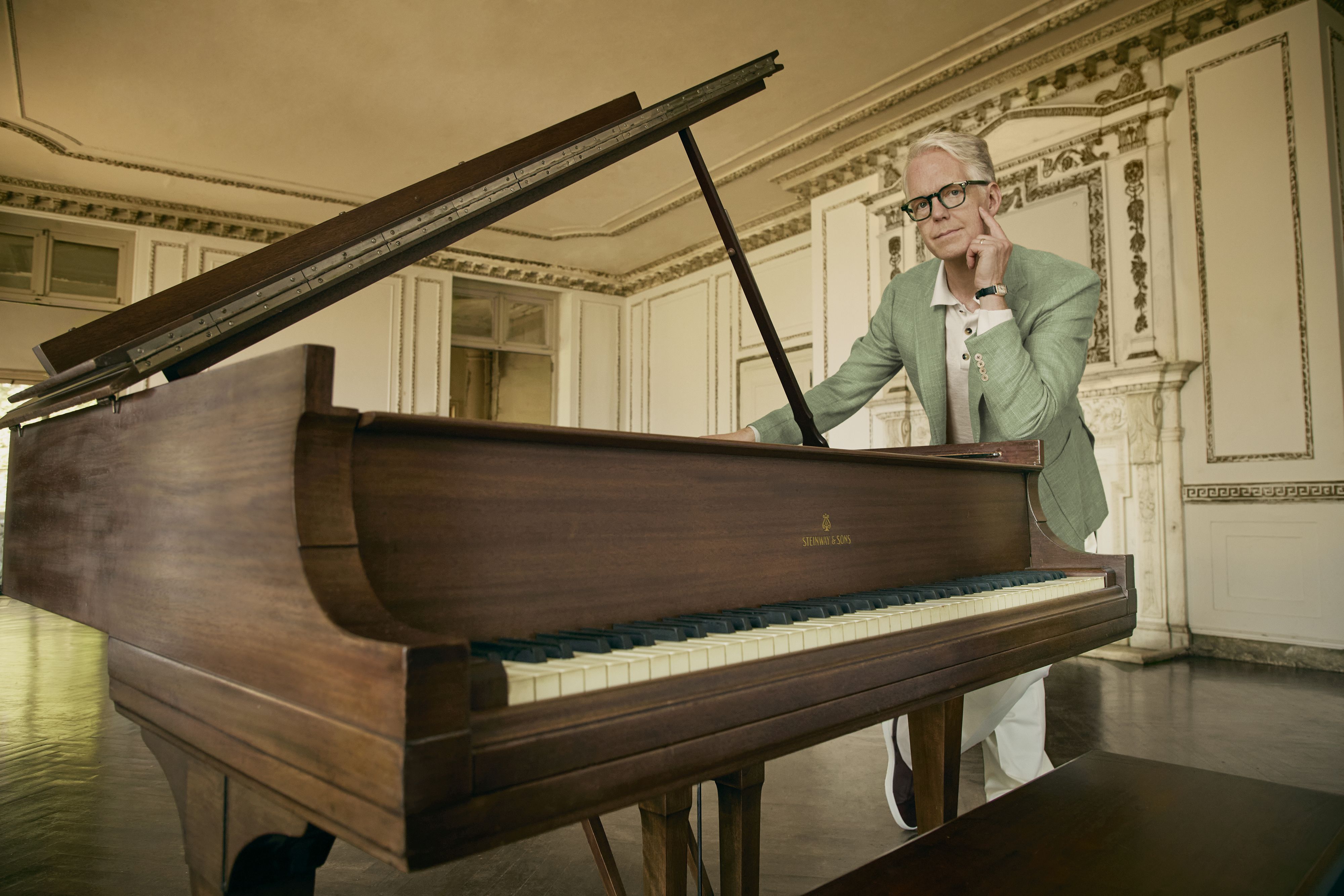
Name: Chad Lawson
Nationality: American
Occupation: Composer, pianist
Current Release: Chad Lawson's new album hush is out via Decca.
Hometown Recommendations: You’ll almost always find me in one of three places in Savannah, GA.
At a Savannah Philharmonic performance with my wife, because we go to every concert we can.
At Origin Coffee, which needs very little explanation if you know me. But beyond the coffee, they’ve built this wonderful sense of community where people actually know one another. You walk in and there’s a good chance somebody knows your name.
Or at E. Shaver Bookseller. E. Shaver is the perfect independent bookstore. It sits inside a beautiful old Savannah home, with room after room of books and five cats who have very clearly decided it’s their house and you’re just visiting. If you’re lucky, one of them may curl up beside you while you’re reading through the stack of books as you decide which one, or ones, to take home. the book, I mean. Not the cat. The cats are perfectly happy where they are.
If you enjoyed this Chad Lawson interview and would like to find out more about his music, visit his official homepage. He is also on Instagram, and Facebook.
For a deeper dive, read our earlier Chad Lawson interview.
When it comes to experiencing strong emotions as a listener, which albums, performances, and artists come to mind?
Oh gracious, where do I start? Three come to mind immediately, mostly because I can still remember exactly what it felt like to hear them.
The first was a video of Sigur Rós recording “Ára Bátur” at Abbey Road. It absolutely wrecked me.
Sitting there sobbing, unable to pull my eyes or ears away from something so beautiful. I was like “could I ever write something so beautiful?” It REALLY inspired me. I think back to that piece and moment a lot to be honest.
And how great is it when something does that to you!? When you hear or see something and it reaches some part of you before you’ve even had time to figure out why. That’s art. And man, it’s special when we catch it.
There was such richness and beauty in it, but more than that, there was honesty. Nothing about it felt like it was trying to impress. It was just, “We wrote something beautiful and you should experience it with us.”
The second is Peter Gabriel’s cover of Bowie’s “Heroes.” From the first note of the orchestra, it pulls you in like a black hole.
There’s this mysterious wonder in it, but also this confidence that only Peter Gabriel could really get away with. I still can’t decide whether it’s vulnerability or some kind of reckless abandon, and I think that’s exactly why I love it. I love how Gabriel has always gone his own way with everything he’s created.
And then Keith Jarrett, who has most definitely shaped my playing more than anyone. His technique is frankly mind-shattering, but what I really love is his patience. He is never in a rush. He’ll stay with an idea far longer than most musicians would probably be comfortable with. He just waits. And somehow, while he’s waiting, everything is still building and moving and becoming something.
You could call it magical, but I almost think that diminishes his talent. There’s an enormous amount of discipline in being willing to stay there and trust what’s happening. Magic suggests luck. With Keith, it feels more like he found some well inside himself years ago and has spent a lifetime learning how deep it goes.
I remember reading something from him years ago, essentially saying that if you’re waiting for something to happen, you’re missing what’s happening while you wait. I’ve never forgotten that. What a flag to wave in a culture that wants everything immediately.
There’s never a sense with Keith that he’s trying to get to the impressive part. He seems completely content to stay exactly where he is until the music decides it’s time to move. That kind of patience is incredibly difficult, and I think that may be the thing I admire most.
Because at the end of the day, the point isn’t to make sure everyone notices the pianist. It’s to make sure they hear the music.
There can be many different kinds of emotions in art: soft, harsh, healing, aggressive, uplifting, and many more. Which do you tend to feel drawn to most?
The honest ones. And stay with me for a second because I can practically feel the eye roll coming.
I think before we even get to which emotions we’re drawn to, there’s another question: why are we drawn to them?
Sometimes we reach for loud or harsh or even uplifting because it matches what we’re feeling. And sometimes, if we’re being really honest, we reach for it because there’s something underneath all of that we’d rather not sit with. Which is just being a normal human. I do it too.
But eventually that thing is still there, waiting for us. And when we finally stop long enough to notice it, what we need emotionally may be very different from what we thought we wanted. There’s a really big difference between the want and need.
Personally, I’ve never been especially drawn to emotions that shout or grab your attention. Maybe because life already does enough shouting on its own. My inbox shouts. The news shouts. Occasionally one of my kids shout from another room about something that absolutely could have waited.
So when I sit at the piano, I’m usually looking for something more honest. Which, for me, means quieter. Not quiet for the sake of quiet. I don’t think softness automatically makes something sincere. But when you take away the volume, the ornament, the extra notes, you hear pretty quickly whether there’s actually anything there. And that’s the part I’m listening for.
Can the melody stand on its own without me helping it too much? Can I play less and still say the same thing? Maybe even say it better?
I spent a lot of years assuming that if I felt something deeply, I needed to make the music sound deep. Now I actually question that. Sometimes the most honest thing I can do is leave it alone and let it be as simple as it wanted to be in the first place.
I have had a hard time explaining that listening to death metal calms me down. When you listen to a song or composition, does it tend to fill you with the same emotions, or are there “paradoxical” effects?
I completely understand that. I think we sometimes assume music gives us the emotion it sounds like it should give us. Sad music makes us sad. Loud music makes us agitated. Calm music calms us down. Right?
Sometimes loud music fits the bill because it finally matches what’s already happening inside. There’s almost a relief in not having to pretend you’re calmer than you are. You’re amped and no apologies necessary. And the reverse is true too. I make music that people often describe as calming, but I’ve had plenty of people tell me it made them cry. I don’t hear that and think, “Well, that didn’t work.” Maybe it worked exactly as it needed to. It’s just different for each listener.
Quiet can actually be pretty confronting. Quiet can be anything but quiet. Take away enough distraction and suddenly you’re left with whatever was underneath it. And sometimes that’s the part that’s whispering and saying, “Can we connect now?”
So I’m less interested in whether a piece creates the “right” emotion and more interested in whether it gives you an honest response. If death metal is the thing that gets you there, have at it. That makes perfect sense to me.
In as far as it plays a role for the music you like listening to or making, what role do words and the voice of a vocalist play for the transmission of emotions?
This is a great question for someone who has managed to build an entire career without saying a word in my music. And I’m going to be incredibly honest, you do not want to hear me sing. :)
The funny thing is, I love words. I read constantly. I host a podcast, so clearly I have no objection to talking. Probably too much, depending on who you ask. Is my team reading this? Lol.
But music is different for me. Words are incredibly specific. That’s part of what makes them so powerful. Words carry weight. And, not to get too off-topic here, but I really do believe that once a word leaves your lips, it releases something into the world. An energy that exists now because you said it.
That’s why I’m really careful with words. You can’t call them back. Words can encourage someone, wound someone, change the temperature of a room, alter the way a person sees themselves. One sentence can hang around for years. So I honor words. I don’t use them casually.
Now, bringing that back to lyrics and vocalists, if someone sings, “I miss you,” well, now we know where we are. There’s context. There’s a person. There’s a story beginning to take shape.With a melody, I don’t have to tell you what it means. You might hear grief in it. Someone else hears relief. Someone plays it at a wedding and another person has the same piece playing in a hospital room. I love that.
And I don’t think one of them has misunderstood the music. Quite the opposite. They’ve brought their own life to it, which is really the whole point.
The first piece on hush is called “Before Words,” and I suppose that title says a lot about where I am with this. There are things we feel before we know what to call them. Sometimes naming them helps enormously. But sometimes I think we’re a little too quick to name everything.
At the piano, I don’t have to. I can play the thing before either of us has decided what the thing is. And I really like leaving it there. It’s not up to me to decide for the listener.
When it comes to experiencing emotions as a creator, how would you describe the physical sensation of experiencing them? Where do you feel them? Do you have a visual sensation? Is there a sense of release or a buildup of tension?
Breath, first. Almost always.
I’ve studied breathwork for years, so at this point I’m probably annoyingly aware of my own breathing. Once you start paying attention to it, good luck turning that off. But the larger thing for me is space. And they’re both interrelated.
I have this almost constant mantra when I’m playing: create space. Space to breathe. Space for the note. Space for the melody. Space for whatever is happening to actually happen before I rush in and do something else to it. And that applies even if I’m playing something faster. A note still needs enough space to say what it’s supposed to say. If I clip it, shorten it, or even just give it less attention, the emotional dynamic changes.
So to keep this at the forefront, I wear meditation bracelets on my left wrist, and I love them, but honestly, part of why I wear them when I play is ridiculously practical. I can’t not see them. So I’ll be in the middle of a piece, notice the bracelet on my wrist, and there it is again: Create space.
It’s become this little reminder to get out of my own way. Because when I actually do that, something really interesting happens. I stop thinking about the music. I’m not thinking, What comes next? My fingers already know. Either they’ve memorized it or, in some strange way, they seem to know where they want to go better than I do.
At my best, I almost feel like I’m part of the audience to my own playing. I’m hearing it happen rather than directing every second of it. The minute I start wondering whether someone likes it, whether they’re listening, whether I missed something, whether I should have played that phrase differently, I’ve left the music. Now I’m having a conversation with my anxiety instead. And that takes energy away from what’s actually happening at the piano.
So for me, the physical experience of emotion is really tied to that release. My breath slows. My shoulders drop. I stop trying to manage the next thirty seconds. The bracelet catches my eye. Create space. And then I see where the music goes.
When it comes to composing and songwriting, are you finding that spontaneity and just a few takes tend to capture emotions best? Or does honing a piece bring you closer to that goal?
I’m probably a terrible example for anyone who believes in sitting down at the same time every day and writing for forty-five minutes until the muse knows where to find you. That absolutely works for some people, and I think that’s wonderful. For me, it falls completely flat.
So, I just wait.
Usually I’ll get a melody in my head. Then another one. Then another. Eventually there are so many of them floating around in there that I finally have to sit down at the piano and figure out what on earth they’re trying to become.
And I get asked all the time what inspired a piece. Was it a sunset? A person? A particular experience? I always feel slightly bad because I know they’re hoping for a much better story. But most of the time, no. There have been maybe three or four pieces in my life that came directly from a specific moment or experience.
Most of the time, the melody comes first and I have absolutely no idea what it’s about. And I really like it that way. I’d rather wait for the piece to tell me what it is than sit down with an idea and start dictating what I think it should become. That’s where the spontaneity matters for me. The melody arrives before I’ve had time to get involved.
Then comes the honing. And honing, for me, is usually less about adding and more about listening carefully enough to figure out what doesn’t belong. I came out of jazz, so believe me, I know how to fill space. And it’s annoying! Lol. Younger me could find twelve notes where three would have done just fine.
Now I’m asking different questions. Does that note actually need to be there? Am I changing this because the piece wants it, or because I’ve heard it twenty-seven times and I’m getting restless? Am I helping the melody, or am I getting in its way?
So yes, I refine things. Sometimes a lot. But art is knowing when to stop. I’m usually refining my way back toward the first thing that showed up before I started trying to make it better. And that first thing is usually smarter than I am.