

Published
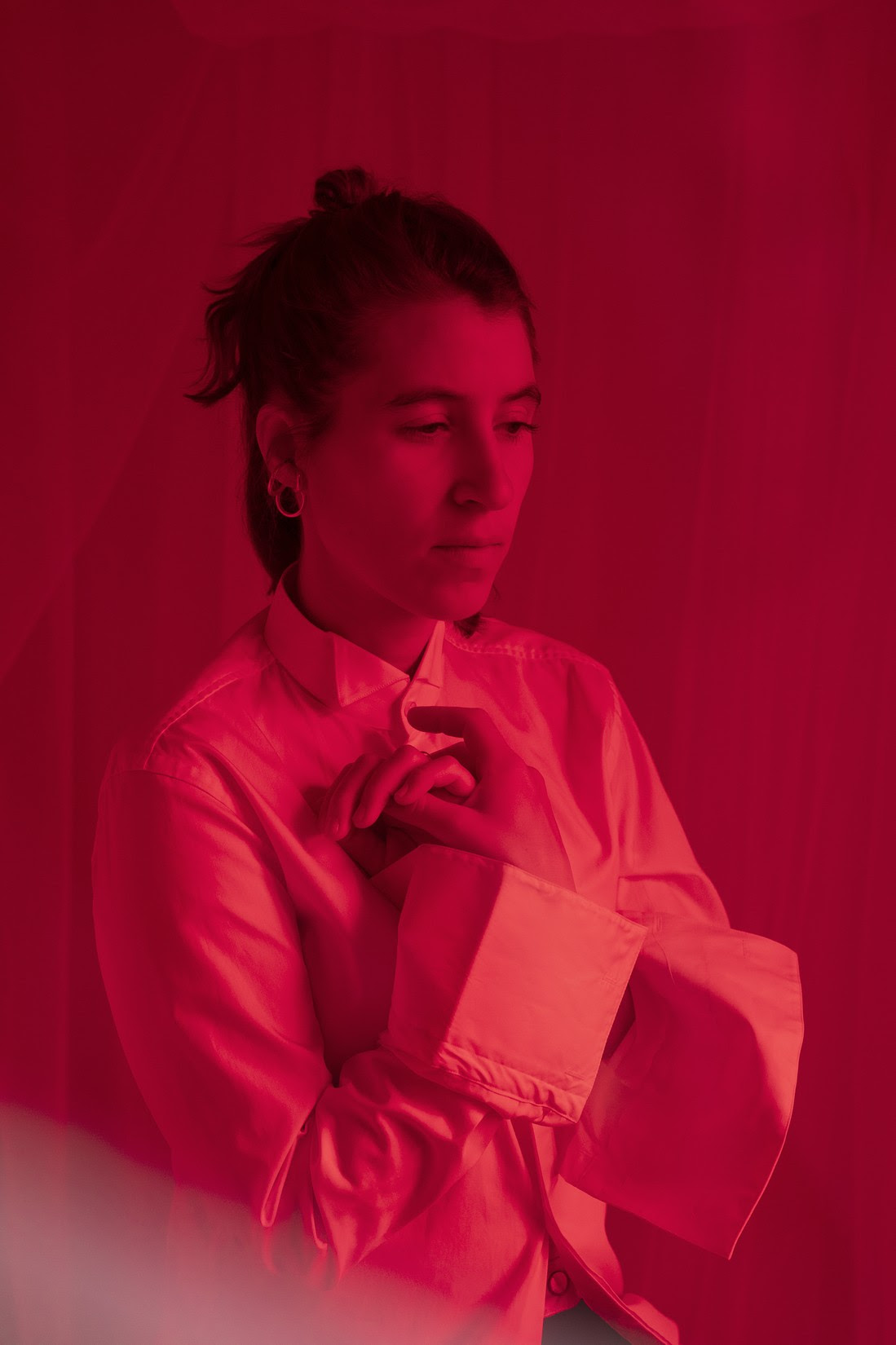
Name: Charlotte Greve
Nationality: German
Occupation: Composer, saxophonist, vocalist
Current release: Charlotte Greve's new album Waterbodies is out via New Amsterdam.
Shoutouts: Big Ears, New Amsterdam Records, Pioneer Works.
If you enjoyed this Charlotte Greve interview and would like to know more about her music, visit her official homepage. She is also on Instagram, and Facebook.
For a deeper dive, read our earlier Charlotte Greve interview.
The borders between producers, sound artists, and even songwriters are becoming increasingly blurry. What does being a composer mean today, would you say?
It's true, you can be a composer in many different ways and I think they are all valid.
However, when comparing this term to lets say a songwriter, to me the composer is thinking on a somewhat larger scale - more elements are involved, a bigger overarching idea is at play.
The composer thinks about more layers as part of the same story.
Many people perceive classical music and contemporary composition as having high barriers of entrance, both for listeners and musicians. What have your own experiences been in this regard?
I do see myself as a contemporary composer but this kind of genre has so many different sounds united under one umbrella, so very different kinds of sounds can have the same name in terms of genre.
I told a friend the other day that I’m very good & specialized in my own personal genre, which most times strives to be emotionally direct, and therefore in my view has a very low barrier of entrance, to hopefully many different kinds of ears/ generations / backgrounds.
My most classical leaning pieces on my record are Own Lap, 22 and Scorpio - just because of the instrumentation (there is an orchestra, there is a choir). They might be more associated with the more “contemporary composition” part of this record.
As of today, what kind of materials, ideas, and technologies are particularly stimulating for you?
My writing book with light blue dyed paper and without lines and a good pencil. Noise cancelling headphones and a single candle.
Our Casio keyboard and any place that has water like the pool, the ocean, lakes, or the shower.
Where do most of your inspirations to create come from – rather from internal impulses or external ones? Which current social / political / ecological or other developments make you feel like you need to respond as an artist?
Most of my musical inspiration continues to come from single notes that are often held, like a drone of some kind that then is combined with some sort of tempo, gesture or rhythm. If it’s not a long note, it’s some kind of repetitive melody.
The state of the world as it is right now with societies being split apart, the climate changing rapidly, and everyone being emotionally slowly eaten alive by social media, I think live music is more important than ever. If that’s not possible, recorded music is good, too, but being in a room together and listening together can be more healing than ever, even if it just lasts for the moment.
I am not an activist but I think creating a shared musical space that is direct and honest is important so people can feel themselves again and therefore in the long run be part of a healthier society.
Tell me a bit about the sounds & creative directions, artists & communities, as well as the colleagues & creative hotspots of your current hometown, please. How do they influence your music?
I have lived in New York for over 14 years and the city continues to inspire my artistic practice, by the sheer intensity it inherits.
I had a daughter 2 years ago, so I’m not going out every night. But when I do, the music here continues to push boundaries, which is ever motivating and inspiring.
A recent highlight was the L’rain record release show at 101.
[Read our L’rain interview]
Composing has always had an interesting relationship between honouring its roots and exploring the unknown. What does the balance between these two poles look like in your music?
Most of my writing is coming from searching for the right timbre and feel. So a lot of it is first intuitive.
Then, after the fact, I edit by looking at it from a distance, considering tradition & experiment.
How much potential for something “new” is there still in composition? What could this “new” look like?
I think everything has been done but if the vessel changes, the composer being the vessel, something new will come from it because the different layers are mixed up in a new and unique way.
What role do electronic tools and instruments play for your creative process? What does your creative space / studio look like and what tools does it contain?
I use my phone to record quick voice memos and sometimes to use a Lo-Fi drum machine on it. I have a simple pedal board, a sampler and a synthesizer and I use the computer to record more elaborate demos in Logic to understand what the song needs.
Everything else happens by playing the saxophone and singing.
It is my impression that adding a conceptual, non-musical dimension to one's work is almost a prerequisite for commissions and grants. How do you view this tendency and how “conceptual” is your own approach to writing?
My approach is not conceptual at all but I try to find topics that really interest me and that I want to write about.
Only then can any sort of framework actually cause inspiration.
For many artists, life-changing musical experiences take place live. Few works these days, however, are performed beyond their premiere. What, do you feel, does this mean for composers, and the music they write, and how does this reality influence your own work?
I like repetition and I aim to include it in most of my writing. It can show itself in different ways, sometimes more obvious than other times. I like that it gives me clarity and a sense of trance and openness.
Most of the music on my new record is coming from a small, repeated cell/chord/rhythm/ melody. Some obvious ones are Wave, Own Lap, and Lighter Blue.
How, would you say are live performances of your music and your recording projects connected at the moment? How do they mutually influence and feed off each other?
This record in particular uses many different sounds, ensembles, sonic spaces, instrumentation, etc. and I have spent the past weeks getting it onto the live stage - a beautiful challenge If you want to keep it open and playful.
On the record I went all out, added everything I was hearing, stacking layers until it felt complete. Making this record felt very much like a playground with all the options and I went for many of them.
When I play live, I want to be able to lean in, feel free and keep the set spontaneous, while still maintaining the luxurious sound of a lot of layers. The result is, I’m playing a lot of different instruments and triggering some out of time layers with the sampler.
The Montreux Festival intends to preserve its archive of recordings for future generations. Do you personally feel it's important that everything should remain available forever - or is there something to be said for letting beautiful moments pass and linger in the memories of those that experienced them?
I think it's good to keep these recordings, especially live.
There are magical things that can happen and I want future generations to have access to that.