Published
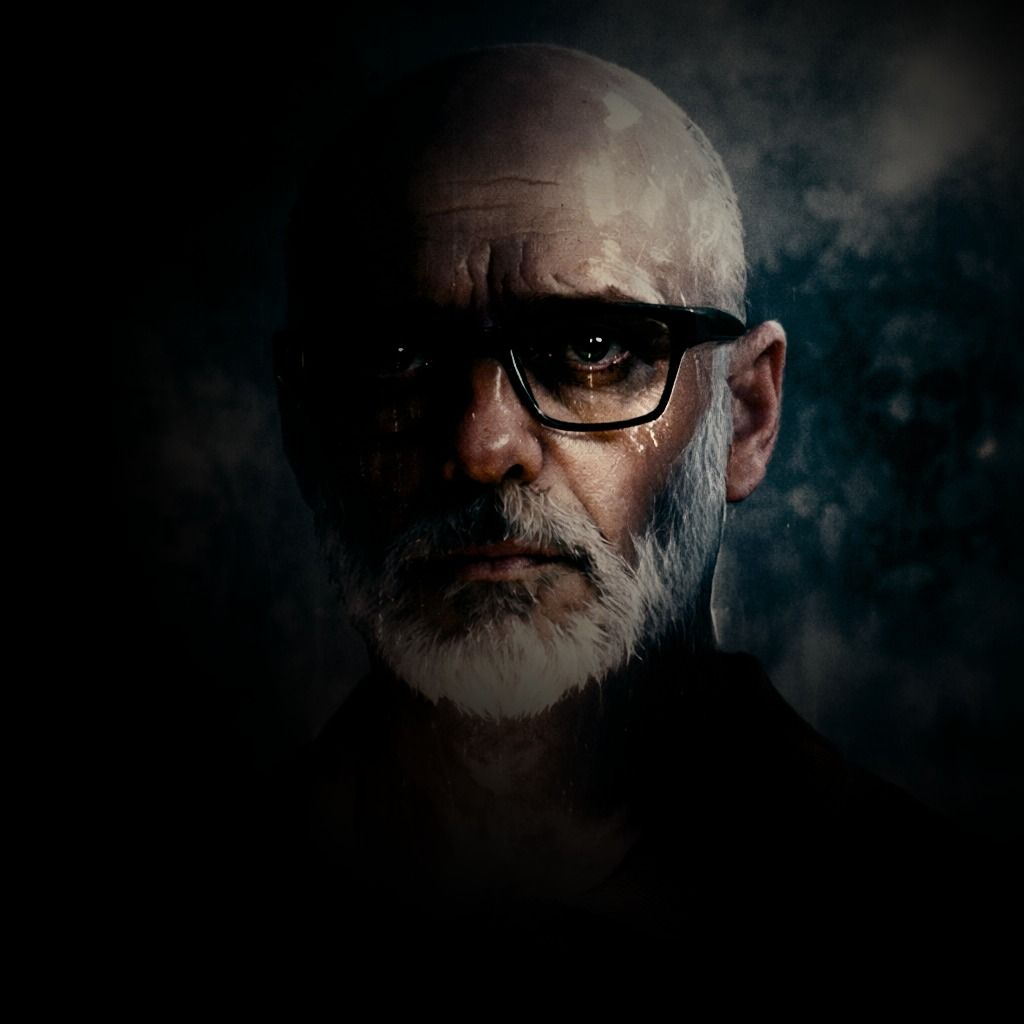
Name: Chris Maico Schmidt aka Mike S. aka Cybordelics aka Mikerobenics aka 1Zimmerapartment
Occupation: DJ, producer, radio host and manager at Evosonic
Nationality: German
Current release: Chris Maico Schmidt's new Bahnhof EP is out via BluFin.
Local Recommendation: My true home are Swabia and Stuttgart, but I turned my back on both as early as 1997 to move to Cologne. At second glance, Cologne is a great city, but visually speaking, it’s really no beauty—even if the people of Cologne like to convince themselves otherwise. So yes, if you’re honest, in the end, the cathedral is the only real sight worth seeing. It’s the centerpiece you simply can’t miss, no matter how many times you’ve seen it.
Things I am passionate about but rarely get to talk about: This is actually a wonderful secret from my career: My contracts used to include a clause that stated: "The longer I’m allowed to DJ, the lower my fee becomes.” For me, the long set time was—and still is—the real reward—the freedom to tell a genuine story about the course of a night. In a scene driven by business-techno and fee madness, this is a topic you can hardly talk about openly anymore. But it simply shows what has always been at the core of what I do: the music and the night, not the business.
If you enjoyed this Chris Maico Schmidt interview and would like to stay up to date with his music and performances, visit him on Instagram, Facebook, and Soundcloud.
What were some of the musical experiences which planted a seed for your interest in electronic music?
For that, I have to go way back—to the late 1980s.
Back then, I saw a performance by Tyree Cooper at Club OZ in Stuttgart. They called it hip house. It was that raw, unbridled energy that was embedded in these sounds, which was completely new to me.
“So little, and yet so much,” I thought to myself, and then, all of a sudden, that was the end of all other genres of music for me.
Most genres of music make use of electronic production means. What does the term “electronic music” mean today, would you say?
Technically speaking, it’s the same today as it was back then: an umbrella term for music that’s primarily created and processed using synthesizers, samplers, computers, and drum machines, rather than traditional acoustic instruments.
The real difference today, however, lies in its cultural status, among other things. In the past, electronic music was a rebellious niche, an underground counterculture. Today, it has entered the pop-cultural mainstream, fills stadiums, and is exhibited in museums.
It has lost its outsider status but has gained immense global influence.
Disco, house, techno, drum n bass, IDM and many other genres were about a lot more than just music. For you personally, is electronic music (still) a way of life – and if so, in which way?
Absolutely. Given my background, this question doesn’t really even come up for me.
Electronic music isn’t a hobby you set aside in the studio at night—it’s the lens through which I view the world. This culture has given me an incredible amount over the past three decades: unforgettable moments and deep connections.
But of course, it has also taken a lot from me: sleep, my nerves—and, most recently, my big left toe.
Debates around electronic music tend to focus on technology. What, though, were some of the things you learned by talking to colleagues or through performing and/or recording with other musicians? What role does community play for your interest in production and getting better as a producer?
Technology is, in the end, just the vehicle for an idea—but the idea itself is born in real life.
Through countless performances with long sets and experiencing music in the club, I’ve learned how music works physically and emotionally. No tutorial in the world can teach you how a room reacts to a specific bassline or when the perfect moment for a break is. You can only learn that through direct interaction with the dance floor and the crowd, as well as through exchanges with fellow DJs behind the decks.
You share this collective moment with people, not for algorithms.
What are examples for artists, performances, and releases that really inspired you recently and possibly gave you the feeling of having experienced something fresh and new?
Phew, tough question. But if I had to name someone who’s impressed me lately, it would be James Hype. I haven’t seen him live in a club yet, but his videos and his technical performance behind the decks are incredibly strong.
You see real DJ craftsmanship and an energy that, in an era of rigid transitions, constant BPM, and pre-made playlists, just feels damn fresh and electrifying.
What kind of musical/sonic materials, and ideas are particularly stimulating for your own work right now?
Definitely: stem separation.
The technology for breaking down existing tracks into their individual components—like vocals, drums, and basslines—is incredibly exciting to me right now. It opens up completely new possibilities for remixing and sampling, for production in general, and even for DJing, because you suddenly have access to elements that used to be inseparably fused together in the mix.
It feels like digging into music history with an acoustic scalpel.
Where do most of your inspirations to create come from – rather from internal impulses or external ones? Which current social / political / ecological or other developments make you feel like you need to respond as an artist?
My inspiration usually comes from a mix of both: Externally, I’m often triggered by a specific track that grabs me emotionally and gives me that very special feeling of goosebumps. That immediately sparks an inner urge in me to create something of my own.
A perfect example of this is the track “Cut N Glue – Square in a Circle (Stadtblick Remix).”
Other sources of inspiration include Coqui Selection's "We Belonged" and Dele Sosimi and Afrobeat Orchestra's "Too Much Information (Laolu Remix)".
These pieces moved me so deeply that it ultimately led to my own EP, “The Brightside.”
When it comes to societal developments, I—like many others—am concerned by the rapid advancement of AI. It’s an eerie feeling. On the one hand, the tools are fascinating; on the other, there’s a genuine existential concern about the devaluation of human creativity.
Tell me a bit about the sounds & creative directions, artists & communities, as well as the colleagues & creative hotspots of your current hometown, please. How do they influence your music?
To be honest: little to none. The scene and the hotspots of my current hometown hardly influence my music anymore. The generation of musicians and visionaries who truly inspired and shaped me here locally has, unfortunately, largely passed away.
Of course, exceptions prove the rule, and there are always small creative rays of hope—but on the whole, I draw my influences today more from my own universe and global exchange than from my local neighborhood.
Today, electronic music has an interesting relationship between honouring its roots and exploring the unknown. What does the balance between these two poles look like in your music?
For me, the balance lies directly in my production process. I love the fundamentals—that raw, hypnotic groove, the analog grit, and the simplicity that made early techno and house so powerful. These are the roots that ground my music and ensure that a track works on a physical level.
I then explore the “unknown” on the digital level—often simply because, in the best sense of the word, I still don’t know exactly what I’m doing there.
This naive experimentation in the digital realm, allowing for serendipity, is my path into the unknown.
What were some of the recent tools you bought, used, or saw/read about which changed your perspective about production, performing, and making music?
While I do enjoy trying out new plugins, in the end I always find myself coming back to my personal “FAVORITES,” the ones that have always worked for me: e.g., Z3TA+ 2, Sylenth1, Acid V, and OhmBoyz.
A clear limit on the tools forces you to be more creative with what you have, rather than getting lost in endless options.
How do you see the role of sampling in electronic music today?
It remains a stylistic device and a wonderful additional creative way to make music.
Sampling isn’t just about copying something. It’s about taking a musical moment out of its original context and giving it a second life in a completely new environment.
Especially today, with the new technical possibilities, sampling is more alive than ever.
What are some of the most recent innovations in sound design for you - and what are currently personal limits to realising the sounds you have in your mind?
My biggest challenge right now is vocals.
When I have a very specific voice in mind for a track, it’s incredibly difficult to actually recreate or find that exact sound and that specific emotion. You have this perfect, magical vocal line in your head, but you often run into limitations when actually searching for or editing it.
For me, a great example of how brilliantly this can be achieved is "Better Than This" by Bedouin.
But I’ve managed to pull it off myself as well—thanks in part to my partner, Patrizia Battistella, on our joint EP.
In as far as it is applicable to your work, how would you describe the interaction between your music and DJing/DJ culture and clubs?
My music needs to breathe; it needs time, space, and air to take effect. That’s why it rarely fits into those rushed two-hour sets that have unfortunately become the norm in today’s club scene. As a DJ, this quick succession of peak-time tracks just doesn’t “satisfy” me.
Luckily, I have my own platform, Evosonic Radio, where I can really go deep and let the music take me on a long journey.
Just last Sunday, I played another 12-hour set there! It’s only in marathon sets like these that music unfolds its true, hypnotic power for me.
How, would you say are your live performances and your recording projects connected at the moment? How do they mutually influence and feed off each other?
These elements are extremely intertwined. When you regularly DJ for so many hours at a stretch, you develop a completely different sense of narrative arcs, repetition, and subtlety. I bring that experience directly into the studio.
I don’t produce quick, disposable tracks for fast-food sets, but rather pieces that are allowed to unfold. My studio work fuels my marathon sets, and those long nights at the club, in turn, give me the inspiration and direct feedback for new productions—then ...
... as now.
Even if AI will not entirely replace human composition, it looks set to have a significant impact on it. What does the terms composing/producing mean in the era of AI, do you feel?
In the age of AI, the role of the producer is shifting radically: away from purely technical craftsmanship, toward that of a curator and source of inspiration.
Since AI can generate flawless, perfectly polished music at the push of a button, human errors, emotions, and rough edges are gaining immense value. Today more than ever, composing and producing means infusing music with soul, attitude, and personality—things an algorithm cannot replicate.
It’s about the imperfect goosebumps, not the perfect wave.