Published
Part 1
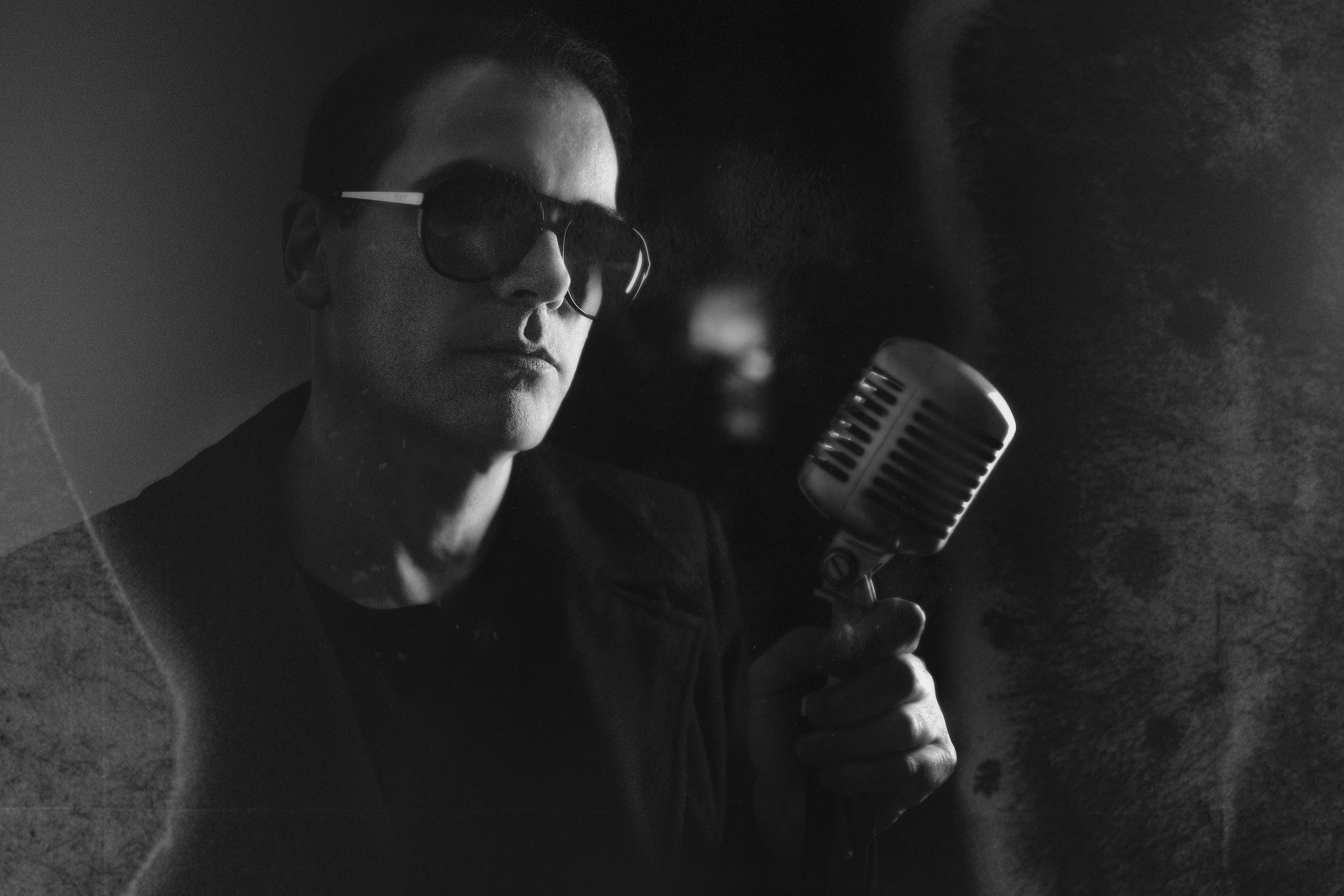
Name: Piero Fragola aka Concrete Noir
Nationality: Italian
Occupation: Composer, producer, multi-media artist, sound designer
Current release: Concrete Noir's new Blades Of Grass EP, featuring remixes by Legowelt and Caruan, is out via Deset.
Hometown Recommendations: I live in Florence, and it's really difficult to choose just one place. Sometimes all you have to do is walk through the streets to feel completely immersed in the city's history and art.
If you've never been to Florence, I think you shouldn't miss the classics, starting with the Uffizi Gallery. But if you've already visited the main museums, I'd definitely recommend La Specola, particularly its extraordinary collection of anatomical wax models. There's something fascinating about them, a strange beauty that can also be quite unsettling.
David Cronenberg certainly recognised that fascination too. In 2023, he made a short film featuring some of these figures for an exhibition at Fondazione Prada. And if you're familiar with his films, you'll probably understand why.
Things that I am passionate about but rarely get to talk about: I have a real passion for manga, something I don't often get asked about when talking about music.
I love Katsuhiro Otomo's Akira, with its extraordinary imagery, its dystopian vision and the relationship between technology, the city and the human body. And then there's Junji Ito, who has this incredible ability to turn something completely ordinary into a nightmare. His stories can be genuinely disturbing, but I find his imagination and attention to detail fascinating.
On the other hand, I also love Jirō Taniguchi, whose work is almost the opposite. There's something beautiful about the way he portrays everyday life, memories, landscapes and the passage of time. Sometimes very little happens, and yet you can spend ages looking at a single page.
They're very different artists, but I think that's exactly what I enjoy about manga. It can take you from the most terrifying visions to the smallest, most intimate moments of human life.
If you enjoyed this Concrete Noir interview and would like to know more about his music and projects, visit him on Instagram, and Facebook.
When the first time you noticed you were drawn to darker themes and moods in music, literature or the movies?
I can't really remember a particular moment. I've been listening to music and collecting records since I was a child, and I've always been attracted to things that leave something unexplained. I grew up listening to very different kinds of music, but artists like Joy Division, Coil and Throbbing Gristle certainly had an influence on me.
I remember reading Camus' The Stranger in high school. It's one of those books that stays with you, and I find it interesting how it also found its way into music, through The Cure's Killing an Arab. I've always loved Neil Gaiman's The Sandman comics too, especially that strange world where dreams, mythology and everyday life seem to exist together.
Cinema has been just as important. I think of Murnau's Nosferatu, and Herzog's later version, with that extraordinary music by Popol Vuh.
Then there's David Lynch, David Cronenberg, Stanley Kubrick, Federico Fellini, Michelangelo Antonioni, Andrei Tarkovsky, and Shinya Tsukamoto's Tetsuo. Very different filmmakers, of course, but each capable of making the familiar feel strange in their own way. Sometimes it's the atmosphere, a silence, a particular light, or something happening outside the frame.
I was probably interested in a certain sense of mystery, in things that could be beautiful and unsettling at the same time.
“Darkness” is, of course, not strictly speaking a term related to sound. What constitutes darkness to you, especially in instrumental terms?
For me, darkness in music is more about atmosphere than a particular instrument or sound. A simple melody can feel unsettling, a repeated sequence can become almost obsessive, and sometimes even silence can change the way you perceive everything around it.
I have a preference for analog instruments, and I love working with reverb and subtle saturation to give sounds warmth, depth and a sense of space. I'm interested in sounds that have a certain physical presence, something you can almost feel around you.
When I make music, I like working with contrasts. The rhythms can be very physical, almost architectural, while the melodies and textures suggest something less defined, sometimes melancholic, sometimes romantic. I think this is also reflected in the name Concrete Noir. Concrete is the weight and structure of sound, something you can physically experience. Noir is more difficult to describe, something that belongs to emotions and imagination.
In Blades of Grass (Deset 05), these two elements are constantly interacting. There's a certain pressure in the rhythms, but also a sense of fragility underneath.
How would you describe the physical sensation and possible attraction of being exposed to darkness in music?
There are records I feel a very personal connection with, music that requires a certain state of mind.
I'm thinking of artists like Current 93, Fennesz, Nick Drake or Elliott Smith. They're obviously very different, but I wouldn't necessarily listen to them at every time of the day. Sometimes you need to find the right moment, to have the time and energy to give the music your full attention.
I think there's something very intimate about this kind of listening. It's almost like a dialogue with the music, and you need to be in the right frame of mind to really engage with it. Certain sounds or melodies can bring back memories, and the same record can feel different depending on the moment you're experiencing. It can be intense, melancholic, even unsettling, but also strangely comforting.
Does your interest in darker musical themes extend into extra-musical fields such as fashion, or politics?
I think almost everything we do has a political dimension, starting with the way we relate to other people. Politics isn't just about big issues or public statements: it's also in our everyday behaviour and the choices we make.
I collaborate with different people quite often, and I try to approach these relationships without prejudice. Whether someone is a well-known artist or a complete unknown doesn't really matter to me, nor do social conventions or expectations. What matters is the exchange.
Even my lyrics, which often deal with fragments of everyday life or more introspective feelings, can have a political dimension. I don't think you always need to make a message explicit. Reducing complex ideas to simple slogans often just contributes to the polarisation and populist language we're already surrounded by.
Fashion is another form of personal expression, and something I have a connection with. My father's first job was as a tailor, and I grew up with a Singer sewing machine at home. I actually bought one myself not long ago. I've also worked on fashion projects and in fashion schools, mainly filming and editing videos. I like to think of clothing, makeup and accessories as extensions of the body and our mood. Sometimes we want comfort, sometimes we want to provoke. It depends on how we feel.
I also enjoy the relationship between fashion and music. I've recently been watching some Ann Demeulemeester runway shows, and I was particularly struck by the use of Virgin Prunes in Prada's Fall/Winter 2026 menswear show.
Who/what are currently artists, labels or even genres which draw you in because of their darker approaches, aesthetics and sound(s)?
I'm drawn to artists who can create a particular atmosphere without necessarily following the conventions of a genre. This summer, for example, I've been listening a lot to Tricky's Different When It's Silent. I've always appreciated his ability to create intimate, sometimes unsettling atmospheres.
Drab Majesty are another good example. They're not a recent discovery for me, but I find all their albums really interesting. There's something very romantic and dreamlike about their music, even when the atmosphere is quite dark. I particularly like the way they work with melodies and textures.
I also have a personal connection with Belief Defect, who released their music on Raster. I made two music videos for them, including Unnatural Instinct, which I co-directed with Matteo Giampaglia.
The video was nominated for Best Experimental at the Berlin Music Video Awards in 2018 and was later featured in their Best Experimental – Blast from the Past selection. I've always appreciated the way Belief Defect combine tension, noise and rhythm.
I still spend a lot of time discovering records, both old and new. Sometimes going back to an album you haven't listened to in years can be just as exciting as discovering something completely new.
What were some of the first performances or releases when you became active in exploring truly dark places in your music yourself?
It's difficult to point to a particular release or performance. I've been making music for quite a long time, working on different projects, and I think certain moods have always found their way into what I do, even when the music was moving in other directions.
With Concrete Noir, I probably gave myself more freedom to explore that side of my music. Romance Ruins was an important step in that sense, and now Blades of Grass takes that exploration further. I was interested in the beauty of things that change, slowly deteriorate or disappear, and in the memories they leave behind.
I wouldn't say I was deliberately trying to make dark music. It was more about finding a sound that felt natural to me, without having to fit into a particular genre. Thanks to the Deset label, which took on this new project, and didn't push me in any specific direction.
I have had a hard time explaining that listening to death metal calms me down. When you're performing a piece with a darker energy, does it tend to fill you with the same energy or feeling – or are there “paradoxical” effects?
I think I understand what you mean. When I'm recording or performing, it's never a purely technical experience. Especially when it comes to vocals. For me, singing is more about interpretation than simply hitting the right notes. The mood I'm in on a particular day, or even at a particular moment, often becomes part of the recording. And I like that, because it makes each take a little different.
But there's also another side to it. Making music is one of the ways I disconnect from everything else. Even when I'm working on something intense or melancholic, I can become completely absorbed in what I'm doing. It's a moment I can keep for myself, away from everything that's happening around me.
So yes, there's definitely something paradoxical about it. Sometimes you put a lot of emotional energy into a piece of music and come away feeling recharged rather than exhausted.