Published
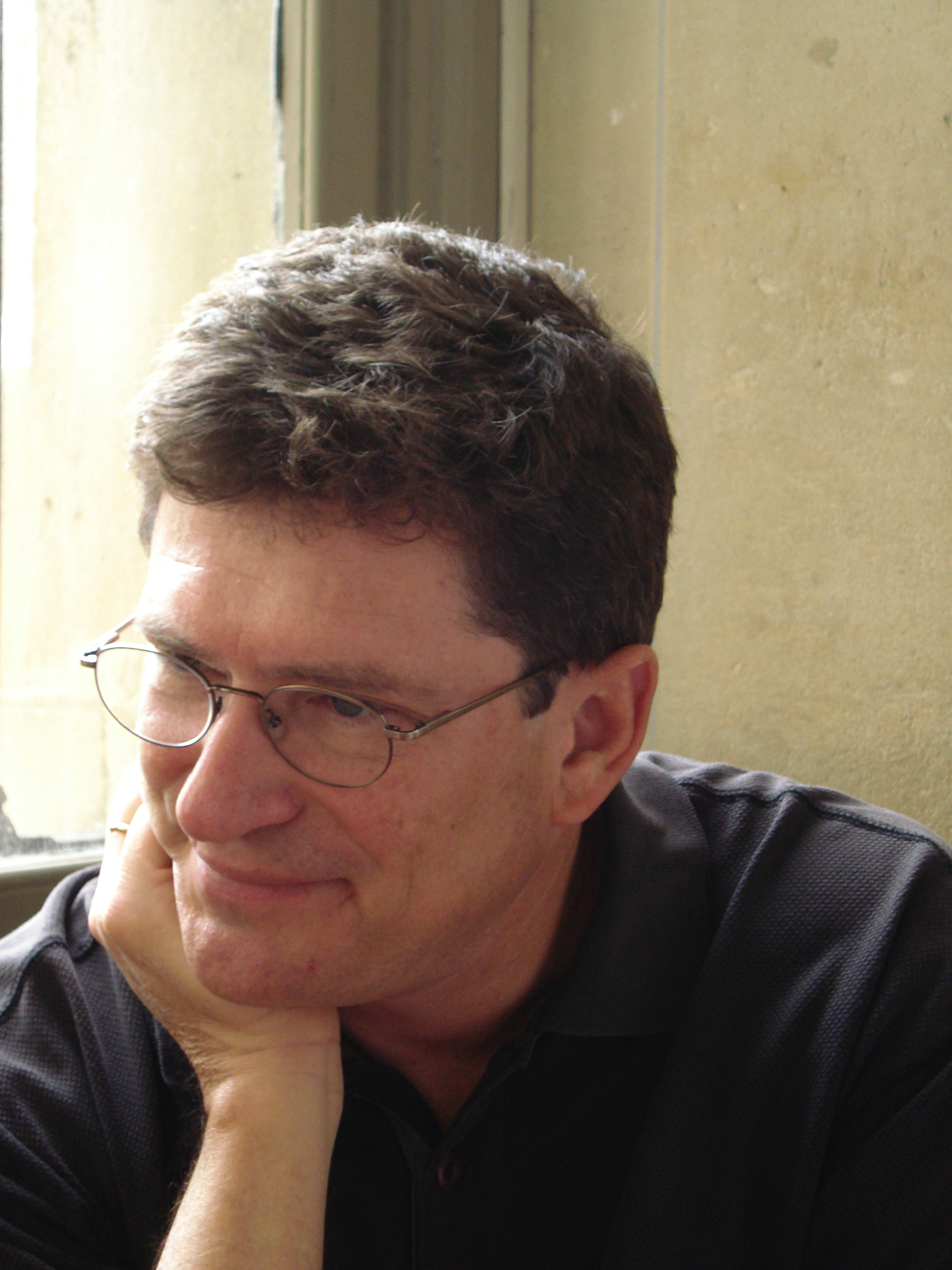
Name: Cort Lippe
Nationality: American
Occupation: Composer
Current release: Cort Lippe's new album buffalo.wav is out via Infrasonic Press.
Hometown Recommendations: I recommend hiking up Mt. Juktas just outside the village of Archanes where I live now on the island of Crete.
Things that I am passionate about but rarely get to talk about: I love playing the music of the 16th century lute composers, especially John Dowland. The quality and range of lute music at that time reached extremely high standards, and players were such virtuosi. But this is not really a topic that no one is interested in. I can’t really think of a example of a topic that really interests me that no one is interested in.
If you enjoyed this Cort Lippe interview and would like to know more about his music and projects, visit his official homepage.
The borders between producers, sound artists, and even songwriters are becoming increasingly blurry. What does being a composer mean today, would you say?
Simply, someone who considers themselves a composer. What bothers me is when composers get called something else, when what they are doing is composing.
There is an opera by an contemporary instrumental composer that has an electronic introduction. Another composer was commissioned to make that introduction who is a very experienced electroacoustic composer. So why was the electroacoustic composer called a sound designer in the concert program? Nothing wrong with someone calling themselves a sound designer, but only if that is what someone prefers to call themself.
Sound designers, sound artists, and many producers engage in the act of composing, but prefer other monikers for their own personal reasons. So the blur exists due to various labels, not in the activity of composing, since everyone with these labels composes.
As to what it “means” to be a composer today, I suppose one could come up with answers to that question involving technology and sociology that could lead to a complicated answer, but on a personal level I imagine that it means pretty much the same thing to composers of all ages: someone trying to create their own personal music.
Many people perceive classical music and contemporary composition as having high barriers of entrance, both for listeners and musicians. What have your own experiences been in this regard?
It is true that classical music and contemporary composition is a small subset of the huge array of music we now have at our fingertips, but there are lots of genres of music that have a small base of listeners. Certainly the barrier is low in terms of cost for a classical or contemporary music concert compared to the incredibly high cost of tickets for some kinds of music these days. So barriers are not necessarily economic.
Barriers might exist on a social level, and some people might feel that certain types of music don’t speak to them, but just about anyone, with the right mind-set can appreciate any kind of music out there if they are the type of listener that likes new challenges.
And every kind of music has high barriers depending on a listener’s taste, predilection for new kinds of music/sounds, and cultural background.
As of today, what kind of materials, ideas, and technologies are particularly stimulating for you?
For many years, I have been interested in combining live electronics, using a computer, and acoustic instruments in an interactive situation which involves algorithmic ideas and new sounds, and where the instrumental performer has influence over the final sounding results.
Digging deeper, I am very interested in the possibilities, for instance, that the Fast Fourier Transform has to offer, and I continue to look for new ways to combine electronics and acoustic instruments.
Where do most of your inspirations to create come from – rather from internal impulses or external ones? Which current social / political / ecological or other developments make you feel like you need to respond as an artist?
I am always inspired by the performers and instruments I am composing for. And I don’t think anyone is immune to forces, be they social, political, ecological, etc. Also external forces that are very personal affect me.
How all this might be expressed in my music takes many avenues, and all the external impulses get filtered through my own compositional activity. With every piece I try to convince myself that I am starting at zero (or close to zero), but this seems to be an impossibility and at some point while working on a piece,
I realize that the amalgamation of all my previous experience is a strong influence on whatever I am trying to compose.
Tell me a bit about the sounds & creative directions, artists & communities, as well as the colleagues & creative hotspots of your current hometown, please. How do they influence your music?
I will talk about my previous hometown, where I lived for 30 years: Buffalo, New York.
There is a great deal of new music activity in the area. The two main universities have large multi-channel spaces ideal for spatial music. They also host festivals of new music every year. The downtown area has Hallwalls Contemporary Arts Center which hosts new music of various genres, including jazz, free improvisation, and other experimental new music events.
There are a number of bookstores, including The Fitz, that regularly hold new music events. The grain silos on Lake Erie hold concerts regularly. The silos are very unusual places with enormous reverb times which people specifically make music for.
There is a flower shop in town that holds new music concerts. The Colored Musicians Club has historically hosted, and continues to host, cutting edge jazz artists. There are two art museums in town that present new music concerts. And there are a number of artist collectives that program new music activities.
People like Jonathan Golove, David Bailey, Jeff Stadelman, Bill Sack, Jason Geistweidt, Ethan Haden, TJ Borden, and Steve Baczkowski all are active as performers, directors of ensembles, concert organizers, and composers in the area.
Composing has always had an interesting relationship between honoring its roots and exploring the unknown. What does the balance between these two poles look like in your music?
I hope the balance between the two poles is constantly shifting.
I embrace the unknown through a grounding in my roots as a musician, the influence of other composers, but with a strong desire to try and do something previously unknown to me.
How much potential for something “new” is there still in composition? What could this “new” look like?
There is always potential for all sorts of “new”, and it could look like all sorts of things that we cannot imagine. I would not even attempt to imagine what music might sound like in 100 years, but it would be nice to have a time-machine to check out music of the future and the past.
People who compose find their own comfort zone between tradition and pushing away from tradition. Some people want to pay homage to tradition and push it forward, some want to break completely with tradition, and fortunately most want to create something that is “new” for them.
What role do electronic tools and instruments play for your creative process? What does your creative space / studio look like and what tools does it contain?
Electronics plays as big a role in my creative process as do the acoustic instruments I am writing for, since the electronic parts and instrumental parts of my interactive pieces are so conceptually intertwined.
My space is pretty sparse: a computer, some speakers, a microphone, scraps of paper, a pencil, and eraser.
It is my impression that adding a conceptual, non-musical dimension to one's work is almost a prerequisite for commissions and grants. How do you view this tendency and how “conceptual” is your own approach to writing?
This is definitely an important tendency today, although I think this tendency influences the work of younger composers more than it influences my own work.
Usually my concepts are of a more abstract or purely musical nature, while often a non-musical dimension exists as a metaphor or as an influence which I prefer to keep private.
Working with long forms, complex concepts or new vocabulary is potentially more challenging today because they require us to remember things that happened perhaps minutes ago – while most of us are finding it hard to focus even on what's happening right now. Both as a composer and as a listener yourself, how do you deal with this?
Music involves memory and imagination. We listen to what is happening at the moment and make all sorts of connections to what came before in the music. At the same time, we project into the future, wondering, guessing, and predicting what might happen next.
Music gives us a chance to step out of our daily lives, in which there are so many things competing for our attention, and experience time in a different way.
For many artists, life-changing musical experiences take place live. Few works these days, however, are performed beyond their premiere. What, do you feel, does this mean for composers, and the music they write, and how does this reality influence your own work?
I have been fortunate that my pieces have been performed multiple times. It is unfortunate that for some composers this is not necessarily the case, and that recordings can become more important or as important as live performances.
I think composers need to think in a practical manner about the performability of their pieces and write music specifically for performers who want to perform their pieces multiple times, and possibly end up teaching the pieces to their students, if they have students.
Composers might try to avoid writing music that is extremely impractical to perform, either due to technical or practical issues (without necessarily simplifying the music they want to write), or avoid writing music for musicians who might not be interested in and engaged with the composer’s ideas.
Close collaboration between composer and performer, so that the performer is an important actor in the creative process, can give rise to multiple performances.
How, would you say are live performances of your music and your recording projects connected at the moment? How do they mutually influence and feed off each other?
I see recordings of my interactive music for performers and live computer as documentation of the compositions.
Since the pieces are composed as music in which live interaction between a performer and a computer is an important factor of the pieces in the first place, a performance “is” the piece, while a recording is purely documentation of the piece.
On the opposite end of the spectrum, I also make purely electroacoustic music which exists as recordings. So in this genre the recording is the composition.
To some, the advent of AI and 'intelligent' composing tools offers potential for machines to contribute to the creative process. What are your hopes, fears, expectations and possible concrete plans in this regard?
I have always been interested in the possibilities and potential of algorithmic music, which is quite different from AI in so many ways.
One of the main ways algorithmic music and AI differ is that algorithmic music is based on a specific or a combination of algorithms, and composers are free to make variants by altering the input, the output, or the algorithms. Being able to explore algorithms, and figure out interesting ways to map the algorithm to musical parameters, while at the same time being able to interpret the output allows composers to step outside their natural inclinations and explore possibilities they might not otherwise discover.
AI is such a different beast. Collating a corpus of existing music for an AI system to use in order to create something new is more like creating some sort of multi-dimensional digital mashup. The composer David Cope pioneered experimenting with and creating music in various composers styles (including his own) using AI, but personally, I prefer the more abstract nature of algorithmic concepts and tools.
One can view AI output as as a kind of complicated average of the corpus of music the AI is fed. I imagine playing with the weighting of the corpus might lead to some interesting results, or mixing various styles in the corpus, or taking the AI output and applying some algorithmic rules to it.
On another level, unfortunately, my fears don’t keep up with reality since something like 40% of all music uploaded to streaming services is now produced by AI. The small companies making lots of money, by uploading hundreds of songs a month and creating fake “artists” who have “created” the music is a money-grab of shocking proportions.
In addition, it is becoming more common for some artists to hide the use of AI in their work, which I find very strange.
Are there approaches, artists, festivals, labels, spaces or anyone/-thing else out there who you feel deserve a shout out for taking composition into the future?
I would love to give a shout out, but it would take up too many words since there are so people taking music into the future…
The Montreux Festival intends to preserve its archive of recordings for future generations. Do you personally feels it's important that everything should remain available forever - or is there something to be said for letting beautiful moments pass and linger in the memories of those that experienced them?
It is laudable that they want to preserve all the great performances from the festival in Montreux, but nothing lasts forever (unless they figure out a way to preserve the recordings on clay tablets).
The nice thing about preservation is that people who were not in attendance at a given concert have the opportunity to enjoy the music too. Maybe they were not alive at the time the concert took place, or maybe someone could not afford to pay for a concert, or maybe they were unable to travel to the concert site due to various reasons/difficulties, etc., so I have no problem with archival recordings being maintained.
And if people prefer to let the beautiful moments pass and linger in their memories, no one is forcing them to listen to a recording later.