Published
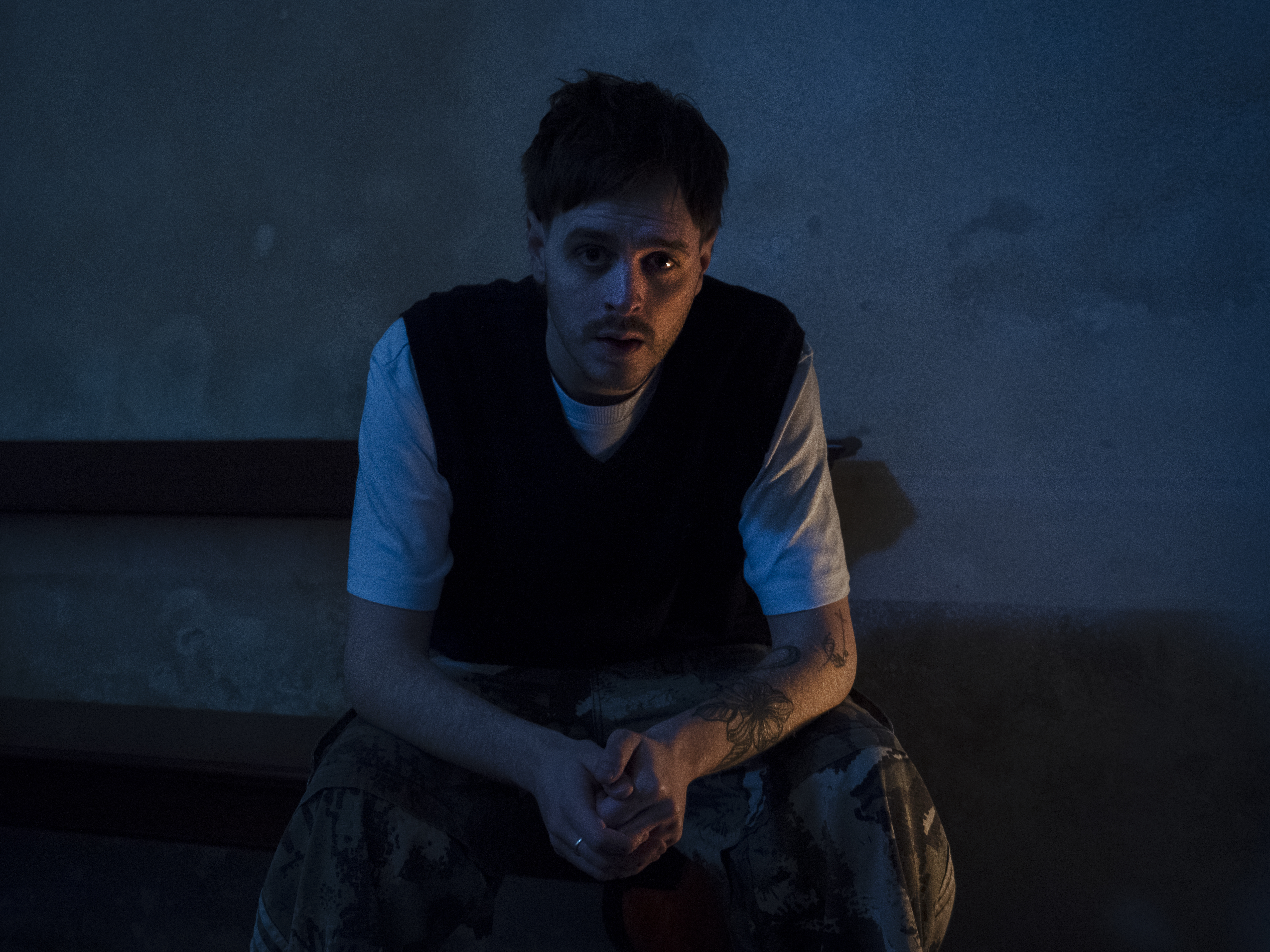
Name: Andrea Gamba aka Daykoda
Nationality: Italian
Occupation: Composer, producer
Current release: Daykoda's new album Blue Devil, featuring Miguel Atwood-Ferguson, Theon Cross, Ze in the clouds and Daedelus, is out via Beat Machine.
Hometown Recommendations: I'd recommend checking out a live music night at BIKO in Milan. It's one of the city's key venues for a younger generation of artists and audiences, with a strong focus on jazz, experimental music and sounds that cross genres. It's a great place to discover musicians who are pushing boundaries and exploring new directions in contemporary music.
Things I am passionate about but rarely get to talk about: I'm really passionate about cinema, video games and food. I love the way cinema and video games can build entire worlds and make you feel part of something, whether through storytelling, visuals, sound or atmosphere. I'm fascinated by the creative choices behind them and how all these elements come together to create an experience.
And then there's food. I genuinely love eating, discovering new places and trying different cuisines. I can get pretty enthusiastic about a good meal, and I think food is one of the best ways to experience a culture.
[Read our Miguel Atwood-Ferguson interview]
[Read our Daedelus interview]
If you enjoyed this Daykoda interview and would like to know more about his music and upcoming live dates, visit his official homepage. He is also on Instagram, Facebook, and bandcamp.
What were some of the musical experiences which planted a seed for your interest in jazz?
I started making music when I was around 15.
I grew up listening to UK and American rock, and then I got into electronic music through labels like Brainfeeder, Warp and Ninja Tune. Artists who were blending electronic production with jazz, hip-hop and more experimental sounds really opened up my perspective. Over time, movin' to Milan and studying in conservatory, made me became more interested in jazz and in the possibilities of combining acoustic instruments with electronic production.
I think what attracted me most was the freedom to move between different musical worlds without feeling the need to belong to just one of them.
What does the term jazz mean today, would you say?
I think jazz has become increasingly difficult to define as a genre, and that's a good thing.
For me, it's more about an approach to music than a specific sound. It's about interaction, listening to each other, experimentation and leaving room for things to happen that you couldn't have planned in advance.
Today, jazz can exist in electronic music, hip-hop, ambient music or many other forms. I don't think it necessarily needs to sound a certain way to carry that spirit.
As of today, what kind of materials, ideas, and technologies are particularly stimulating for you?
I'm really interested in the relationship between acoustic instruments and electronic production, and in how the same musical idea can change depending on the context in which it's presented.
With Blue Devil, I spent a lot of time developing electronic productions and then reworking them into arrangements for a quartet, before bringing some of that material back into an electronic context.
I like this circular process because the music keeps changing identity.
Where do most of your inspirations to create come from – rather from internal impulses or external ones? Which current social / political / ecological or other developments make you feel like you need to respond as an artist?
My inspiration usually comes from internal urges. I'm often trying to understand something I'm experiencing or feeling, even if I don't necessarily have the words for it at the time.
Blue Devil came from a period of reflection, dealing with disappointment, loneliness and the pressure I put on myself to constantly improve. I started questioning the idea that you always need to achieve something bigger or become a better version of yourself.
I don't usually approach music with the intention of making a direct statement about a specific political or social issue. For me, the response is often more personal. I try to create a space where I can explore these feelings honestly, and hopefully leave room for other people to find their own meaning in them.
Tell me a bit about the sounds & creative directions, artists & communities, as well as the colleagues & creative hotspots of your current hometown, please. How do they influence your music?
Milan has quite a diverse music scene, with different worlds coexisting, from jazz and experimental music to electronic music and club culture. There are musicians here who move freely between these different environments, and I think that openness is important.
I've collaborated with several musicians from the local scene, and playing together has influenced the way I think about composition and arrangement. With Blue Devil, for example, working with my quartet allowed me to approach some of my electronic productions from a completely different perspective.
At the same time, I don't think my music is necessarily a direct reflection of Milan. A lot of my influences come from different places and musical communities around the world. Living here gives me a context to work and collaborate, but I'm interested in keeping my ears open to what's happening elsewhere.
Thanks to technological advances, collaboration has become a lot easier. What have been some of the most fruitful collaborations for you recently and what approaches to and modes of collaboration currently seem best to you?
Some of the most meaningful collaborations on my new album have been with Theon Cross, Miguel Atwood-Ferguson and Daedelus.
They all come from quite different musical backgrounds, and I think that's what makes these exchanges interesting to me. I'm not looking for someone to simply add their sound to my music, but for something to happen that I wouldn't have come up with on my own.
I usually start by building the musical world myself, through production and composition, and then I look for people who can bring a different perspective to it. Sometimes that means giving someone a specific direction, while other times I prefer to leave more space for them to interpret the music in their own way.
Technology makes it much easier to exchange ideas and work with people across the world, but for me, the human connection is still the most important part. Whether a collaboration happens remotely or in the same room, I want it to feel like a genuine exchange rather than just sending files back and forth.
Jazz has always had an interesting relationship between honouring its roots and exploring the unknown. What does the balance between these two poles look like in your music?
For me, it's less about finding a balance between tradition and experimentation, and more about allowing both to coexist naturally. I'm not interested in reproducing the language of traditional jazz, but I have a lot of respect for its history and for the freedom it has always represented.
My background in electronic music has shaped the way I approach composition, rhythm and sound design, while working with acoustic musicians has taught me to leave room for interaction and unpredictability.
With Blue Devil I wanted these two worlds to influence each other. Some ideas started as electronic productions, became arrangements for acoustic instruments, and then found their way back into an electronic context.
Through this process, the music kept changing, and I think that's what makes it exciting for me: not knowing exactly what it will become when you start working on it.
How much potential for something “new” is there still in jazz? What could this “new” look like?
I think there's still a lot of potential for something new in jazz, but maybe we need to stop thinking about innovation as creating something that has never existed before. Sometimes what's new is simply bringing different worlds together in a way that feels honest and meaningful.
I'm interested in what happens when jazz interacts with electronic production, sound design and contemporary club music, but also in how technology can change the way we compose and listen.
For many artists, life-changing musical experiences take place live. How do you see that yourself?
Live music has always been important to me, both as a listener and as a musician. There's something about being in a room with other people, sharing a moment that can never be exactly reproduced, that makes music feel very real.
As a musician, playing live has also changed the way I understand my own music. You can spend months working on a track in the studio, but when you play it with other musicians, or hear how people respond to it, you discover things you couldn't have anticipated.
I think some of the most meaningful experiences happen when you lose a bit of control over what's happening. That's something I've become increasingly interested in, not just in live performance but in my creative process in general and I would say in my life also.
You prepare as much as you can, but you also have to be open to whatever happens in the moment.
How, would you say are your live performances and your recording projects connected at the moment? How do they mutually influence and feed off each other?
For me, recording and playing live are two different ways of exploring the same musical ideas.
In the studio, I can work on every detail, manipulate sounds and build complex structures. Playing with a band brings a different kind of energy into the music, because you have to leave room for other musicians and for things to happen in the moment.
I don't see the live version as simply a reproduction of the record. I want the music to keep evolving, and sometimes playing a piece live makes me realise that something I considered finished in the studio still has other possibilities. Ideally, the process never really stops.
What, would you say, are the key ideas behind your approach to improvisation?
For me, improvisation is about finding a balance between intention and letting go. I like having a strong musical framework, but I don't want to control every detail of what happens within it.
Coming from electronic production, I'm used to working with sounds and structures that can be edited and refined endlessly. Playing with other musicians forces me to accept that some things happen only once, and that not everything needs to be corrected or perfected.
I think listening is the most important part of improvisation. It's not just about expressing yourself, but about reacting to what other musicians are doing and allowing their ideas to influence yours. Sometimes the most interesting moments happen when you stop trying to come up with something clever and simply respond to what's happening around you.
Are there approaches, artists, festivals, labels, spaces or anyone/-thing else out there who you feel deserve a shout out for taking jazz into the future?
I think there are a lot of exciting things happening in Italy right now. We have some great artists and experimental musicians who are constantly pushing boundaries and moving between different musical worlds.
Festivals like Jazz:Re:Found, Jazz is Dead! and VIVA! are doing important work in creating spaces for music that doesn't fit neatly into one category. In terms of labels, Beat Machine Records is also an interesting reference point in the Italian avant-garde scene.
There are many artists I really appreciate here, including Ze in the Clouds, who's a friend of mine and features on my new album, as well as Emanuele Triglia, LNDFK, Beetamax, and Studio Murena, among many others. They're all approaching music from different perspectives, and I think that diversity is one of the most interesting things about the current Italian scene.
Internationally, labels like Brainfeeder, Warp, Ninja Tune and International Anthem have been fundamental to my musical development. They've shaped the way I listen to music and think about production, and they've shown me that you don't necessarily have to respect the boundaries between genres.
The Montreux Festival intends to preserve its archive of recordings for future generations. Do you personally feels it's important that everything should remain available forever - or is there something to be said for letting beautiful moments pass and linger in the memories of those that experienced them?
I think there's something beautiful about the idea that certain moments exist only for the people who were there to experience them. Music is a living thing, and part of its magic comes from knowing that a performance can never be recreated in exactly the same way.
At the same time, I think preserving recordings is important. Listening to performances from decades ago can completely change the way you understand music. These archives allow ideas to travel across generations and inspire people who weren't even born when the music was made.