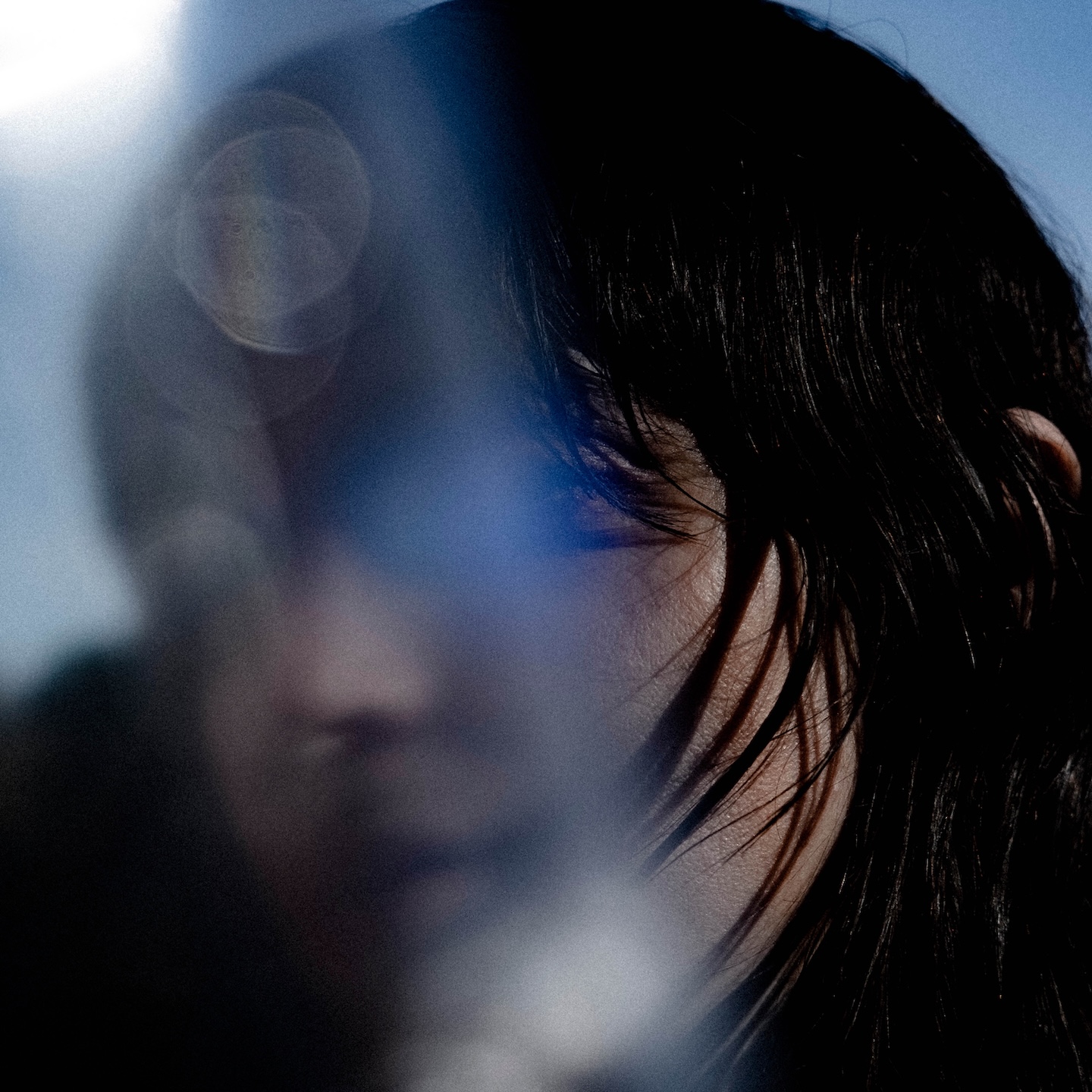


Published
Name: DIMA
Occupation: Composer, sound artist, producer
Nationality: Argentinian, Barcelona-based
Current release: DIMA's new album Salva is out via 99CHANTS.
Recommendations on the topic of sound: Books I've read relating to this are The Soundscape by R. Murray Schafer and Deep Listening by Pauline Oliveros.
[Read our Pauline Oliveros interview]
If you enjoyed this DIMA interview and would like to know more about her, visit her on bandcamp.
When I listen to music, I see shapes, objects and colours. What happens in your body when you're listening? Do you listen with your eyes open or closed?
It depends on what I'm doing while listening to music. If I'm relaxing at home and intentionally put on a record, I'll most likely put on headphones and lie down with my eyes closed to get more into it.
My imagination becomes very cinematic and sensuous. Images start appearing, sometimes entirely new, other times fragments of places, people, or experiences from my past, rearranged into imaginary situations.
There's something involuntary about it. One image leads to another, and suddenly I'm somewhere else.
How do listening with headphones and listening through a stereo system change your experience of sound and music?
I mostly prefer listening with professional headphones because I tend to get deeper into the hidden sounds and moments of a song. I can distinguish each instrument with more clarity, and it helps me hyperfocus, be present, and engage with what's going on.
Stereo is wonderful in shared contexts, and it also allows the ears to rest. Attention becomes broader, and more sounds are invited into the moment.
So headphones relate to my intimacy, while stereo is sonically and socially inclusive. I'm a loner at heart.
Tell me about some of the albums or artists that you love specifically for their sound, please.
The Pavilion of Dreams by Harold Budd is very phantasmagoric and walks me through fantasy like no other album.
Some contemporary releases I'm currently into are Entre Nous by Eden Aurelius, Seeing Is Forgetting by Elori Saxl and Henry Solomon, and APPX:12 by Corell.
[Read our Elori Saxl interview]
Doolittle by Pixies - of course, these sounds relate to a particular moment in my adolescence. I believe some albums become so deeply ingrained in us because of when we first encounter them.
This one was truly a companion. It's a classic. Its rawness, the way the instruments and arrangements dialogue so well with each other, and how great it's recorded.
Do you experience strong emotional responses towards certain sounds? If so, what kind of sounds are these and do you have an explanation about the reasons for these responses?
Yes, I absolutely love low, airy, round sounds. A bass flute or bass saxophone completely captures me. Other sounds that resonate with me are dreamy synth violins, particularly when they sound full and round. Of course, a good bass is a classic. Again, I always return to round, full sounds.
The reasons are hard to understand. Music completes the emotions we can't explain, but I have this intuition that our individual physical characteristics and internal rhythms and waters might have something to do with how we respond to sound. The rhythm of our heartbeat, how blood flows, the thickness of our skin, our body temperature, the speed at which neurons transmit information back and forth.
I wonder whether even slight differences in these things could influence why certain sounds resonate more or less with different people. Some sort of bodily entrainment. It's just a personal speculation, but one I find interesting.
Sounds also accumulate layers of meaning through experience. A song heard during a particularly emotional moment in your life becomes significant, and that significance compounds over time. Naturally, you may tend to seek out more of these sounds or reject them.
There can be sounds which feel highly irritating to us and then there are others we could gladly listen to for hours. Do you have examples for either one or both of these?
High-pitched, loud sounds, like the scratching of a ceramic plate with a metal fork, drive me insane.
I can listen to gongs or low-frequency Tibetan singing bowls for hours.
Are there everyday places, spaces, or devices which intrigue you by the way they sound? Which are these?
I live in a city, so I usually try to escape noise. In this context, I really love how sound changes when I drive through tunnels. I'll also step inside churches for some silence. I call them my sonic sanctuaries.
I'm also very intrigued by the sounds of new electric cars. They sound really nice. An artificial, smooth, electric sound.
On a more natural note, the sound of walking on pebbles is also really nice.
Have you ever been in spaces with extreme sonic characteristics, such as anechoic chambers or caves? What was the experience like?
Yes, I have.
My immediate reaction is to want to scream and sing constantly. I feel like a child again. If I could, I would stay there for hours, listening to how different elements sound in relation to one another.
What are among your favourite spaces to record and play your music?
I prefer recording in intimate settings. A room in someone's house, where I can spend hours in a session without thinking about when the rental time is up.
My main instrument is my voice, and yes, the cliché of singing in the shower is true. It's the best.
Do music and sound feel “material” to you? Does working with sound feel like you're sculpting or shaping something?
Not at all. In my imagination, sounds are free. They arrive from somewhere, pass through an interface, and then are free again.
I guess the accumulation of sounds converging and meeting in one specific time and space could feel like something is taking shape, but then everything is in constant motion, moving away and dissolving. Very undefined, similar to how clouds move.
How important is sound for our overall well-being and how far do you feel the "acoustic health" of a society or environment is reflective of its overall health?
Sound is crucial to our well-being. In an already overstimulated society, it's another layer that adds to it. Constant high-volume noise can fog and tire the brain, increase stress, and leave us feeling stunned.
The worst part is that people who live in densely populated communities don't always factor it in. Because we can't see sound, we don't necessarily realise how harmful it can be. And because we're so accustomed to living with noise, we may not even notice the effect it's having on us. I think the first challenge is becoming aware of it.
Needless to say, we don't live in a particularly healthy system, but I do think we're getting better. Alongside all the disinformation, there is actually more information available, and people in certain contexts are prioritising their health.
The wellness industry is getting a lot of attention and hate lately, but I actually prefer wellness being a thing nowadays. Whatever makes you love yourself more is okay with me.
Sound, song, and rhythm are all around us, from animal noises to the waves of the ocean. What, if any, are some of the most moving experiences you've had with these non-human-made sounds?
When I visited Los Hervideros on the island of Lanzarote, the waves had a force I had never experienced so closely before. They crashed wildly against the rocks, and the foam retreated with this enormous shhhh.
It sounded like something from another universe, fierce and immense, but at the same time completely natural. I also love hearing newborn kittens in the wild and finding them all cuddled up together.
Many animals communicate through sound. Based either on experience or intuition, do you feel as though interspecies communication is possible and important? Is there a creative element to it, would you say?
Non-verbal communication is already very present. And I understand that we know quite a lot about how other animals communicate with each other, especially mammals. I follow the work of Interspecies.io.
I hope a deeper form of communication will be possible. It certainly takes creativity to listen and translate sound into meaning. Collaborations between people from different disciplines could bring us closer to understanding animals.
Tinnitus and developing hyperacusis are very real risks for anyone working with sound. Do you take precautions in this regard and if you're suffering from these or similar issues – how do you cope with them?
I do take precautions, especially by regulating my listening volumes. I also avoid situations where I'd be standing next to loudspeakers.
I've stopped clubbing, to be honest. That's actually why I started producing listening sessions in 2021. I was over that type of relationship with sound.
We can surround ourselves with sound every second of the day. The great pianist Glenn Gould even considered this the ultimate delight. How do you see that yourself and what importance does silence hold?
Having environmental sound all day is a delight. I wouldn't say the same about listening to music all day.
I actually get overwhelmed if I listen to music for long periods, especially if it's complex, has lyrics, or even follows a classic song structure.
Seth S. Horowitz called hearing the “universal sense” and emphasised that it was more precise and faster than any of our other senses, including vision. How would our world be different if we paid less attention to looks and listened more instead?
I imagine we would pay more attention to the words we actually use to construct ideas. Our vocal expressions would also change. There would be a greater awareness of HOW our voices sound and HOW we express our emotions through them. Perhaps we'd be less impulsive in the way we speak.
Regarding the environment, cities would be quieter, machines would be built differently, and urban signals, like traffic light sounds for visually impaired people, would be more thoughtfully designed and perhaps even more attractive to listen to.