Published
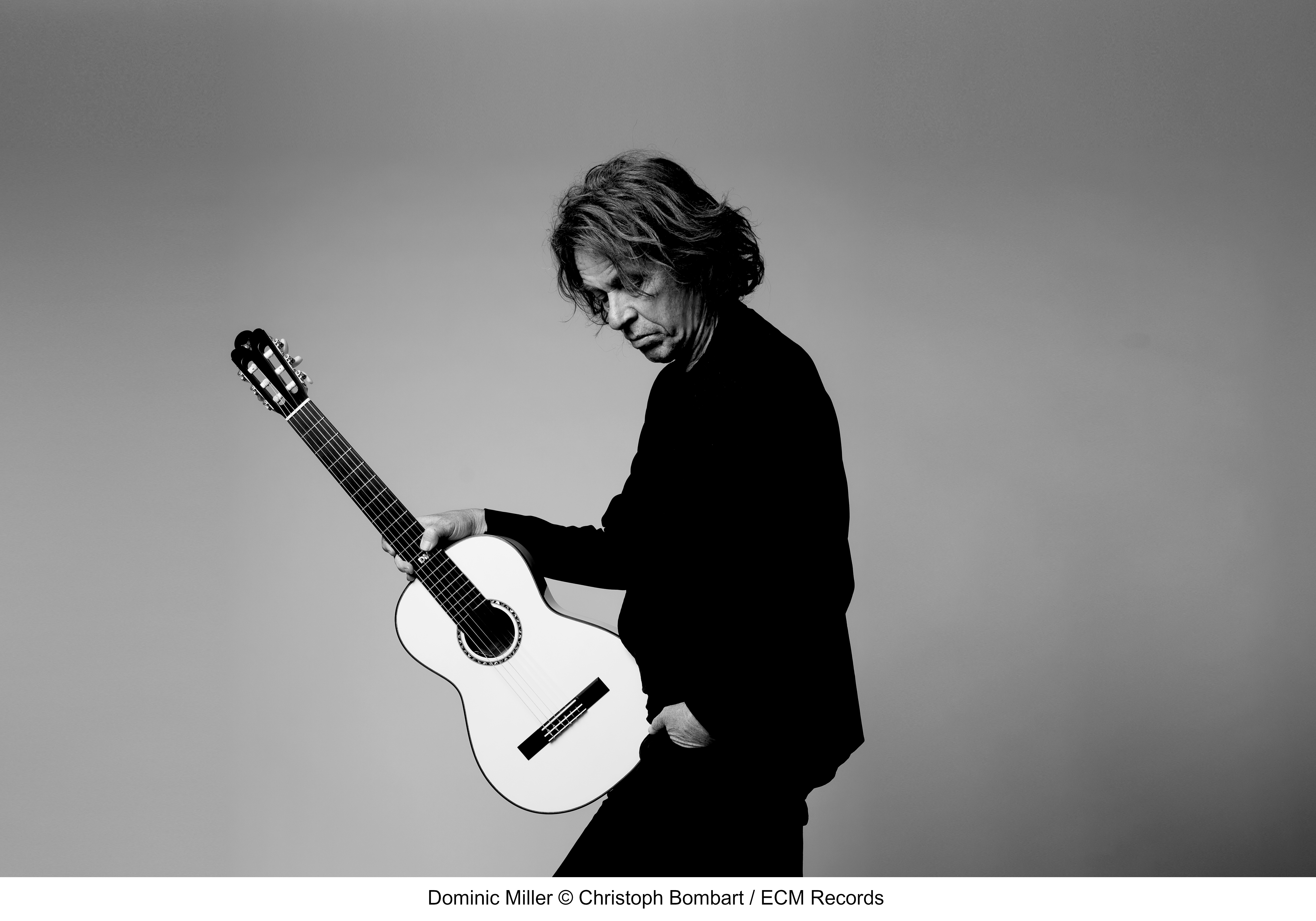
Name: Dominic Miller
Nationality: Argentine-British
Occupation: Guitarist, composer, improviser
Current release: Dominic Miller's new album Diana is out via ECM.
Hometown Recommendations: Spend the day relaxing in Les Jardins de Luxembourg in the 6th district, Paris.
Things I am passionate about but rarely get to talk about: Outside of music, chess and dogs are my passion.
If you enjoyed this Dominic Miller interview and would like to know more about his music and current live dates, visit his official homepage. He is also on Instagram, and Facebook.
What were some of the musical experiences which planted a seed for your interest in jazz?
Listening to the Miles Davis Kind of Blue album always spoke to me as a kind of song album where the musicians also improvised variations on these solid themes.
Then I graduated to modern jazz with Mahavisnhu Orchestra, Return to Forever and Weather Report, where the playing was stretched to the max.
What does the term jazz mean today, would you say?
To me it is improvising or speaking in the language of music.
As of today, what kind of materials, ideas, and technologies are particularly stimulating for you?
Materials, I would say well-chosen wood, and technology.
Just the ability to record music in the best possible way.
Where do most of your inspirations to create come from – rather from internal impulses or external ones? Which current social / political / ecological or other developments make you feel like you need to respond as an artist?
Most of my inspiration comes from human relationships (and dogs of course).
I feel it my obligation to veer people away from AI which has no place in the creative arts. I think this might influence the way I present music.
Tell me a bit about the sounds & creative directions, artists & communities, as well as the colleagues & creative hotspots of your current hometown, please. How do they influence your music?
I live in Paris which is quite a noisy city.
Anything from the sound of a metro, a siren, people laughing etc, all these sounds influence creative people.
What role do electronic tools and instruments play for your creative process?
I don’t rely on technology too much and I’m not obsessed with instruments although I have some that help me get the sound I want.
As long as the intonation is good I’m good to go.
Thanks to technological advances, collaboration has become a lot easier. What have been some of the most fruitful collaborations for you recently and what approaches to and modes of collaboration currently seem best to you?
Nothing beats human interaction.
But since Covid I have adapted by sharing music files and then recording with many colleagues - which in some instances has been very productive.
Jazz has always had an interesting relationship between honouring its roots and exploring the unknown. What does the balance between these two poles look like in your music?
I don’t think about that too much.
When I’m stuck for inspiration I sometimes listen to the greats (see above) and am reminded why jazz musicians are considered the bravest musicians in any genre.
This sometimes helps me unlock the creative flow.
How much potential for something “new” is there still in jazz? What could this “new” look like?
There’s always room for new melodies, rhythms and concepts. As with chess, the possibilities are endless.
I wish I knew where it would go from here. We’re all looking for it and that’s why we keep doing it in case we get lucky.
For many artists, life-changing musical experiences take place live. How do you see that yourself?
I see every concert as a special moment, exclusive between the audience and ourselves, and one that we will hopefully remember.
How, would you say are your live performances and your recording projects connected at the moment? How do they mutually influence and feed off each other?
They are two very different disciplines that borrow from each other.
For instance in the recording realm it’s good to go off piste and improvise the way you would in a concert. And in the live realm it’s sometimes useful to think of good structure as with arrangements.
Improvisation is obviously an essential element of jazz, but I would assume that just like composition, it is transforming. How do you feel has the role of improvisation changed in jazz?
As I said, improvising is conversing in the language of music and is absolutely essential. It is what defines jazz.
What, would you say, are the key ideas behind your approach to improvisation?
To not think.
Are there approaches, artists, festivals, labels, spaces or anyone/-thing else out there who you feel deserve a shout out for taking jazz into the future?
I would say shout out to all the promoters who are booking jazz musicians.
Without them we stay in our bedrooms practicing.
The Montreux Festival intends to preserve its archive of recordings for future generations. Do you personally feels it's important that everything should remain available forever - or is there something to be said for letting beautiful moments pass and linger in the memories of those that experienced them?
Good point and I agree that a performance is or should be exclusive to the artists and the audience. However, these recordings are also beneficial to many, particularly students to have access to some of these memorable shows.
I don’t think all of them need to be documented, though.