

Published
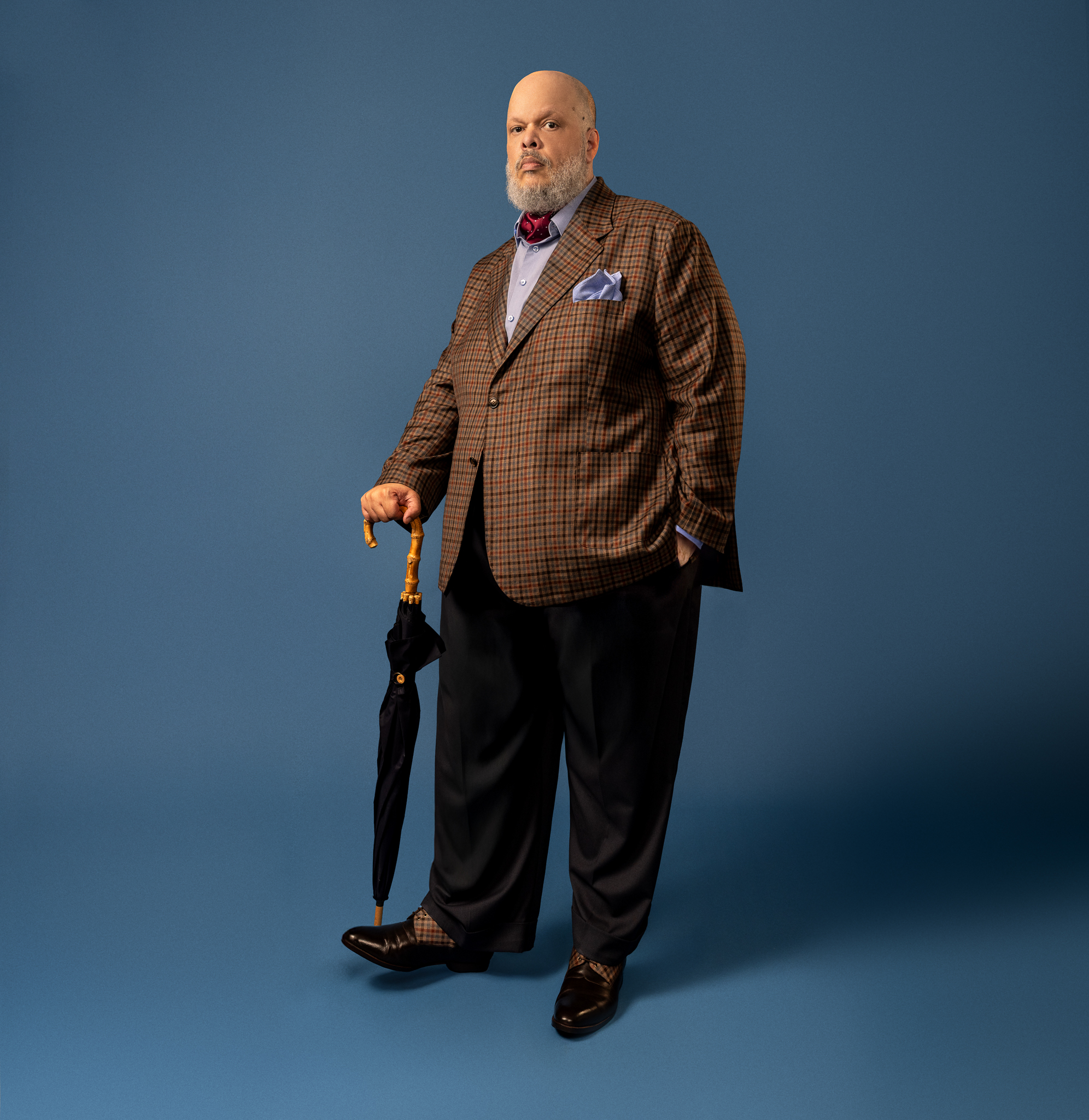
Name: Ed Motta
Nationality: Brazilian
Occupation: Singer, songwriter
Current release: Ed Motta's new album Toc-Toc is out via MPS.
If you enjoyed this Ed Motta interview and would like to know more about his music and upcoming gigs, visit his official homepage. He is also on Instagram, Facebook, and tiktok.
When did you first consciously start getting interested in singing? What was your first performance as a singer on stage or in the studio and what was the experience like?
I started singing jingles for children, and then singing in a hard rock band.
My idols were Ronnie James Dio and Glenn Hughes.
If you're also playing other instruments, how does the expressive potential of these compare to your own voice?
My voice is my strongest expression.
I play instruments because of composition and arrangements, the whole architecture. But singing is more spiritual to me.
Singing is an integral part of all cultures, and traditions. Which of these do you draw from – and why?
I came from records.
Being a record collector since my youth has a strong impact in my life. Music was everywhere.
What were some of the main challenges in your development as a singer/vocalist? Which practices, exercises, or teachers were most helpful in reaching your goals – were there also “harmful” ones?
Donny Hathaway was my best teacher.
Trying to imitate his tone was my challenge for years. I paid attention to each word.
What are the things you hear in a voice when listening to a vocalist? What moves you in the voices of other singers?
The phrasing and tone are more important to me than sometimes having a comma here, a comma there.
But I love singers with everything in harmony like Jean Carn and Phyllis Hyman.
How would you describe the physical sensation of singing? [Where do you feel the voice, do you have a visual sensation/representation, is there a sense of release or tension etc …]
I always feel like I'm in a dream, like flying.
I don't think I'm ever singing alone for as long as I'm alive. There's a presence there together with me, holding my hand.
We have a speaking voice and a singing voice. Do these feel like they are natural extensions of each other, ends on a spectrum or different in kind?
I always tried for the timbre of my singing voice to be a little different from my talking voice.
I talk a lot, lol.
How do you see the relationship between harmony, rhythm and melody? Do you feel that honing your sense of rhythm and groove has an effect on your singing skills?
Oh yes, before my rock start, I was fascinated by songs with a strong rhythm plus vocals.
Bob James's Sign Of the Times is one of them.
What are the potentials and limits of your voice? How much of your vocal performance can and do you want to control?
When I'm recording in the studio, I think about many things, many details.
Live, it's more natural. Sometimes I'll try to go to places I can't technically, but I prefer the intention instead of perfection when it's related to a live performance.
As a singer, it is possible to whisper at the audience, scream at the audience, reveal deep secrets or confront them with uncomfortable truths. Tell me about the sense of freedom that singing allows you to express yourself and how you perceive and build the relation with the audience.
I used to imitate instruments. The audience always went crazy if I did that, but my vocal doctor has asked me to stop.
My voice became stronger and cleaner that way. These were great effects, but they were also dangerous.
I'd love to know more about the vocal performances for your latest release Toc-Toc, please, and the qualities of your voice that you wanted to bring to the fore.
It's very much inspired by soul/funk singers, and a bit of jazz, too, because they are the music genres most often on my mind.
When you're writing song lyrics, do you sense or see a connection between your voice and the text? Does it need to feel and sound “good” or “right” to sing certain words? What's your perspective in this regard of singing someone else's songs versus your own?
Sometimes I think about the sound, but when the storytelling is more complex, I let the words show me the way to sing.
Strain is a particularly serious issue for many vocalists. How do you take care of your voice? Are the recipes or techniques to get a damaged voice back in shape?
I drink water all the time, and I was supposed to eat an apple a day.
How has technology, such as autotune or effect processing, impacted singing? Has it been a concrete influence on your own approach?
It can help you get a good take.
You just need to adjust some little parts, and voilá it's ready.
For recording engineers, the human voice remains a tricky element to capture. What are some of the favourite recordings of your own voice so far and what makes voices sound great on record and in a live setting?
In the studio I like Neumann 67, and Telefunken U 47.
Live I use Shure SM58 Beta. It's the best for a voice with a loud and strong tone.
Motherese may have been the origin of music, and singing is possibly the earliest form of musical expression, and culture in general. How connected is the human voice to your own sense of wellbeing, your creativity, and society as a whole?
My mother used to sing many Brazilian songs to me.
Singing connects me to my beginning, my mother.