

Name: Elias Haslanger
Nationality: American
Occupation: Saxophonist, composer, improviser
Recent release: Elias Haslanger's new album Legacy is out via Bandstand.
If you enjoyed this Elias Haslanger interview and would like to stay up to date with his music, visit his official homepage. He is also on Instagram, Facebook, and bandcamp.
When did you first consciously start getting interested in musical improvisation?
In about 8th grade.
I was playing guitar and saxophone and listening to a lot of blues guitar and trying to play along with folks like Albert Collins, Stevie Ray Vaughan, and Albert King. My mom brought home my first Charlie Parker record called Cool Blues and was intrigued by the sounds.
I started practicing Charlie Parker solos from the Omnibook.
What was your first improvisation on stage or in the studio and what was the experience like?
I was in a band in high school playing saxophone and we composed our own original music.
There were sections for sax solos that were short and based on just a couple of chords so it was my first time getting experience trying to solo in front of an audience.
It was terrifying but thrilling.
Tell me about your instrument and/or tools, please. What made you seek it out, what makes it “your” instrument, and what are some of the most important aspects of playing it?
I play a MacSax Empyreal tenor sax and a MacSax FJ4 mouthpiece with Rigotti reeds.
The Empyreal is modelled after the Selmer Mark VI and the FJ4 is a custom mouthpiece modelled after the Otto Link 8*. I played a Mark VI with an Otto Link 8* for years until MacSax approached me about playing their horn and mpc.
I like the setup because it has a classic sound but with modern craftsmanship making it easier to play and fewer idiosyncrasies.
How would you describe your own relationship with your instrument – is it an extension of your self/body, a partner and companion, a creative catalyst, a challenge to be overcome, something else entirely?
It is an extension of me and my thoughts and feelings.
When you're improvising, does it actually feel like you're inventing something on the spot – or are you inventively re-arranging patterns from preparations, practise or previous performances? What balance is there between forgetting and remembering in your work?
If you are not prepared then you will not catch the moment of inspiration. Of course, there is a lot of practice and patterns that are prepared prior to improvising but if you haven’t done this work, it’s impossible to catch lightning in a bottle.
For me improvising isn’t just me playing a solo, it’s me interacting with others in the band as well as with the audience, so it goes so much further than me playing notes and rhythms in a vacuum. The atmosphere and setting of the music are also important.
Scales and patterns are a means to an end. And that end is connecting with other people in a space that is conducive to expressive music.
Taking your recent projects, releases, and performances as examples, what, would you say, are the key ideas behind your approach to improvisation?
Every improvisation or solo must serve the composition.
There is a line from the beginning of the song that extends through the beginning melody, through everyone’s solos and through the ending melody. Everything is connected to the composition and any solo that is not connected to the composition is not in service to the music.
What are some of your favourite collaborators and how do they enrich your improvisations?
I have been playing with the same friends for many years, and they are vital to everything about my music.
From interpreting my compositions through supporting my improvisations, there is no music without the band of my friends who know each other extremely well.
In a live situation, decisions between creatives often work without words. From your experience and current projects, what does this process feel like and how does it work?
Because we play together so frequently, it is not necessary to discuss much other than the usual roadmap of compositions.
How we start and how we stop is about all we need to chat about.
There can be surprising moments during improvisations – from one of the performers not playing a single note to another shaking up a quiet section with an outburst of noise. Can you tell me about such situations from your own performances and how they impacted the performance?
Reacting to what others are playing or not playing is the job of everyone in the band and it’s what makes each performance unique.
If you aren’t listening and reacting in real time then it’s quite boring to the band and to the audience.

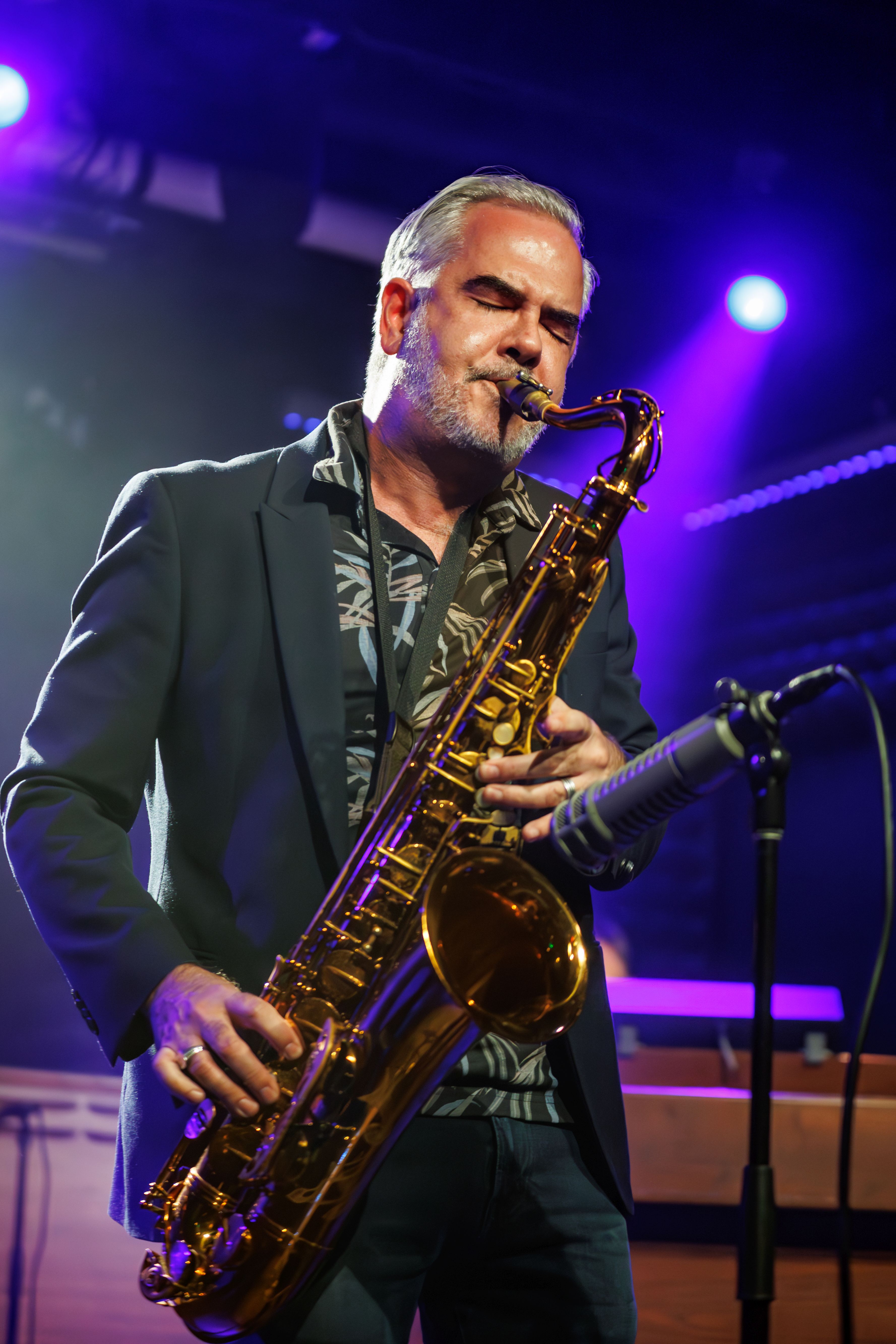 Elias Haslanger Interview Image (c) the artist
"If you are not prepared then you will not catch the moment of inspiration."
Video
