Part 1
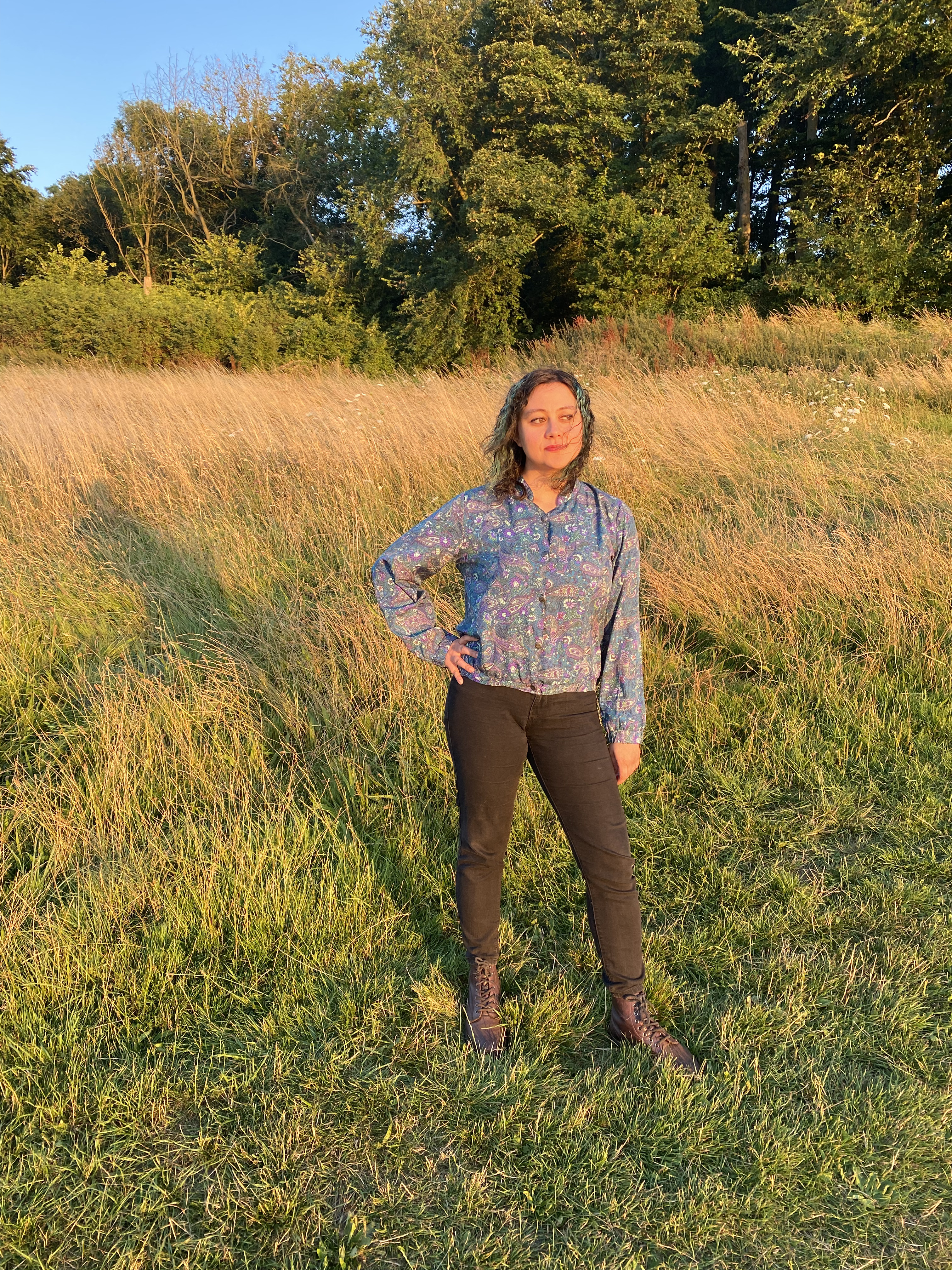
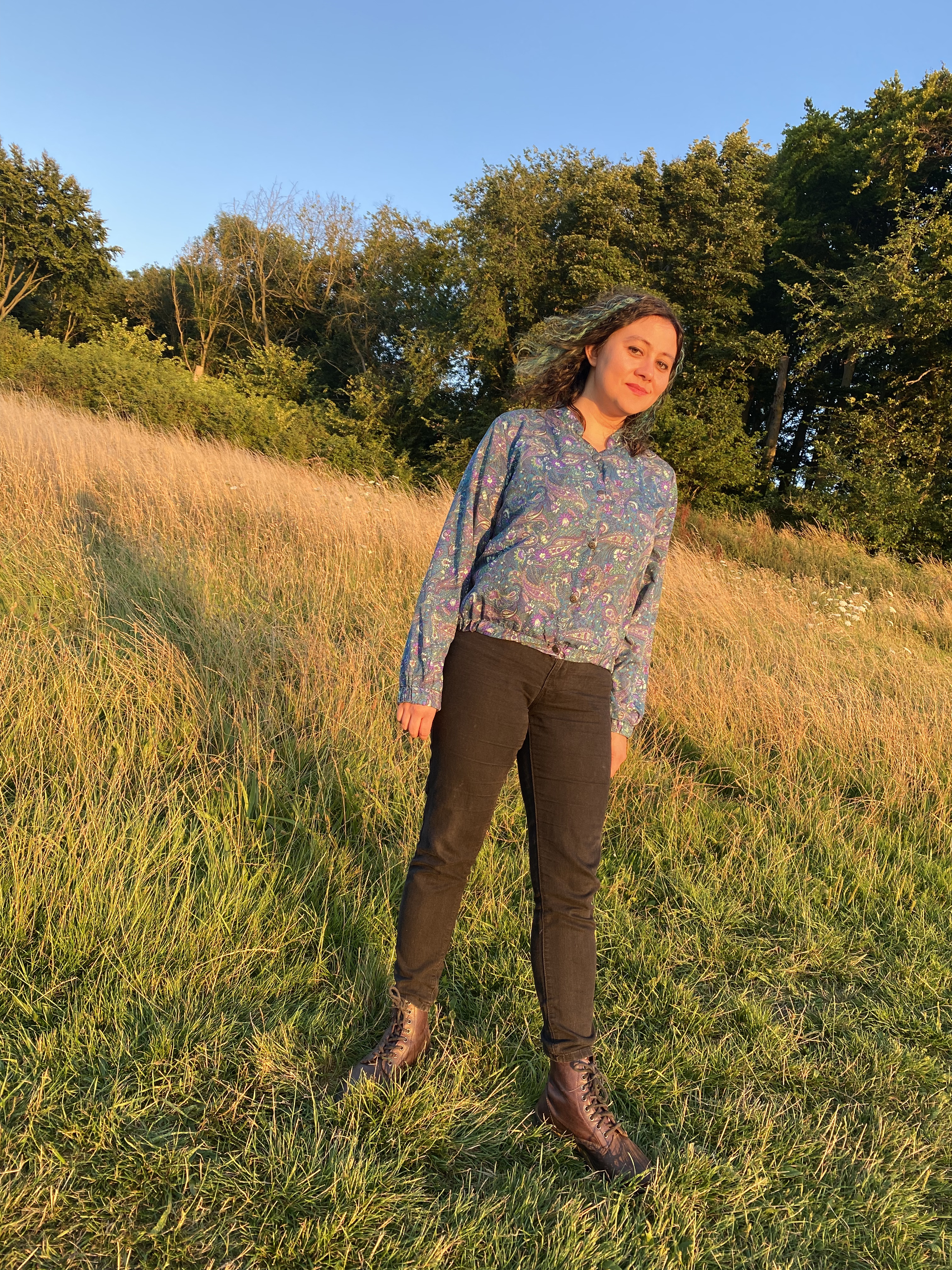
Name: Elif Yalvaç
Nationality: Turkish
Occupation: Composer, producer, multi-instrumentalist
Recent release: Elif Yalvaç teams up with bassist Jordan Muscatello for their new album as Diaries of Destruction, DoD II.
Recommendations: I would like to recommend a book: Zen Guitar by Philip Toshio Sudo. I think this book is not only for guitarists. I find it very helpful in approaching any creative work, or how you approach life, with a one step at a time approach and by valuing each and every step, wherever it goes. It’s a ‘doing book’: doesn’t say what to do, but offers guidance on how doing can help develop wisdom. I like the realistic and rational sustainability perspective it gives me. It feeds into my enthusiasm for Japanese music and food, and what they created in music technology. I am looking for ways to travel to Japan to learn more.
And I would like to recommend Joel-Peter Witkin’s photography work. He explores unusual ways and themes: some very dark but yet dignified, even in a disturbing way, which inspires my music - especially now Diaries of Destruction. For me there’s something deep about his work and his perspective that’s inspiring. We are saturated with images now, and only more so with increasing scope for AI generation. Still there can be individual images that connect and shape our thinking over time.
If you enjoyed this Elif Yalvaç interview and would like to stay up to date with her music, releases, and live dates, visit her official homepage. She is also on Instagram, Facebook, and Soundcloud.
Where does the impulse to create something come from for you? What role do often-quoted sources of inspiration like dreams, other forms of art, personal relationships, politics etc play?
Life events feed into my music, often in unexpected ways. I don’t always share what I go through directly: instead I tend to process experiences myself, sometimes with the help of a professional or more recently with books. Music is an important part of this process.
A specific example is the starting point for my Diaries of Destruction project. This was in Turkey’s summer heat during the pandemic, and a building right next to the one I was stuck inside was being demolished. I watched it being brought down every day, and the noise became unbearable together with the heat and confinement.
But rather than just get frustrated and desperate, I began to record the sounds and pictures, almost as an observer from the outside, and not having any specific plan for where this was going. The ‘diary’ idea evolved from this - then later, became an album with collaborators during an extended stay in the UK.
There, I was able to record some much quieter rhythmic building noises from next door, and these as a kind of ‘performance’ seeded the last piece on the album.
The Diaries of Destruction project will release a second album DoD II. With bassist Jordan Muscatello we captured some spontaneous recordings that, listening back, I felt had some distinctive identity. With later live performances and further listening we distilled this original inspiration into a coherent album. It has sonic clashes but also consonant meeting points.
The finishing touch was finding a visual identity in the mischievous Mari Lwyd figure, an entertaining but also dark and menacing tradition with horse skulls from Wales, capturing something of the music as a duo as cover art but also the spirit in which the music was created.
For you to get started, do there need to be concrete ideas – or what some have called a 'visualisation' of the finished work? What does the balance between planning and chance look like for you?
I love to go on long walks, especially in the middle of nowhere. That’s when I process experiences, and ideas come up. Then I stop and make notes on my phone without trying to think too much: to capture what’s in my head. But I always leave space for these ideas to evolve later.
For example, I originally never imagined remix versions for my collaborative album My Heart of Noise with Möller Records in advance. My remix album “Maelifell” evolved from seeing that the original album was me finding something coherent from pieces started by collaborators I met on my travels, and I wondered - what would it be like the other way round?
For the final track in my album Vection I used some Sea Organ field recordings by German photographer Christian Schnalzger but there was no plan for these originally. Those recordings were sitting around somewhere and then I noticed that the guitar melodies in the track were calling for them!
Is there a preparation phase for your process? Do you require your tools to be laid out in a particular way, for example, do you need to do 'research' or create 'early versions'?
I am frequently disorganised despite looking or sounding organised. I do not have a particular preparation phase or set of tools that has to be ready in a particular way. Recently I am working more on guitar effects pedals so the tool-chain itself becomes part of a creative process.
I work on multiple projects at the same time, and I have a long list of others I would like to pursue. I try to list them in a timeline and keep track of where they’ve got to and what I need to do. I have drafts for most of my ideas and collaborative projects. They are like ghosts, or ghost versions, then I make clans of necromancers out of them!
I play this computer game Heroes of Might and Magic a lot and I can make an analogy with what I do in this game here too. It is basically like playing chess, moving pieces across a board, with a plan that adapts.
Do you have certain rituals to get you into the right mindset for creating? What role do certain foods or stimulants like coffee, lighting, scents, exercise or reading poetry play?
Honestly, I don’t. I have created music in a wide range of settings because sometimes I did not have a choice, and had to go with what I had access to, which was the case especially when I used to live in Turkey. I was mostly on the go then, frequently travelling to work, or - when I could - escaping to Nordic countries.
I like the silence of the night to work: no notifications, or demands or requests, or no daily news updates unless I go and check them obviously or unless force majeure occurs but I honestly do not care about any sort of rituals that would include crystals or scents. I actually find this a turn off, or a waste of time.
Putting that aside, I appreciate the presence of my dog Ziggy next to me when I work: he seems to love the sound of dark guitar. Then some whisky for listening back afterwards.
What do you start with? And, to quote a question by the great Bruce Duffie: When you come up with a musical idea, have you created the idea or have you discovered the idea?
Chicken or the egg? I generally start by improvising. And then it is like sculpting, trying to give a shape and voice to the work.
But really it’s both, with the materials I work with. There’s the feeling of discovery when an insight appears, but that insight has to be shaped - can’t separate the two.
Often, while writing, new ideas and alternative roads will open themselves up, pulling and pushing the creator in a different direction. Does this happen to you, too, and how do you deal with it? What do you do with these ideas?
Oh yes. Even when I do my long walks I get into different paths and try to avoid the fear of missing out when I don’t follow a certain route. I used to be stricter such that it would hurt me as I was attempting to control what I cannot. Now I try to be more open to different directions especially. That’s how I try to deal with it: by attempting to let go of control.
And missing out in some ways is inevitable. I usually note down my new ideas and when I look back on them, some of them are abandoned or they have already manifested themselves into something, or something else.
But I try to make sure to finish things with what I have at the time. If I hadn’t found a way to complete L’Appel du Vide I wouldn’t have met the label NNA Tapes, who released my follow-up album Mountains Become Stepping Stones, or got my visa to be in the UK. I would be a miserable dreamer, and that feeling of missing out would be much more painful.
There are many descriptions of the creative state. How would you describe it for you personally? Is there an element of spirituality to what you do?
For me, one of the most grounded “I am in the present moment now” moments is possibly when I perform and make music on stage. The same goes for when I work on music with Ableton Live or other software or hardware tools. I get lost in the flow basically and do not notice how the time passes. It’s like the world stops.
Obviously I would not like to overstay and torture the listeners, which sometimes happened in some others gigs where I was in the audience! That’s why I try to also create a structured creative journey when I perform or when I work on the music.
There is a spiritual aspect possibly in the sense of being in the present moment, rather than doing this endless rumination and mind wandering as I usually do with other things and tasks.
Once a piece is finished, how important is it for you to let it lie and evaluate it later on? How much improvement and refinement do you personally allow until you're satisfied with a piece? What does this process look like in practise?
Some works just feel finished even in a short time, whereas others are always open to improvement or evolving.
My process involves multiple listening sessions in different settings, including with everyday headphones on a long walk, or on a flight or commute. In all of these, I tend to take notes to later implement any changes. And then more listening, sometimes shared, with monitors or reference headphones. Sometimes this repetitive process is longer because I tend to leave some gap and empty space between exporting a candidate and then listening to it again, which helps me regain perspective.
That’s the kind of advice I give my students at GSMD where I teach electronic music composition: to leave the piece to cool down for a bit, and then get back to it again for a different perspective. Finish versions - then, maybe you have the finished version.