

Name: José D’Agostino aka Ex Colorado
Nationality: Argentine
Occupation: Guitarist, producer, composer
Current Release: Ex Colorado's new album Ex Colorado 3 is out October 17th 2025.
Recommendation for Frankfurt am Main, Germany: In Frankfurt Sachsenhausen I recommend visiting the Sonnenring building (from where I got the name of my song). It is a gem from the 70s and from there you can go to the City Forest.
If you enjoyed this Ex Colorado interview and would like to know more about his music and upcoming live dates, visit him on Instagram, and bandcamp.
How would you describe your personal relationship with Krautrock? When and how did it start?
My relationship with Krautrock began in the early 2000s, when a friend of mine recommended “Hallogallo” by Neu!. Hearing that track was like a revelation — it completely shifted my approach to music.
I see Krautrock as a constant source of inspiration, but I never take it in isolation, instead I try to blend it with other worlds I love — space rock, dream pop, shoegaze, psychedelia, electronic music, and ambient.
Out of that mix came what I like to call Dreamykraut for my way and style of making music with Ex Colorado.
[Read our Michael Rother of Neu! interview]
Tell me about one or two of your favourite Krautrock records please.
Two albums I love are Neu! 75 and Deluxe by Harmonia. Neu!
75 really embodies the duality of Krautrock — one side more contemplative and atmospheric, the other more aggressive and motorik.
Deluxe, on the other hand, feels like a perfect marriage of experimentation and melody. Both albums are still references for me.
[Read our Harmonia's Roedelius interview]
Krautrock always seemed like a phenomenon connected to a very specific era in German history. What about this music and its time do you connect with?
I connect to the sense of reinvention. What resonates with me is the spirit of developing a unique sound and identity, something truly personal. In the mid-70s, these musicians were taking different music styles and elements and transformed them into something new and timeless.
I felt something very similar in Argentina in the early 2000s. With my first band, Go-Neko!, we weren’t identifying with the music around us, so we tried to create instrumental music that tells something without the need of a singer, inspired by bands like Neu!, Cluster or La Düsseldorf.
Many of the original Kraut musicians loved blues, rock, and psychedelia; they were intrigued by electronics and improvisation; they rebelled against virtuosity, classical education and the superficiality of Schlager on German radio. How much of that do you recognise in your own creative preferences and interests?
A lot of it. I deeply connect with the rejection of virtuosity in favour of concrete ideas.
For me it’s about building something hypnotic and immersive without relying on endless jams.
Both in the music and the way it was made, Krautrock was about imagining different worlds. What is the experience of listening to this music like for you and what kinds of worlds is it taking you to? What is your preferred way of listening to it?
This kind of music takes me to natural, idyllic soundscapes. It feels like being immersed in places of motion and contemplation.
I love playing the LPs at home, but some of my favourite moments are when I listen on long train rides looking through the window or while cycling around Frankfurt, especially on the outskirts where the forest begins.
A lot of the Kraut spirit came to life through musicians living in communities, playing and recording together every single day. Have you ever tried working and creating in such a constellation? Is it possible to emulate this process from a home studio?
Yes, in a way. Back in Buenos Aires, when I had my own studio and worked with my bandmates in Go-Neko!, we would meet daily, playing live to develop ideas and then recording them. The energy was very similar — constant creation, everyone contributing to shaping a sound.
Today, in my home studio, I try to keep that spirit alive, even if the process is more solitary.
What, to you, are the main elements that make something “Kraut?” What are the practises of the musicians from the 70s that inspire your own practise today?
For me, it’s not just the motorik beat, although that’s important. It’s the repetition, the textures, and most importantly, the mindset. It's about taking simple ideas and applying them with focus and patience, creating a trance-like state without needing to complicate things.
I’m inspired both by their methods and their philosophy. The daily ritual of playing and recording is something I’ve always admired and tried to incorporate.
But also their openness to experimentation — to take risks, embrace minimalism, and find freedom within repetition — is equally important to me.
Tell me about one or two of your own early Kraut pieces that you're still proud of (or satisfied with) – and why you're content with them.
From my Go-Neko! days, “Go-Kraut!” still makes me proud because it was our first attempt to bring those ideas into the Argentine indie scene of the early 2000s.
And from Ex-Colorado, “Sonnenring” stands out as one of my most satisfying works. It captures the hypnotic, motorik drive but also the balance of nature and urban motion that has inspired my recent music.
What instruments or equipment are you using to create your music? Are there any vintage instruments that you find essential to get your sound right?
Regarding analogue synths, the ARP Omni from the late 70s was the conductor for the first two Ex-Colorado albums.
For my new album Ex-Colorado 3, I expanded the analogue synths sounds with a Korg PolySix, a Roland Juno-106, a Korg MS-10, and a modular system, all from Newmen´s Tik Tak Studio where the album was mixed.
But my main palette is built from a Jazzmaster electric guitar, an old Casiotone, a Rhythm Ace drum machine and a selection of pedals and tape/echo devices.
[Read our Newmen interview]
[Read our feature on the Roland Juno-106]
Could you describe your creative process on the basis of your most recent Kraut-leaning release?
Taking “Sonnenring” as an example. The track — and the whole Ex-Colorado 3 album — draws inspiration from the encounters between forests and urban systems. I wanted to explore the interplay between pause and motion, nature and infrastructure, silence and acceleration.
“Sonnenring” started with a simple rhythmic pulse and layers of guitars and synths, which gradually evolved into this hypnotic journey, reflecting the sensation of racing through forests and cities at high speed.
Tell me a bit about the role that improvisation and inventive arrangement techniques (like cut-up) play for your work?
It’s a balance. I’m not drawn to endless improvisation, but I do use it at certain stages to discover textures or rhythms. Then I shift into structure and repetition, which is where I feel most comfortable.
Sometimes I’ll cut and rearrange parts in the studio to push a track into unexpected territory, but always with clarity in mind.
I got into Kraut via Tangerine Dream and early Ash Ra and to me, the motoric beat was never quite as important. Today, it seems as though it's the defining element. Are you interested in it? Are you making use if it? What makes it special to you?
For me it’s essential. The motorik beat has this forward-driving energy that creates movement without distraction. It’s not just rhythm, it’s like a state of mind — endless, hypnotic, propulsive.
I love how it can hold everything together while still leaving space for melodies and textures to float on top.
Did you ever visit one of the birthplaces of the genre – Berlin, Düsseldorf, Munich – or any spaces related to the history of Kraut? Do you own any paraphernalia from the era?
Yes, I’ve visited Düsseldorf, Munich, Cologne, Hamburg, Stuttgart, and Berlin.
Whenever I travel, I try to find something connected to that era — not just venues or record shops, but also buildings, forests, or lakes that echo the spirit of the time. It’s like piecing together fragments of history through places.
Are there approaches, artists, festivals, labels, spaces or anyone/-thing else out there who you feel deserve a shout out for exploring interesting directions for Krautrock?
Yes, definitely. From the past, Für Mich by Thomas Dinger is a gem that deserves more recognition.
Among contemporary bands, I’d mention Newmen, Kosmischer Läufer, Zement, and Sankt Otten.
[Read our Kosmischer Läufer interview]
[Read our Zement interview]
[Read our Sankt Otten interview]
Several of the original Kraut pioneers recently passed away or withdrawn from making new music. If some of your personal favourite artists were affected as well – can you share a little what did their music meant and means to you?
Conny Plank and Dieter Moebius really marked me. Plank’s production shaped so much of the sound I admire, and Moebius’s work was a masterclass in minimalism and imagination.
On the other hand my living heroes are Michael Rother and Hans-Joachim Roedelius — both continue to inspire me with their ability to evolve while staying true to their spirit. Their music is a reminder that exploration never really ends.

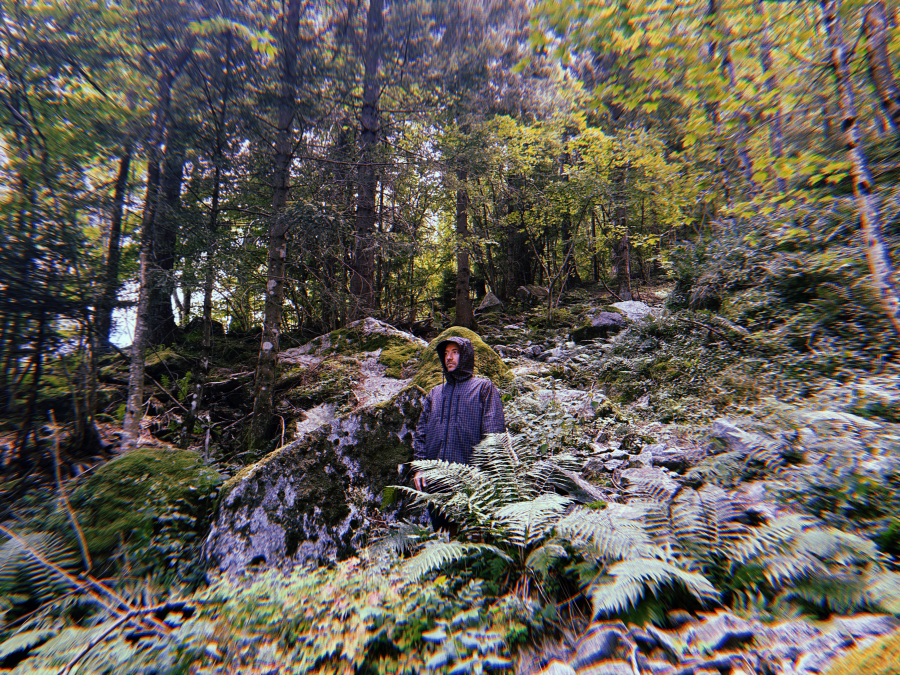 Ex Colorado Interview Image (c) the artist
“For me, krautrock is the repetition, the textures, and most importantly, the mindset.”
Video
