

Names: Felix Kubin, Asmus Tietchens
Occupations: Composer, producer, radio play creator (Felix Kubin), composer, sound artist (Asmus Tietchens)
Nationality: German
Current Release: Felix Kubin & Asmus Tietchens' new collaborative album Senderkennungen is out via Auf Abwegen.
Recommendations on the topic of sound:
AT: E.M. Cioran: Vom Nachteil geboren zu sein
FK: “Česká loutka” (Czech Puppet) by Jaroslav Blecha, Pavel Jirásek. “Many puppets are beautiful: A body without soul, eyes without life, all this gives evidence of how unnecessary the breath of life is for beauty.”
If you enjoyed this interview with Felix Kubin and Asmus Tietchens and would like to find out more about their music, visit their official homepages: Felix Kubin; Asmus Tietchens.
When I listen to music, I see shapes, objects and colours. What happens in your body when you're listening? Do you listen with your eyes open or closed?
AT: When I listen to music, nothing happens in my body. My eyes are open, but I'm not focusing on anything because I'm staring at a black wall.
FK: I don’t have synaesthetic perceptions with music but I do get goose bumps now and then. I can focus so much on listening that I forget what’s going on around me.
Music can also trigger memories. The station identifications I composed for Senderkennungen bring me back to the magic one-minute pauses on public broadcast in the 1980s. I experienced these as a very calming state of mind.
During the Covid pandemic I felt as if the world was in a limbo that reminiscent of those silences on the radio.
How do listening with headphones and listening through a stereo system change your experience of sound and music?
AT: I never listen with headphones—not even when I'm working in the studio—but at a normal volume on a very good stereo system.
FK: I prefer to hear the room I am in. I also like to compose pieces for certain acoustic environments, be it a church or a wardrobe. Headphones have a different function for me: they cancel out the room and can take you into a parallel world.
Once I went to the opera and listened to completely different music on the headphones while watching the stage. With the invention of wireless telephony, people seems to exist in parallel echo chambers. They walk on moss and become transparent.
Tell me about some of the albums or artists that you love specifically for their sound, please
AT: I won't, because it would be very hard for me to pick.
FK: Kontakte by Stockhausen. This piece never ceases to impress me. I heard it recently at Hamburg’s Elbphilharmonie in its original 4-channel version.
The sounds are so radical, captivating and modern that they still sound more exciting than most of the electroacoustic music that was composed since.
Also, the production quality and quadrophonic innovations are staggering. Stockhausen created sounds that could have been made with an FM synthesizer.
But the piece is from 1960. He must have layered and cross-modulated a lot of sine-tones to come to such a result.
Do you experience strong emotional responses towards certain sounds? If so, what kind of sounds are these and do you have an explanation about the reasons for these responses?
AT: No, I'm not familiar with anything like that. However, I do enjoy well-made music that suits my taste.
FK: No. It always depends on the context in which these sounds appear in real-life or in a composition.
I can tell you which sounds I hate: The sound of glass bottles falling over in a cinema. And the sound of cars. Other than trains that produce a multitude of interesting noises and tones, cars smother and drown out the timbre of the environment.
There can be sounds which feel highly irritating to us and then there are others we could gladly listen to for hours. Do you have examples for either one or both of these?
AT: Sounds don't bother me, nor are there any that I could listen to for hours on end without qualification.
FK: I could listen for hours to Asmus telling stories about his wild Hippie years.
Are there everyday places, spaces, or devices which intrigue you by the way they sound? Which are these?
AT: No.
FK: I like the confusing echo effects of domes, the slamming of doors and neighbours playing instruments or having sex.
Have you ever been in spaces with extreme sonic characteristics, such as anechoic chambers or caves? What was the experience like?
AT: The “camera silens” during my annual major hearing test is quite an intense auditory experience. All you're hearing are body noises.
FK: I visited an anechoic chamber in 2004 during the production of my radio play Paralektronoia which dealt with ghosts and electricity. You lose all sense of time there.
I remember moments in open nature without any sound - no wind, no rustling of leaves. I found those moments even more claustrophobic than being in the camera silens.
What are among your favourite spaces to record and play your music?
AT: My studio.
FK: My studio is my oyster.
However, the Electric Avenue Studio of my friend Tobias Levin has the most august sound for acoustic recordings.
Do music and sound feel “material” to you? Does working with sound feel like you're sculpting or shaping something?
AT: The Latin word “componere,” in German, translates to “putting together.” When I work with sounds, tones, and noises, I put these acoustic materials together. In other words: I compose.
FK: Electronic music is always a mixture of sound shaping and tonal composition – even if the scale is microtonal. But for me, composition is what makes a piece strong.
I think nowadays there are too many musicians who confuse sound design with composing. Many works lack a “tonal” sense, an understanding of drama, even if the composition happens rather in the overtone spectrum or in the juxtaposition of noises.
I miss the music.
How important is sound for our overall well-being and in how far do you feel the "acoustic health" of a society or environment is reflective of its overall health?
AT: Unwanted noise can be harmful, and unwanted silence can drive people to distraction. “Healing music”? Too esoteric.
FK: Every city would sound beautiful, if the cars would shut up.
I never thought of music as a functional tool for healing of wellness, though, and I find it quite dismissive to reduce it like that.
Sound, song, and rhythm are all around us, from animal noises to the waves of the ocean. What, if any, are some of the most moving experiences you've had with these non-human-made sounds?
AT: The sounds made by the tearing of the ice layer on a frozen Swedish lake in the depths of winter.
FK: Rats moving behind a wall.
Many animals communicate through sound. Based either on experience or intuition, do you feel as though interspecies communication is possible and important? Is there a creative element to it, would you say?
AT: This might be important. My dog obeys when I yell “sit!!!,” but my cat doesn’t.
FK: I am waiting for an interspecies translation tool. I am sure that will be invented soon.
And then we'll realize that most animals change their opinions very fast.
Tinnitus and developing hyperacusis are very real risks for anyone working with sound. Do you take precautions in this regard and if you're suffering from these or similar issues – how do you cope with them?
AT: Fortunately, I don't suffer from tinnitus or anything like that.
I haven't taken any precautions against it. I try to avoid stress.
FK: In some cultures they believe that the gods speak to you when you have a Tinnitus.
My best friend used to phone me, when he heard a temporary beeping in his ear. He said “I received a message from you”.
We can surround us with sound every second of the day. The great pianist Glenn Gould even considered this the ultimate delight. How do you see that yourself and what importance does silence hold?
AT: I consider Glenn Gould's point of view to be a vain attitude. Deliberate (!!!) silence is far more important.
FK: Babies can sleep better when the dish washer is running. I get restless when it’s too silent because I start microscopic listening. I only like pauses as a means to build up drama.
On our collaborative record, the idea was to shape the pauses with short tunes. There is no silence a priori, it’s always filled with the echoes of previous events; or anticipations of upcoming ones.
Seth S. Horowitz called hearing the “universal sense” and emphasised that it was more precise and faster than any of our other senses, including vision. How would our world be different if we paid less attention to looks and listened more instead?
AT: Any answer to that would be pure conjecture.
In any case, it would be a good idea to listen carefully to the album Senderkennungen by Felix Kubin and Asmus Tietchens at least once.
FK: A radio play maker once told me that listening is a paranoid sense. We receive the acoustic information from 360° around us, and usually sound is reflected many times on walls and objects.
It’s great to be enveloped by reflections but also good to verify reality with your eyes.

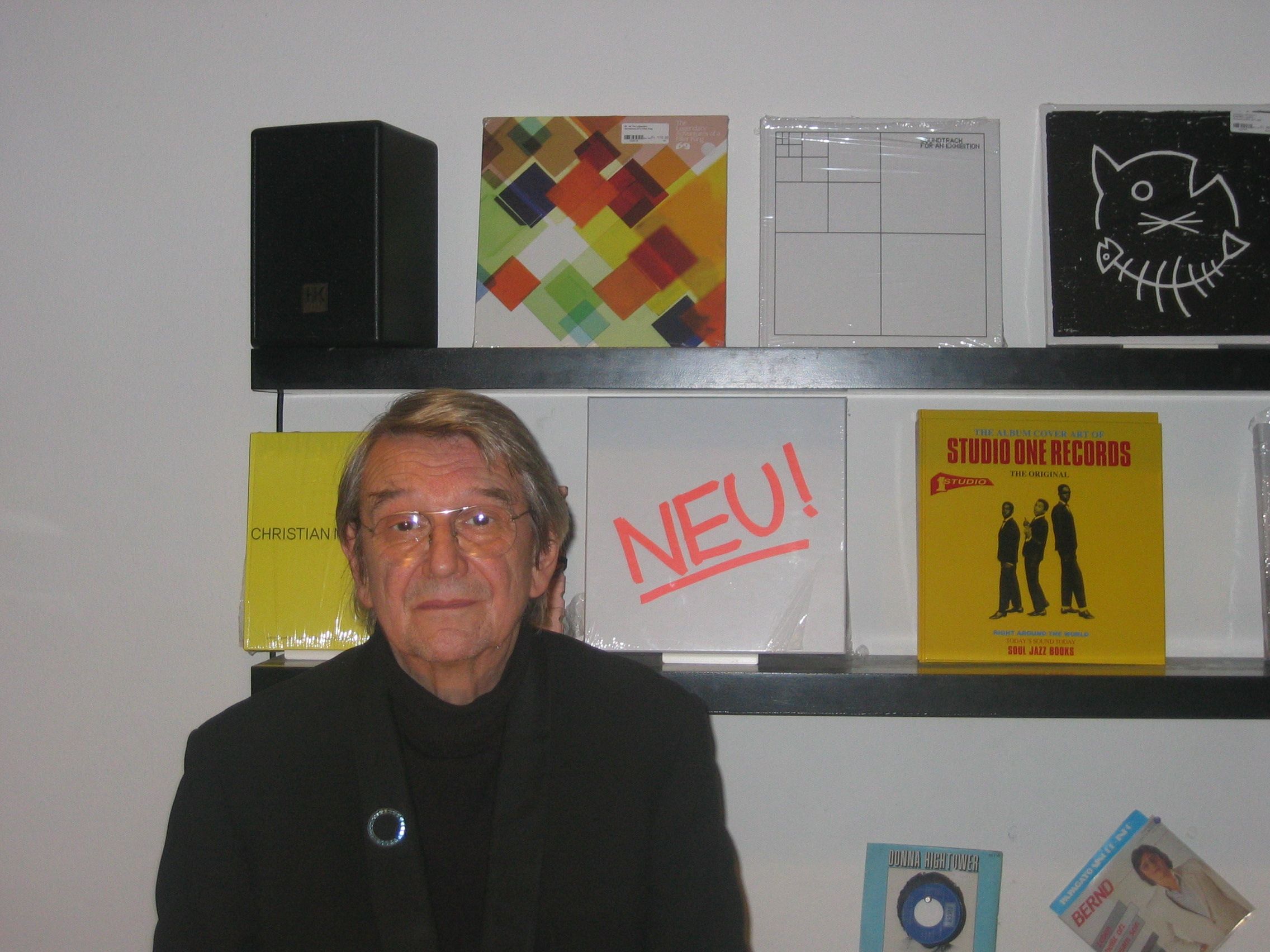
 Felix Kubin Interview Image by Katja Ruge
Felix Kubin: "I think nowadays there are too many musicians who confuse sound design with composing."
Video
