

Published
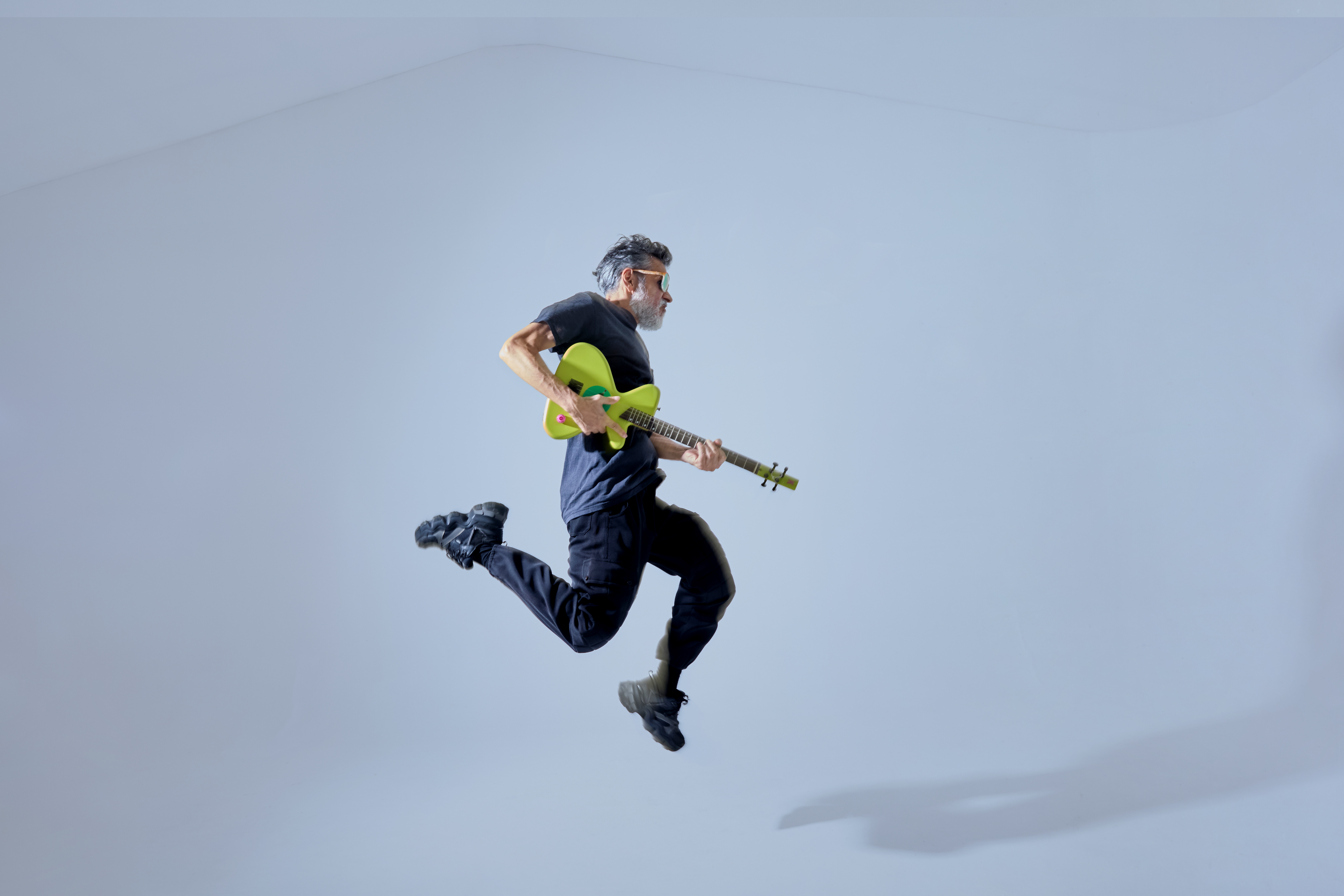
Name: Cidadão Instigado
Members: Fernando Catatau
Nationality: Brazilian
Current release: Cidadão Instigado's new, self-titled album is out via Nublu.
Hometown Recommendations: My hometown is Fortaleza, in Ceará, which is part of the Brazilian Northeast. It's a beach city, and that alone makes it very special. Having lived a big part of my life in Fortaleza gave me a different perception of life.
Today I live in São Paulo, which is considered the country's great financial capital and where most of the work is concentrated for people who work in culture. I'd recommend going to Fortaleza to see the beaches. It's so beautiful! In São Paulo, I'd recommend the cultural programme.
Things that I am passionate about but rarely get to talk about: I'm passionate about my country, my culture and nature. Brazil is a complex and very large country, but it's also incredible because of its diversity. When the Brazilian people understand what a powerhouse we are, it's going to be amazing. We were made to believe that everything is better abroad, but it isn't. This is the most incredible place I know.
If you enjoyed this Cidadão Instigado interview and would like to know more about the project, its music and possible live dates, visit him on Instagram, and bandcamp.
Where does the impulse to create something come from for you? What role do often-quoted sources of inspiration like dreams, other forms of art, personal relationships, politics etc play?
I'm someone who mixes my art a lot with the things I live through.
When I write lyrics, they're usually about things I'm going through or about perceptions I have of what's around me, so everything is a source of inspiration for me. Everything that's part of my surroundings ends up in my work.
The important thing is knowing how to channel the inspiration. Sometimes I'll talk about something that was really bad in my life, and in the moment of creating I manage to find a good way through it, or to show a better, possible path. When that reaches other people, it might impact their lives in a positive way.
For you to get started, do there need to be concrete ideas – or what some have called a 'visualisation' of the finished work? What does the balance between planning and chance look like for you?
I have a very personal creative process. It's a bit hard to explain, because I'm someone who creates from whatever I have in my hands, and I really like to make use of certain "moments of improvisation" to work out my creations.
I don't plan things very well. I just keep doing and doing until I have something that sounds true to me, what I believe in. I record a lot on my phone: melodies, grooves, ideas, beats, anything that inspires me.
That's why it sometimes takes me a long time to finish a piece, because I build it out of experiments and choices. I keep setting aside whatever doesn't interest me.
Is there a preparation phase for your process? Do you require your tools to be laid out in a particular way, for example, do you need to do 'research' or create 'early versions'?
I do everything at the same time.
Something that's very much part of my personality is that if I'm listening to a certain kind of music, or I simply see a striking everyday scene happening in front of me, it immediately reverberates in what I'm making.
With this record in particular, I was really focused on music that made me dance, and that was a very important part of making it. It caught me at a time when I was rescuing myself emotionally, and I connected a lot with dance music from all over the world.
Somehow, turning my attention to dance music took me somewhere else.
Do you have certain rituals to get you into the right mindset for creating? What role do certain foods or stimulants like coffee, lighting, scents, exercise or reading poetry play?
Everything arrives in my head in fragments, and then I start making sense of it, so there isn't really a specific rule.
I love art and life itself, so I draw on everything for inspiration. I like simple things, but sometimes everything is very complex. I believe true wisdom comes from being able to pick up on what serves you in the world, whether it's good things or bad. When we have a good sense of what serves us, that's when a good lyric, a song or a poem comes out that touches other people's hearts.
There are bad things that touch people too, so it's all about perceptions and paths.
For your latest release, what did you start with? If there were conceptual considerations, what were they?
This new album started during the pandemic, through experiments with a Roland music workstation called the MV-8800.
I started devoting myself to learning it in the middle of the chaos and isolation the pandemic caused. It was a very dramatic moment in the life of the Brazilian people and of the world. Here, we had the aggravating factor of the denialist government we had at the time. So all we could do was keep going however we could.
I think it's a record that carries the weight of that moment and, at the same time, has this desire to make dance music to relieve the mental torment.
Tell me a bit about the way the new material developed and gradually took its final form, please.
Through these experiments with the machine, and with a lot of sounds that had inspired me over the previous years, I ended up creating an artistic path that, in a way, calmed me down through the beats and the words I was writing. I wrote a lot to get that panic out of me and to try to find ways to ease the pain.
In 2022, the journalist Alexandre Matias invited me to do a one-month residency (one show a week) at Teatro Centro da Terra in São Paulo, and I had the idea of inviting several artists I was a huge fan of to share the night with me. I gave them a number of fragments of songs I had started writing in that first pandemic phase. That's where the album's collaborations began.
I invited Juçara Marçal, Kiko Dinucci, Yma, Anna Vis, Mateus Fazeno Rock, Edson Van Gogh and Jadsa.
What makes lyrics good in your opinion? What are your own ambitions and challenges in this regard?
In my opinion, what makes lyrics good is being understood by other people. When a lyric reaches someone else and somehow moves them emotionally, that's when I feel it worked.
I place a lot of value on words, so for me the struggle is making myself understood, both by others and by myself. Writing lyrics isn't easy, so I put a lot of dedication into it.
What are areas/themes/topics that you keep returning to in your lyrics?
I think one place I always come back to in my lyrics is taking care of the mind, and the everyday life of people living in society in these modern times.
I think that when I write about the deepest things I feel, I somehow manage to find better paths through my problems. When that reaches other people and someone identifies with it, maybe that person can see other paths through their own problems.
Many writers have claimed that as soon as they enter into the process, certain aspects of the narrative are out of their hands. Do you like to keep strict control or is there a sense of following things where they lead you?
I like it when things follow their own course.
Improvisation sometimes brings that, but I also spend a lot of time polishing what I've made, even when it came out of an improvisation. So in a way I'm a bit controlling about my own course.
I think the balance between freedom and polishing is the best path, and, at some point, knowing when to stop.
There are many descriptions of the creative state. How would you describe it for you personally? Is there an element of spirituality to what you do?
I think every act of creation, especially in the arts, carries a spiritual element.
Just think about how a work of art can change the course of someone's life. I myself have been saved many times by something someone wrote, or by a song that calmed me down when I was in a really bad place.
Art heals, and it's spiritual too.
Once a piece is finished, how important is it for you to let it lie and evaluate it later on? How much improvement and refinement do you personally allow until you're satisfied with a piece?
I'm a slower person. Everything I do takes time to mature. I need to have my certainties. Sometimes I take a very long time to finish a song, because I need to step away from it to give it that time to mature. I think that's hugely important.
But sometimes it's hard to know when to stop and close it. If I let myself, I'll spend a long time dragging on with the improvements the song deserves (in my head), so when a record is finished, it's a big victory for me.
How do you think the meaning, or effect of an individual piece is enhanced, clarified or possibly contrasted by the EPs, or albums it is part of? Does each piece, for example, need to be consistent with the larger whole?
I really like complete albums, ones that tell a whole story through the way the tracks come together. I think of it like a school essay: it has a beginning and an end, and in the middle there's a lot to be told.
I also like listening to a song on its own, like a single, but this speed the market demands from artists nowadays bothers me a bit. It kind of kills creativity.
But I'm not closed off to it. I think everything has its value.
In terms of what they contribute to a song, what is the balance between the composition and the arrangement (including production, mixing and mastering)?
It's all part of the process. Sometimes you have a great song, and something along the way can ruin it.
I've done some work where I was disappointed with the end result, and that leaves me feeling frustrated. Then people tell you that only the person who made it notices, but it's there, and you know it could have been better.
That's part of the process, and it's exactly why it's so important to work alongside good professionals, so that in the end you can come out of it happy and satisfied.
Music and the accompanying artwork are often closely related. Can you talk about this a little bit for your current project and the relationship that images and sounds have for you in general?
I think music and visual art have to be in full conversation with each other. Visual art can completely change the direction of a record. An ugly cover, in my view, interferes with the music, especially because music is one of the few art forms you can't see. That's where you understand the importance of visual art.
When I invited Isadora Gallas and Juno B to do the visual side of the new album, I already knew more or less what that partnership would give me. I remember telling Isadora in our first conversations that I didn't want to sound like an artist from the past. For me it was very important that the work be present in this time, right now.
After finishing a piece or album and releasing something into the world, there can be a sense of emptiness. Can you relate to this – and how do you return to the state of creativity after experiencing it?
That's a very real feeling. It's always like that.
I try not to stop the machine. When I'm finishing a work, I'm already thinking about what I'm going to do next. If I don't, life starts to lose its meaning.
The creative state, even though it's extremely exhausting, is also what nourishes me to keep living well.
I would love to know a little about the feedback you've received from listeners or critics about what they thought some of your songs are about or the impact it had on them – have there been "misunderstandings" or did you perhaps even gain new "insights?"
I got a lot of feedback from critics and also from fans who have been following us for many years, especially since we hadn't released anything new in 11 years.
Some people really liked the new paths I decided to venture down, and some were disappointed because they expected me to make something similar to what I'd done before. To me, that was exactly what I expected … and wanted. I didn't want it to sound like something I'd already done.
As with the visual art, I looked for inspiration in things happening now, and I think, in a way, I pulled it off.
Creativity can reach many different corners of our lives. Do you personally feel as though writing a piece of music is inherently different from something like making a great cup of coffee? What do you express through music that you couldn't or wouldn't in more 'mundane' tasks?
When an artist gets into the creative mood, I think they gain access to places that go beyond the tasks of everyday life. I'm talking about artists who go deep. A lot of people make art looking for recognition, likes or engagement, but when there's real depth, I see it differently.
Everyday tasks have to be done in a more resolute and decisive way, while creating something truly artistic is much subtler, and for me it works through trial and error.
Anything is possible until you find the best way to approach a subject.