Published
Part 2
Could you describe your creative process on the basis of one of your pieces, live performances or albums that's particularly dear to you, please?
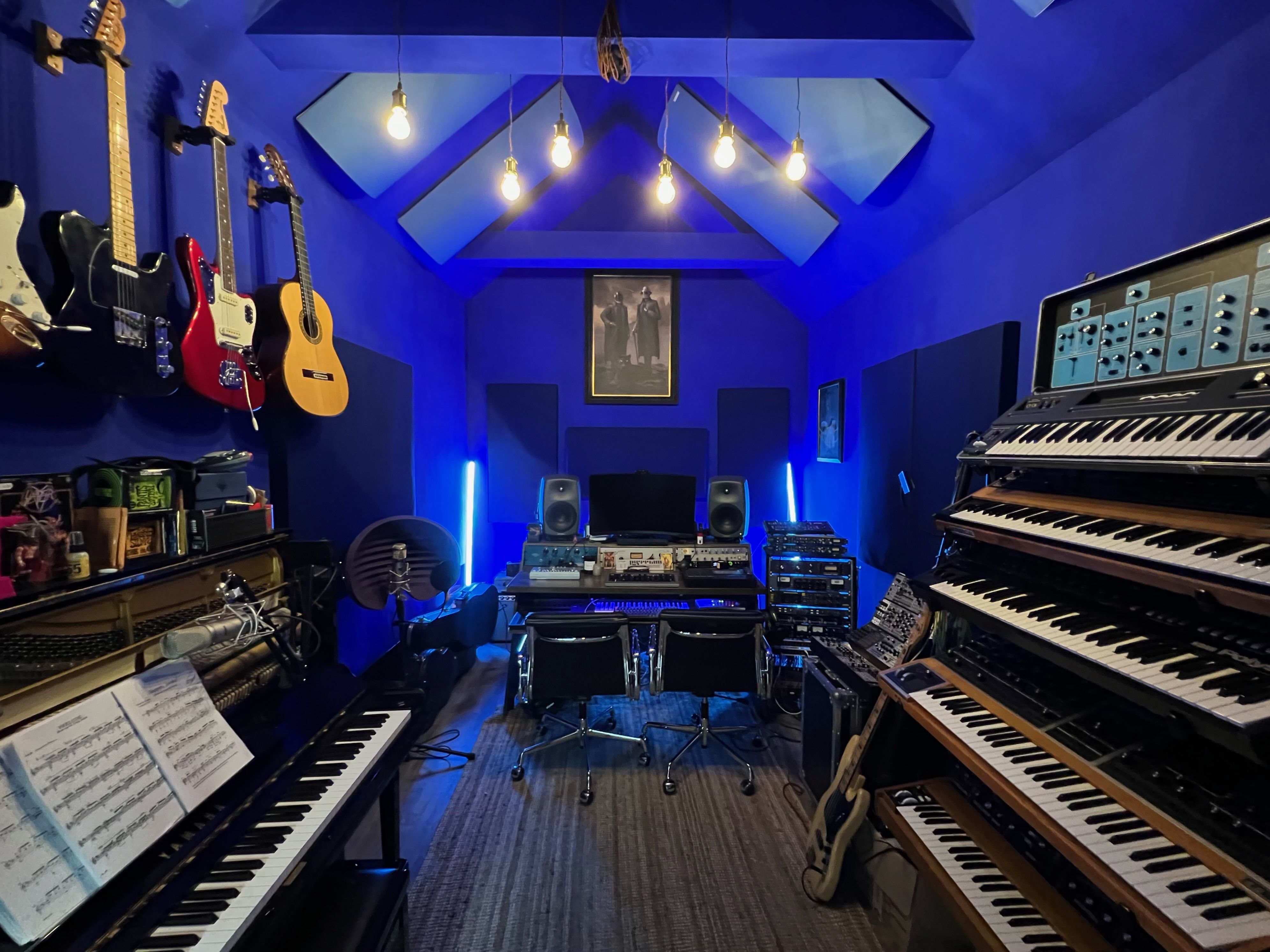
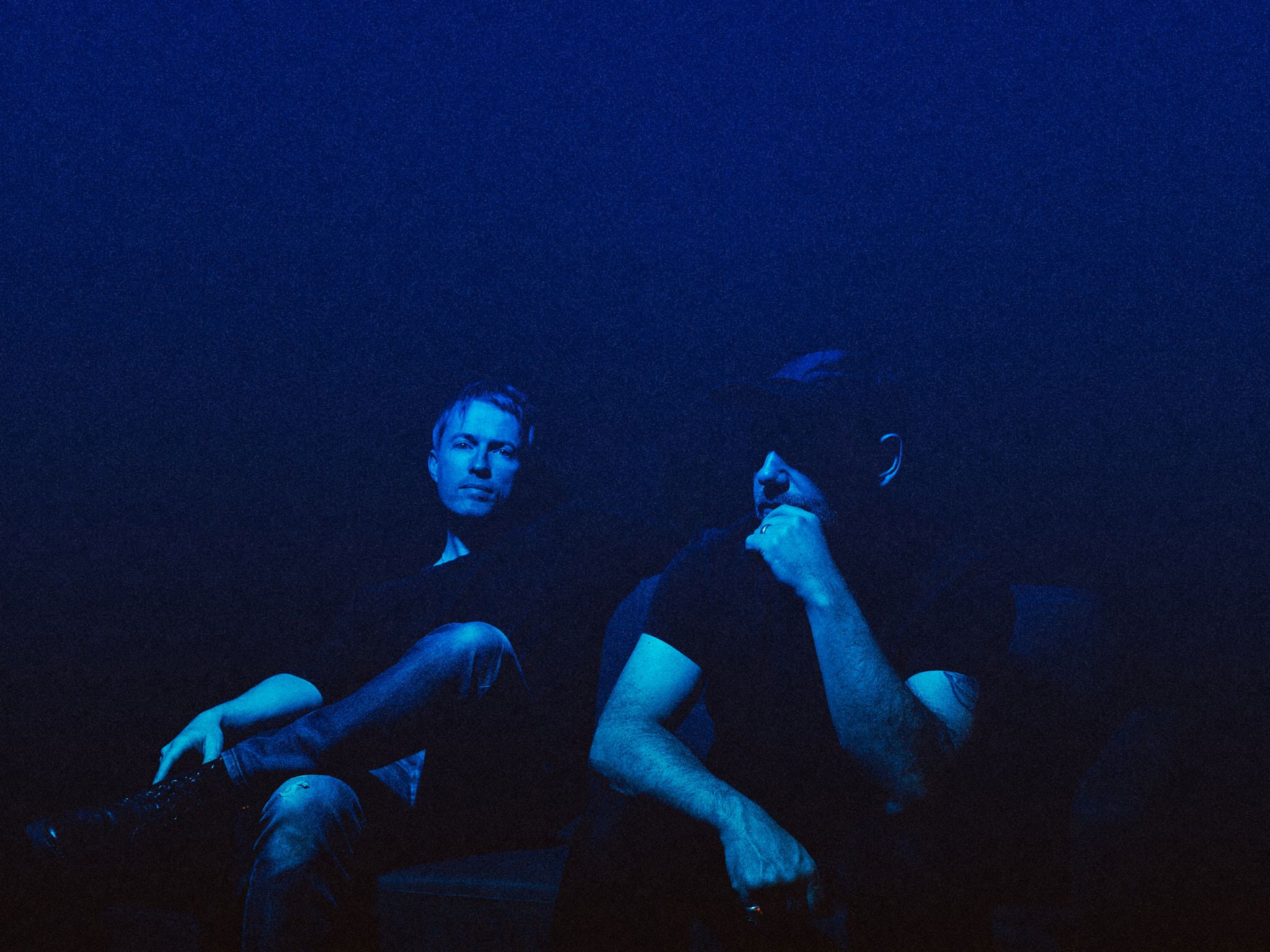
In terms of Protection music, our creative process was born out of necessity.
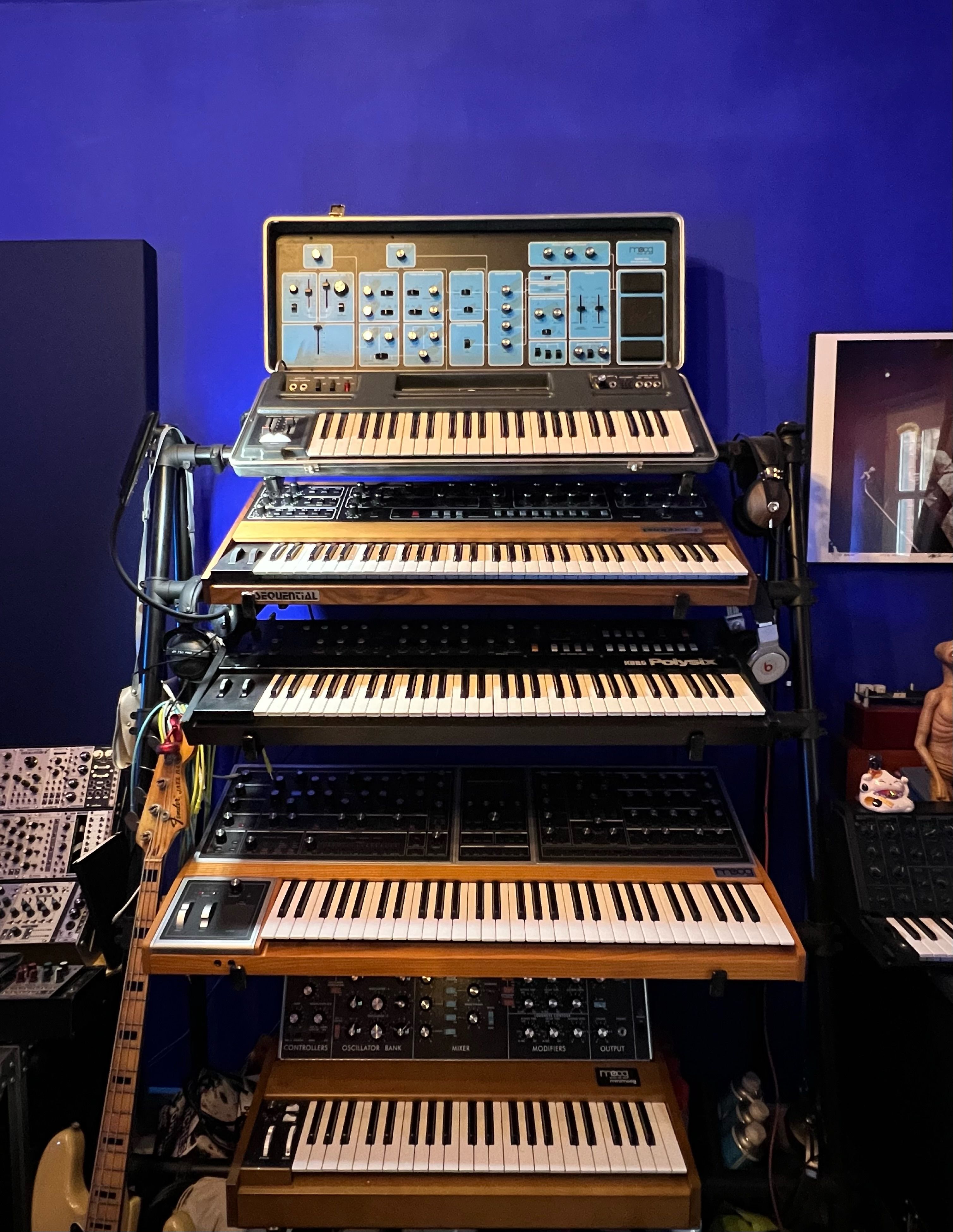
During the pandemic we started sharing very sparse ‘seeds’ as we call them using a shared online workspace. We would then take our turn to add a few elements, and / or shape the existing elements and then send it back and repeat the process until we felt like the track was pretty much complete. We would then get together to mix (after we were able to do so). This worked really well initially and we pretty much kept this template for all the other music we have worked on together with a couple of exceptions.
I think that this is a really satisfying way to write as it allows each of us to take the time and space to find the inspiration for the start of something completely on our own in our own respective studios. This is really different to starting something together in the same room with other people which can have a very different kind of collaborative energy. Not that this is any better or worse, just different.
Maybe what we sacrifice in terms of the energy and immediacy of bouncing ideas off each other in person, we gain in terms of a more reflective approach that can inhabit quite an internal space that I find almost impossible to reach when writing with someone else in the room.
Do you conduct “experiments” or make use of scientific insights when you're making music?
I tend to only try this sort of thing when I am feeling stuck or blocked. Scott and I both have a set of Brian Eno and Peter Schmidt’s legendary Oblique Strategy cards on our desks which set out a a rule for the days session. They are either very clear or leave it wide open to interpretation and can often lead to unlocking inspiring pathways in the writing process.
[Read our Brian Eno feature]
I’ve always enjoyed creating my own arbitrary boundaries or rules when starting a track. It can be pretty overwhelming being in the studio and having seemingly infinite instruments, samples, plugins, etc. The decision paralysis can lead to feeling a bit stuck sometimes. But again I only tend to employ these strategies when I feel a bit stuck.
How does the way you make music reflect the way you live your life? Can we learn lessons about life by understanding music on a deeper level?
I’ve never really thought about this to be honest. I am sure my methods do reflect my personality in some way. I think I mainly follow my emotions or excitement levels when it comes to making music. If I am feeling down or not really that excited about something, I tend not to force myself to go and try to work on something.
This is something that is true in my day to day life too. I wish I was a bit more methodical or workmanlike about writing - sitting down each day in the studio regardless of my mood or how inspired I am feeling but I find that a real struggle a lot of the time!
I’m not really sure what understanding music on a deeper level can teach us about life. I am really fortunate to have been involved in making and performing music since I was a young child so nearly all my life has been about music in some way. I wouldn’t even know where to begin unpicking those things - but now that you have asked I will be thinking about it.
Do you feel as though writing or performing a piece of music is inherently different from something like making a great cup of coffee? What do you express through music that you couldn't or wouldn't in more 'mundane' tasks?
I guess this feels connected to your previous question about music creation reflecting the way you live your life. It’s almost certainly a bi-directional thing. I think that if you give a shit about the small or ‘mundane’ things and try to do everything to the best of your ability, to be present and considered in every part of your life it will almost certainly be reflected in how you create art.
I think making good coffee for example is probably quite different to making music, but there is definitely a connection in terms of having a tried and true method that you adjust over time to improve.
But for me making music isn’t just about perfecting methods and work-flow systems. Sure that’s an important part of it although in making music or any other kind of art it can be fun and just as fruitful to completely abandon the tried and tested methods and be much more messy and spontaneous.
That said, I am very much a fan of meticulously crafted coffee!
Every time I listen to "Albedo 0.39" by Vangelis, I choke up. But the lyrics are made up of nothing but numbers and values. Do you, too, have a song or piece of music that affects you in a way that you can't explain?
Yes the one that comes to mind is the Philip Glass opera Einstein on the Beach, a lot of which consists of voices repeating sequences of numbers against minimal organ tracks. No idea why it makes me feel the way it does but the effect is deeply moving and hypnotic.
Also there’s an album by the late Jóhann Jóhannsson called IBM 1401 A User’s Manual which features tape recordings and technical descriptions of the operation of the old business computer that his father made which Jóhannsson set to his own orchestration.
I’ve always been drawn to the sad robot trope, there’s a nostalgic/future aesthetic which can be very melancholic and beautiful.
If you could make a wish for the future – what are developments in music you would like to see and hear?
I wish that musicians feel drawn to making more risky and surprising creative decisions and worry less about metrics and marketing.
I realise that this is a much bigger conversation around how music is consumed and distributed and how the system rewards certain trends and certain types of composition. I’m not sure how or if the genie can ever be put back in the bottle but in my opinion the tail has started to wag the dog a bit and artists can feel like their hands are being forced to make artistic decisions that create the biggest impact for the streaming services and playlists, etc.
This is not true in relation to every genre of music at every level of course, there are still and will always be courageous artists making music for smaller audiences. But the rewards are increasingly unsustainable and musicians who could 30 years ago make a living from writing more challenging music are forced to take on the role of the hobbyist musician.