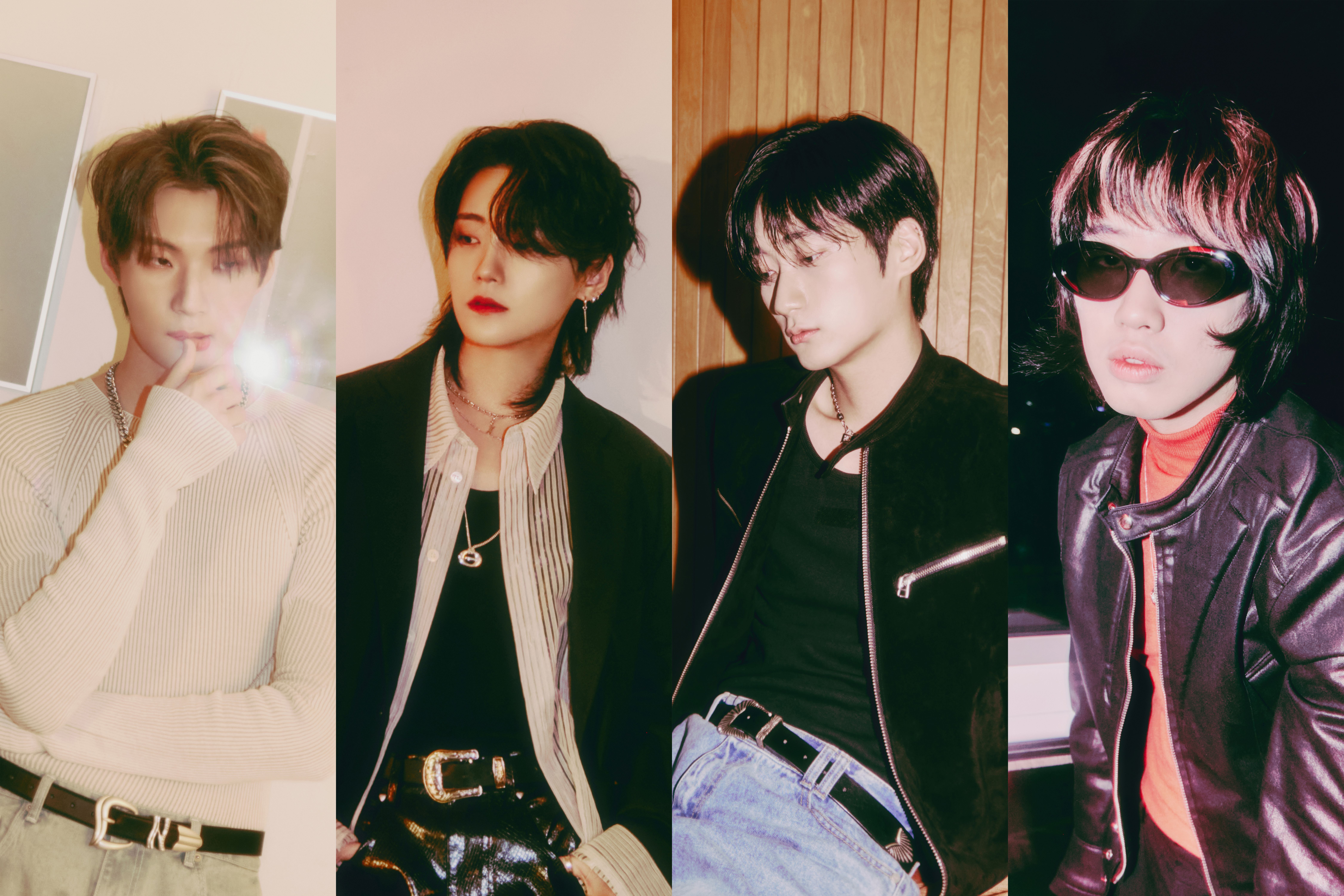
Part 2
Do you feel that your music or your work as an artist needs to have a societal purpose or a responsibility to anyone but yourself?
Yunmin: I believe that art is subjective and there is no absolute truth. So it can't be discussed in terms of right or wrong or through a binary perspective. Yet, I’ve noticed that people often talk about it that way, insisting that their view is correct.
I understand that I can’t satisfy everyone. Still, if I have one wish, it’s that even when I deal with negative subjects or stories, I hope many people can find something positive in them. As a creator, I have a responsibility, but how it’s received and used as nourishment is up to the listener.
Kim Seunbin: Of course, as an artist who influences others, it's impossible not to be mindful of that. However, I believe that to create good art, it's essential to capture the artist's thoughts exactly as they are.
John B. Kim: Rather than thinking that it should be this way, I hope that the music I create, which is expressed through my own values, becomes a source of comfort for those who need it and strength for those who need it, ultimately having a positive impact.
Chea Dohyeon: For me, music is simply a way to express individual thoughts. If it becomes a social issue, it just means that the person happens to be interested in that issue.
Once a piece is done and released, do you find it important that listeners understand it in a specific way? How do you deal with “misunderstandings?”
Yunmin: Creating a song is my story, but once it's released, I believe it becomes the story of those who listen to it. Regardless of my intentions, the way the listener interprets and embraces the music is, in my opinion, the best way to experience it.
Kim Seungbin: When creating music, I have specific intentions and thoughts in mind, and I present those through my work. However, I believe that the interpretation of the music is ultimately up to the listeners.
From the beginning, I try to anticipate how listeners might interpret the music and aim to minimize any negative misunderstandings, but if misunderstandings still arise, I think that’s something I can’t control.
John B. Kim: From a values' perspective, I believe that the freedom of interpretation is important because of the unexpected and diverse insights it can bring. At the same time, understanding the creator’s values and intentions embedded in a song is also crucial.
Practically, as a creator, I think it's possible to convey some of the song's intentions through the music, lyrics, and interviews. However, I also believe that the interpretation of a song is ultimately up to each individual and can vary widely depending on the listener.
Chea Dohyeon: If you like the music, listen to it; if you don't, then don't.
Sound, song, and rhythm are all around us, from animal noises to the waves of the ocean. What, if any, are some of the most moving experiences you've had with these non-human-made sounds? In how far would you describe them as “musical”?
Yunmin: When I was young, I remember the sound I heard when I held a seashell to my ear at the beach.
I believe that all the sounds in the world can become music. Just as we use the sound of rain, waves, or even silence as elements in an arrangement, I think that everything from noise to quiet can be music. Even the sound of that seashell was music to me.
Kim Seunbin: Humans likely first defined and created "music" by drawing inspiration from the sounds of nature—like birdsong, the sound of waves, or the accidental sound of something hitting a tree. If you think about it that way, you could consider every sound as music, depending on how you perceive it.
John B. Kim: The sound of rain can sometimes play a role similar to that of music. Considering that all creation praises the Creator, we could say that everything, even thunder, can be expressed as musical.
Chea Dohyeon: I've experienced moments of complete silence with no sound at all, and those moments allow me to focus more deeply on my inner self.
We can surround us with sound every second of the day. The great pianist Glenn Gould even considered this the ultimate delight. How do you see that yourself and what importance does silence hold?
Yunmin: I once ate extremely sweet chocolate. After eating it, my usual favorite chocolate tasted like nothing. Just as continually eating sweet foods makes it hard to tell if something is sweet. I think music wouldn't feel as precious if it were continuous without any silence.
Kim Seungbin: I love music, so I listen to it a lot while driving, working out, or even showering. However, I believe it's also important to have quiet time to think.
While it's great to always do what you love, sometimes, when you take a break and then return to it when you really want to, the enjoyment can be even greater.
John B. Kim: Just as activity and rest are both essential in life, a balance between various sounds and silence is also necessary.
In an age overloaded with stimuli, it seems that silence is needed to fully appreciate and enjoy the good sounds once again.
Chea Dohyeon: The world is often too complex, and we're surrounded by unwanted noise and overwhelming information. Sometimes, to reinterpret and make sense of that information, we need to retreat into silence.
Do you feel as though writing or performing a piece of music is inherently different from something like making a great cup of coffee? What do you express through music that you couldn't or wouldn't in more 'mundane' tasks?
Yunmin: They use taste, we use hearing.
Kim Seunbin: Coffee appeals to the taste buds, and music to the ears, allowing us to feel the creator's intention and depth. While there are other details to consider, I don't think they're fundamentally all that different.
John B. Kim: I believe that, fundamentally, whatever we do, it’s about expressing a certain sense and excellence. Music, through its lyrics, can more actively convey rational content.
Chea Dohyeon: I actually have a close friend who is a coffee artist, and when I listen to their stories, I realize that it's not so different from creating music.
Through music creation, I can bring something new into existence that didn’t exist in reality, something that was only in my mind.
What is a music related question that you would like to ask yourself – and what's your answer to it?
Yunmin:
Are there any other instruments you would like to learn besides vocals and guitar?
Saxophone, drums.
Kim Seunbin:
What do you want to say through your music?
My thoughts at that time.
John B. Kim:
What is music to you?
A gift, a tool.
Chea Dohyeon:
What do you want to achieve with your music?
I want to tell my story.