Published
Name: FOUK
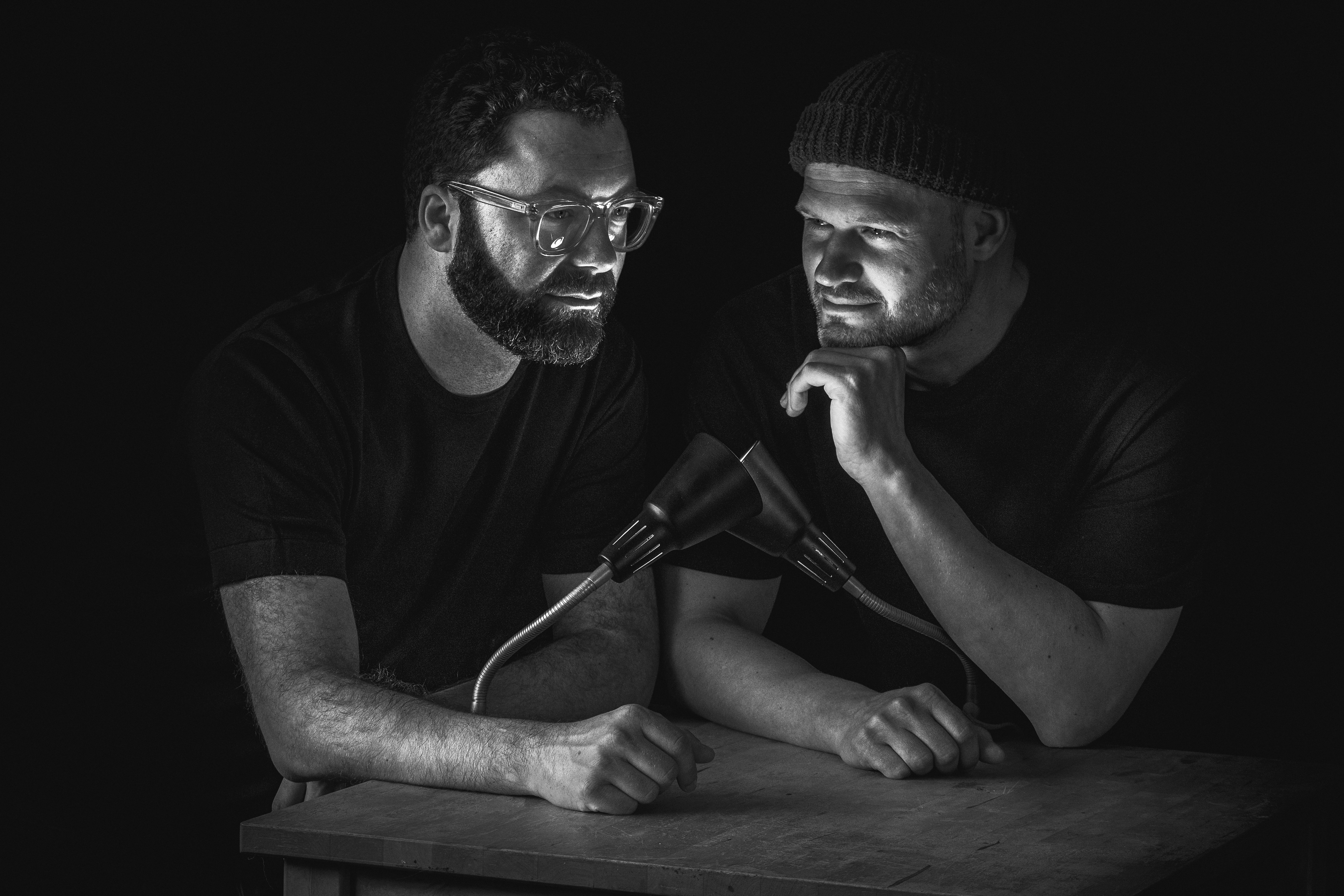
Members: Daniël Leseman, Hans Peeman aka Junktion
Occupation: Producers, DJs
Nationality: Dutch
Current release: FOUK's new Get it Done EP is out via Freerange.
If you enjoyed this FOUK interview and would like to stay up to date with the duo and their music, visit them on Instagram, Facebook, Soundcloud, and bandcamp. Their label Outplay also has a bandcamp page.
There can be many different kinds of energy in art – soft, harsh, healing, aggressive, uplifting and many more. Which do you tend to feel drawn to most?
With the music we make, we are drawn the most to positive, healing, uplifting, soft and introspective energies. It all depends on our mood. We tend to crossover different genres, like disco, house and funk.
We very rarely make anything that has a dark or abrasive energy, it’s not part of our sound. We love musical compositions with a warm feel to them.
For instance our remix of Nathan Haines & Marlena Shaw's “Squire For Hire” is very positive and happy in our way.
In as far as it plays a role for the music you like listening to or making, what role do words and the voice of a vocalist play for the transmission of energy?
Hans: I guess it all depends. With very simple lyrics or single-word-vocals, the word or words itself become very prominent and powerful, especially in house music. For me the transmission of energy of a vocal is largely influenced by tone/type of voice and rhythm, after this the words become more important.
A vocal can also become part of the whole, like another instrument, depending on the lyrics being simple or more elaborate. It’s all about the interplay between the vocals and the instrumental.
When vocals tell a story through the lyrics, that story is very important in transmitting the energy of a song. Like in our “Loving At First Sight” with Debórah Bond:
Daniel: I’m very much focused on the instrumentation of music. So for me, the lyrics or words themselves contribute less to the transmission of energy.
But vocals can be considered instruments as well and the dynamics and timbre definitely have an impact on the energy of a song. Especially when they also contribute to the rhythm of tracks, like with short bursts of words or a repetitive patterns of words.
When it comes to experiencing the sensation of “energy” as as a creator, how would you describe the physical sensation of experiencing this energy? [Where do you feel it, do you have a visual sensation/representation, is there a sense of release or a build-up of tension etc …]
Hans: I do a lot by feeling. When creating something and it finally clicks you feel your whole body starting to get more focused on your senses, your heart starts beating faster.
There’s this rush, this enthusiasm, but also, in my mind's eye, I often get a sense of a place, a vague image of being somewhere connected to the corresponding feeling in my mind. Or it can be just that feeling, but I always see/feel this sense of space. It’s like the connection your mind makes to certain smells, they can be very powerful.
Daniel: It’s indeed this focus and rush that Hans is talking about. It’s like in that moment you tend to forget your senses or at least things go so fast. Choices you make and ideas popping up. Especially when we both get in that flow together.
And it’s only afterwards that you really notice your heartbeat is racing and there’s a blush on your cheeks.
When it comes to composing / songwriting, are you finding that spontaneity and just a few takes tend to capture energy best? Or does honing a piece bring you closer to that goal?
Hans: The best ideas come when you’re not that focused on having to create. The more spontaneous, the better the results are.
We’ve had more instances than we can count when we come up with the best ideas just before we ended the session for the day. Often it’s after a day of trying and failing to come up with something.
The energy switch that happens when we spontaneously jam and it just feels right is magical. So you end the day on a high note. Then we let it simmer for a bit to see if it’s worthwhile. :)
Daniel: Spontaneity is a key factor in capturing our energy in the studio. Take the Club Mix of “Neon Drift” for instance. It very much came from an impromptu dub switch while jamming to what now is the “First Light” mix.
It had a more club sounding vibe that we didn’t want to let go of, and it gave us so much energy in the studio that we decided to make a separate version of it.
Then again it all depends on the particular project. Sometimes it can take a month to get to a worthwhile point in a project, so honing a piece definitely has its place.
How much of the energy of your own music, would you say, is already part of the composition, how much of it is the result of the recording process?
Rhythm, chords and melody have a huge impact on energy. For instance in music, people have correlated certain chord progressions and modes in musical theory with vibes/feelings.
The best example of this is in film music. Certain progressions can have a grand or even religious feel, or a mysterious and introspective vibe. Those things have a huge impact on energy. So we’d say it’s very much part of the composition.
For example our track “Next Summer” has a dreamy introspective feel:
However the way you play and record these parts is also very impactful. You can make sounds feel grander with effects like reverb and delay. Using compression to make a beat “pumping” can give this sense of urgency or innate feel of making you move, like in a lot of French House.
Our creative process is very much a recursive process, the composition originates while playing/programming and recording the instruments. So the recording process influences the composition.
For your current release, what kind of energy were you looking for?
We were aiming for the energy of the dancefloor. The sense of being in a shared space in sync with the music, with each other while also in your own bubble enjoying the music.
So it’s a strong club sound, while still being musical and uplifting.
And there’s our other side, much softer and melodic, which is showcased in the "First Light" mix of "Neon Drift" as opposed to the "Club" mix. There’s a nice contrast between the two mixes.
What role do factors like volume, effects like distortion, amplification, and production in general for in terms of creating the energy you want?
The way you record and process your parts is very influential on energy.
Electronic music is amplified music, so it already has an innate type of energy. The amount of amplification or production and perceived loudness is a big factor. Look at the difference in loudness between EDM and the house music we make as Fouk.
There are many production techniques to create energy in music. We use harmonic distortion, that can give a certain grit to things. Like we said in our answer to the question above, the way you use compression can set a great deal of the tone of energy: You can make a beat pumping/popping in a way which gives people that head bopping feel when they hear your music.
How does the presence of the audience and your interaction with it change the energy of the music and how would you describe the creative interaction with listeners during a gig?
Receiving energy from the audience creates a promise to synergy. When you come to that point in your performance where this synergy happens organically, you create this conversation purely based on feeling and energy. It's the most rewarding part of performing.
When recording your music you are only vibing in your own bubble, being a duo there also is a certain synergy happening when you’re in the zone. As artists we are very close to the thing we create, when other people create and emotional connection to your work it is a very different and powerful thing.
What kind of feedback have you received from listeners or concert audiences in terms of the experience that your music and/or performances have had on them?
The best feedback we’ve received was that people are genuinely happy and positive after hearing us play or listening to our music.
And they specifically told that they saw that feeling being shared with the people around them.
Would you say that you prefer to stay in control to be able to shape the energy or do you surrender to it and allow the music to take over? Who, ultimately has control during a live performance?
Both actually. When we play our DJ sets we always retain a certain amount of control over things. But you have to surrender to it and let it breathe. You can’t solely own or control the vibe.
Everybody connects to music in their own way. Once music is out there on the dancefloor it becomes part of everybody there. So it is very much a conversation with the crowd.
If you manage to connect with everybody with the same shared feeling or energy, that is the magical part of performing.
The energy that music is able to generate can be extremely powerful. How, do you think, can artists make use of this energy to bring about change in the world?
Music can create an unspoken bond between people, the innate ability in ourselves to synchronise to a rhythm and melody through dancing or simply listening to it.
From that connection comes understanding. We are all the same, just people having a shared experience. By making music, artists can give people joy and keep them open and connected to each other.