Published
Name: Francesco Rista
Nationality: Italian
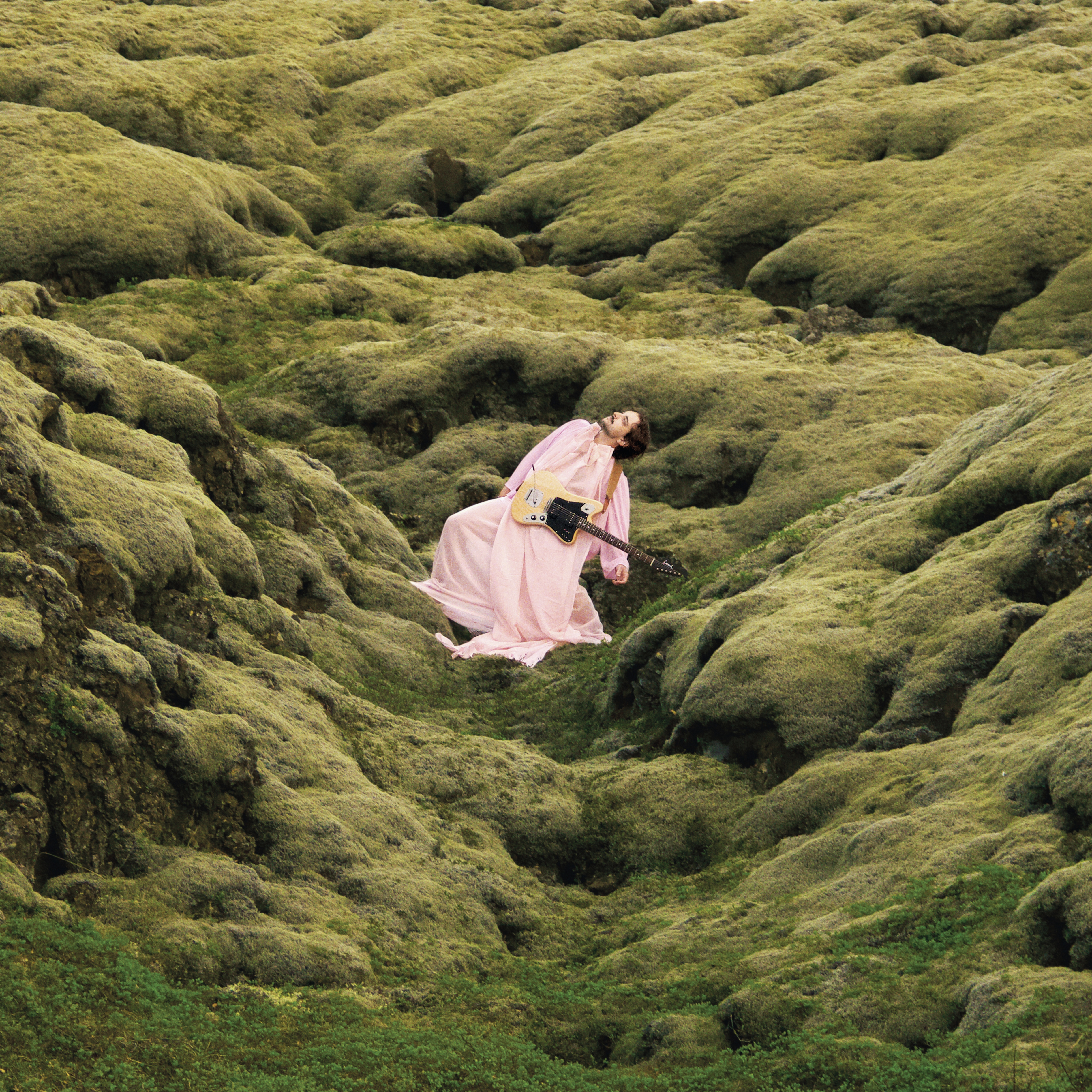
Occupation: Guitarist, composer, performer
Current release: Francesco Rista's latest album release, a recording of Steve Reich's Electric Counterpoint is out October 23rd 2026 via Fresh Ribes.
Hometown Recommendation: I live in Reykjavík now, but I spent the last few years studying in Copenhagen. If you visit Copenhagen, I recommend visiting Kristoffer at Effektpedaler downtown and then stopping by “Ma Poule” for a quick drink and sandwich.
If you enjoyed this Francesco Rista interview and would like to know more about his music and upcoming live dates, visit his official homepage. He is also on Instagram, and Soundcloud.
When did you first start getting interested in musical interpretation?
Interpretation is, in many ways, one of the freest forms of art. Just like reading a score, a poem, or a book, we make the work our own by absorbing its meaning and communicating it in a deep and personal way.
Much of my work is focused on interpreting music by other composers. My first real encounter with this art form was working with Bach’s Violin Partita BWV 1004, which I arranged for the classical guitar. I love the process of borrowing music written for other instruments and discovering how to make it sound natural on my guitar. Naturally, certain elements will sound different, and harmonies sometimes have to be reframed, but that is all part of the game.
Classical masterworks give us freedom because there are no strict rules or close supervision holding us back. However, working with contemporary composers takes that excitement to a whole new level. Performing a piece right in front of them and watching their reaction is incredible. It is amazing to see how a written score can unfold in ways they never expected.
Every interpretation uncovers a different side of their work, revealing fresh nuances, new dimensions, and unique artistic challenges.
Which artists, approaches, albums or performances captured your imagination in the beginning when it comes to the art of interpretation?
Early on, I was deeply inspired by artists like Rolf Lislevand, Christina Pluhar, and Víkingur Ólafsson, musicians who bring such a fresh approach to classical music.
But what truly captured my imagination was seeing just how vastly different, yet equally brilliant, two interpretations of the exact same work could be, specifically, the Goldberg Variations played by Glenn Gould and Jean Rondeau. One is on the piano and the other on harpsichord, but the contrast goes far beyond the instrument.
Gould’s version feels mystical, devine, as if it were handed down straight from the top of Mount Olympus.
Rondeau’s interpretation, on the other hand, feels grounded in our time. It feels like he is one of us, speaking directly to us.
Yet, despite coming from completely different worlds, both interpretations have this incredible power to elevate the spirit and pull you entirely into the music.
Are there examples for interpretations that were entirely surprising to you personally and yet completely convincing?
I love the album Songs from the Labyrinth by Sting, where he sings John Dowland’s songs with Edin Karamazov.
What do you personally enjoy about the act of interpretation? Are you finding that this sense of enjoyment is changing over time?
What I enjoy most about the act of interpretation is taking a score, studying it deeply, and then forget about it. I love going against conventional performance practices and trying things that go against established norms.
For example, when I worked on my version of Steve Reich’s Electric Counterpoint, a piece that has been recorded a few times, I wanted to give a fresh, unexpected perspective. I explored alternative fingering possibilities that allowed for a much more horizontal flow, where the individual melodic lines feel like they are dancing with one another.
By doing this, I let each note sustain naturally rather than playing with the traditional staccato attack. Replacing that staccato with a smooth legato created a more organic, breathing texture.
Of course, achieving this vision was a collaborative effort with my producer, Aske Vang Rasmussen. He deeply understood Steve Reich’s original intent while fully embracing my personal take on the score. In a way, he created a "third interpretation" that brought the whole project together.
How much creativity is there in the act of interpretation? How much of your own personality enters the process?
I would say creativity plays a massive role, it’s everything.
For me, the process is very similar to how an actor approaches a script. As a musician, I have the freedom to explore countless possibilities both in practice and in concert before deciding on a direction for a recording.
But much like an abstract painter, knowing when a piece is truly "finished" is very difficult, if not impossible. I always remind myself that a recording is simply a picture of a single moment in time. And it really is, because as musicians, I never truly stop discovering new paths and possibilities in the same piece of music.
Could you describe your approach to interpretation on the basis of a piece, live performance or album that's particularly dear to you, please?
A project that is particularly dear to me is my upcoming album, Candy Floss. I’ve spent years studing Steve Reich’s Electric Counterpoint and Bryce Dessner’s Garcia Counterpoint.
Two other pieces were written by close friends, Finnur Karlsson and Nick Martin. Nick and I recorded his piece, Diluendo, in Iceland, spending a full week working long hours every day, exploring possibilities, layering guitars, and experimenting with sounds.
It felt like throwing colors onto a canvas, and collaborating so closely brought us even closer as friends.
One of the key phrases often used with regards to interpretation are the “composer's intentions”. What is your own perspective on this topic and its relevance for your own interpretations?
I always try to respect the composer's intentions, which is precisely why I love working with living, contemporary composers. It gives us the opportunity to engage in a true dialogue, to challenge each other and collaborate on finding what is best for the music.
When interpreting Baroque, Classical, or Romantic repertoire, where direct dialogue isn't possible, honoring the composer intention becomes about agogics, expressive timing, micro-dynamics, and deciding which notes or inner voices within a phrase should take center stage.
In the case of Electric Counterpoint, I haven't had the pleasure of speaking directly with Steve Reich, I hope he'll not be disappointed when he hears my version. Let's see :)
I am infinitely fascinated by radically different or even “wrong” interpretations – the tempi of Toscanini, Kempff's Goldberg Variations. Are there extreme interpretations that you enjoy as well? Do you personally draw a line – and if so, what happens when we cross it?
I honestly find it hard to define what is "extreme" anymore.
Likely, music and classical music in particular, is becoming more and more free. Today, we feel much more empowered to push boundaries and fully embrace our own creativity. We are no longer paralyzed by the fear of disappointing Bach or a conservatory teacher. I think we’ve been living through a period where musicians were truly craving freedom from tradition.
At the same time, artistic culture moves in cycles. Perhaps we’ll eventually reach a point where the pendulum swings back, and listeners and performers begin craving structure, rules, and academic rigor again. But for now, I love that interpretation has room for every imaginable approach.
Some works seem to attract more artists to add their interpretation to it than others; some seem to even encourage wildly different interpretations. From your experience, what is it about these works that gives them this magnetic pull?
There are certain works that we simply can never get enough of. These are pieces whose musical essence is so powerful that it transcends any single instrument.
Minimalist music is a fantastic example, but I see it just as clearly in Baroque masterpieces like Bach’s Cello Suites, the Goldberg Variations, or the works of Rameau and Scarlatti.
Artists can return to a work several times throughout the course of their career, with different results. Tell me about a work where this has been the case for you, please.
That exact work for me is Steve Reich’s Electric Counterpoint! I’ve actually recorded it three times.
The first time, I recorded it using standard loops, which is how most people approach it. But I wasn't happy with the result, it felt flat, mechanical, with no heart. So I went to the opposite extreme for my second attempt: I recorded every single track individually with no looping, treating it as a live guitar ensemble would play it. While that gave it life, I realized it lacked the precision that this music demands in my opinion.
What I really wanted was a balance, an interpretation that felt both hyper-precise and completely free. For the third version, I combined both approaches: using long, organic loops alongside live, un-looped rhythmic guitars. This gave to the music a dynamic, breathing feel.
And honestly? I’d love to record it again!
Part of the intrigue of interpretations is that the process is usually endless. Are there, vice versa, interpretations that feel definitive to you?
No, never.