Published
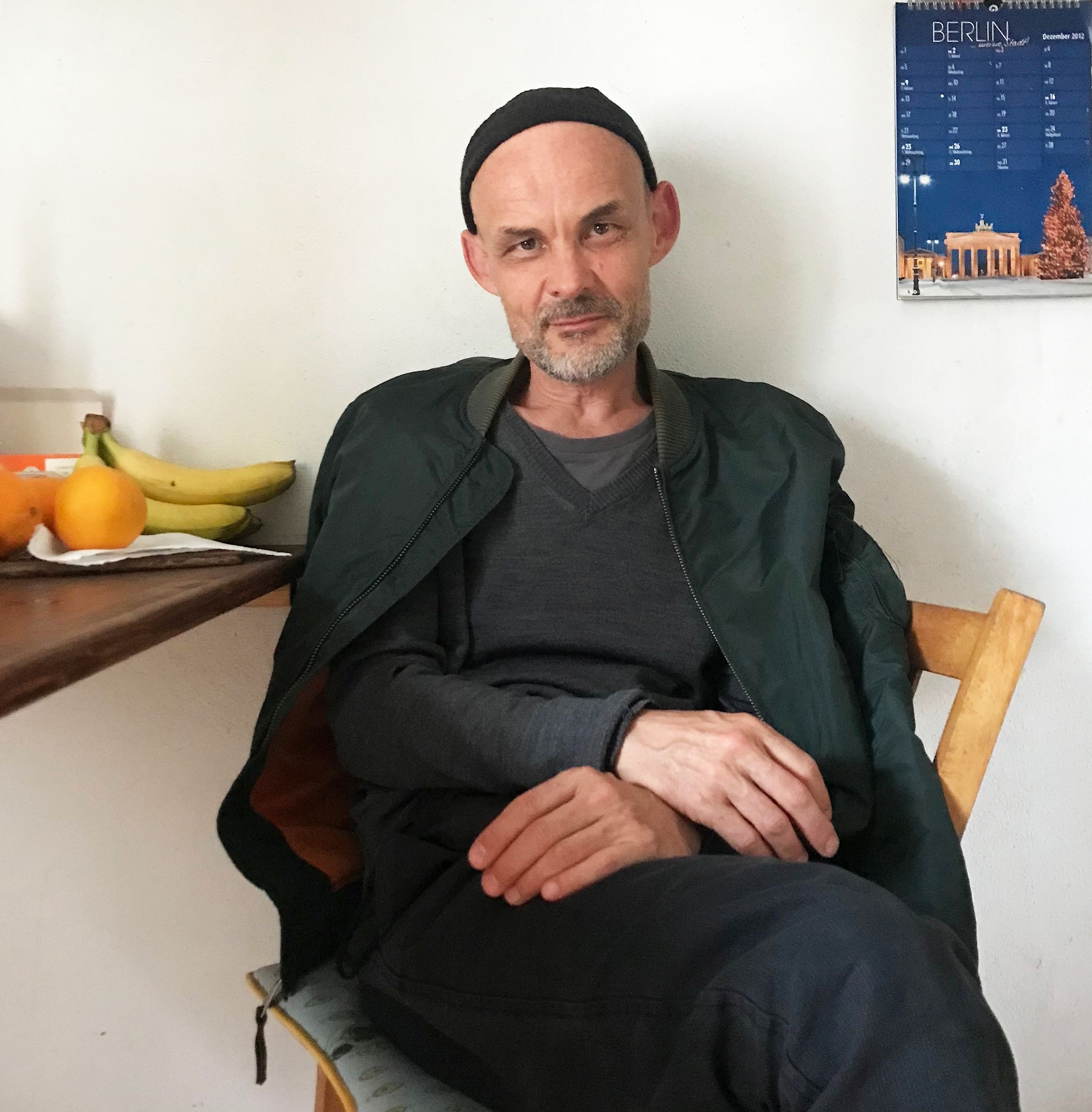
Name: Frank Schültge aka F.S.Blumm
Nationality: German
Occupation: Author, musician, producer
Current release: F.S.Blumm is one of the acts performing at the Detect Classic Festival which takes Place July 19th-21st 2024 at Schloss Bröllin. Other artists on the bill include JakoJako, Dobrawa Czocher, Die Wilde Jagd, and Simon Popp.
Recommendations: Yesterday I started reading Entangled Life: How Fungi Make Our Worlds, Change Our Minds, and Shape Our Futures by Merlin Sheldrake. It starts very promisingly.
I recommend every painting by Albert Oehlen, and today I recommend Children's Games by Antônio Carlos Jobim.
[Read our Cosmo Sheldrake interview]
[Read our Simon Popp interview]
[Read our Simon Popp interview about drumming]
[Read our Dobrawa Czocher interview]
[Read our JakoJako interview]
If you enjoyed this F.S.Blumm interview and would like to stay up to date with his music, visit his official homepage. He is also on Instagram, and Facebook.
Over the course of his career, F.S.Blumm has worked with a wide range of artists, including Nils Frahm, Guido Möbius, Greg Davis, Anne Laplantine, and Lee „Scratch“ Perry.
[Read our Nils Frahm interview]
[Read our Guido Möbius of Gordan interview]
Where does the impulse to create something come from for you? What role do often-quoted sources of inspiration like dreams, other forms of art, personal relationships, politics etc. play?
My first impulse comes from playing the guitar; it's that simple.
I mean, in general, inspiration comes from perceiving all kinds of art, connecting with nature, and riding my bicycle. But in the end, my driving force is playing the guitar itself: improvising, even without reflecting, letting things go, just keeping going.
It's like learning a language or doing exercises: keep going.
For you to get started, do there need to be concrete ideas – or what some have called a 'visualisation' of the finished work? What does the balance between planning and chance look like for you?
I prefer not to have an idea of my result before I start. I mean, I need a theme and a topic before I start, but I want to see where this initial idea leads me in the end. I'm just too curious about all the things that are outside my mind.
An initial idea can be very small; it can be a pattern, for example, some movement with my left or right hand, stretching my fingers and my brain, and trying to do something that I have yet to learn. It can be an idea coming from a music theory question, like putting three against four in a rhythm, or putting a major chord on top of a minor chord and vice versa, then seeing what happens.
But of course, if I do music for a radio play, film, or circus, things are a bit different. It's about an atmosphere, an emotion, a certain quality of movement that I'm trying to capture and follow.
Is there a preparation phase for your process? Do you require your tools to be laid out in a particular way, for example, do you need to do 'research' or create 'early versions'?
No, I just play my instruments and then stick to whatever pops up. I mean, the individual instruments correspond with you and help you play the music in a certain way.
You compose differently on an upright bass than on a xylophone or guitar, of course. So, all these instruments, their handling, and their touch lead you somewhere specific. First, you follow, and then there is also a time for reflecting and analyzing, which might lead you somewhere else.
Do you have certain rituals to get you into the right mindset for creating? What role do certain foods or stimulants like coffee, lighting, scents, exercise or reading poetry play?
I need time, contemplation, silence ... Maybe it's a little bit like Zen meditation?
First, there needs to be some kind of nothingness, and then I can fill things up again, fill the air with sound waves.
I don't do Zen meditation, maybe I should. I'm not patient enough. I always want to make music, haha.
What do you start with? And, to quote a question by the great Bruce Duffie: When you come up with a musical idea, have you created the idea or have you discovered the idea?
I think I have discovered the idea like a law of nature; the idea had already been out there somewhere, waiting.
Maybe creation starts when you have two ideas and try to combine them, and something new happens.
When do the lyrics enter the picture? Where do they come from? Do lyrics need to grow together with the music or can they emerge from a place of their own?
With lyrics, it's the same: you need daily exercises, a morning routine, practice. You have to keep writing if you want to reach a certain quality.
Language grows out of using language. I haven't been writing lyrics for quite a while; I've returned to writing instrumental music.
What makes lyrics good in your opinion? What are your own ambitions and challenges in this regard?
They should have some rhythm and melody. They should open doors and tickle your associations.
They can tell a story, which is good, but they don't necessarily have to. It can be abstract. For example, I like Dada poetry.
Many writers have claimed that as soon as they enter into the process, certain aspects of the narrative are out of their hands. Do you like to keep strict control or is there a sense of following things where they lead you?
I like to lose control because it's the only way I can get to somewhere I haven't been before, to an unknown place.
Often, while writing, new ideas and alternative roads will open themselves up, pulling and pushing the creator in a different direction. Does this happen to you, too, and how do you deal with it? What do you do with these ideas?
I embrace them and I try to share some path with these new friends.
There are many descriptions of the creative state. How would you describe it for you personally? Is there an element of spirituality to what you do?
Well, music is strange. You cannot catch it; it's flying through the air, it is immaterial. You put it out, and the moment you do, it is already pulling you in! And then you have the magic of synergy when you play with other people.
Sometimes when you're recording, you ask yourself, "Who is this? Is it really me!?"
When you're in the studio to record a piece, how important is the actual performance and the moment of performing the song still in an age where so much can be “done and fixed in post?“
I don't believe too much in fixing stuff in post-production. I think things should be ripe before you record them. You need to be focused.
If you start recording with the approach of "Ah, whatever, I'll fix it later"... well, then your music lacks a certain density.
Once a piece is finished, how important is it for you to let it lie and evaluate it later on? How much improvement and refinement do you personally allow until you're satisfied with a piece? What does this process look like in practice?
After I record something, I really enjoy not listening to it for one or two weeks. It helps me to put myself in the position of a listener who hears my piece for the first time.
You are less, to use a German word, "befangen" ... hmm... less biased?
Even recording a solo song is usually a collaborative process. Tell me about the importance of trust between the participants, personal relationships between musicians and engineers and the freedom to perform and try things – rather than gear, technique or “chops” - for creating a great song.
I am my own sound engineer; I am recording myself. It is a very closed circuit, very hermetic, with no distractions.
Recording is a very delicate moment, very intimate. There should be the musician and the microphone, and everyone else should step back ... really step back!
When I record a guest musician and I am the engineer, I take my time until I'm sure that the musician truly feels at home.
What's your take on the role and importance of production, including mixing and mastering for you personally? In terms of what they contribute to a song, what is the balance between the composition and the arrangement (performance)?
I really prefer to do everything myself, from playing to recording to mixing.
Even my final mix-downs are getting closer and closer to mastering, because I've learned a lot from very talented mastering engineers.
After finishing a piece or album and releasing something into the world, there can be a sense of emptiness. Can you relate to this – and how do you return to the state of creativity after experiencing it?
I prefer to always have several construction-sites at the same time. That is why I'm never finished, haha.
Music is a language, but like any language, it can lead to misunderstandings. In which way has your own work – or perhaps the work of artists you like or admire - been misunderstood? How do you deal with this?
Well, once your baby is out there in the world, it has to deal with it. You can't help it anymore.
One of the good things about music is that it's hard to put into words, and that's why words cannot really hurt the music.
Creativity can reach many different corners of our lives. Do you personally feel as though writing a piece of music is inherently different from something like making a great cup of coffee? What do you express through music that you couldn't or wouldn't in more 'mundane' tasks?
Yes, I think composition and coffee preparation are subject to completely different rules.
Again, it's hard to put into words, but music involves a lot of mathematics, like when I double a frequency and it gets an octave higher, or when I count to seven and gain an unsquare rhythm, or when I only use five tones in my scale.
So, I use mathematics, but what I express is a feeling ... isn't that strange?