Published
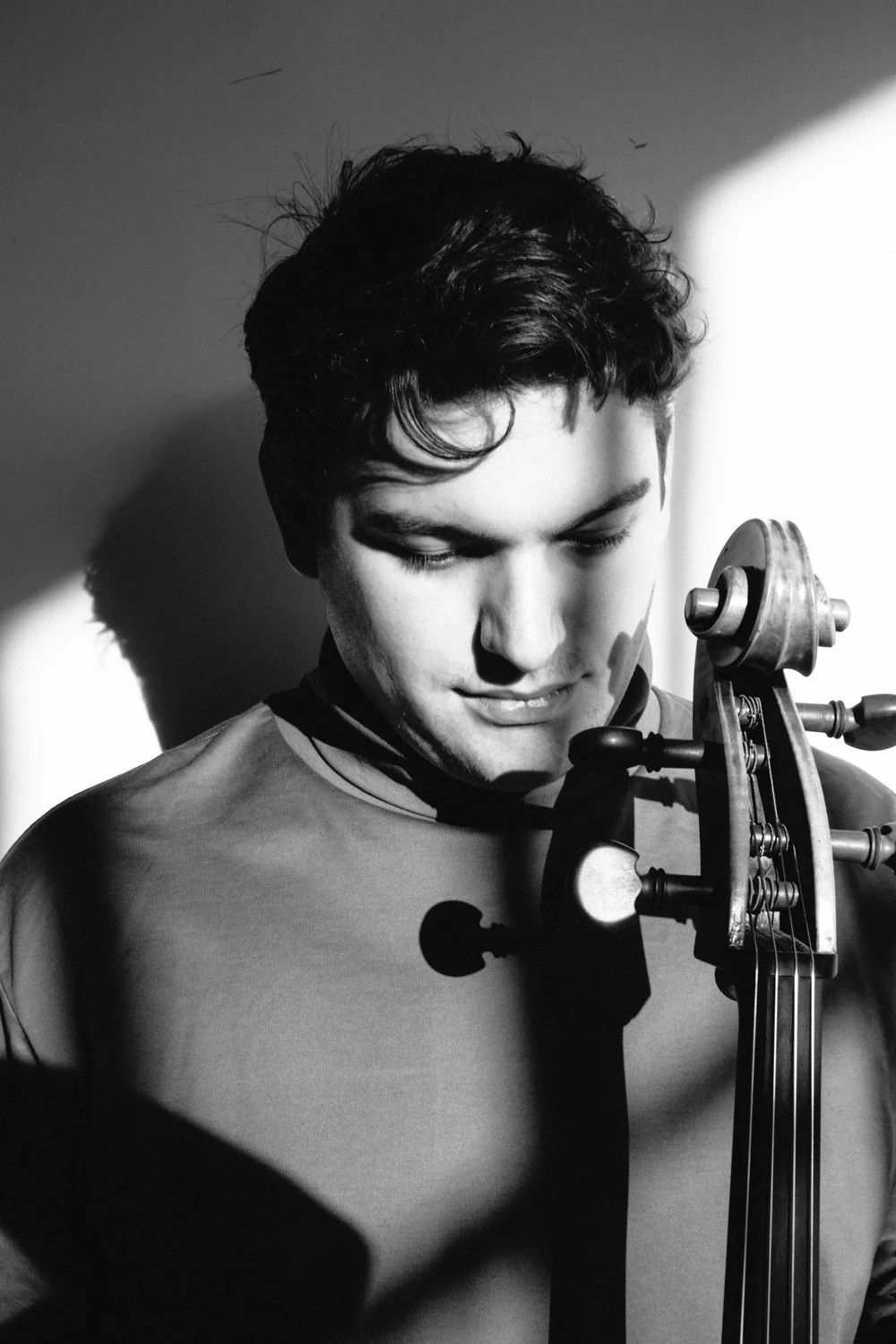
Name: Gabriel Cabezas
Nationality: American
Occupation: Cellist
Current Release: Gabriel Cabezas's new release containing his interpretation of Alyssa Weinberg's Pieces of Light, is out October 2nd via MASS MoCA.
Hometown Recommendation: I’m from the Chicago area originally, and recommend that every tourist and local take the Architecture Center’s boat tour - it’s interesting, obviously fun to be on a boat, and surprisingly emotional and inspiring!
If you enjoyed this Gabriel Cabezas interview, and would like to know more about his music and live performances, visit his official homepage. He is also on Instagram, bandcamp, and Facebook.
When did you first start getting interested in musical interpretation?
I guess since I started playing!
Interpretation is just a part of music, whether you’re reading a score or not. If your teacher tells you to play louder, shorter, faster, etc, you have to interpret that comment. It’s part of the fabric of every interaction with music that you could possibly have, as someone making sound.
Are there examples for interpretations that were entirely surprising to you personally and yet completely convincing?
Everything I have heard, as a cellist, from Daniil Shafran totally broke my brain as a young person.
He made such severe, compelling decisions, surprising and honest. Often not what I would do, but always interesting!
What do you personally enjoy about the act of interpretation? Are you finding that this sense of enjoyment is changing over time?
I think that I have gravitated towards playing newer music, both in chamber music (my groups yMusic, Owls, and other projects) and as a soloist since it has always felt like interpretation in that context is so close to the act of creation.
I’ve always enjoyed the energy from that kind of active music making - it’s drawn me to having friends who compose since at least as far back as college.
And I guess that energy drives me to go back into the canon of cello music and try and experience that music in the same way.
How much creativity is there in the act of interpretation? How much of your own personality enters the process?
I think there might be different kinds of creativity in interpretation depending on the kind of score you’re interpreting - what kind of improvisation (with pitches, but also rubato, dynamics, etc) tends to be appropriate in the style that your playing will dictate a lot of natural choices.
Of course, the choices you end up thinking are natural end up showing a lot about your personality!
What was your own learning curve/creative development like when it comes to interpretation - what were challenges and breakthroughs?
Getting experience outside of the realm of playing “traditional” (I suppose 18th-mid 20th century European music) classical music, after I finished school, gave me a different framework for making musical decisions and naturally led me to approach older music in a way that felt fresh to me.
One of the parameters that I hadn’t really explored that much in older music was really thinking about how I had been thought to organize rhythm and time - in classical music time is relational, but doesn’t always exist on a strict grid.
Beginning to incorporate more of a drummer’s instinct towards time in interpreting a wide range of classical music freed me to be really intentional about messing with the that grid of time, which is definitely something I’m always thinking about now.
In many cases, the score will be the first and foremost resource for an interpretation. Can you explain about how “reading” a score works for you?
This is kind of a hard question! I think reading a score, if it’s written in a “traditional” classical music kind of way, is as natural to me as reading a book
- it’s just language.
So, when you have a composer writing in a way that you’re not used to, you’re just learning a different language, using context clues, watching and listening to other people engaging with that language in order to learn it in a way that works for you.
Sometimes, you’re working with a composer where you’re developing that language actively together. I made an album with the composer Gabriella Smith, Lost Coast, a few years ago now, where the centerpiece of the album (later re imagined as a cello concerto) has a solo cello part with some long passages of extended improvisation.
That improvisation, though, was guided by a lot of back and forth between us looking for colors and techniques that would evoke some pretty harsh and rich natural sounds and electronic instruments - in the score, there might just be a line with an arrow in my part for 50 bars or so and a couple of words gesturing at the kinds of sounds we’d talked about, but I don’t need more than that to get to something the piece calls for.
One of the key phrases often used with regards to interpretation are the “composer's intentions”. What is your own perspective on this topic and its relevance for your own interpretations?
Sometimes it’s hard to know the “composer’s intentions”! Notation of all kinds is imperfect, and if you’re working from any source that isn’t a living composer guiding you on your choices, it’s always possible you naturally interpret a marking or even a written sentence differently than they intended it to be.
I think a lot about how I’ve actually had differences in opinion with composers about what the word “warm” might naturally mean in a score when applied to tone - one of the things I most love about working with friends as collaborators is that we can have an ongoing dialogue and our intentions towards the music we’re making can change over time. I’ll use an example from my upcoming album (the piece “Pieces of Light”) with Alyssa Weinberg. Alyssa and I have known each other for a long time, and I have a pretty good sense of how she writes most of her pieces and the general ideas she’s interested in.
She was working on a movement for this piece, called phosphenes, where she was trying to figure out how to find and notate some marginally stable harmonics and multi phonics on the cello. It seemed pretty tedious to me both for her to figure out something this specific and then for me to learn it in a way that was consistently replicable, so we basically had a conversation drilling down to her actual “intention” behind looking for these notes - it really wasn’t for specific pitches to fill a pitch class, or anything like that, but rather looking for different “colors” of sound.
We then created parameters for these colors of sound, and she created a graphic score out of her already existing sketches. This lack of specificity combined with the shared knowledge we have of each other actually gets me as close as I can get to her intentions.
I am infinitely fascinated by radically different or even “wrong” interpretations – the tempi of Toscanini, Kempff's Goldberg Variations. Are there extreme interpretations that you enjoy as well? Do you personally draw a line – and if so, what happens when we cross it?
I don’t think we know what our line is until we cross it. I personally want to find the edge of what I think is effective! Then, sometimes, you walk it back when you hear a recording and wonder what on earth you were thinking.
I do think it’s an excellent teaching tool to get your students to play with “incorrect” interpretations, but utmost commitment. You can learn what a strong decision feels like, and then you modify what you’re doing to fit what you actually want to come across in your performance.
When you have the score in front of you, what's your take on taking things literally, correcting possible mistakes, taking into account historical aspects etc?
Like everything in interpretation, it’s pretty situational. I will say that comparing editions and having a sense of some historical interpretation can be very useful - there are a lot of pieces by less popular composers that have been published very poorly and contain tons of errors.
In those cases, finding some historical sources or advice from people better versed in those pieces than you is essential. Ideally, you’re in a scenario with a beautiful score in front of you where all of the basic elements are clear and intended by the composer, and then you can put your own spin on their ideas within that framework, but we’re not always that lucky.
Also, working a lot with living composers, sometimes there’s an early change in the score or typo that accidentally doesn’t get changed for the next edition! So, giving that knowledge to people you encounter playing those pieces can be important as well.
For older music, I think I generally like to take a look at a few different editions of the score, the manuscript if available as well, and maybe a couple of recordings before thinking about what I might do with the piece.
With regards to the live situation, what role do the audience and the performance space play for your interpretation?
There are some natural things that happen, for sure - playing chamber music in a club or at an outdoor festival is going to move you to play maybe in a little bit more in your face way than it might in a super quiet room with fewer people around, for example.
But, I do also want to make sure I’m communicating what the piece means to me, no matter the context. I guess the real key is programming for the room you’ll know you’ll be in!
Some works seem to attract more artists to add their interpretation to it than others; some seem to even encourage wildly different interpretations. From your experience, what is it about these works that gives them this magnetic pull?
I don’t know! This a really interesting question.
It might seem, pretty cynically I guess, just “the market” for these pieces lends itself to this - Bach cello suites, as an example, have been pretty popular over the last century plus at this point, so there might be an attitude of everyone wanting to show their take on something that everyone might already know. An audience with a lot of familiarity towards particular pieces will notice your interpretation as interpretation more than an audience just hearing something for the first time!
But there is still something about the music itself that makes you want to add your voice to the conversation - maybe it’s the comparing of primary sources or performance practices informing your interpretation, or engaging with a more contemporary performance practice … For me, I try to think a lot about the rhythmic structure and registration of voices in a normally monophonic instrument … there’s a lot of room in the sandbox to play!
I will say that I think basically anything can handle multiple, pretty different interpretations, and it’s always refreshing to hear a new take on basically anything. I’m very curious to see what works of the 20 and 21st century end up like some Bach and Beethoven pieces are now!
Artists can return to a work several times throughout the course of their career, with different results. Tell me about a work where this has been the case for you, please.
I’m not sure if I have a great example of this outside from talking about the joy of playing a piece again for the first time since you were maybe a teenager or younger.
Growing up learning classical music in a very traditional way, your interpretation is usually pretty micromanaged by your teacher, which can be very useful in its way. Revisiting those pieces “as an adult”, you get to really investigate the way you were taught the piece and re evaluate what does and doesn’t work for you now.
It’s like getting to play the piece for the first time, but you’ve already learned it technically!
Part of the intrigue of interpretations is that the process is usually endless. Are there, vice versa, interpretations that feel definitive to you?
Nothing is definitive!
One of my favorite concert memories of the last decade or so was going to hear a tribute concert for Philip Glass, performed by a variety of excellent players who had mostly not played in the Philip Glass Ensemble or worked a lot with him.
Their interpretation was filled with a kind of romanticism and earnest-ness that you might not associate with the aesthetics of the Philip Glass Ensemble, but it was a performance filled with so much humanity and joy, showing aspects of the music that were always there but you might not have thought to look for.
I’d like to bring that to everything I do!