Published
Name: Glass Museum
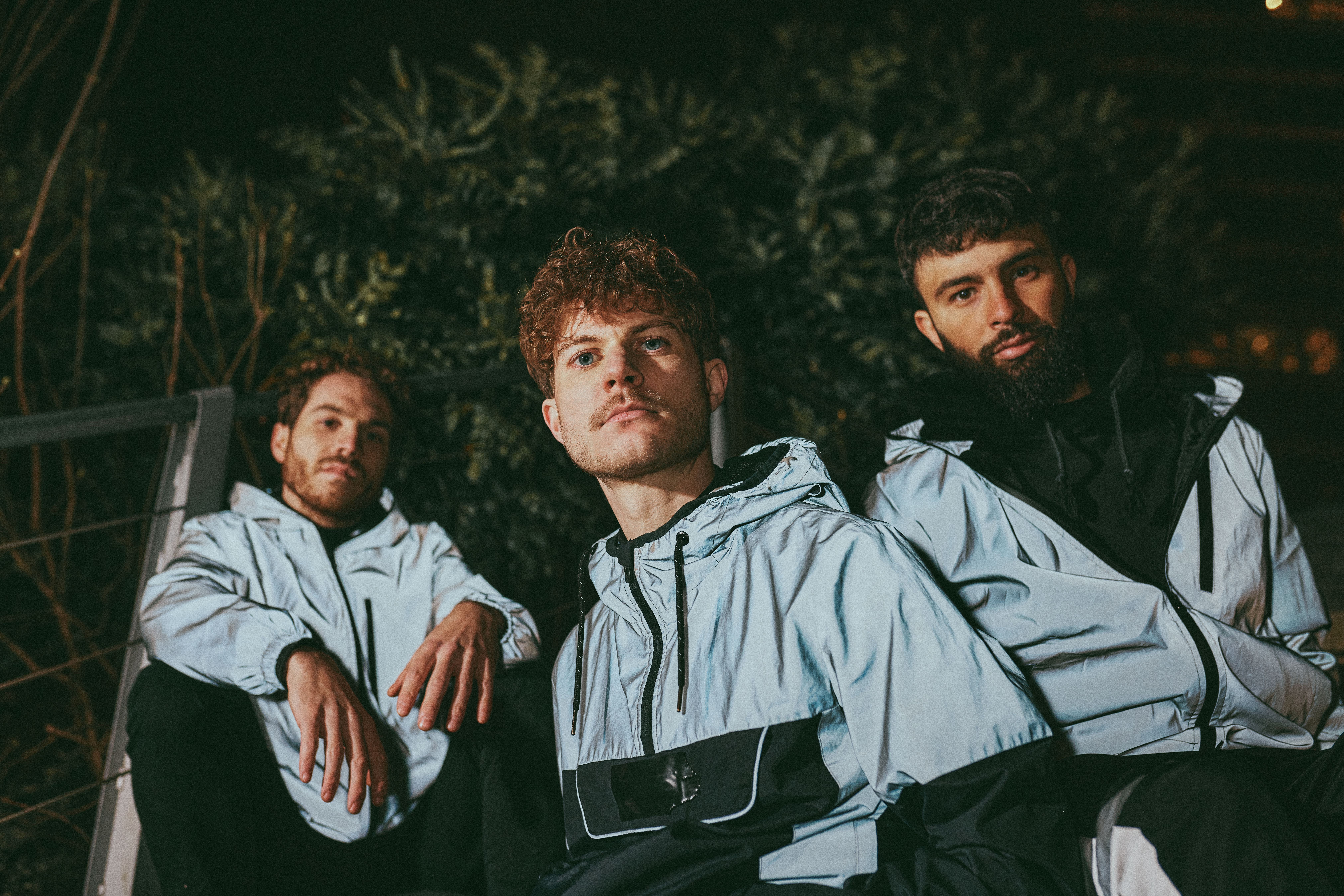
Members: Antoine Flipo (piano), Martin Grégoire (drums), Issam Labbene (bass)
Interviewee: Martin Grégoire
Nationalities: Belgian
Current release: Glass Museum's new album 4N4LOG CITY is out September 19th 2025 via Sdban.
Global Recommendations: In Brussels, we love going out to alternative spots like Brasserie Illegaal or Recyclart. Both places offer a mix of live bands and electronic nights, always with a warm and inclusive atmosphere.
We also enjoy spending time in nature — the city has some underrated green spaces like Rouge-Cloître or the Tournay-Solvay park. It’s definitely worth taking a day to explore them by bike, especially along the 'Promenade Verte', a beautiful cycling route that runs through the city’s green belt.
And while we don’t live there, we have to mention Funke in Ghent — an amazing club with a forward-thinking electronic music program.
Topics we are passionate about but rarely get to talk about: It’s not directly related to jazz, but we’re really passionate about a label called Mood Family, an electronic music label based in Ghent. They’ve released amazing artists like Tijn Driessen, Mosley Jr, and OY — all of whom we admire a lot. What excites us about their work is how they approach club music with an experimental and improvisational mindset. There’s a real sense of freedom and creativity in what they do, and it resonates with our own way of thinking about music.
If you enjoyed this Glass Museum interview and would like to stay up to date with the band and their music, visit their official homepage. They are also on Instagram, bandcamp, tiktok, and Facebook.
For a deeper dive, read our earlier Glass Museum interview.
What were some of the musical experiences which planted a seed for your interest in jazz?
Some of the first bands that drew us into the jazz world were groups like Tortoise (a band from Chicago, between post rock & jazz). In fact, our name, Glass Museum, is a direct reference to one of their tracks.
Later on, we discovered bands like GoGo Penguin, and the whole roster of the British label Gondwana Records — Mammal Hands, Hania Rani — as well as Canadian artists like BadBadNotGood and American musicians such as Christian Scott or Kamasi Washington (via the Brainfeeder label).
What these artists have in common is their ability to blend jazz with electronic elements, rock, and psychedelic influences. That hybrid approach really resonated with us and became a major inspiration when we started Glass Museum.
[Read our GoGo Penguin interview about their creative process]
[Read our GoGo Penguin interview about improvisation]
[Read our Leland Whitty of BADBADNOTGOOD interview]
More recently, we’ve also been listening to the Moses Yoofee Trio, whose work feels like a fresh continuation of that same exploratory spirit.
[Read our Moses Yoofee Trio interview]
What does the term jazz mean today, would you say?
Back in the 1970s, Miles Davis was already blurring the lines between genres with Bitches Brew, so the idea of mixing styles in jazz isn’t exactly new.
To us, jazz today is above all a space of total freedom — a playground for experimenting with genres, sounds, and improvisation.
Even though neither Antoine nor I come from a strictly academic jazz background, we both see jazz as a mindset rather than a set of rules. It’s about openness, risk-taking, and pushing boundaries
As of today, what kind of materials, ideas, and technologies are particularly stimulating for you?
Over the past few years, we’ve been deeply inspired by electronic club music.
Artists like Floating Points, Four Tet, Djrum, and Skee Mask have really influenced us — not only because of their melodic sensibility, but also for the depth and quality of their production.
Their work has been a big source of inspiration for Antoine, especially in terms of sound design: drum textures, synth choices, and lo-fi piano sounds.
At the same time, when we play together as a band, the energy we channel on stage is often closer to rock than anything else
Tell me a bit about the sounds & creative directions, artists & communities, as well as the colleagues & creative hotspots of your current hometown, please. How do they influence your music?
Over the past few years, a really exciting instrumental scene has been growing in Brussels — one that blends jazz influences with club music. Bands like Echt!, Tukan, or Lander & Adriaan are great examples.
What ties many of these artists together is their connection to places like Volta — a rehearsal and creative space in Anderlecht — and to labels like Sdban Records, which have played a key role in structuring and supporting the scene. There’s also something about Brussels itself — a very diverse and layered city — that seems to shape the sound and creative identity of many of us.
For us, being part of this community and rehearsing alongside these bands definitely had an influence on our latest album. With 4N4LOG CITY, we also wanted to reflect on the urban environment we live in: its rhythms, its loops, its analog textures. The city became both a theme and a sonic influence.
[Read our Echt! interview]
[Read our Tukan interview]
What role do electronic tools and instruments play for your creative process?
For our latest album, most of the compositions started from repetitive electronic loops. That’s really where electronic production becomes central to our creative process — it forms the foundation on which everything else is built.
We used these loops as a base to jam together as a trio, and many of the tracks grew out of those sessions. Still, piano, drums, and bass remain our most intuitive tools of expression — they’re how we communicate musically and develop a narrative within each piece.
Thanks to technological advances, collaboration has become a lot easier. What have been some of the most fruitful collaborations for you recently and what approaches to and modes of collaboration currently seem best to you?
For this album, one of our main goals was to open ourselves up to collaboration. We had been wanting to bring guests into our music for a while, but it wasn’t an easy shift at first — we were very used to composing within our usual instrumental format, so it took a few trials and errors to find the right approach.
For “GATE 1,” we asked Swiss producer Arthur Hnatek (Tigran Hamasyan, Erik Truffaz) to send us a modular electronic loop he had created by linking his drum kit to an analog synth. That loop became the foundation for the track.
[Read our Tigran Hamasyan interview]
[Read our Erik Truffaz interview]
For VAN GLAS, our collaboration with rapper Jazz Brak, we sent him an early instrumental demo which immediately resonated with him. We later spent a day together in the studio to finalize the vocal take.
In the end, the key was finding the right collaborators — and being flexible enough to adapt our process each time depending on their universe and how they work best.
Jazz has always had an interesting relationship between honouring its roots and exploring the unknown. What does the balance between these two poles look like in your music?
Since we don’t come from a strong background in traditional jazz — like bebop or swing — our connection to jazz came relatively late in our journey as musicians. So rather than paying tribute to the great jazz masters by trying to reproduce their language, we naturally gravitated toward the exploratory side of the genre.
Our sense of ‘tradition’ probably comes more from progressive rock bands like Pink Floyd in the 1970s than from classic jazz.
That said, we still take a lot of pleasure in listening to iconic artists like John Coltrane, Sun Ra, or Marc Moulin, who continue to inspire us in different ways.
For many artists, life-changing musical experiences take place live. How do you see that yourself?
For us, live performance is definitely the most powerful way to experience music. We’ve had some truly intense and emotionally charged moments attending concerts or club sets — moments that went far beyond just listening to music at home.
There’s something deeply human, alive, and collective about it. That’s also where our own music fully comes to life — when it connects with an audience in a shared space. The energy, the imperfections, the interaction … that’s where everything makes sense for us
How, would you say are your live performances and your recording projects connected at the moment? How do they mutually influence and feed off each other?
In our creative process, there’s a constant back-and-forth between studio production — working on a computer with Ableton — and live composition using our three instruments. These two approaches feed into each other and help the music take shape.
Once a track is finished, we put a lot of effort into adapting it for live performance. That often means rearranging sections, extending certain parts, or creating new dynamics to make the piece breathe differently on stage.
Are there approaches, artists, festivals, labels, spaces or anyone/-thing else out there who you feel deserve a shout out for taking jazz into the future?
Recently, we’ve been really intrigued by a scene emerging in France, particularly around drummer Julien Loutelier. His projects — like Cabaret Contemporain, Photons, or Sugar Sugar — explore a fascinating blend of acoustic drums and electronic textures.
It’s a bold and innovative direction that we think is pushing jazz forward, and definitely a scene to keep an eye on.