

Published
Part 1
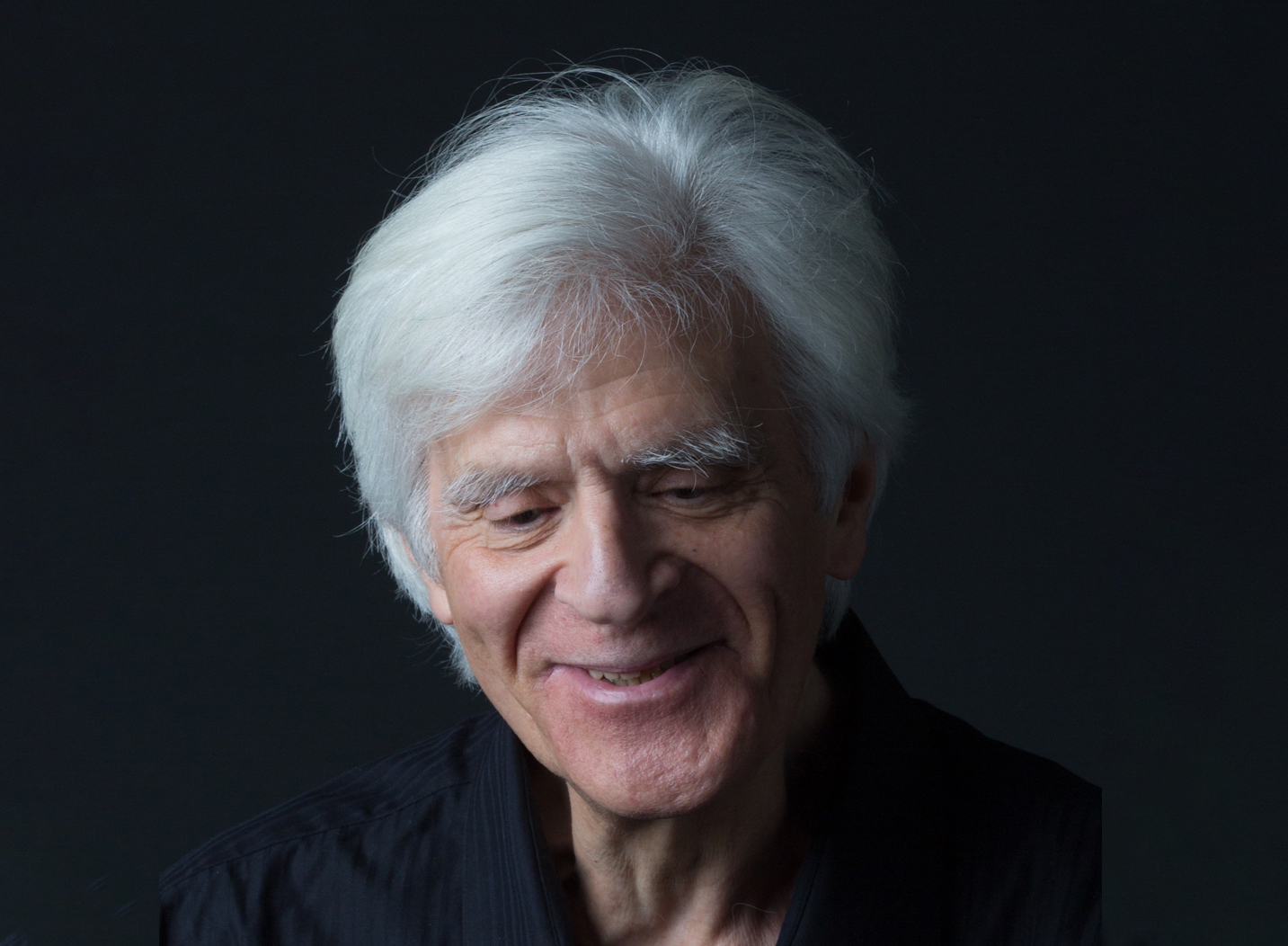
Name: Greg Sandow
Nationality: American
Occupation: Writer, critic, composer
Current release: Greg Sandow's new, album Three Quartets, performed by the Terra String Quartet, is out via Acis.
If you enjoyed this Greg Sandow interview and would like to know more about his music and writing, visit his official homepage. He is also on Instagram.
The borders between producers, sound artists, and even songwriters are becoming increasingly blurry. What does being a composer mean today, would you say?
Anyone who creates music is a composer, at least for me. Doesn’t matter if they create a string quartet, a pop song, a corporation's musical logo, or a jingly tune for a children's toy. Or a piece for the recorded sound of bouncing ping pong balls.
“Composer,” for me, isn’t an honorific, a title conferred by gatekeepers. People create all kinds of music, and we can sort out what we think of it. Including jingly toy tunes! I heard them a lot when my son was young, and I had two thoughts: "For composers that's paying work,” and "I wish more good composers wrote these.”
Many people perceive classical music and contemporary composition as having high barriers of entrance, both for listeners and musicians. What have your own experiences been in this regard?
High barriers can be an advantage, in a highbrow way, because they can translate into high prestige. Think of Elliott Carter in the 1980s, when I emerged as a critic. His scores were hard to write, and hardly anyone wanted to hear them, but who got more respect?
Though all classical composers have high barriers to clear. You need an academic degree, as a rule, and you network, to get performances, grants, commissions, and (to support yourself) a faculty job. Along with that (though more in the past than now), have come rules about what kind of music you can write. That's where the barriers bruised me, though at first I thrived.
By some miracle, in 1970, when I was so new to composing that I'd hardly written anything, I got into the Yale School of Music as a graduate composition student. So I thought I should fill in blanks in my knowledge, by learning modernist 20th century music, since it’s in that tradition that I thought I’d compose. I studied Stravinsky, Schoenberg, Bartok, Webern, and Berg, and I thrived on it, sightsinging Schoenberg string quartets, playing (as well as I could) Webern's Variations for Piano. That music still enriches me, still helps shape what I write, even if my work (mostly tonal these days) sounds very different.
But then came the bruising. Studying atonal music was one thing, but writing it? The closest I came was in a piece called Three Duets, for two unaccompanied singers, soprano and mezzo. These were atonal, but also lyrical. You can find them on my website.
But with atonal music I struggled at Yale, instead writing theater scores and conceptual pieces like those I heard on the downtown scene in New York. I couldn’t gestate serious atonal works, of the kind my teachers and fellow students produced.
That was an entrance barrier to a composing career — an unstated one, but real — that rose up and bit me. Which is one reason, I’m sure, why now I think we all should write any music we want.
Which gives me an idea. I should write one of those serious atonal pieces! Just for the hell of it. And in fact I sometimes do write 12-tone music, which is fun for me. An example is “12-Tone America,” one of two pieces I wrote for pianist Min Kwon’s America/Beautiful project, in which many composers wrote variations on “America the Beautiful.”
I found a row that played at least the start of the song. (My other piece was “America Slow Dance,” written in the style of 1950s rock & roll.)
As of today, what kind of materials, ideas, and technologies are particularly stimulating for you?
I love it when composers function as auteurs, as film directors do. When they’re the artistic guiding force, even if others create some (or even all) of what we hear.
An example: Kacey Musgraves' song "Slow Burn." She wrote the music and lyrics. Collaborators in the studio worked out the backing tracks, and she told them what she liked and didn't like, shaping what they did till the song was truly hers.
Or Aretha Franklin's first hit, "I Never Loved A Man (The Way I Loved You"). She demoed the song at the first recording session, singing and playing piano for backup musicians who’d never heard her.
Her first chord was so explosive that the pianist in the band said she should play piano. He moved to the organ, and made up a riff that runs all through the final version of the song. While the horn players went to another room to work out their parts.
In new music, Alvin Lucier’s Music on a Long Thin Wire, where a process — hang a long metal wire in a resonant space, and use an oscillator to keep it vibrating — creates the sound.
Or Robert Ashley's masterpiece Perfect Lives, a video opera in which Ashley speaks, over music inspired by him, but created by others (especially pianist "Blue" Gene Tyranny).
And of course the Beatles, as they're shown putting songs together in Peter Jackson's documentary Get Back. Paul shows the others his first thoughts for “Get Back” (the song), and in seconds Ringo finds the perfect beat for it.
I've never worked this way, but hearing about it inspires me.
Where do most of your inspirations to create come from – rather from internal impulses or external ones? Which current social / political / ecological or other developments make you feel like you need to respond as an artist?
I'd have sworn my inspirations came from inside me.
As in my piece Recital (not yet premiered, but scores and computer demos are on my website). Hey, I thought, why not write a complete vocal recital, for soprano and piano? So I wrote it, creating my own versions of the music vocal recitalists sing, German lieder, French art songs, and more (with, as encores, a big Italian opera aria and a Broadway-style show tune). That, I thought, was an internal impulse.
But, as I just realized, it’s also an external one. I love Italian opera; I love Broadway musicals. In my younger years I was a singer, and sang Fauré and Schubert. All that music sits out in the world, and I feel, writing more of it, that I’m bringing it inside me.
And an opera I wrote, on Frankenstein — that started outside. me. I’d seen the movie; I’d read Mary Shelley. In my inner cauldron I added Italian opera, thinking that Bellini or Verdi in his early years could (in another universe) have written their own Frankenstein, since the novel was published just before their time, in 1811, and was often put on the non-singing stage. So, impelled from both inside and outside, I wrote my opera partly in their style. (For quick example, here’s a quintet involving all the leading roles except the Creature. (Shannah Timms, Marion Capriotti, Paul Mow, Daniel Mobbs, Scott Altman; New York City Opera Orchestra, Brent McMunn conductor)
One of my string quartets, The Remembered Song, was inspired by a passage in A Course in Miracles, a spiritual book. We’ve heard, perhaps in Heaven, a song that brought us joy, which now we barely remember. I began the piece with fragments of the song, played (beautifully, on the recording, by the Terra String Quartet) at the edge of silence. At the end it’s heard complete.
So now I see I start with things outside me. Never, though, politics or social issues. I’m acutely concerned with them, but (maybe because I think political work can be done more effectively outside the classical music world) not since I was a student (when I wrote a piece for speaking voices based on an interview with Henry Kissinger) have I written anything political.
Composing has always had an interesting relationship between honouring its roots and exploring the unknown. What does the balance between these two poles look like in your music?
Much of my music might sound traditional, like that Frankenstein quintet (see above), firmly rooted in classical music's past (though with excursions sometimes into pop and rock).
But I think that's deceptive. Schoenberg and Webern get, as I’ve said, into the guts of my music, inspiring constant variation. Time signatures keep changing, often in every measure, suggesting that, even if the rhythms sound regular, the flow of the musical phrases might not be.
In my long string quartet, Mahler Variations, there's a constant change of musical styles, with each variation bringing something new. It's maybe not for me to judge, but I don't know other pieces quite like this one. Parts of it might sound familiar, but I think as a whole there’s a lot new in its structure and details.
Finally, with all the stress in the last 100 years on classical composers breaking new ground, writing in old styles can be radical. When Frankenstein — sounding so much like old Italian opera — was done in a big workshop, one reaction was, "Is this allowed?" (I’ll note here, since Frankenstein has never been formally premiered, that one reason I’ve got neglected works in my catalogue is that, until now, I’ve never focused on composing.)
How much potential for something “new” is there still in composition? What could this “new” look like?
There's endless potential for new kinds of music. Art renews itself! But by the very definition of newness, how can we say what something new would be?
Speaking only for myself, I think over many decades there's been too much emphasis on newness in classical composing. In a healthy artistic ecosystem, most new work would be in familiar styles. That guarantees an audience, including an audience for new styles that emerge, even if they seem radical, and some people hate them.
Something I learned in pop music: In a vast market, even the fringes are vast.