

Name: Heli Hartikainen
Nationality: Finnish
Occupation: Saxophonist, clarinetist, composer, improviser, sound artist
Current Release: Heli Hartikainen's new Interbody EP is out via Multiphonic Works.
If you enjoyed this Heli Hartikainen interview and would like to know more about their music, visit their official website. She is also on Instagram, and Soundcloud.
For a deeper dive, we recommend our earlier interviews with them about Instruments as an Extension of the Body, and about improvisation.
Where does the impulse to create something come from for you? What role do often-quoted sources of inspiration like dreams, other forms of art, personal relationships, politics etc play?
Something that I find dear to me is the word "ekphrasis," which means translation between different art forms. Originally it means a text describing a painting, but the meaning can be expanded; I often think that when playing I am doing an interpretation of the space and surroundings, atmosphere, or some piece of art I've seen lately that has stuck with me.
When it comes to sound technology, experimental saxophone techniques or compositional forms, I always gravitate towards something new, something that feels like unknown territory that requires research.
I don't really use found sounds in my work, but everyday sounds do inspire me; the polyrhythms of traffic light beeps, choirs of construction machinery, hums and rumbles of the wind and rain.
For you to get started, do there need to be concrete ideas – or what some have called a 'visualisation' of the finished work? What does the balance between planning and chance look like for you?
For me the big picture always comes first; a timeline, the dramaturgy, the theme, then the techniques and the moods, and only last of all I think about the actual notes. I want to know the overall story before "filling in" the details.
“Balancing between planning and chance” is actually pretty good description of my practise! For my chamber piece "Light Cones"(2024), I gave the performers a "map" of chords from which they chose the notes to play, along with the possibility of moving from one section to another in their own time.
I spent a lot of time crafting that piece and developing a system and a chord structure that resulted in beautifully undulating harmonies, while keeping it both in control and free.
At the core of my new EP Interbody is the tenor saxophone, extended through a self-built sampler organism that responds in real time to pitch and volume. A high degree of randomness is built into the system, creating a very unpredictable polyphonic counterpart to my live playing, merging improvisation and algorithmic processes, the human and the machine-organism. This is me once again creating systems that balance between controlled and erratic.
Fun fact: I ended up sampling the strings from a rehearsal recording of "Light Cones" into the final track of Interbody, "Nadir."
Is there a preparation phase for your process? Do you require your tools to be laid out in a particular way, for example, do you need to do 'research' or create 'early versions'?
I always make my notes by hand first. I read a lot and gather notes and inspiration, bounce back and forth ideas and structures.
I have piles of notebooks filled with said timelines, weird scribbles (that one could also call graphic notation) of textures, waves showing the dynamics and intensity of the structure… Eventually I go over these notes many times, adding something, changing something, leaving something out, and little by little what is meant to be sticks, and is carved out of the material.
For Interbody, what did you start with? If there were conceptual considerations, what were they?
Interbody examines time from the perspective of the human body: geological, experiential, and corporeal time as embodied experience. If CHRONOVARIATIONS was spacetime-embracing and monumental, using a church as its instrument, Interbody turns the focus inward.
The EP's single track "Pneuma" is about breathing, breathlessness, and the absence of breath — the flow of air, oxygen, and the lack of it. The piece is simultaneously ceaseless flow and hovering stillness.
In the pieces "Tide" and "Aporia," I use my own text in my music for the first time — text written alongside the compositional process to crystallise the themes and motifs of the record for myself.
I recorded myself reading my texts as speech samples, so on the album you hear not only my saxophone but also my speaking voice. Through the software, my poem fragments become part of the album's sonic palette.
Interbody was recorded with multiple microphones surrounding me in order to capture a realistic sonic "close-up," in contrast to CHRONOVARIATIONS, where it was the room itself that was being listened to. I wanted to create an interpretation of these inner sounds – a translation of embodied experience into music, formulated in time.
Tell me a bit about the way the new material developed and gradually took its final form, please.
For Interbody, developing the "Pitch and Envelope Tracking Sampler Organism" with the visual programming language MAX/MSP was an enormously interesting challenge from a compositional standpoint.
The composing, sampling, and software development all had to happen simultaneously; the sampler's algorithm includes a certain randomness, so it can't be forced into a fixed mold. I constantly had to search for a balance between compositional control and the freedom given to the machine.
Sometimes the software has four options to draw from, sometimes a hundred. This feature makes it a fascinating tool for me as an improviser, since playing with the software becomes a kind of continuous, evolving feedback loop that forces me to stay alert and ready to take the music in unexpected directions.
This was the most interesting – and difficult – part of the composition process: how much freedom can I give to the machine? Where is the sweet spot between control and chaos? This is where I applied algorithmic thinking to my compositional process, taking into consideration the hundreds of possible sonic outcomes and structuring the themes, melodies and samples accordingly in order to maintain control over the overall sound and feel.
Many writers have claimed that as soon as they enter into the process, certain aspects of the narrative are out of their hands. Do you like to keep strict control or is there a sense of following things where they lead you?
With Interbody I especially wanted to challenge myself as an improviser and throw myself into the deep end at every gig. The sampler organism forces me to stay on my toes and be ready to take the music in unexpected directions. During gigs I always take inspiration from the space and play with it, sense the atmosphere and let it channel through my music. That's why every gig is very unique!
During the Interbody recording process I wanted to try and see how "letting the material lead" works in the production of a record. Once I entered the studio, I hadn't decided on the length of the tracks, the release date, or even whether I'd call it an album or an EP… I wanted to do things differently, and rather than aiming for a certain kind of end result, I just focused on doing my absolute best in the studio and being radically open to the piece of music that would wait for me in the end.
Many people suggested I'd be really nervous about the new record because the previous album was received so well. I had never even thought of such a thing; I had already stripped that pressure off my shoulders back at the production stage.
There are many descriptions of the creative state. How would you describe it for you personally? Is there an element of spirituality to what you do?
When playing live, I'm quite happy to say I get into the flow state almost every time.
During that state my inner dialogue completely shuts down, and I only think "in music." The latency between hearing a sound in my head and it coming out through my fingers is non-existent; I lose track of time … In that state I don't feel like I need to invent anything; the music just flows through me.
That's honestly like a drug, and probably the best thing about performing music.
What's your take on the role and importance of production, including mixing and mastering for you personally? In terms of what they contribute to a song, what is the balance between the composition and the arrangement (performance)?
Especially with my previous album CHRONOVARIATIONS, the post-production was not only mixing but carving the actual final piece out of the wild amount of material.
The album was recorded binaurally with 24 microphones, meaning that in addition to the 8 ambisonic room microphones and saxophone mics, we had 12 other auditory points of view. That means a lot of possibilities for zooming in on different sonic images.
Every concert we played with CHRONOVARIATIONS was built site-specifically for each venue to honor and emphasise the acoustic character of the space.
I'm very invested in sound and its qualities. In my artistic work I spend a significant amount of time engineering the right sounds for the occasion. The soundscape and the sonic palette need to be just right for me to even proceed to compose.
The good thing is that my sound technician and mixing engineer Kaj Mäki-Ullakko already has a very good sense of my aesthetics and easily gets what I'm after!
Music and the accompanying artwork are often closely related. Can you talk about this a little bit for your current project and the relationship that images and sounds have for you in general?
The Interbody cover art, by my talented friend Helka Saariniemi, pictures something of an ancient Greek statue alongside fragments of my poetry.
The poetry is heard fragmentarily in Finnish in my speech samples on two tracks, and I wanted to give non-Finnish speakers a chance to grasp something of the mood as well.
I think the experience of the text is somewhat similar for English speakers — encountering it as fragments — as it is for Finnish speakers hearing it auditorily.
After finishing a piece or album and releasing something into the world, there can be a sense of emptiness. Can you relate to this – and how do you return to the state of creativity after experiencing it?
Absolutely. It is one of those unavoidable states of a creative process; from excitement to self-doubt, from happiness to emptiness and everything in between!
I've learnt from myself and all my previous experiences that after the huge load of a new release is off my shoulders, it's time to give myself a little break, and give time for new ideas to load in. Even if at the moment of release I feel like my head is completely empty, the ideas always do come, sooner than I'd expect.

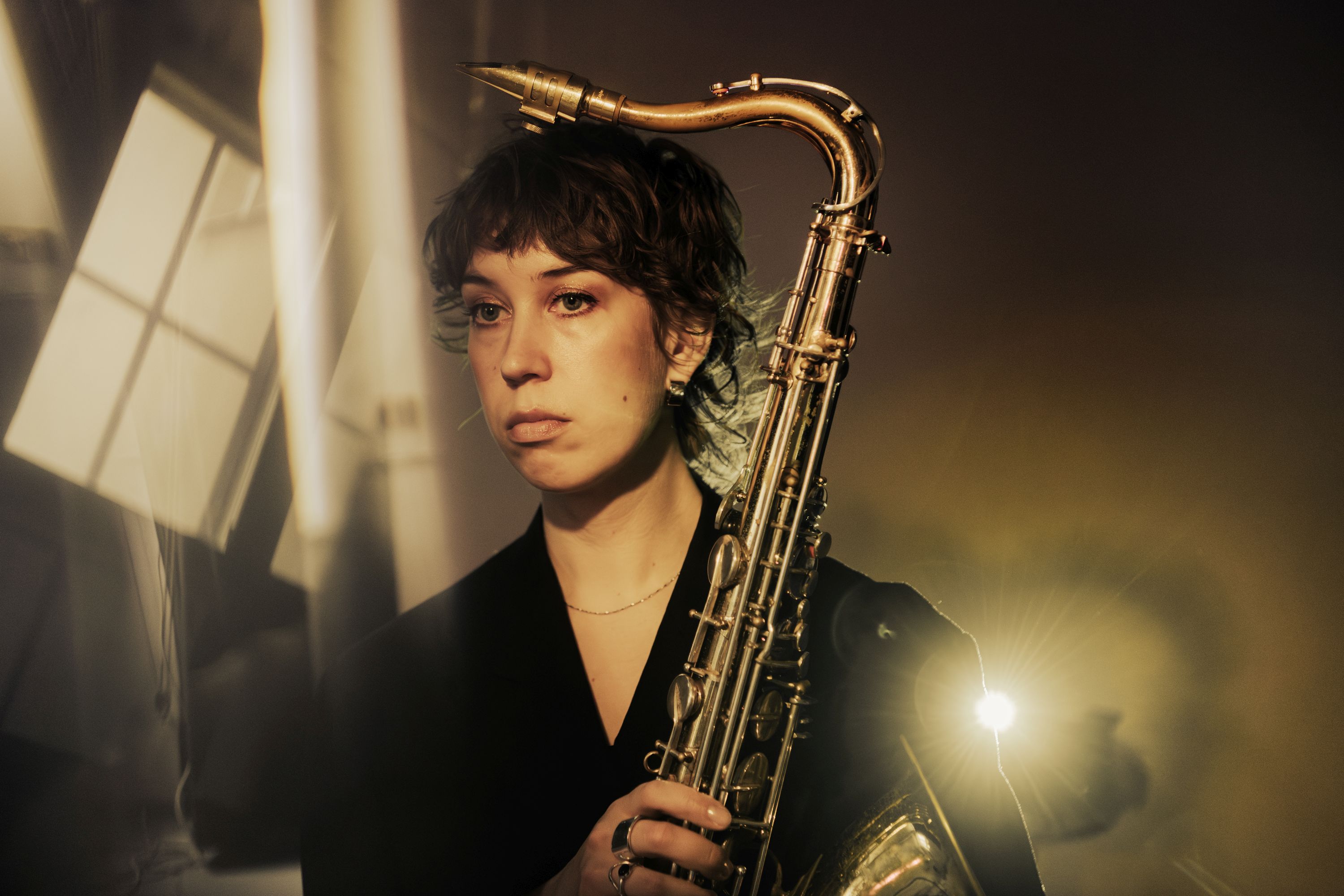 Heli Hartikainen Interview Image by Julius Töyrylä
"During the flow state my inner dialogue completely shuts down, and I only think 'in music.'"
Video
