Published
T
Name: I WANT POETRY
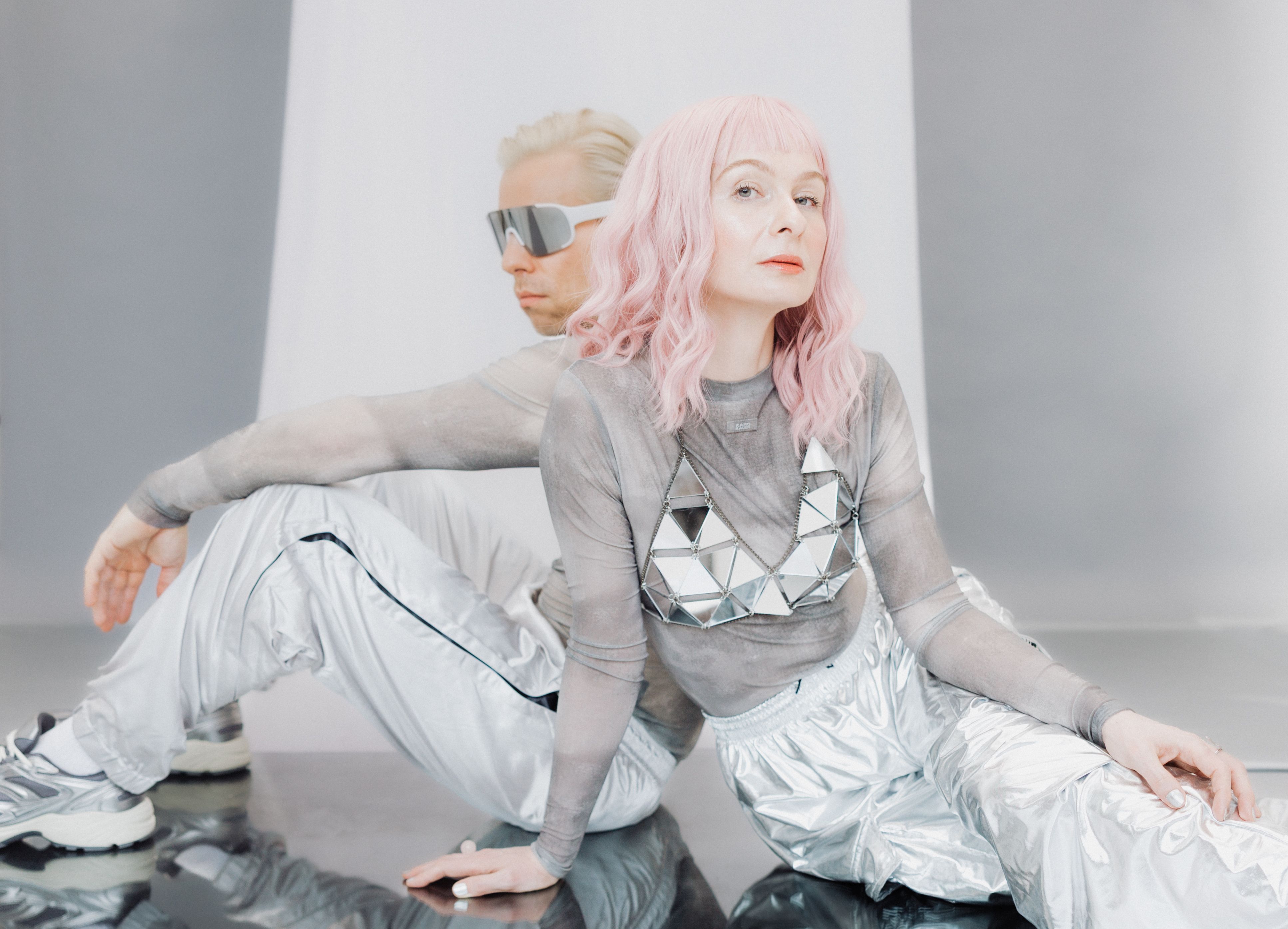
Members: Tine von Bergen, Till Moritz Moll
Nationality: German
Current release: I Want Poetry's new album Future Selves is out now.
Hometown Recommendation:
Tine: I’d recommend spending some time in Dresden’s Neustadt. It’s quite a contrast to the beautiful old town and the Christmas markets the city is famous for – a lively Gründerzeit neighbourhood full of cafés, bars, restaurants, little shops and all kinds of music venues, from tiny jazz clubs to techno halls. The best thing is probably not to plan too much and just wander around for a while. There’s a very particular atmosphere to it – colourful, alternative, a little chaotic, and very much alive.
If you enjoyed this I WANT POETRY interview and would like to find out more about the band and their music, visit their official homepage. The duo are also on Instagram, and Facebook.
For an even deeper look into their thoughts, read our earlier I WANT POETRY interview, and our conversation with them about their creative process.
What were some of the musical experiences which planted a seed for your interest in electronic music?
Moritz: My dad played guitar and would always be writing songs on it, but he also had an Ensoniq synthesizer with a sequencer. My first recollection of creating music was on that machine, and I still use it to this day.
I love creating sound from a thought, from an idea or a feeling. For instance, in “Blue”, we wanted the sound to feel like a hot summer day, the kind where nothing seems to matter except floating in the present moment.
Most genres of music make use of electronic production means. What does the term “electronic music” mean today, would you say?
Tine: I think that especially in pop music, genres are more and more melting into each other recently. Sometimes you hear a great song or production and you can’t really tell – is it Jazz? Is it Electro? Is it Pop? And that’s the beauty of it, really – that freedom of creation.
I love experimenting with vocal sounds – from trying out new ways of expression to creative recording and production. It’s super fun to work with Moritz on that, because we always arrive at a point neither of us would have reached alone.
Disco, house, techno, drum n bass, IDM and many other genres were about a lot more than just music. For you personally, is electronic music (still) a way of life – and if so, in which way?
Moritz: Music is our cocoon, our path to transformation. Every melody you jam, every line you sing and every beat you hit is always a dare, surrendering to your intuition and letting go of the barriers inside. Those limits we impose on ourselves or let others impose on us are what keep us from reaching our potential.
Especially when we play live, it’s an almost religious experience of connection with everyone. For a brief moment, you can feel the possibilities unfolding. Our future selves are already within us, if we dare to look and if we allow ourselves to grow.
Debates around electronic music tend to focus on technology. What, though, were some of the things you learned by talking to colleagues or through performing and/or recording with other musicians? What role does community play for your interest in production and getting better as a producer?
Moritz: Collaboration is very important for our creative process. It all grows organically, from exposing ourselves to the world and channelling those impressions in countless sketches until an album concept emerges.
Then we love to bring in friends and other creatives, we start planning photos and videos, and work on the sound of the album with trusted producers, first and foremost our long-time ally Michael Vajna. We’ve been working with him since Human Touch, and he’s had a tremendous impact on how we perceive and conceive music.
We spent a long summer afternoon and well into the evening sitting together on his patio talking about our vision of the future and what it could sound like. Every song we work together with Michael, we always learn something new, and the songs benefit greatly from the different perspectives everyone brings to the table.
For instance, “Mirrors Of The Sky” in pre-production was a kind of tribal ballad.
Michael took that and wove a beautifully dystopian soundscape into that which perfectly captures the nature of the song, like a half-remembered dream of the past.
What are examples for artists, performances, and releases that really inspired you recently and possibly gave you the feeling of having experienced something fresh and new?
Tine: There are two performances that had us completely mesmerized recently.
The first was seeing Half Waif live in Berlin – a small club and a minimal setup, but it was so intense, so emotional and artistic at the same time. Nandi is truly one of a kind.
[Read our Half Waif interview]
The other one was on a completely different scale, but equally stirring. We were in NYC this spring, playing at The New Colossus Festival. After the festival was over, we spent some time in the city, drawing inspiration while finishing up the album. We also spontaneously ventured out with a videographer we had just met and shot the music video for “Supersize World.”
So we were already immersed in the superlative when, on the very last night before our flight back home, we went to see FKA Twigs in Madison Square Garden. A two-and-a-half-hour show with all the theatrics, the lights and projections and choreography.
We’ve been in love with her music for years, but we’d never seen her live. She’s simply amazing, she radiates power and love like a magnesium torch.
Where do most of your inspirations to create come from – rather from internal impulses or external ones? Which current social / political / ecological or other developments make you feel like you need to respond as an artist?
Tine: When we started to work on this album, we felt that there is a lot of despair in the world right now, in part reinforced by the proclamations of those who profit from fear and disillusion, but that just didn’t ring true with us.
We feel that right now is the best time ever to build a better future, and that sense of agency and empowerment is what drove the creation of Future Selves. The central line is from the title track: “The future is calling, and we don’t need reason – just heart.”
What kind of musical/sonic materials, and ideas are particularly stimulating for your own work right now?
Moritz: A lot of electronic music today is dark and powerful and somewhat nihilistic. For this album, we wanted a sound that conveys joy – music that is just fun to play.
We realized that what we are looking for in Future Selves is a kind of positive outlook on tomorrow that we knew as children. A future that’s bright and hopeful and promising. The music of that time naturally reflects that for us, so we took a lot of inspiration from 80s and 90s artists such as Madonna.
Listen to “Child” – this was written at the piano, but it’s really that pumping 909-beat which allows it to convey the nostalgia and playfulness but also the defiance inherent in the song.
Today, electronic music has an interesting relationship between honouring its roots and exploring the unknown. What does the balance between these two poles look like in your music?
Moritz: What fascinates us about electronic music is its continued evolution. For decades it has been a major source of renewal that has sparked new genres and new forms of expression. As pop musicians, we draw so much inspiration from that.
It’s an oversimplification to say that Techno shaped the sound of the 90s or that Hip Hop is a major force in current pop, but the influences of the electronic avantgarde are hard to miss. The great thing about Pop Music is that it’s not so tightly bound by genre. That’s how you get revelations like “When we all fall asleep, where do we go” – milestones that inspire a whole new generation of producers.
And for us personally, we get to explore our inner worlds through that cosmos of sound.
What were some of the recent tools you bought, used, or saw/read about which changed your perspective about production, performing, and making music?
Moritz: I don’t really have GAS. Years ago I picked up Pigments and it’s been my go-to synth since then. Ableton Live for production, Logic X for recording, that’s all we need really as far as gear goes.
Our greatest tool, and our rarest commodity, is time spent immersed in music. It doesn’t matter if it’s an out-of-tune piano in a backstage room or a random turn of a knob on a synthesizer – everything can give off that spark that lights up the room.
And in the end, the single most important tool for us is the old upright piano in our home studio. Stripping any track down to just vocals and piano allows us to see through the mist, if you will. Sometimes we find that the song actually doesn’t need much more.
How do you see the role of sampling in electronic music today?
Tine: We like to do our own sampling. There’s a track on Future Selves, more of an interlude, that is inspired by an old TV show. The host talks about “Tomorrow’s Girl” and how advanced technology will impact how we live.
Instead of just sampling the show, we re-recorded the spoken parts.
Then we had Moritz’ sister interview her little daughters on what they thought the future would be like and added some fragments of that to the track, giving it that childlike sense of wonder about what’s to come.
How, would you say are your live performances and your recording projects connected at the moment? How do they mutually influence and feed off each other?
Moritz: Everything’s a single nowadays, so when we’re performing live, we love to elaborate on the recorded tracks. A song like “No Is A Full Sentence” can turn into a 10 minute story arc if the feeling’s right.
Our shows are so important to us because we get to deep dive into the emotions with the audience. There’s nothing quite so powerful as singing a chorus together and sharing that feeling.
Even if AI will not entirely replace human composition, it looks set to have a significant impact on it. What does the terms composing/producing mean in the era of AI, do you feel?
Moritz: I think that the term AI as it’s used for the currently promoted models is misleading.
Their output seems to have logic or reason, but they’re not intelligent at all. A child has no knowledge but is already intelligent. These machines have insane amounts of knowledge but all they do is reproduce this based on probability. They have no desire, no empathy, no anger or frustration, no love. They don’t ever feel vulnerable and they can’t be brave.
I think for that reason, they can be accelerators within existing space, but they can never innovate. It will always be up to humans to dream and explore beyond the horizon.