Published
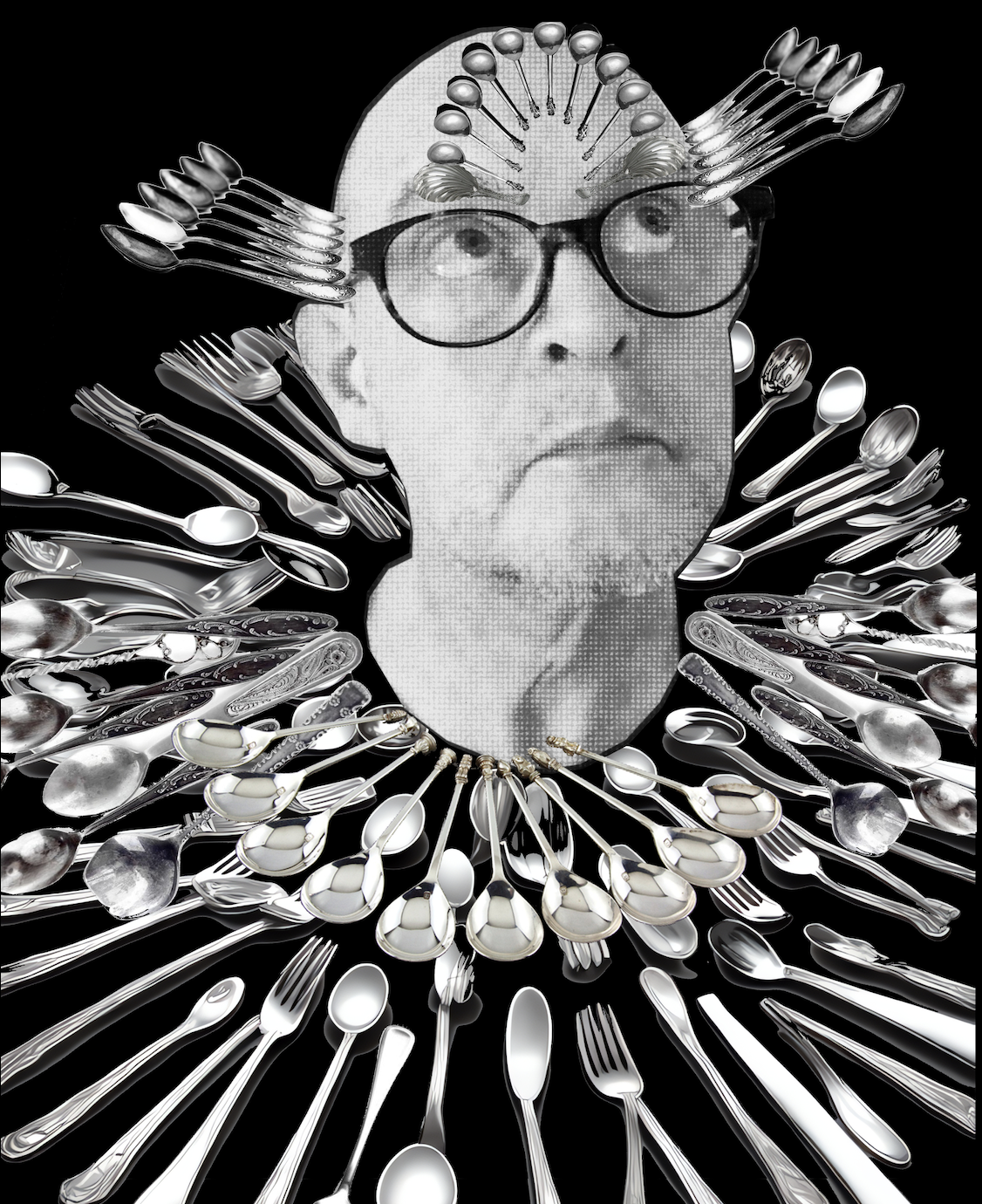
Name: Ian Cardophagus Masters
Occupation: None
Nationality: At birth, British. Now, I'm not sure.
Recent release: Ian Masters's Happy Collapse, a collaboration with Stefano Guzzetti as Galactic Embrace, is out now. Order the CD from Glass Modern.
When I listen to music, I see shapes, objects, and colours. What happens to you physically when you're listening? Do you listen with your eyes open or closed?
Ah, so you're a synaesthete. It sounds like fun. I'm not.
When I'm *really* listening, I close my eyes to block visual information from interfering. I wait for frisson/the chills to inform my brain if I really love a piece of music or not. I try to silence my brain as it produces too much irrelevant information.
Certain pieces of music, I can guarantee will give me frisson, such as 'The Snow' by Coil or 'Hares on the Mountain' by Shirley Collins.
Do you experience strong emotional responses towards certain sounds? If so, what kind of sounds are these and do you have an explanation about the reasons for these responses?
Probably, though I've never really thought about it.
I certainly have strong responses to unusual harmonies and surprising sounds. I suspect that my love of 60s synthesiser sounds probably fits into that category.
I don't have an explanation for why that might be and to be honest, I don't need one. I try not to overthink it.
When did you start writing and producing music - and what or who were your early passions and influences?
I wrote my first song when I was about 15 or 16, but it was a long time before I wrote a song that was worth recording.
Along the way, I experimented with sounds on a four track recorder as many people did in the 1980s. I no longer have those tapes, although one of the pieces still exists in one of the dusty drawers of my brain.
What are the most important tools and instruments you're currently using?
Curiosity, chance and self-belief are my main tools. I have a punk (in the 1975~76 meaning of the word) attitude towards being able to make music.
I'm not a particularly good musician, but I believe that by trial and error I can produce something interesting on most occasions.
Many songwriters have claimed that as soon as they enter into the process, certain aspects of the narrative are out of their hands. Do you like to keep strict control or is there a sense of following things where they lead you?
Oh, I'm completely disinterested in keeping any kind of control. When you do that, you lose spontaneity, beautiful mistakes, and shut down your brain to random interference from many different places.
I don't have a songwriting method. Every time I start a song, I intuitively start it in a completely different way from the last. I'm too undisciplined to follow rules, even ones that I myself have set.
Which albums or artists do you love specifically for their sound?
Oh, the list is endless: The Electric Prunes, Harry Mudie, Louis & Bebe Baron, Gel Melle on the Andromeda Strain OST, Plug, Plaid, Toru Takemitsu, Takehisa Kosugi, Arvo Part, Elliott Smith, John Barry etc etc etc ...
There can be sounds that feel highly irritating to us, and then there are others we could gladly listen to for hours. Do you have examples for either one or both of these?
I find auto-tune unbearable when it replaces the sound of the voice completely.
Conversely, I can listen to beautiful voices endlessly, such as Elizabeth Fraser or Francoise Hardy.
I can also listen to the organ-dominated sound of The Three Suns records for hours on end.
Are there everyday places, spaces, or devices which intrigue you by the way they sound? Which are these?
Places, spaces: no.
Devices, yes: The Buchla synthesizer and the musical saw, played in an abstract way.
What are among your favourite spaces in which to record and perform your music?
Temples.
Do music and sound feel “material” to you? Does working with sound feel like you're sculpting or shaping something?
Music and sound feel to me as essential as oxygen.
If a room has no sound in it, it is naked. I prefer a room to be properly dressed for the occasion.
How important is sound for our overall well-being, and to what extent do you feel the "acoustic health" of a society or environment reflects its overall health?
I don't know what the acoustic health of a society means, but I think it's well known and scientifically proven that music has an overall positive benefit in our mental well-being. Some people need it more than others.
I am among the people who need it most of the time. Otherwise, the inner voices get too loud very quickly.
Tinnitus and developing hyperacusis are very real risks for anyone working with sound. Do you take precautions in this regard, and if you suffer from these or similar issues, how do you cope with them?
I take earplugs to concerts whenever there's a good chance they'll be too loud. I also take offense at bands that think it's necessary to play at volumes high enough to risk hearing damage.
Not all sound systems are created equal. One gig mixed badly at a venue with a sub-spec PA could be the end of my listening life. I went to a gig a few months ago where I had to spend the whole gig with earplugs in. To me that seems fucking ridiculous. It ruined the gig for me.
However, I wasn't quite so careful when I was younger.
We can surround ourselves with sound every second of the day. The pianist Glenn Gould even considered this the ultimate delight. How do you see that yourself, and what importance does silence hold?
I agree mostly. I prefer there to be sound of some kind, at whatever volume is necessary.
Silence is for sleeping.
The shift from analogue to digital recording technology has given composers and musicians a great deal of freedom and autonomy. Did you start off as a recording artist during the analogue era and, if so, is there anything from the process that you miss or feel digital technology lacks?
Yes, I started in the analog era. I don't particularly miss anything from that era except the sound of 2 inch tape machines slowing down. Most people will know that from some recording or other.
Having virtually unlimited tracks in digital recording often leads to cluttered, unfocused mixes. If you have a clear vision of how you want your music to sound, four tracks is all you need.
With more and more musicians creating than ever and more and more of these creations being released, what does this mean for you as an artist in terms of originality? Who are some of the artists and communities that you find inspiring in this regard?
You haven't really conveyed the meaning of your question clearly but I don't agree that there are more and more musicians than ever creating. Where is your evidence?
There will always be artists that create original music. Artificial intelligence will not change that. It can often be difficult to hear the music of musicians who were reticent to allow their music to be heard, or whose music is perceived to be less accessible, but if you make an effort to find it, you will.
Hence my recent discovery of the music of Michael O'Shea. Magical.